
The complete guide
How to Choose Merino Wool Socks for Men
The problem with cold feet
Most people own the wrong socks for winter and do not realise it. A drawer full of thin cotton pairs is fine for July, but cotton has one real weakness: it soaks up moisture and then holds it. The moment your feet warm up inside a shoe and start to sweat, that cotton gets damp, and damp fabric pulls heat away from skin. You end up with cold feet in a warm room, which feels strange until you understand the cause.
Wool has long been a common choice for cold-weather socks.
The catch has always been comfort. Old-fashioned wool socks were made from coarse fibres that felt like steel wool against the ankle, and plenty of people wrote off wool entirely because of one bad pair. Merino changed that, and it is worth understanding why.
What merino actually is
Merino is a sheep breed that grows a much finer fleece than most. Fine fibres usually feel softer against the skin than coarse ones.
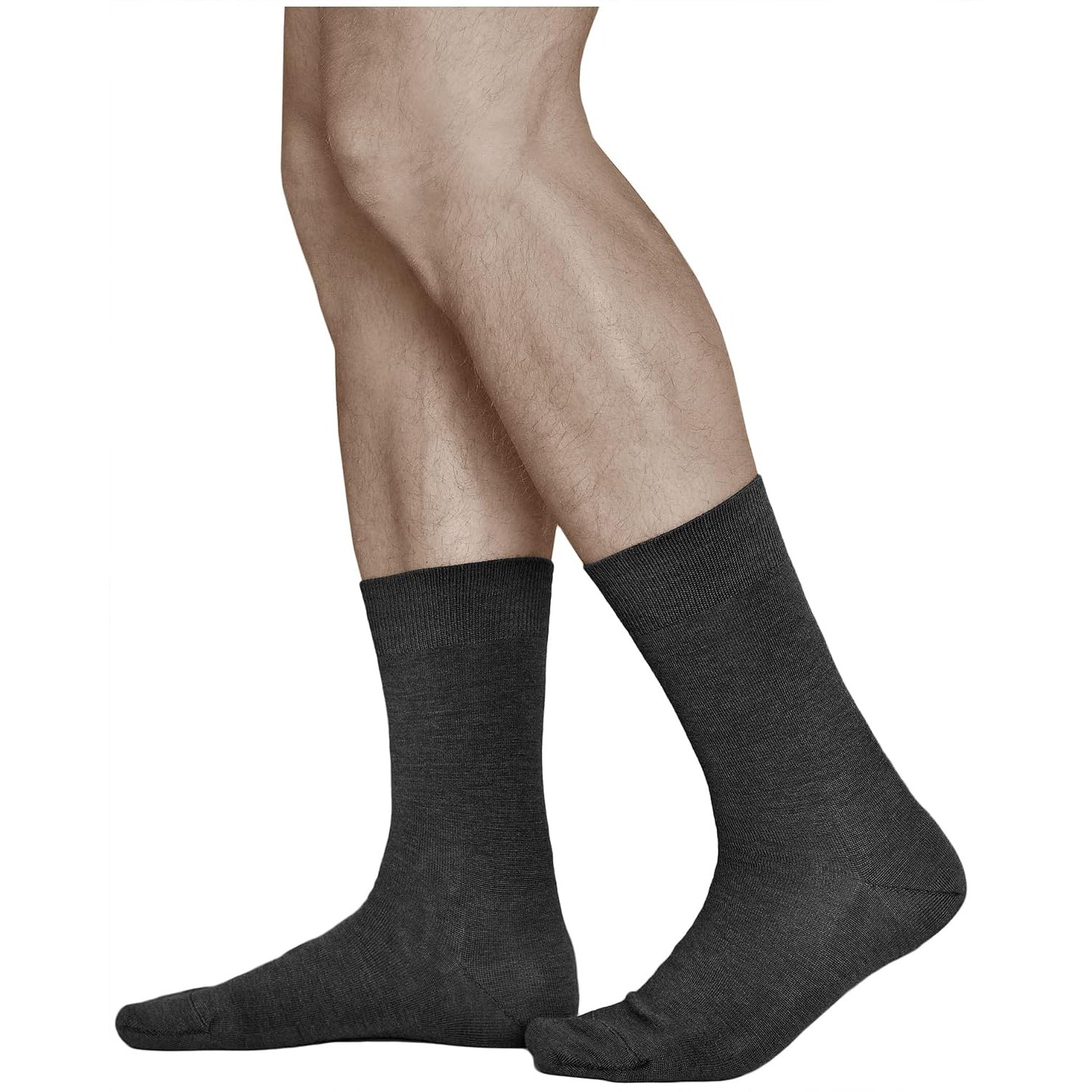
These socks use an 80% wool blend, with 17% polyamide and 3% elastane making up the rest. Wool on its own can wear thin at the heel. The polyamide adds strength at the high-friction areas, and the elastane gives the cuff and arch some stretch. You get a sock that still feels like wool.
Who these suit
Think about your day. If you commute, sit in an office, walk between buildings and come home in the dark, these are aimed squarely at you. They are mid-weight, not bulky, so they slide into leather shoes and trainers without making everything feel tight. The flat seam across the toe matters most in exactly that situation, where a thick ridge would press against your toes for hours.
They are not the right sock for every job. The manufacturer is clear that these are not designed for hiking, stiff leather boots or very cold frosty weather. If you are heading out on a trail or working outside in deep cold, buy a thicker boot sock with proper cushioning under the heel and ball. Using a mid-weight dress sock in a hiking boot invites blisters, and that is a footwear mismatch rather than a fault in the sock.
How to choose the right weight
Sock weight is really about what goes around it. Start with the shoe, not the sock.
A fitted dress shoe or a slim trainer leaves very little spare room. Put a thick sock in there and you compress your foot, restrict circulation and, ironically, end up colder. A mid-weight merino sock is the better answer because it fits without squashing the foot.
A roomy boot with space to spare can take a heavier sock, and in genuinely freezing conditions it should. If you are buying for both situations, two different weights in the drawer will serve you better than one compromise pair.
Sizing is the other variable. Socks that are too big bunch under the arch and cause friction. Socks that are too small stretch flat and feel tight. The elastane here gives some tolerance, but it is not unlimited, so pick the size that matches your foot rather than hoping the stretch will cover a gap.
Caring for wool
This is where most wool socks die early. The care guide is short and worth following exactly.
Machine wash at a maximum of 40C with the socks turned inside out. Turning them inside out protects the outer face from abrasion against the drum and other garments, which cuts down on pilling. Do not tumble dry. Heat and tumbling together cause wool scales to lock into each other, the fibre mats, and the sock comes out a size smaller and stiffer than it went in. That process is not reversible.
Do not iron and do not bleach. Bleach attacks protein fibres and wool is a protein fibre, so a splash of it will weaken the knit even if the damage is not visible straight away.
Skip the fabric softener too. It leaves a coating on the fibre. A detergent labelled safe for wool, used sparingly, does everything you need.
Dry them flat or over a rack somewhere with air moving. Draping them on a hot radiator dries them fast and shortens their life. If you can, give each pair a rest day between wears. That gives it time to dry out fully.
Getting more wears from fewer washes
You may not need to wash after every single wear. Air them overnight, give them a sniff in the morning, and make the call.
If small pills appear at the ball of the foot or the back of the heel, that is normal friction wear. A cheap fabric comb or a quick pass with a sweater stone tidies them up in a minute.
Why a two pair pack makes sense
Buying one pair of anything you intend to wear often is a false economy. With two pairs you can give each set proper recovery time, wash on your own schedule instead of in a rush, and still have a warm pair ready on a cold morning. The item weight of roughly 100 grams also means a spare pair costs you almost nothing in luggage space.
If you are building out a winter drawer gradually, wool socks are one of the better places to start. They work harder per item than almost anything else you own, and the difference between a good pair and a bad one is obvious within a day.
The short version
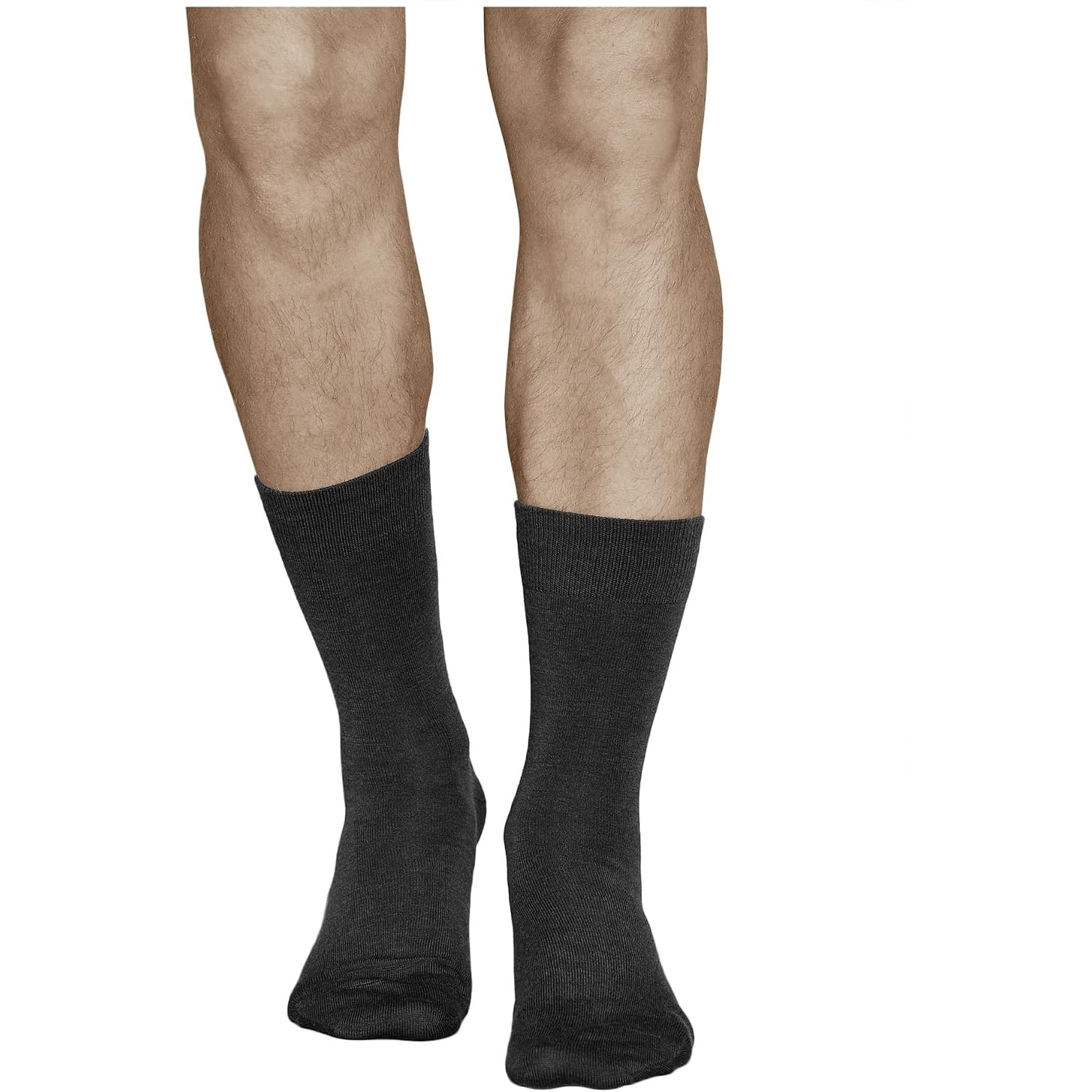
These are mid-weight merino wool socks for men in a two pair pack, knitted from 80% wool with polyamide and a touch of elastane for shape. They are warm and soft, and finished with a flat toe seam.
Wear them for everyday autumn and winter use in regular footwear, the office, the commute, around the house. Skip them for hiking, stiff boots and very cold frosty conditions, where a dedicated boot sock is the right tool.
Wash cool, air dry, no tumble dryer, no softener. Do that and a pair of good wool socks will see you through several winters.