
The complete guide
How To Choose And Style A Small Beige Ceramic Vase
The problem with most vases
Walk into a homewares shop and the vase section is mostly two extremes. There are tall, dramatic floor vases that need a big bunch of long stems to look right, and there are tiny bud vases that hold one flower and tip over if you breathe near them. Neither is much help when what you actually want is something to sit on a coffee table or a shelf and make the room feel a little more cared for.
That middle ground is where a short, round ceramic vase earns its keep. It is low enough to see over at a dining table. It is wide enough at the base to feel stable. And it holds the kind of small supermarket bunch most of us actually buy, rather than demanding a florist's arrangement every week.
The other common problem is the opening. Plenty of vases have a mouth as wide as the body, which sounds generous but is a nuisance in practice. Stems slide to the outside, splay apart and leave a gap in the middle. You end up fiddling with them, propping them against each other, and it still looks a bit lopsided. A narrower neck does the arranging for you.
How this vase works
Three things are doing the work here. The shape, the texture and the colour.
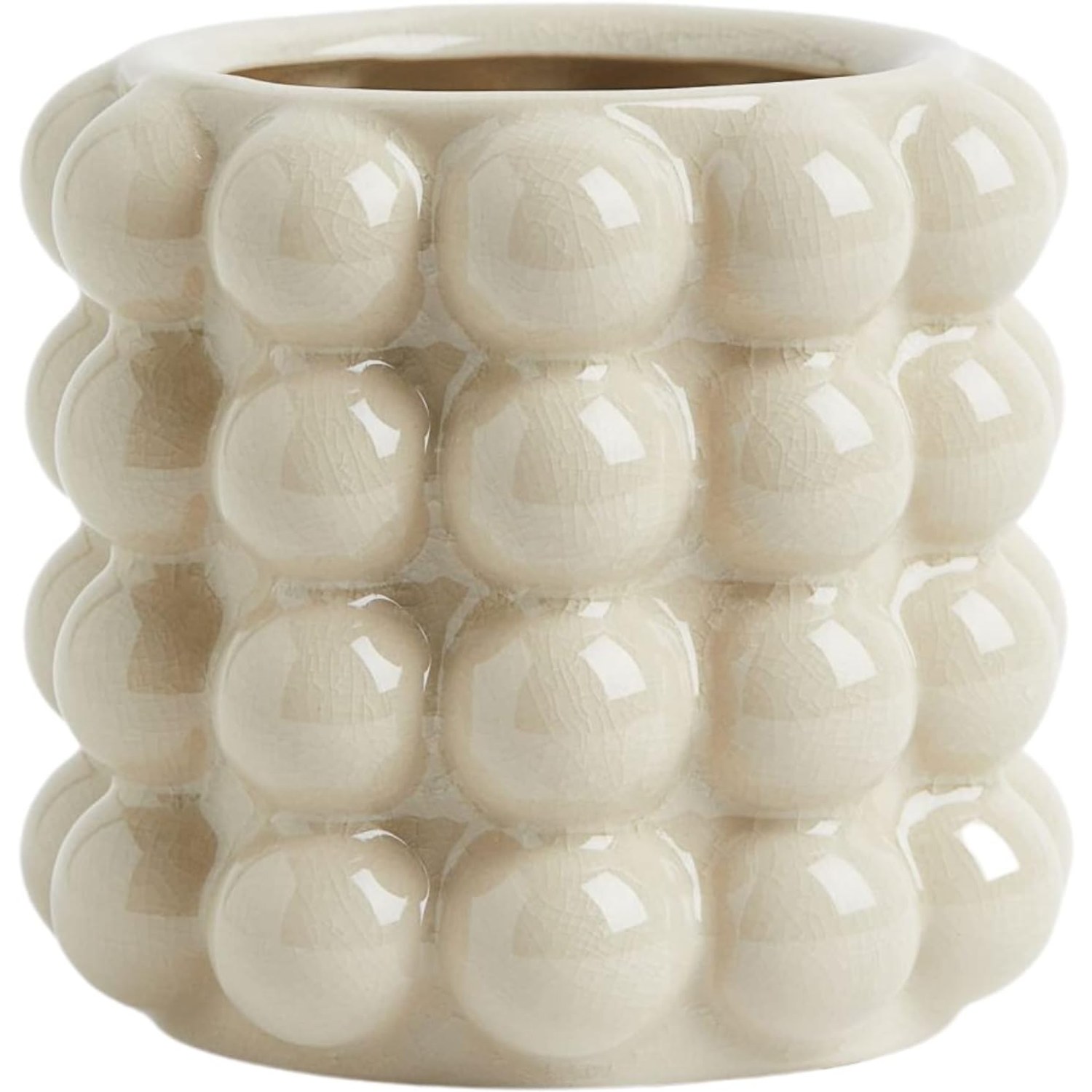
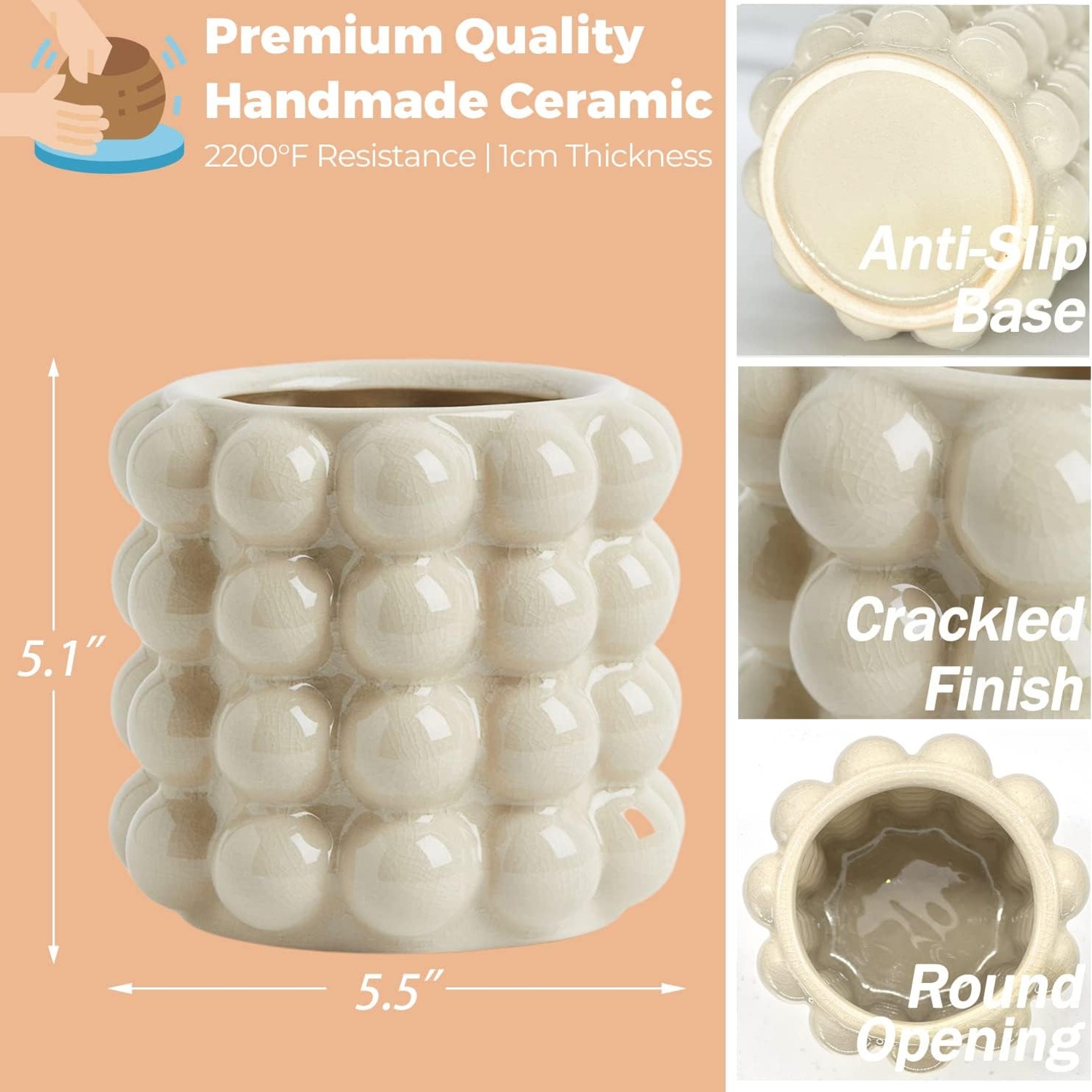
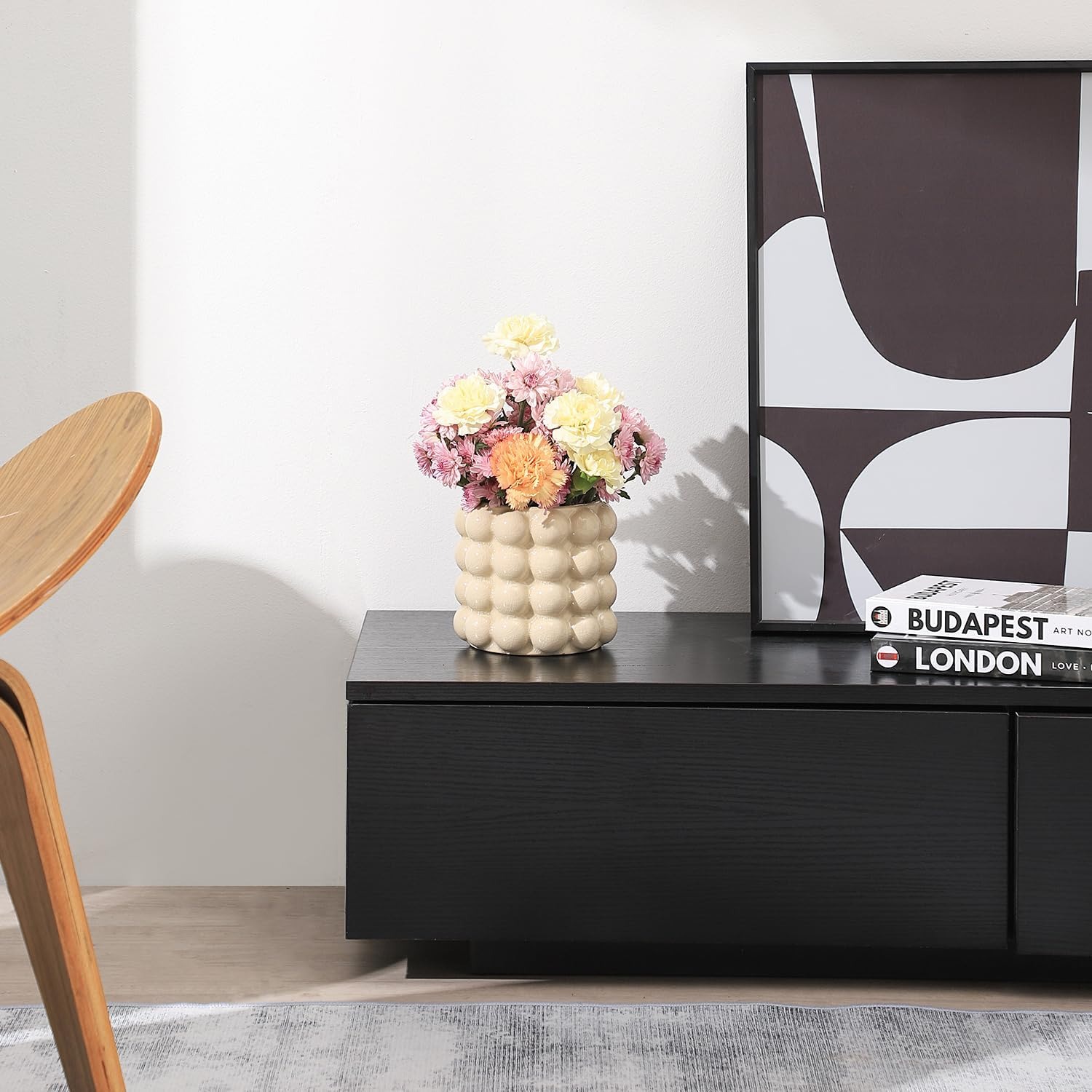
The shape is short and rounded with a narrow round opening. That combination is forgiving. Water in the base lowers the centre of gravity, so it sits firmly rather than feeling top heavy. The tight neck pulls stems together at the point where they enter the vase, so even a loose handful ends up looking deliberately gathered. If you have ever wondered how florists make five stems look like a considered arrangement, a lot of it is simply the vessel doing the holding.
The bubble texture is the part people comment on. Rather than a smooth glazed wall, the body carries rounded dimples that run across the curve. In daylight they throw soft shadows that shift as the sun moves. Under a lamp in the evening the effect softens and the silhouette takes over. It means the vase still reads as an object worth having on display when there are no flowers in it at all, which is most weeks for most households, if we are honest.
The beige finish is the quiet one. It sits in the same family as raw linen, oat, unbleached paper and light oak. Because it is warm rather than cool, it stops a white room from feeling clinical, and it softens darker paint colours instead of fighting them. This is why a warm neutral is often the best ceramic vase for living room use when you are not sure what else is going in the space yet.
Who it suits
If you like a calm, layered room with natural materials, this fits straight in. It sits comfortably alongside rattan baskets, linen cushions, timber trays and stoneware. The texture gives it enough interest to hold its own in a minimalist setting, where every object has to earn its place.
It also suits people who want flowers in the house but do not want a project. A short vase with a narrow neck is genuinely low effort. Cut the stems shorter than feels right, drop them in, and walk away. There is no foam, no frog, no technique.
Renters and people who move often tend to like small ceramic pieces too, because they travel well and work in any floor plan. A big statement vase is tied to the room you bought it for. A small one goes wherever you go.
And it is a reliable gift. Choosing homewares for someone else is risky when the piece is large or strongly styled. A small neutral vase sidesteps that. It is one of the safer housewarming vase gift options because the recipient decides where it lives and what goes in it.
How to choose the right size and spot
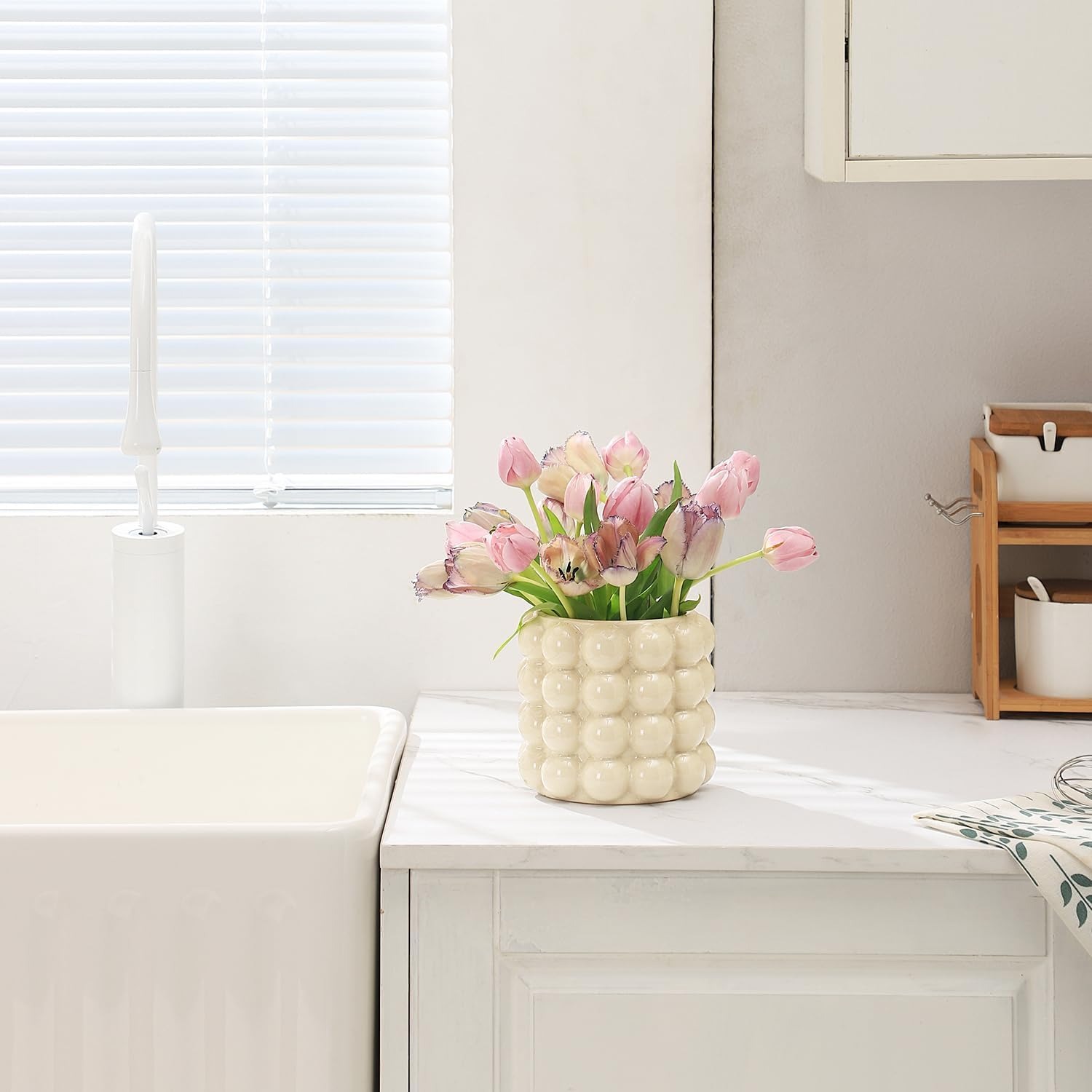
Think about sightlines first. On a dining table you want to see the person across from you, so a low vase is the right call. On a bookshelf you have vertical space to play with, so a short vase works best next to taller objects rather than alone on an empty shelf. On a coffee table, low is again the answer, since anything tall gets knocked while people reach for the remote.
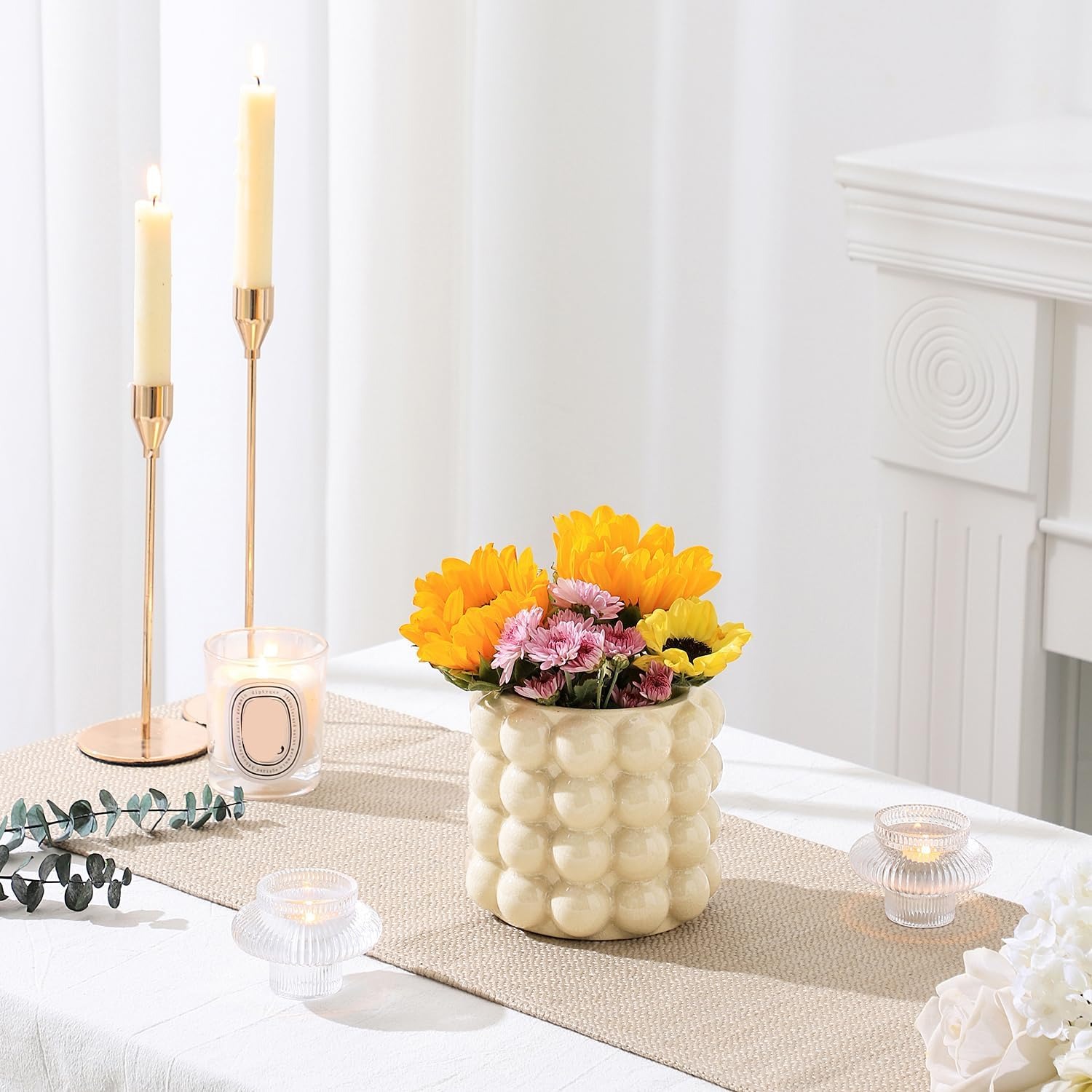
Think about scale next. A small vase on a big empty surface can look lost. The fix is grouping. Put it with a stack of books, a candle, a small bowl or a second vessel at a different height. Two or three objects of varying heights read as a deliberate arrangement. One small object alone in the middle of a large table reads as an accident.
Think about the stems you can actually get. If your local market mostly sells long stemmed roses and lilies, you will be trimming a lot. If you can get ranunculus, anemones, small daisies or herb sprigs, this shape is ideal. Dried stems are the other easy answer. A few bunny tails or dried lavender sprigs will sit happily for a season and need no water at all, which makes this one of the better options when you want a short vase for flowers that does not need weekly attention.
Finally, think about where it will not go. No drainage hole means it is not a planter. You can slip a nursery pot inside as a cover, but water that plant at the sink and let it drain before it goes back in. Soil sitting in standing water rots roots fast.
Looking after it
Ceramic is easy, as long as you treat it like ceramic.
For the outside, a soft cloth with a little water handles dust, and the dimples are shallow enough that nothing gets trapped. Dry it afterwards so you do not leave water spots. Skip abrasive pads and scouring powders, since they can dull the surface over time.
For the inside, warm water with a drop of mild dish soap does the job. A soft bottle brush helps if your hand will not fit through the neck. If a white film builds up from hard water or flower food, a soak with warm water and a splash of white vinegar usually lifts it. Rinse well and let it air dry upside down before you store it.
Change the water in fresh arrangements every two or three days. It keeps the flowers going longer and stops residue forming inside. Trim a little off the stems each time you do it.
Hand wash only. No dishwasher, no microwave, no oven. And keep it back from the edge of benches and tables, especially if you have pets or small children who move at speed.
Styling it without overthinking
A few habits make a small vase look better with almost no effort.
Cut stems short. Most people leave them too long. Aim for the flower heads sitting just above the rim rather than floating well above it. The arrangement looks fuller and the vase stays stable.
Use fewer stems than you think. Four good ones beat nine crammed in.
Let one thing be the hero. If the flowers are bold, keep what sits around the vase simple. If the vase is sitting empty as a decorative object, let the texture be the feature and give it a little breathing room.
Repeat the colour somewhere nearby. A beige vase near a linen cushion, a timber frame or a woven basket looks intentional rather than random. That small repetition is what makes a styled shelf feel settled.
The short version
This is a small, short, beige ceramic vase with a bubble texture and a narrow round opening. The shape keeps it stable, the neck gathers stems so small bunches stand up neatly, and the warm neutral colour means it works in almost any room without needing a plan.
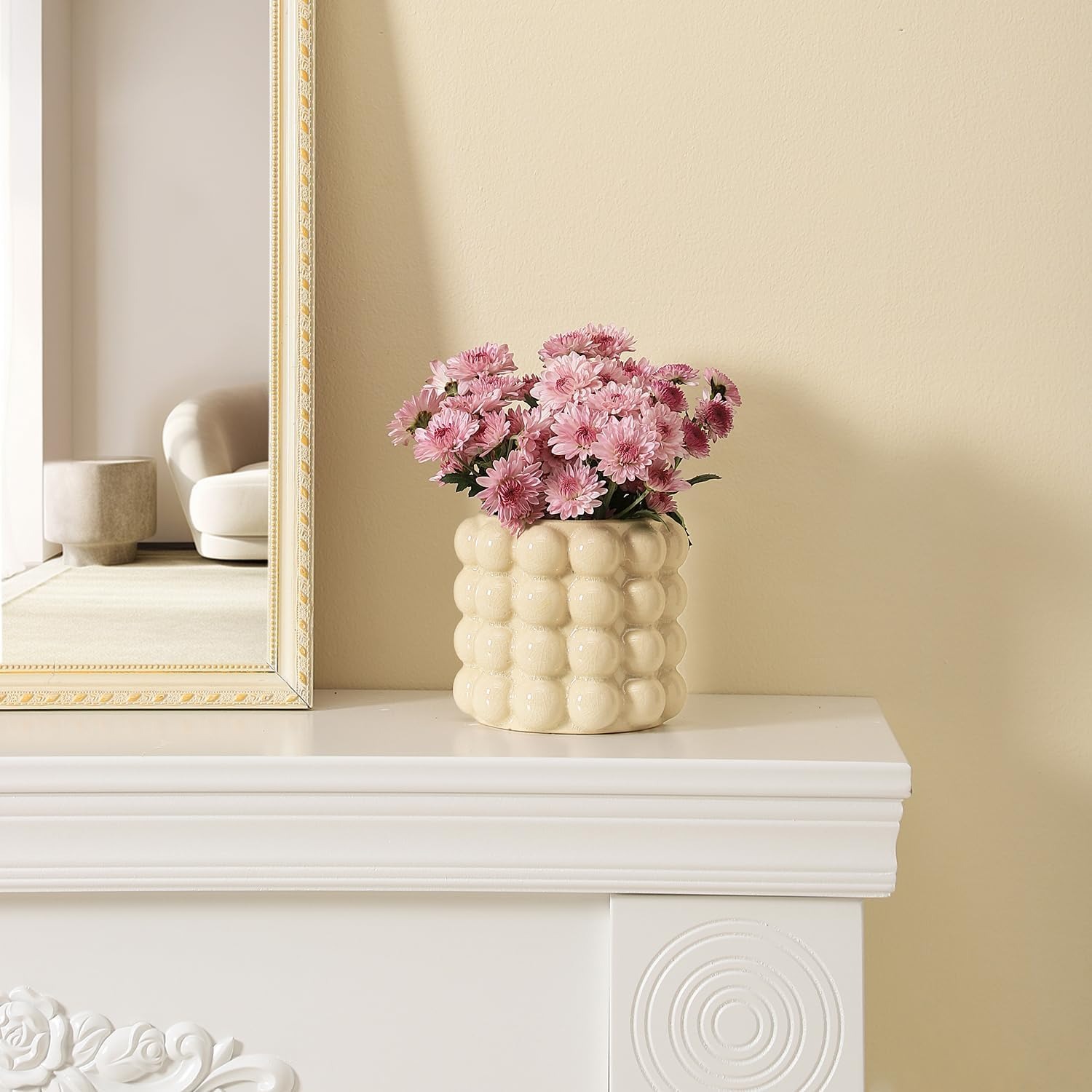
Use it for fresh flowers, dried stems or good artificial blooms. Wipe it, hand wash it, keep it off the edge of the table, and it will keep doing quiet work on a shelf, a mantel or a coffee table for years. If you want one object that makes a corner look finished without committing to a whole decorating scheme, this is a sensible place to start.