

The complete guide
How To Choose A Cashmere Beanie That Actually Keeps You Warm
The problem with most winter hats
Most people own a hat that does not really work. It is either synthetic, which traps sweat and then goes cold the moment you stop moving, or it is coarse wool that itches so much you take it off after fifteen minutes. Either way it ends up in a coat pocket instead of on your head.
A cashmere beanie solves both problems at once. The fibre is fine enough to wear directly against the forehead and ears, and it is a natural insulator that keeps working when the wind picks up. The question is not really whether cashmere is warm. It is whether the particular hat you are looking at has enough cashmere in it to do the job.
Why ply matters more than the word "cashmere"
Plenty of hats say cashmere on the label. Far fewer tell you how much yarn is actually in the knit.
Ply is the number of strands twisted together to make the yarn before it goes on the knitting machine. A single-ply cashmere hat can feel beautiful in the shop and still be nearly transparent when you hold it up to the light. A 3 ply cashmere hat uses three strands, which means the fabric has more fibre in the same stitch, more thickness and more small air pockets.
That air is the point. Insulation is not really about the fibre itself. It is about the still air the fibre holds next to your skin. More plies, more trapped air, warmer head. You can feel the difference just by picking two hats up: the three-ply version has weight and spring, where a thin one flops.
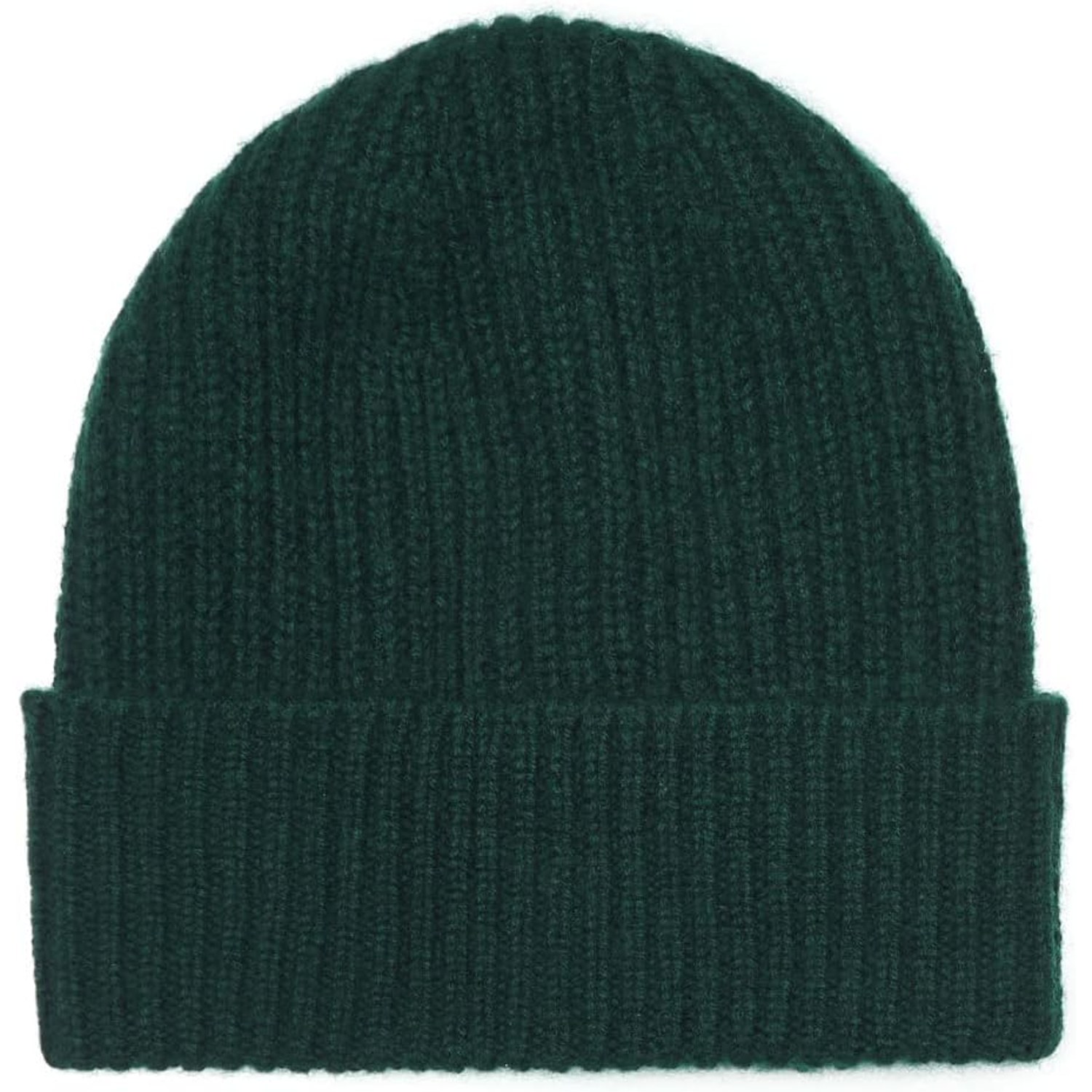
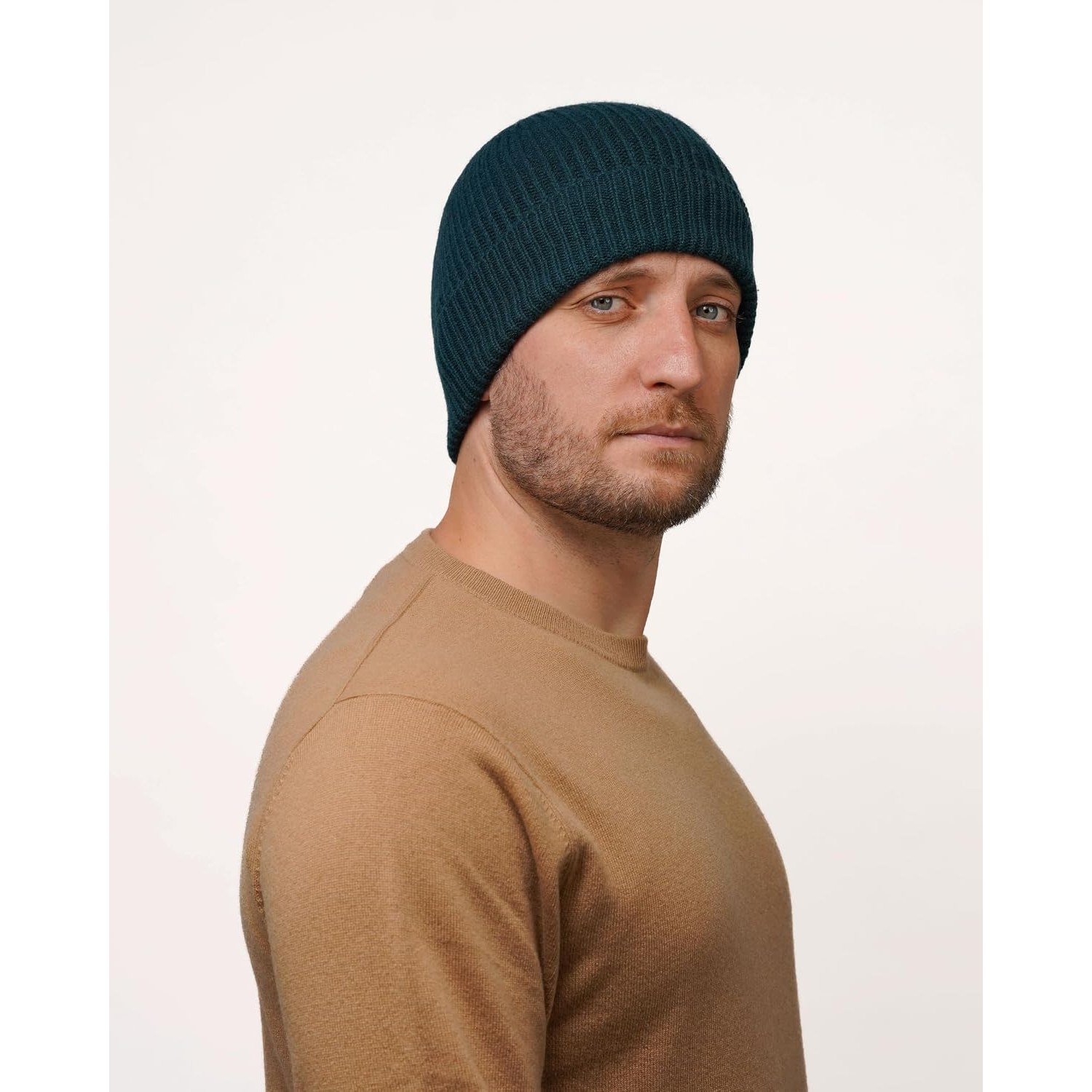
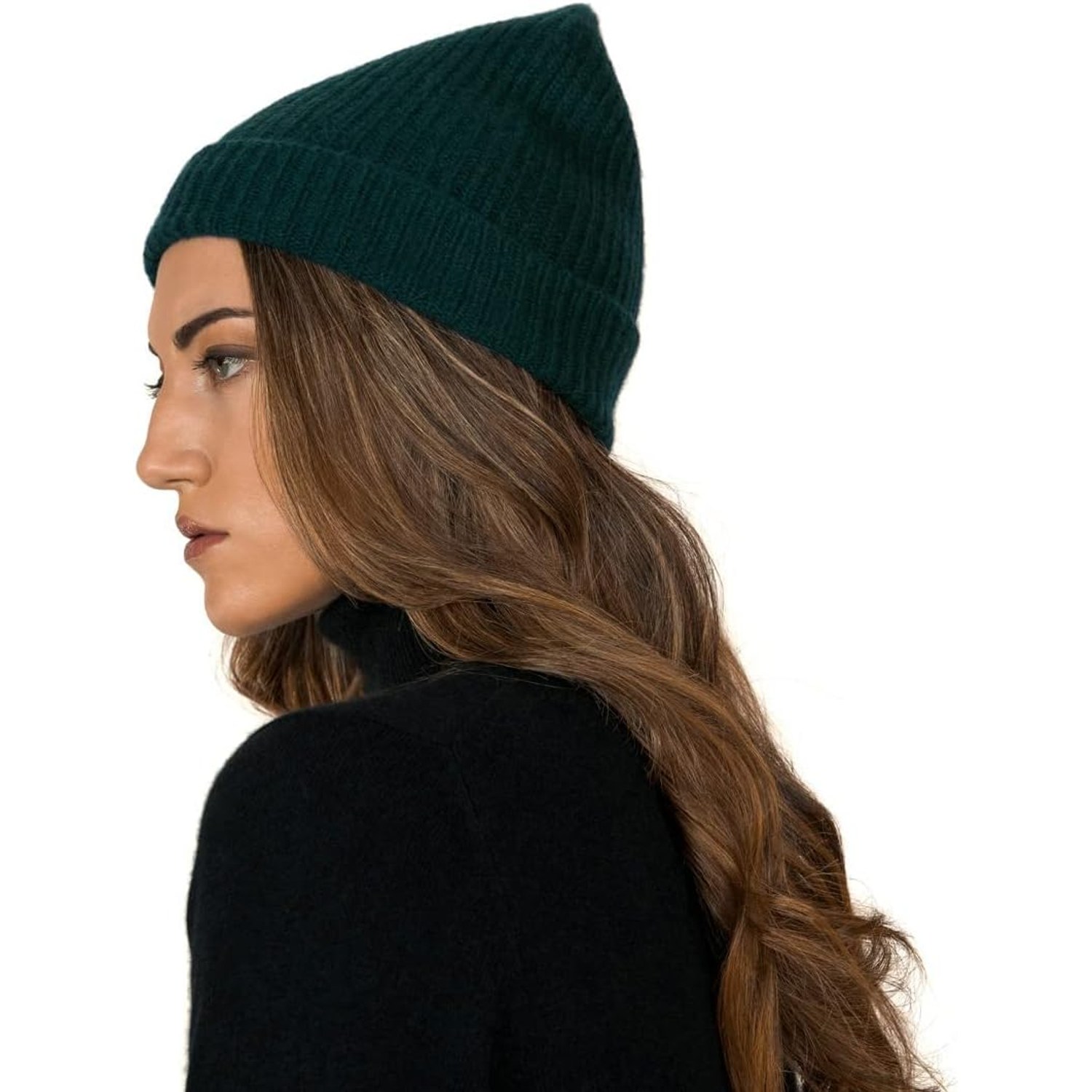
This hat is knitted in three plies, which puts it in the everyday-winter category rather than the decorative category. It is a hat you can wear walking the dog in January, not just one you wear from the car to the restaurant.
What cashmere actually is, in plain terms
Cashmere comes from the soft undercoat of cashmere goats. The animals grow it to survive cold winters, and it is combed out in spring. Each animal produces a small amount, which is a large part of why the fibre costs what it does.
The reason it feels different from sheep wool comes down to fibre diameter. Cashmere fibres are very fine, so when the ends of those fibres touch your skin they bend rather than poke. Coarse wool fibres are stiffer, they stay upright, and your nerve endings read that as itch. This is why someone who cannot tolerate a lambswool hat is often perfectly comfortable in a cashmere one.
Fine fibres also mean a softer drape. A ribbed cashmere beanie hugs the shape of the head instead of standing away from it like a stiff knit does.
Why Scottish knitting still means something
Scotland has been working with fine yarns for generations, and the knitting mills there built their reputation on consistency. This beanie is made in Scotland.
What does that give you in practice? Mostly, evenness. A well-made rib has uniform tension from the brim to the crown, so the hat does not pucker in one spot or sag in another. The brim rolls back cleanly instead of bunching. Edges are finished so they do not curl or unravel after a few washes. None of this is dramatic on day one, but it is the difference between a hat that still looks right in year four and one that goes shapeless by spring.
One size, and how ribbed fit works
This is a one-size adult hat, listed as unisex. That tends to worry people who have had bad luck with one-size caps, so it is worth explaining how ribbed knit behaves.
Rib is made of alternating raised and recessed columns of stitches. Those columns compress together at rest and open out under tension, which gives the fabric a lot of horizontal stretch and strong recovery. A ribbed beanie therefore adapts to a range of head sizes and then springs back when you take it off, instead of staying stretched like a flat knit would.
For most adults this means a snug, even fit. If you have a particularly large head, expect it to sit close rather than slouchy. If you prefer a looser, slouched look, you can wear it pulled back off the forehead and let the crown sit higher.
Because the shape is plain and unisex, it also works for shared households. Plenty of these hats end up being worn by two people in the same family, which is not something you can say about a hat with a fixed sizing chart.
Who this suits
This is a good fit if you want one quiet, well-made winter hat rather than a drawer full of average ones. It suits commuters who are outside in short bursts, people who walk or run in the cold, anyone who stands on a touchline on Saturday mornings, and people who travel somewhere colder than home and want packable warmth.
It is also an easy gift. Sizing is not a gamble, the plain rib does not clash with anyone's coat, and most people have never owned a 100 cashmere beanie hat even if they have plenty of other knitwear. That gap between what people own and what this feels like is why it lands well.
It is less suited to high-output mountain sport where you want a thin wicking liner under a helmet, and it is not the hat for a muddy work site. Cashmere rewards reasonable treatment.
Cashmere or merino?
Both belong in the same category of cashmere and merino accessories, and both are genuinely good. The honest difference is this: merino is tougher and more forgiving, cashmere is softer and warmer for its weight.
Merino handles daily abuse, resists pilling better, and often tolerates a gentle machine cycle. Cashmere gives you a softer handle against the skin and better warmth without bulk, but it asks for hand washing or dry cleaning. If you want a hat to throw in a rucksack and forget about, merino. If you want the one that feels like a treat every time you put it on, cashmere.
Looking after it
The care instruction here is hand wash or dry clean only, and that is worth following exactly.
To hand wash, fill a basin with cool water and a small amount of wool detergent. Submerge the hat, press it gently a few times and leave it for a few minutes. Do not rub, scrub or wring. Rinse in cool water, press the water out between your palms or against the side of the basin, then roll the hat in a towel to take up the rest. Lay it flat, reshape the brim and crown, and leave it to dry away from radiators and direct sunlight.
Two other habits help. Store it folded in a drawer rather than hanging it, because hanging pulls the rib out of shape over time. And wash it before you put it away for summer, then keep it in a sealed bag or box. Moths go for the traces of skin and hair left in a worn garment, so a clean hat in a closed container is rarely touched.
Pilling can happen anywhere the hat rubs a collar or scarf. It is normal in soft fibres and it is easy to fix with a cashmere comb or a fabric shaver. A minute of tidying restores the surface.
The short version
Buy a cashmere beanie for the softness, but check the ply for the warmth. This one is knitted in three plies from pure cashmere in Scotland, in a plain unisex rib, one adult size. It sits comfortably on skin that cannot tolerate coarser wool, it has enough body to work on genuinely cold days, and it looks the same in five years as it does in week one, provided you hand wash it and dry it flat.
If you are replacing a scratchy wool hat or a synthetic one that never quite kept the cold out, this is the straightforward upgrade.