
The complete guide
How To Choose A Cashmere Blanket That You Will Actually Use
The problem with most throws
Most blankets fail in one of two directions. They are either thin and do nothing, so they end up folded on a chair as decoration, or they are thick and heavy, so they feel like being trapped under a rug. Neither gets used much. The thin one stays pretty and untouched. The heavy one comes out twice a winter and then goes back in the cupboard because getting under it is a commitment.
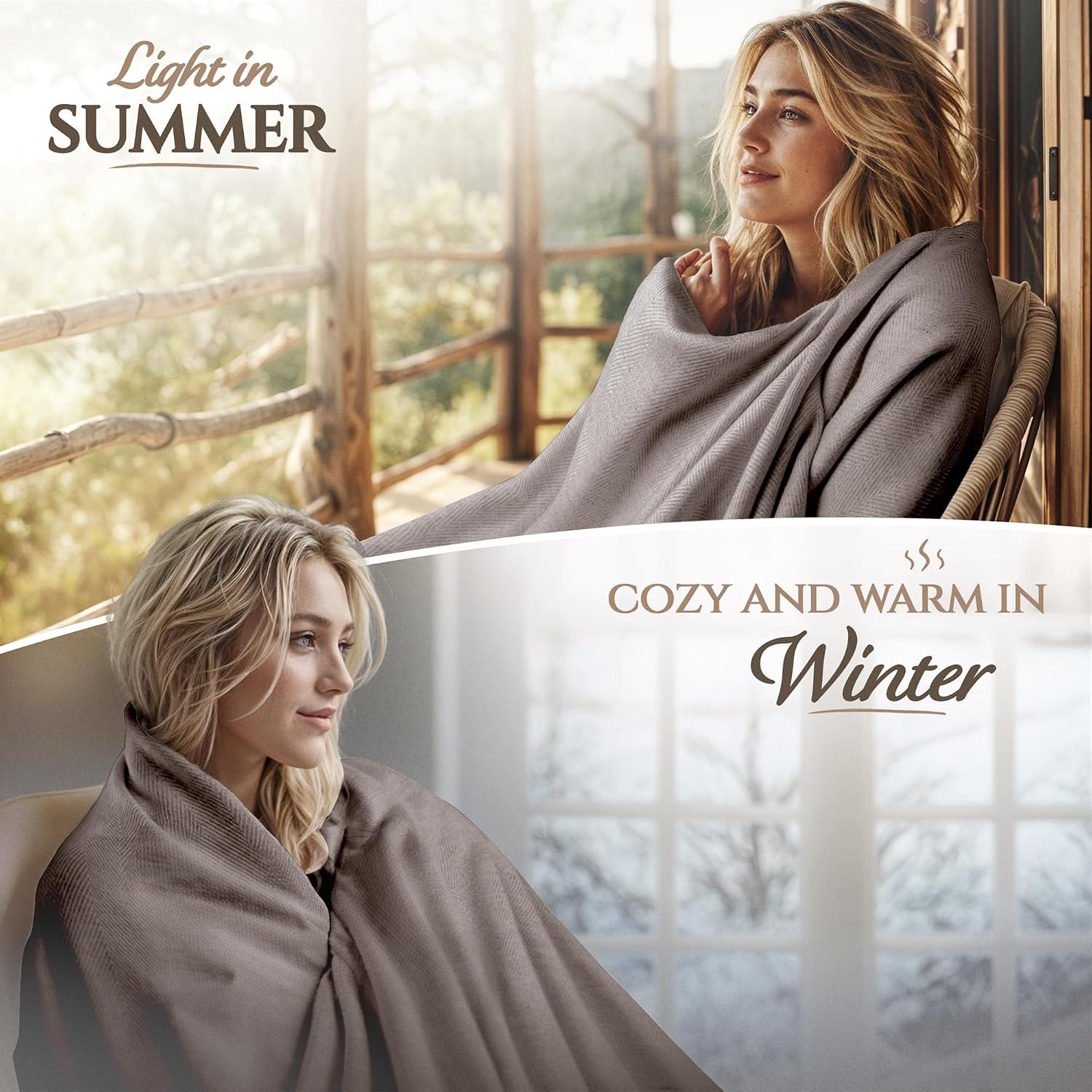
What you usually want is something in between. Warm enough to matter the moment you pull it over you, light enough that you forget it is there, and big enough that you do not spend the evening tugging it back over your feet. That is a narrow target, and it is the gap a cashmere blanket fills better than almost anything else.
Why cashmere behaves differently
Cashmere is not just expensive sheep's wool. It is the fine undercoat combed from cashmere goats, and the individual fibres are much thinner than standard wool fibres. Thinner fibres do two things. They bend more easily against your skin, which is why cashmere does not prickle the way a coarse wool blanket can. And they trap a lot of small air pockets for very little material, which is where the warmth comes from.
Air is the insulator, not the fibre. That is the part people miss. A blanket keeps you warm by holding still air next to your body, so a fibre that holds more air per gram gives you more warmth per gram. This blanket weighs about 550 g across a 125 x 250 cm span, which is remarkably little cloth for that coverage, and it still warms up fast once it is over you.
The practical effect is that you reach for it more often. It is not an event to get under. You pull it across your lap while reading, or over the duvet when the night turns cold, and it does the job without the weight.
How it is made
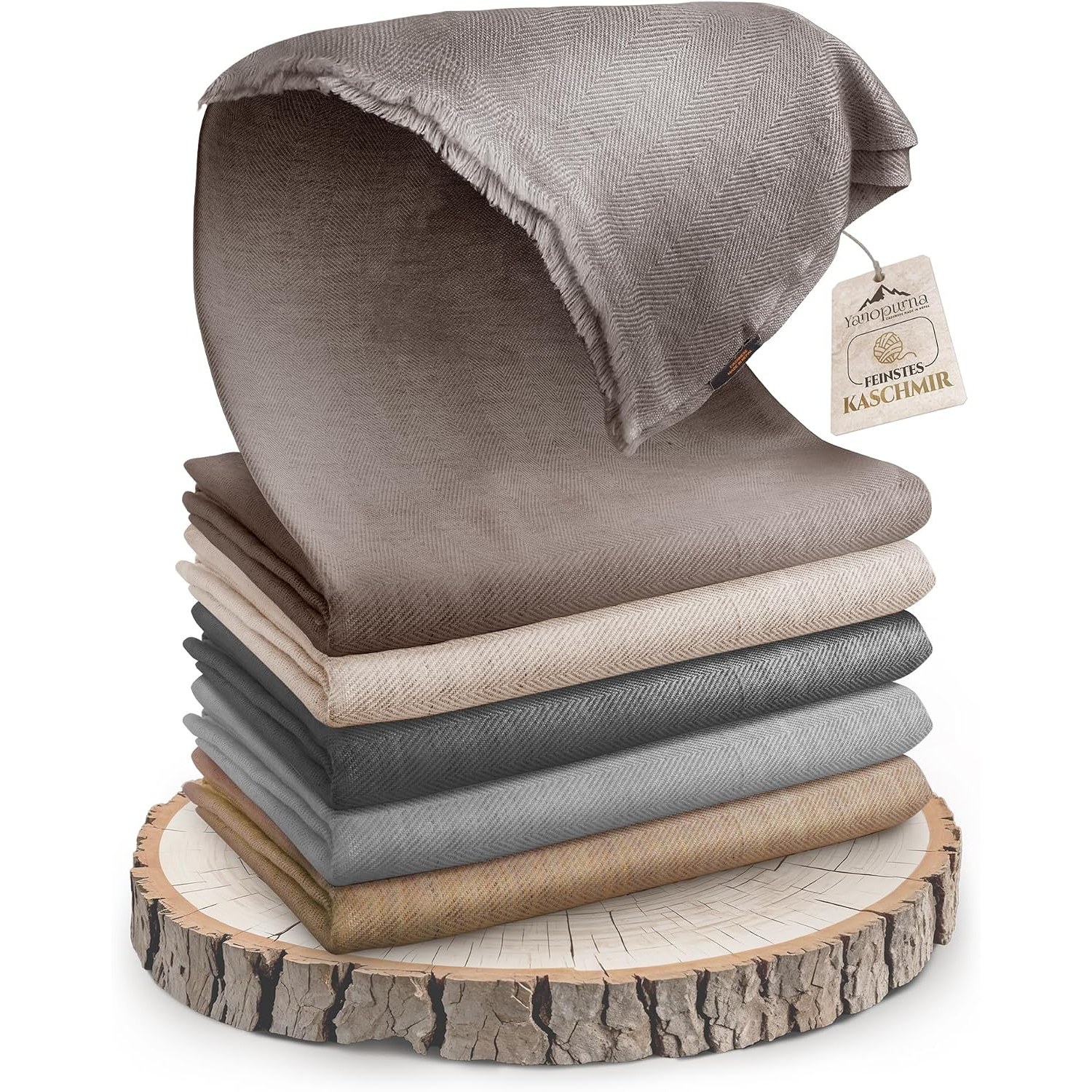
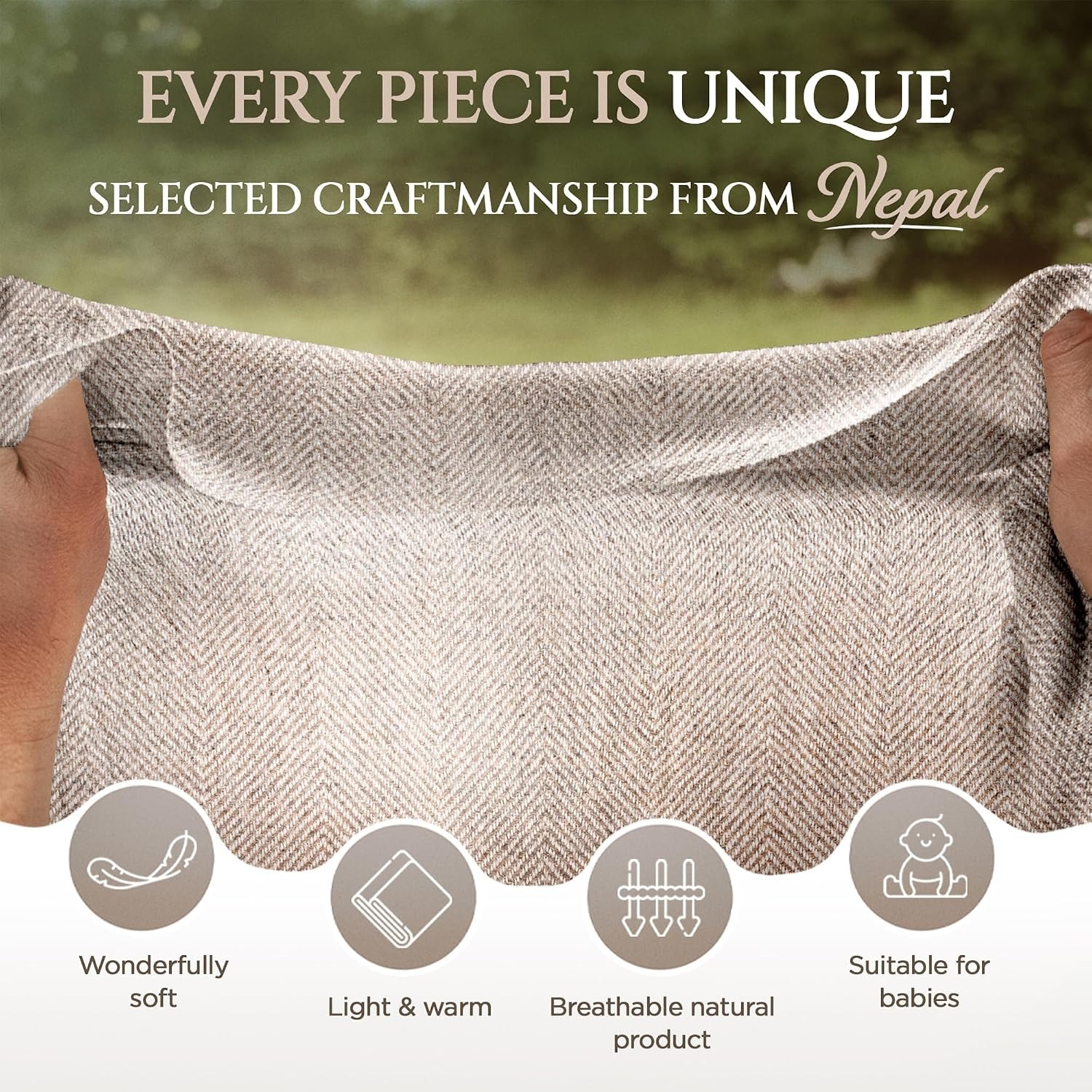
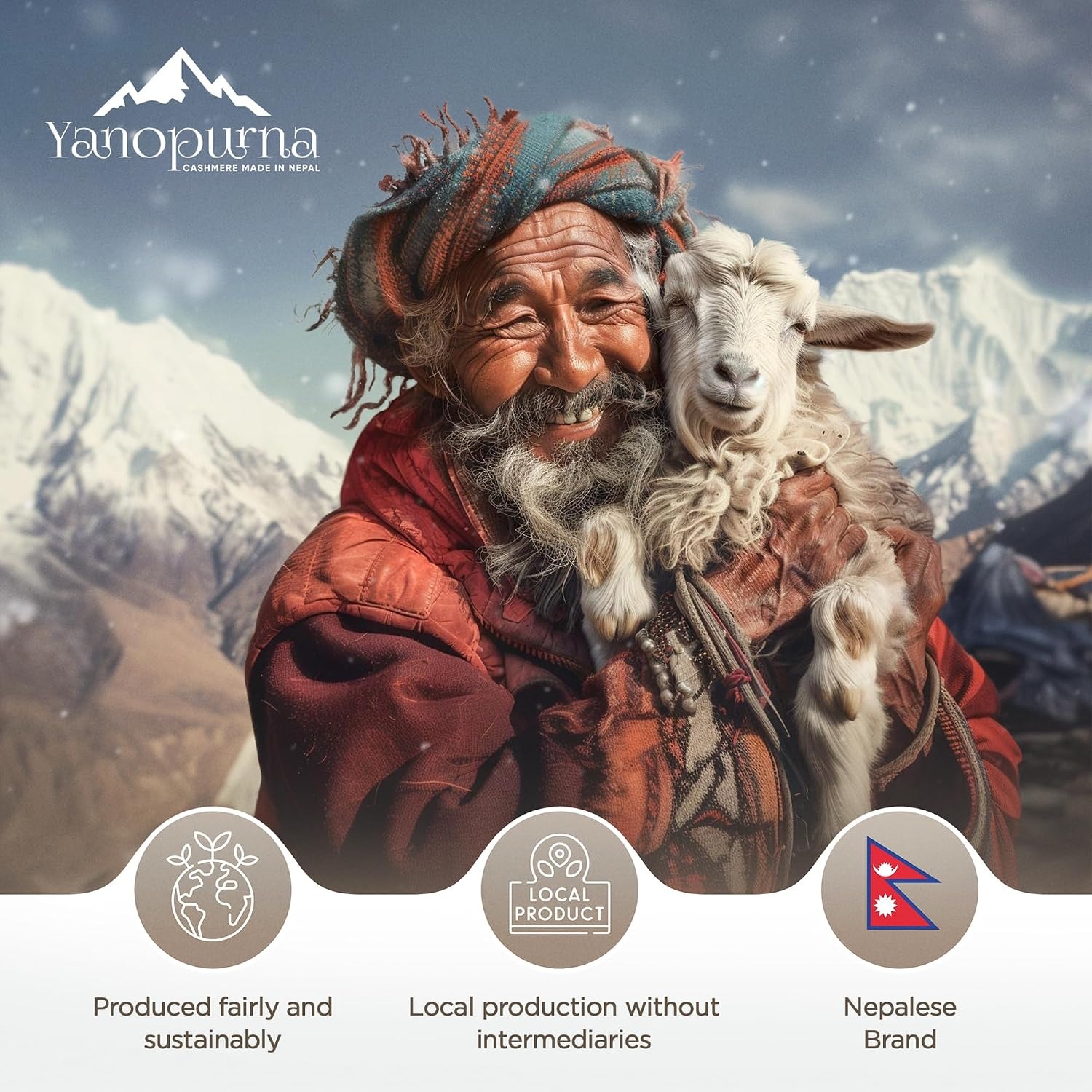
This one is handwoven in Nepal by small family workshops. The cashmere is combed from the goats, hand spun into a fine yarn, and then woven on a loom rather than run through an industrial machine.
Handweaving matters in a few ways. The pace is slower, so the yarn is handled more carefully and the tension across the cloth tends to be a little softer than a machine-set weave. It also means each blanket is slightly its own thing. Look closely at the surface and you will see minor variation in the weave, and the edges will not be laser-identical piece to piece. That is the signature of hand work, and it is worth understanding before it arrives so you do not mistake character for a flaw.
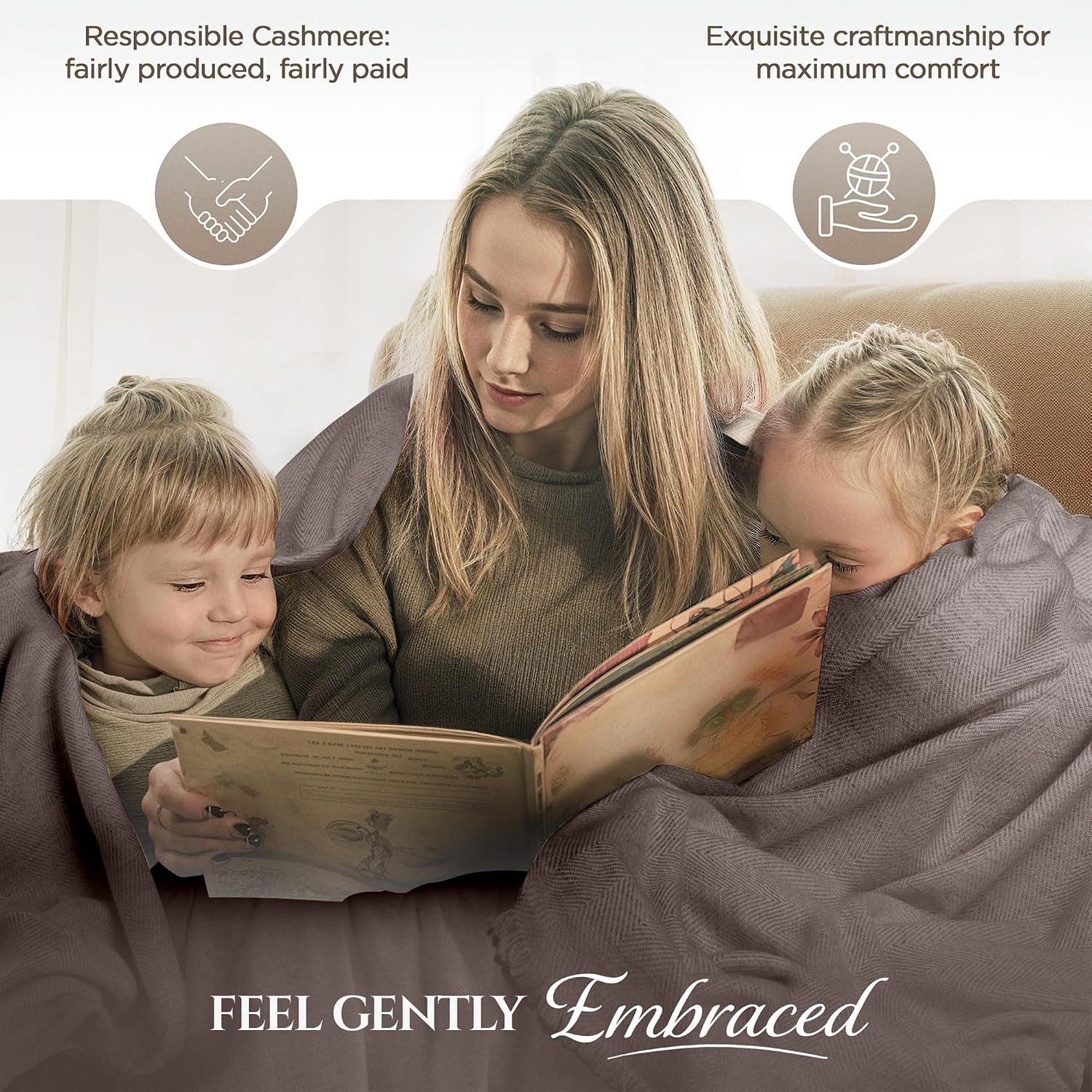
If you care about where your things come from, buying handwoven supports a different kind of production to a factory line. That is part of the appeal for a lot of people looking for the best handwoven wool throw rather than the cheapest option on a shelf.
Is 125 x 250 cm the right size for you
Size is where throws most often go wrong, so it is worth being concrete.
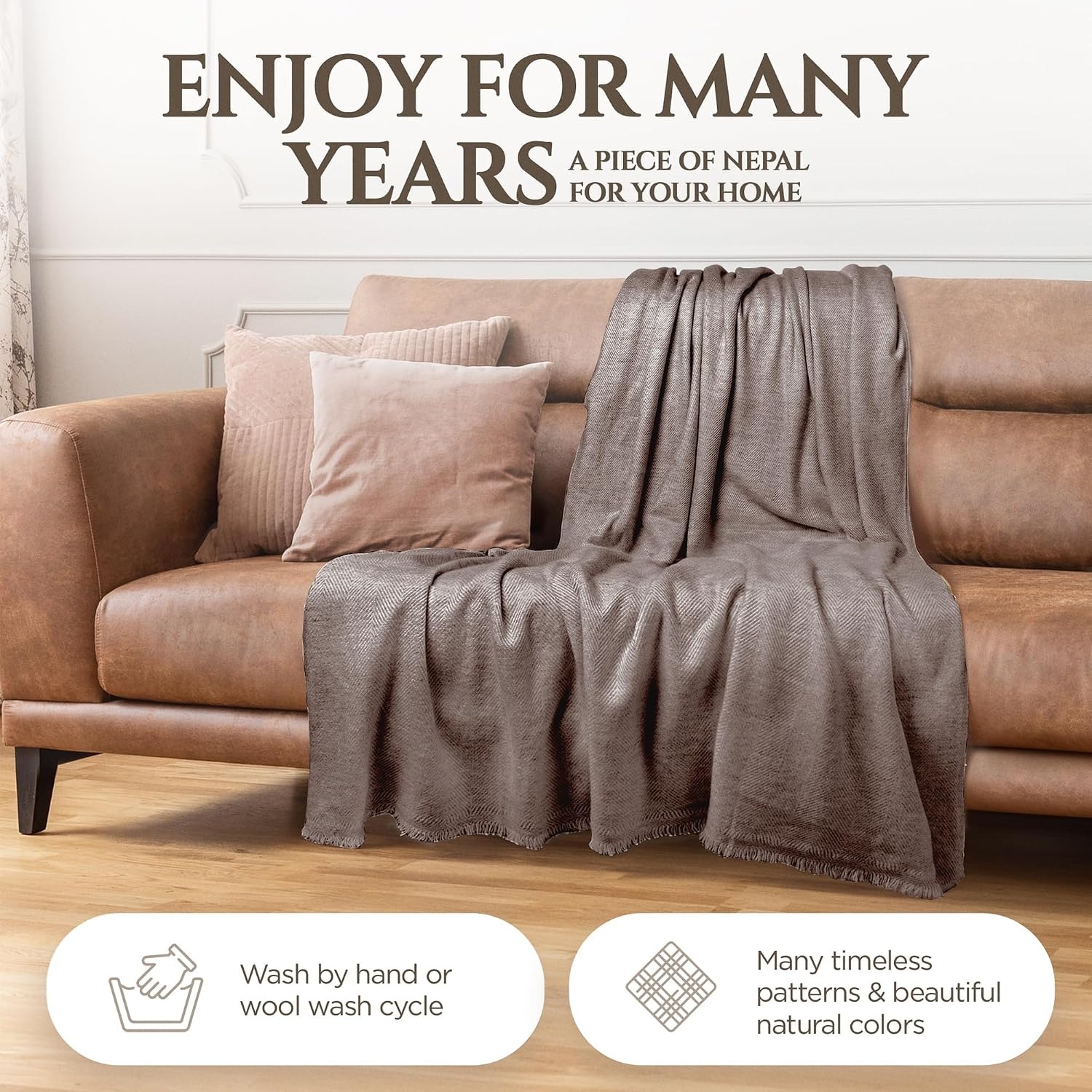
At 250 cm long, this runs the full width of a queen bed with overhang on both sides, which makes it a clean bed runner. Laid lengthways instead, it covers a single sleeper from shoulder to foot with room to tuck. On a three seater sofa it drapes over the back and down one arm and still leaves enough fabric to actually use.
Where it shines is sharing. A standard 130 x 150 cm throw covers one person. This one covers two adults sitting together without either of them playing tug of war. That alone changes how often a blanket gets used in a household.
It is less ideal if you specifically want a small lap square for a desk chair or a car seat. For that, something shorter is easier to manage. But if you have ever been annoyed that a throw is six inches too short, this solves it.
Who it suits
People who feel the cold but hate weight. Anyone who has been told wool makes them itch and assumes all natural blankets are the same. Frequent travellers who want something warmer than an airline blanket in a bag that is already full. Anyone shopping for the best cashmere blanket as a gift for a person who has everything, because almost nobody buys pure cashmere for themselves.
It is less suited to a house with a large dog that sleeps on the furniture, or a toddler phase involving felt tip pens. Cashmere is fine and it can snag. That is not fragility exactly, it is just a material that rewards a bit of care. If your throw needs to survive garden use and weekly hot washes, a tougher wool or a synthetic is the honest answer.
Judging quality when you shop
A few things separate good cashmere from the stuff that disappoints.
Composition is the first. Look for 100% cashmere rather than a cashmere blend, because blends often carry a small cashmere percentage and a lot of acrylic. This blanket is stated as pure cashmere wool.
Weight relative to size is the second. A piece that is very heavy for its dimensions is usually blended or coarsely spun. One that is feather light across a large area, as here with roughly 550 g over 125 x 250 cm, points to fine yarn.
Hand feel is the third, and the hardest to judge online. Good cashmere feels dry and springy rather than slick. A slippery, over-soft surface sometimes means heavy chemical finishing that washes out after a few cleans.
Care, honestly
This is simpler than most people expect. Cashmere is naturally dirt repellent and does not hold odours the way synthetics do, so it needs washing far less often than you would think. Airing it outside on a dry day fixes most problems.
When it does need cleaning, hand wash in cool water with a wool detergent. If your machine has a genuine wool cycle, you can use it, but turn the spin off. Do not tumble dry. Do not iron. Press the water out between towels, then dry it flat and reshape it while it is still damp.
Expect a little pilling in the first few uses where the fabric rubs. A cashmere comb takes care of it in minutes and the fabric settles after that. For storage, keep it clean and folded in a breathable bag with a cedar block, never sealed in plastic, and never put it away dirty.
Do this and the blanket gets softer over the years rather than worse. That is genuinely unusual.
The short version
This is a 100% cashmere wool blanket, handwoven in Nepal, measuring 125 x 250 cm and weighing around 550 g. The length makes it useful rather than decorative, covering a bed, a sofa or two people without running short. The weight makes it something you reach for daily instead of twice a season.
Care is light. Wash it rarely, wash it cool, dry it flat, store it clean. Accept small weave variations as part of hand production. If you want warmth you barely feel the weight of, and a blanket that improves with age, this is the kind of piece that earns its place on the sofa.