
The complete guide
The Honest Buyer's Guide to Linen Napkins
The problem with "good" napkins
Here is a pattern most households fall into. There is a bag of paper napkins in the cupboard for ordinary meals, and somewhere in a drawer there is a cloth set that gets used for Christmas lunch and maybe a birthday. The cloth set is nicer. Everyone agrees it is nicer. And it sits in the drawer for fifty weeks of the year because using it feels like a commitment, and because somewhere in the back of your mind is the idea that washing it will be a chore.
That is the real problem a set of linen napkins has to solve. Not looking good in a photograph. Looking good and then going straight into the machine with the rest of the laundry on Sunday without a second thought.
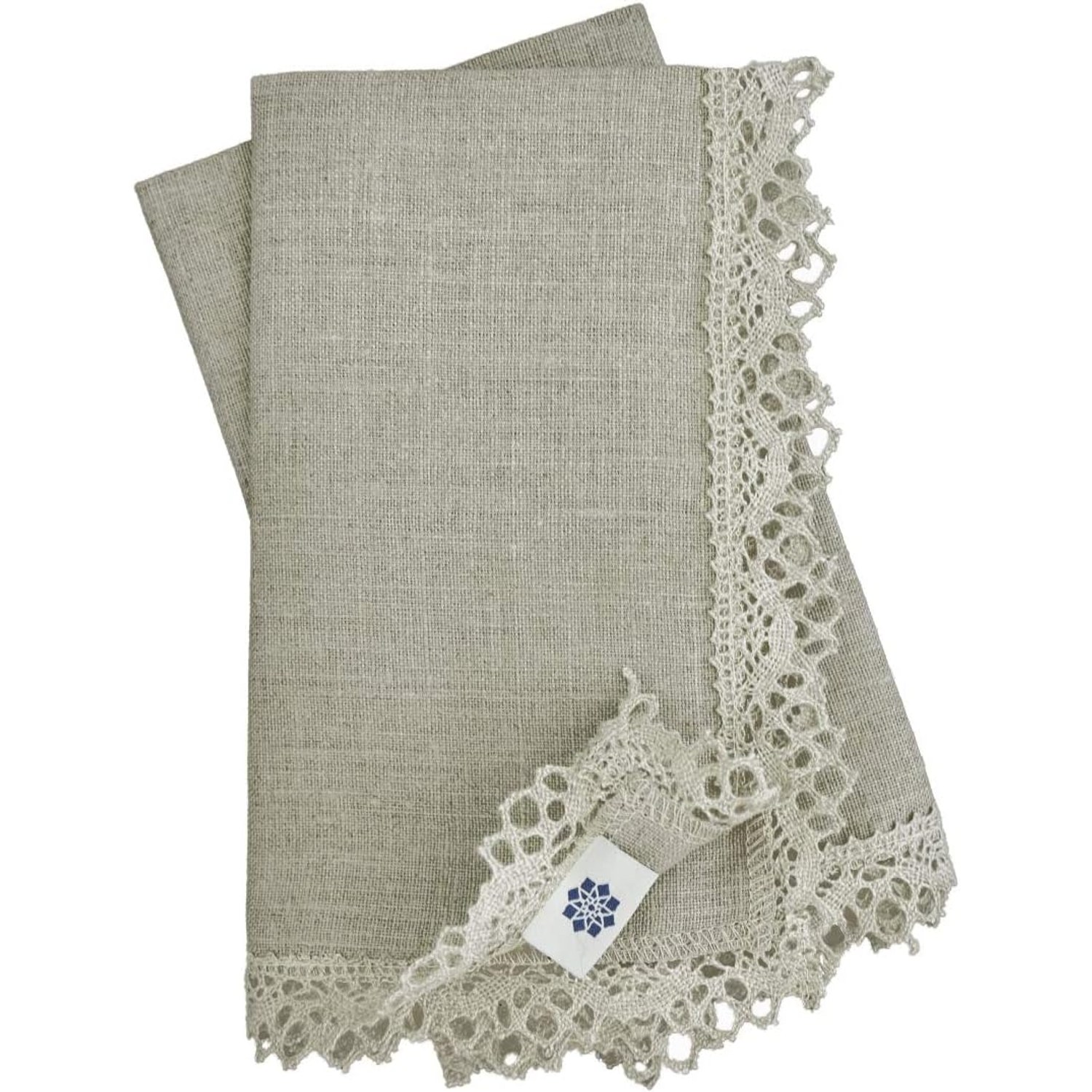
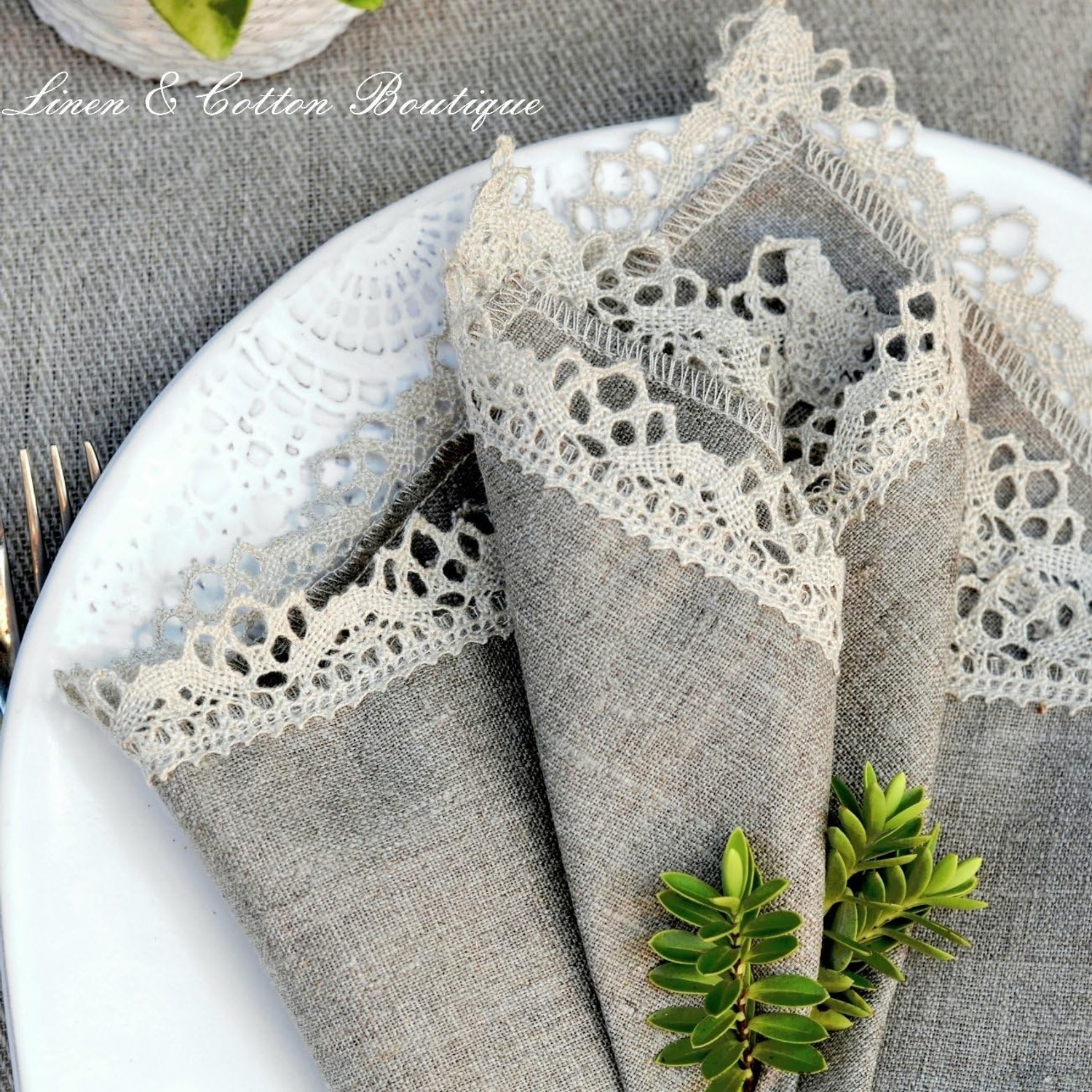
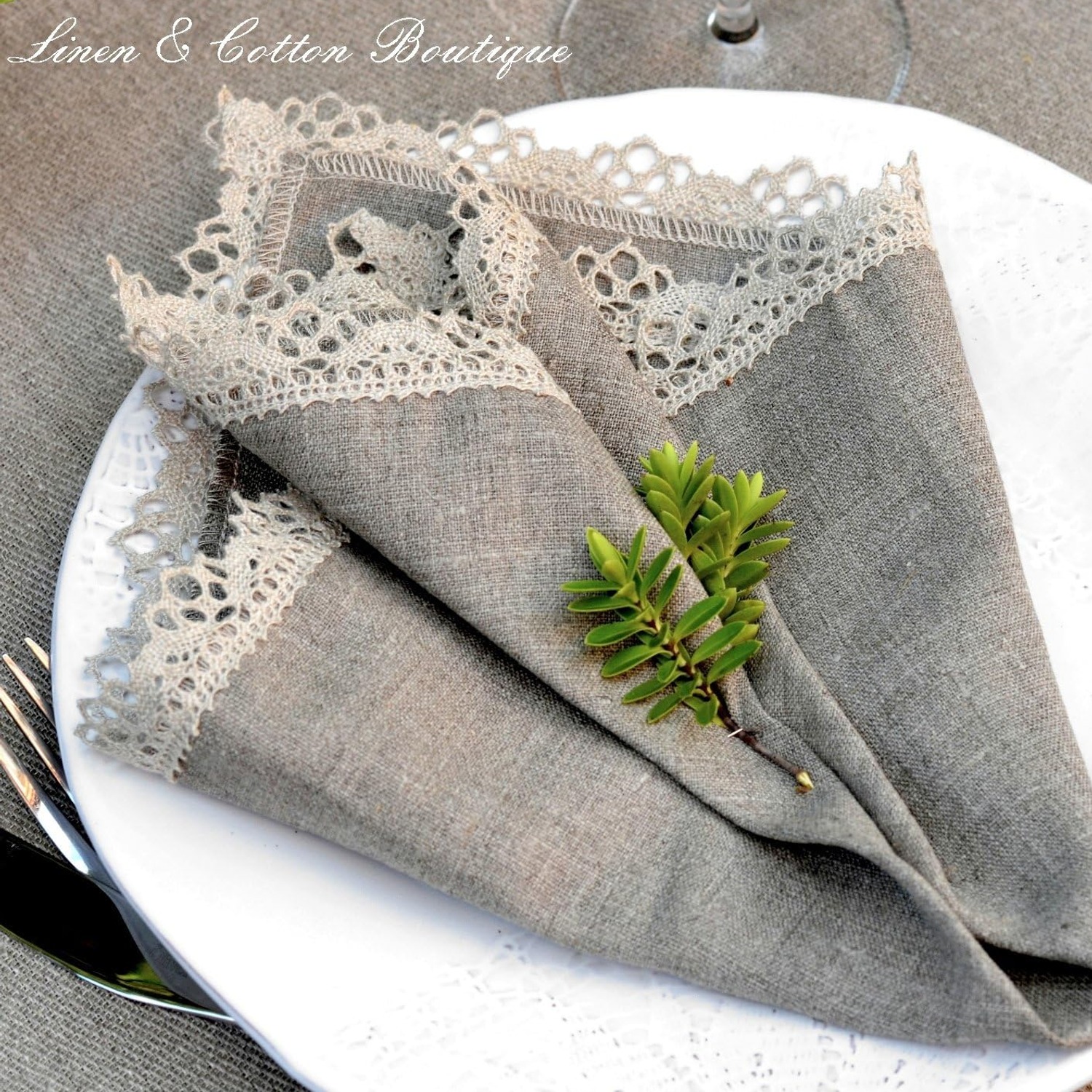
These crochet edged linen napkins are built for exactly that. They are 100% linen, they come in a set of four, they measure 39cm square, and they wash at 40°C in a normal machine. Nothing about them requires special handling. The crochet border is the part that makes them worth putting on a table, and the simple care instructions are the part that makes you actually do it.
Why linen, specifically
Linen comes from flax, and the fibre behaves differently to cotton in ways you notice at the table.
The first is absorbency. Linen takes up moisture fast and lets it go fast. When you wipe your hands on a linen napkin, your hands get dry. A thin cotton or a polyester blend tends to push moisture around instead. The same property means a linen napkin that has done its job through a long dinner still feels usable at the end, rather than damp and defeated.
The second is drying time. Linen releases water quickly, which is why it is the traditional cloth for tea towels. Your wash load dries faster and you spend less time waiting.
The third is how it ages. Most fabrics are at their best on day one and go downhill. Linen does the opposite. New linen has a little stiffness to it, a bit of body. Each wash breaks that down a small amount, and after a dozen cycles the cloth drapes softly and sits in the hand like something you have owned for years. People who love linen are usually describing linen that has been washed thirty times, not linen fresh from the packet.
The fourth is texture. The weave has small irregularities in it, a slight slubbiness that catches the light. That is the fibre, not a flaw, and it is why a linen napkin looks handmade on a table where a flat printed polyester looks like catering supply.
What the crochet edge actually does
A napkin is a square of cloth. What separates a napkin from a tea towel, visually, is almost entirely what happens at the edge.
A plain machine hem is functional and invisible. A crochet trim is neither. It draws a soft, slightly open line around the perimeter, which gives the napkin a defined shape when it is folded and a bit of decorative interest when it is simply draped. Fold one into a triangle and the trim runs along the hypotenuse. Roll it and the edge shows at the ends. Lay it flat under cutlery and it frames the plate.
It is a small piece of detail that does the heavy lifting in making a table look considered. You do not need a tablecloth, a runner, a centrepiece and matching chargers. Four napkins with a worked edge, plain plates, and you are done.
The practical note is that a decorative edge wants slightly more care than a plain hem. Do not force the napkin through a tight ring, and keep it out of wash loads with zips or hooks that could catch. That is the whole list.
Is 39cm the right size?
Napkin sizing runs roughly like this. Cocktail napkins sit around 25cm. Lunch napkins land near 35cm to 40cm. Formal dinner napkins run 45cm to 50cm.
At 39cm, these sit in the upper end of the everyday range. That is a deliberate spot. A 50cm napkin is genuinely generous in the lap but it is also a big piece of cloth to fold neatly beside a side plate, and in a small dining room it can overwhelm the setting. A 39cm napkin covers a lap, folds into quarters without bulk, and leaves the table looking tidy rather than draped.
If you host long, formal, multi-course dinners regularly, you might want something larger. For almost everything else, including dinner parties, this is a practical size and it is why so many good sets are made to it.
Who these suit
They suit a few different people.
Someone setting up a first proper home who wants one grown-up thing on the table and does not want to spend their life ironing. Someone who already cooks well for friends and wants the table to match the food. Someone trying to cut back on paper napkins for environmental or cost reasons and needs a reusable set that does not feel like a downgrade. And someone shopping for a present who knows the recipient's house but not their taste in detail, since a set of four pure linen napkins is one of the safer housewarming gifts going.
They suit less well if you need a large quantity for a big event. Four napkins covers a small table. A wedding needs multiple sets, which is fine, but worth planning for rather than discovering at the last minute.
How to choose between sets
If you are comparing napkins, these are the questions that actually matter.
Check the composition. "Linen look" and "linen blend" are not the same as 100% linen, and they do not soften the same way. These are pure linen.
Check the wash temperature. Anything that says hand wash or dry clean only will live in a drawer. 40°C in a machine is the number you want.
Check the size against your table and your plates. Measure the gap between your plate and the edge of the table if you are unsure.
Check the edge finish, since it is the detail you will look at every meal.
And check how many you get. Four is a common set size and it suits most households, but if you regularly have six at the table, buy accordingly.
Looking after them
Wash them once before you use them. This relaxes the weave and gets any first-wash movement out of the way.
After that, wash at 40°C with similar colours and a mild detergent. Skip the fabric softener, which coats the fibre and works against the natural softening you want. If you have a stain, deal with it quickly: blot rather than rub, rinse with cold water from the back of the cloth, and soak before washing if it has set.
Dry on a low tumble or on the line. If you want them crisp, iron while slightly damp with a warm iron. If you prefer the relaxed look, do nothing. Both are correct and the second is faster.
Store them folded flat or rolled loosely. Hard permanent creases come from long storage under pressure, so a drawer with a bit of room is better than a tightly packed one.
Avoid chlorine bleach entirely. It weakens linen fibres over time, and a 40°C wash handles the vast majority of food stains without it.
The short version
Four napkins. Pure linen, 39cm square, crochet edge, machine wash at 40°C, made in the EU by Linen & Cotton.
The cloth absorbs well, dries fast, and gets softer every time you wash it. The crochet border is what makes a plain square look like a set table. The care instructions are simple enough that these will not end up in a drawer waiting for a special occasion, which is the whole argument for buying good napkins in the first place.
Use them tonight. In a year they will be better than they are today.