
The complete guide
The Honest Buyer's Guide to Eucalyptus and Lavender Soy Candles
The problem with most candles you have bought before
Think about the candles currently sitting in your house. Odds are at least one has a deep hole burnt down the middle with a thick collar of wax welded to the glass. Another one probably smells great in the shop and almost nothing at home. A third was lit twice, got shoved to the back of a shelf, and now collects dust.
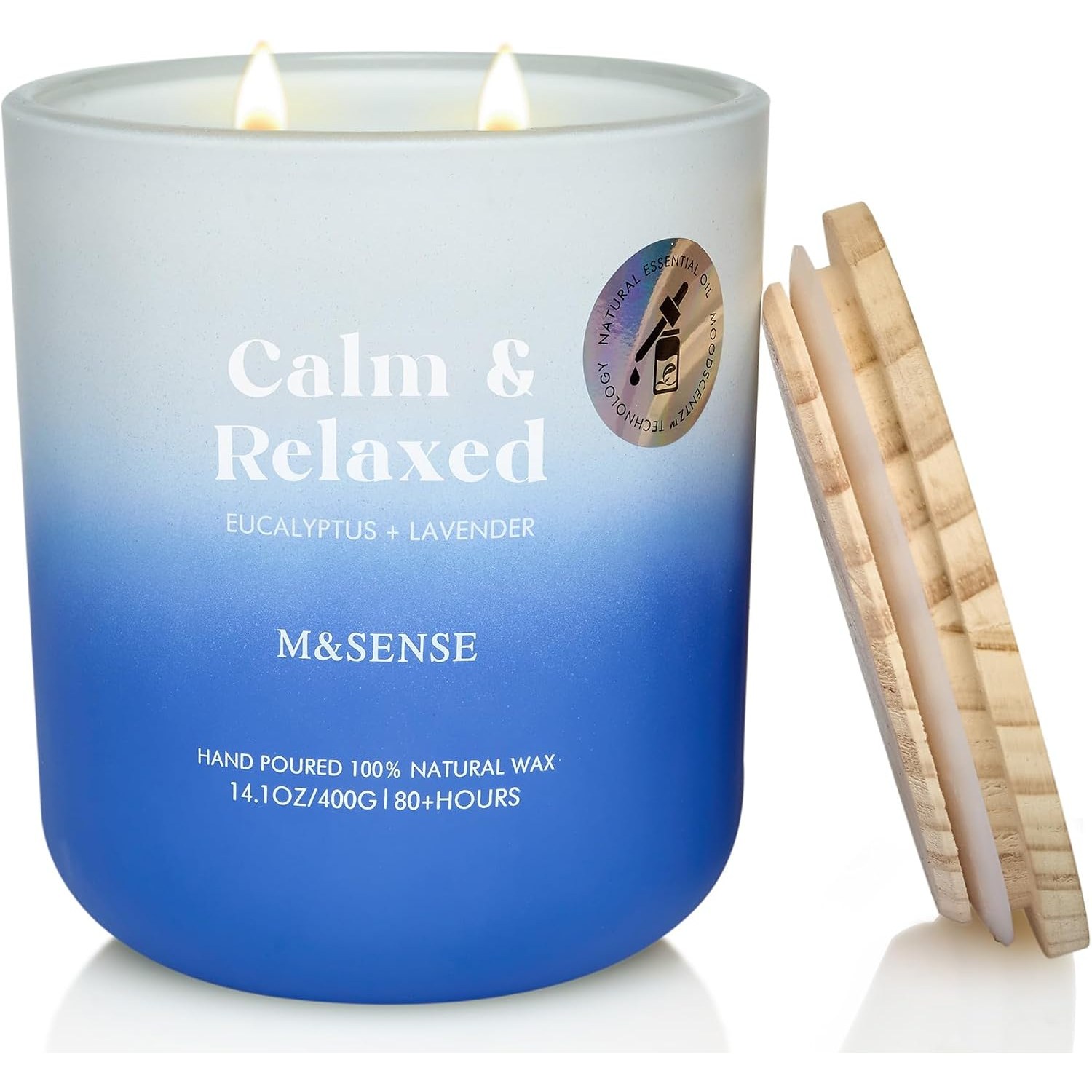
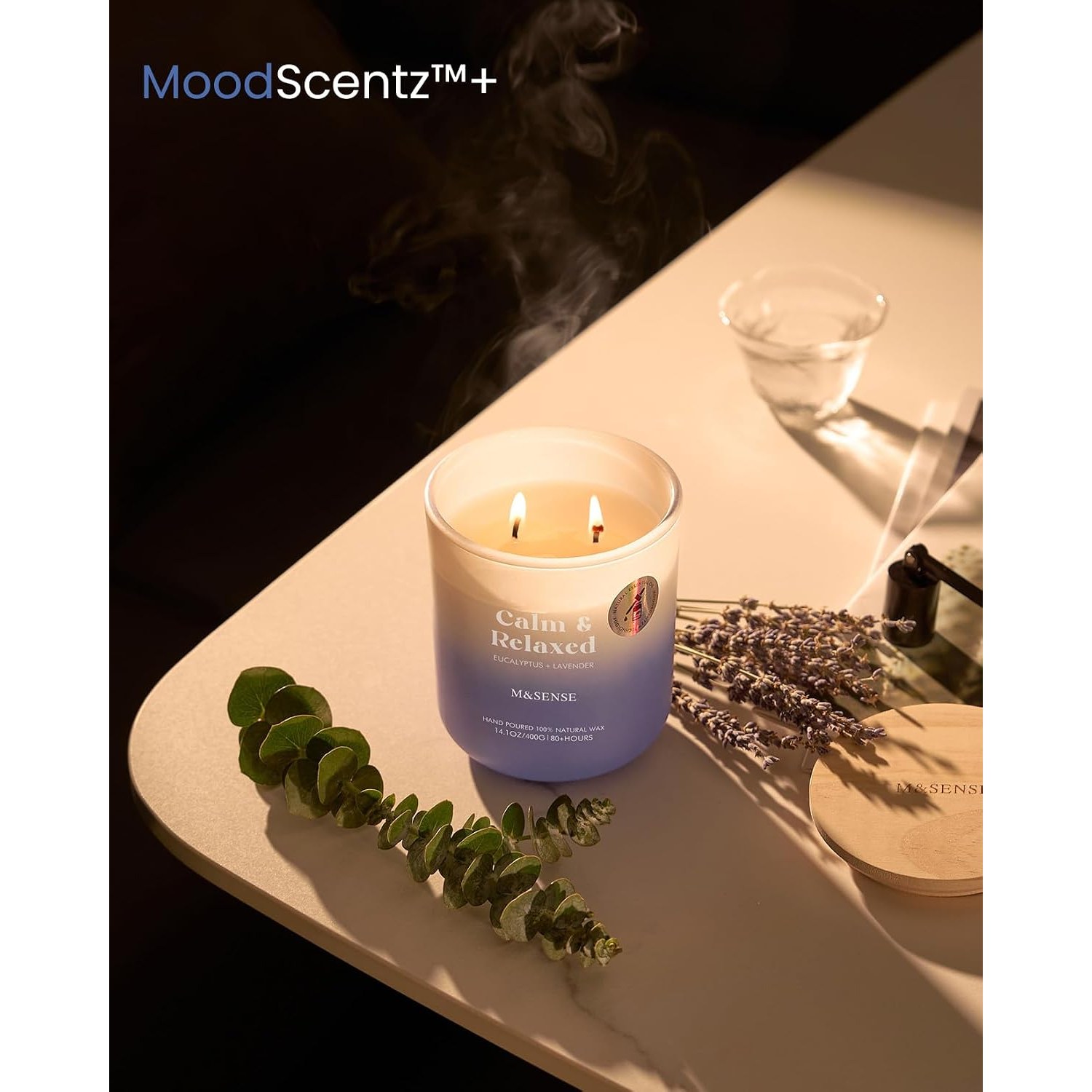
Those are not random failures. They come from two things: jars that are too wide for a single wick, and wax that gives up its fragrance too fast or not at all. A 400 g eucalyptus lavender soy candle with two cotton wicks is a direct answer to both. The size means it scents a real room. The twin wicks mean the wax actually melts to the edge.
That is the whole argument for a candle like this. Everything else is detail, but the detail is worth knowing before you spend money.
How a double wick candle actually works
A candle flame does not burn wax. It burns wax vapour. The flame melts a small pool of wax, the wick draws that liquid up, the heat turns it to vapour, and the vapour burns. The melt pool is the engine of the whole thing.
In a narrow jar, one wick makes a melt pool that reaches the glass easily. In a wide jar, it cannot. The heat only spreads so far sideways, so the flame burns straight down and leaves the outer wax untouched. Once that ring hardens, it is very hard to recover. You have paid for 400 g of wax and you will smell maybe half of it.
Two wicks fix the geometry. The heat sources sit apart, their melt pools overlap in the middle and reach outwards to the glass, and the surface comes down level. It is a less dramatic look than one big flame, but it is the look you want: two small, steady lights rather than one tall, flickering one.
Soy wax adds the second half of the equation. Soy melts at a lower temperature than paraffin, so the pool forms gently and the fragrance lifts out over a longer window. It is the reason big soy jars tend to feel like a slow, steady evening scent rather than a blast that fades in half an hour.
Why eucalyptus and lavender go together
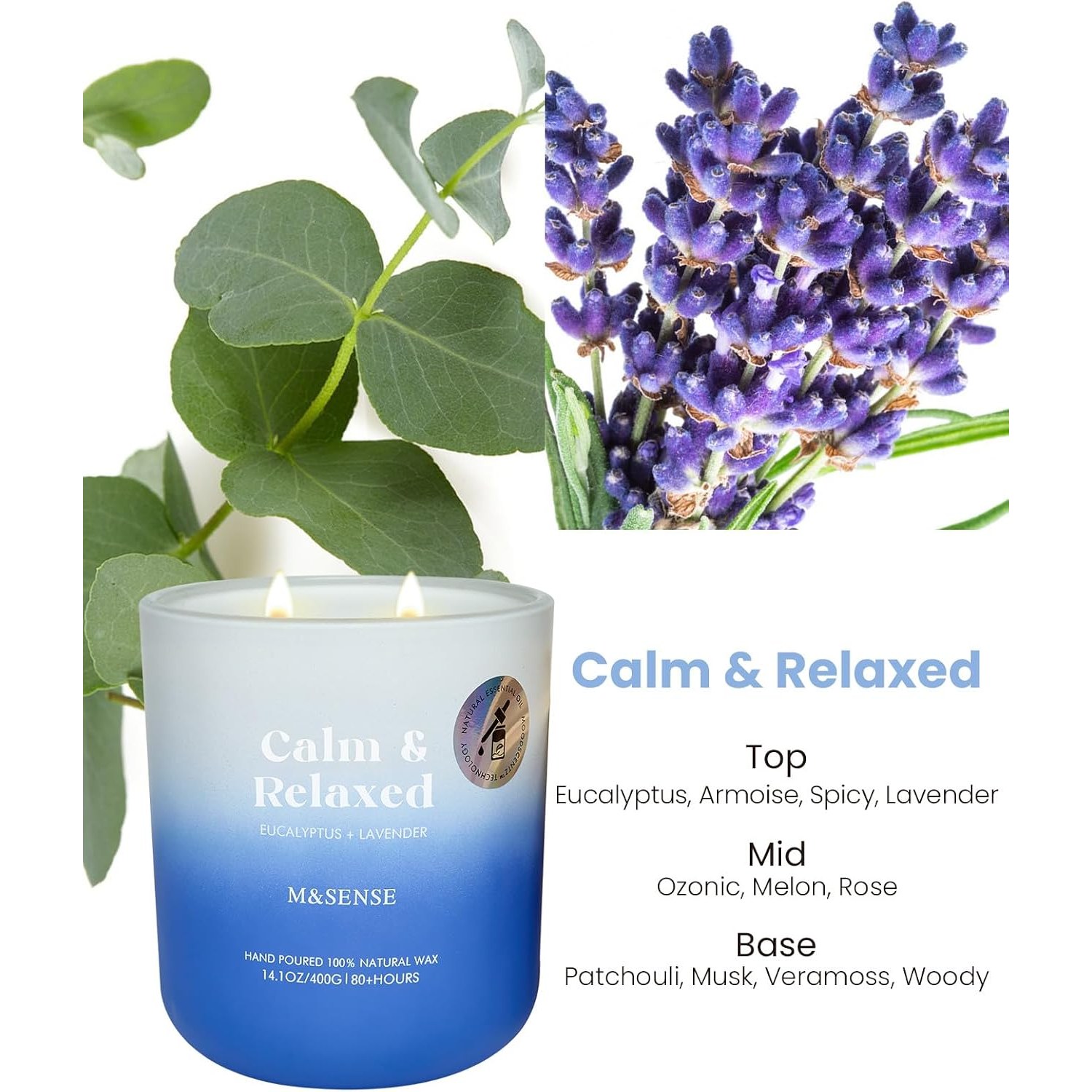
Scent pairings work when one note does something the other cannot. Eucalyptus is sharp, green and a little medicinal. On its own it can feel clinical, like a chest rub or a physio clinic. Lavender is the opposite: soft, floral, slightly powdery, and on its own it can tip into old-fashioned.
Put them together and each one rounds off the other. The eucalyptus keeps the lavender from going sleepy and sweet. The lavender takes the hospital edge off the eucalyptus. What you get sits in the clean, herbal, spa territory that works in almost every room of a house.
That is also why this pairing shows up so reliably in massage rooms and yoga studios. It reads as calm without reading as dessert. If vanilla, caramel and heavy florals give you a headache after twenty minutes, a herbal floral candle like this one is usually much easier to live with.
Who this candle actually suits
It suits anyone with a living room, bedroom or bathroom of normal size who wants the scent to fill the space rather than hover over a side table. A 400 g jar is genuinely large. In a small studio or a tiny bathroom you may find you only need twenty minutes of burn time before the room has had enough.
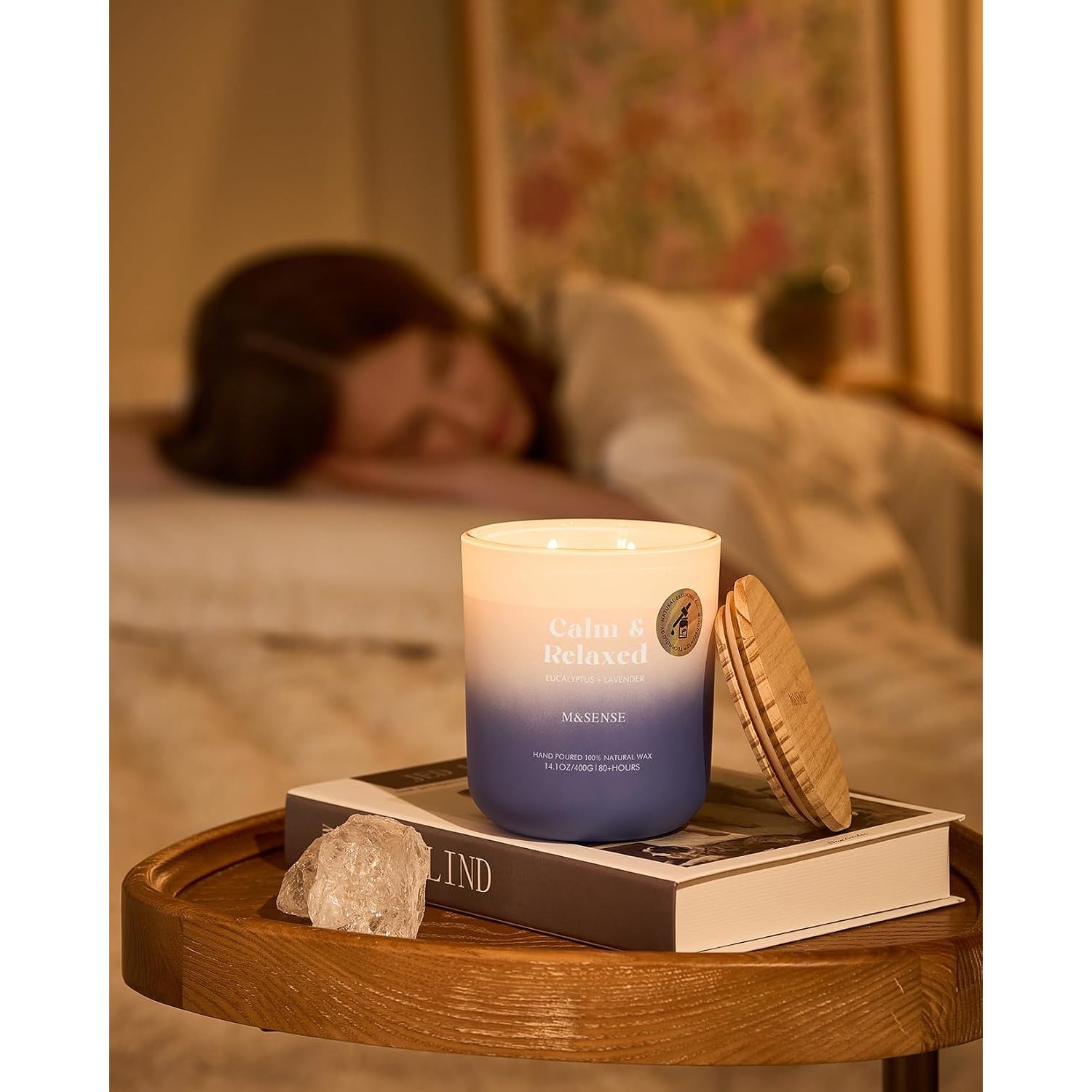
It suits people with an evening routine. Reading, stretching, a bath, winding down before bed. The slow soy burn rewards being lit for an hour or two at a stretch rather than flicked on and off.
It also works well as a gift, and it is one of the few gifts that genuinely needs no sizing or guessing. A large jar candle in a clean herbal scent is a safe choice for a friend, a teacher, a parent or a new neighbour. Eucalyptus and lavender is the version most people already like, even if they could not name it.
Where it suits less: a workspace where strong scent is distracting, a very small enclosed room with no ventilation, or a house where someone is genuinely sensitive to fragrance. In those cases a smaller candle or none at all is the kinder option.
How to choose between candle sizes and styles
Start with the room, not the candle. A bedroom or bathroom of average size works beautifully with a 400 g double wick candle. An open-plan living and kitchen area needs that size or larger. A small desk nook does not.
Then think about how you burn. If you light a candle for ten minutes while you make dinner, a large jar is wasted on you, and worse, short burns on a wide jar invite tunnelling. If you light one and leave it going through a whole evening, a big jar with two wicks is exactly right.
Check the wick count against the jar width. As a rule of thumb, any jar wider than about 8 cm benefits from more than one wick. A single wick in a wide jar is the single most common reason candles burn badly.
Finally, consider the container. A plain, sturdy glass jar is worth more than it looks, because you keep it. Once you have washed out a reusable glass candle jar and filled it with makeup brushes or cotton buds, you stop seeing the candle as a disposable item.
Getting the most out of it
The first burn sets the pattern. Light both wicks, leave it alone, and give the melt pool time to reach the glass all the way around. If you blow it out before that happens, the candle will keep burning to that smaller diameter forever.
Trim both wicks to about 5 mm before each new burn. This is the single highest-value habit in candle care. Long wicks make tall flames, tall flames make soot, and soot stains the inside of the glass. Thirty seconds with a pair of scissors prevents all of it.
Keep it out of draughts. Open windows, ceiling fans and air conditioning vents make the flame dance, which burns the wax unevenly and throws more soot. A candle that looks calm is burning properly.
Cap each session at around four hours, then let the wax cool and set before relighting. Stop altogether when roughly 1 cm of wax remains in the base, because by then the heat is going straight into the glass rather than into wax.
When the wax is done, freeze the jar for an hour and the last of it will usually lift out in one piece. Wash with warm soapy water, dry it, and keep the glass.
Safety, briefly but seriously
Never leave a lit candle unattended. Keep it away from curtains, bedding, paper, loose fabric and anything a breeze can push into it. Put it on a flat, heat-resistant surface, not directly on polished wood.
Keep it out of reach of children and pets. The glass gets hot and melted wax burns skin. Put the candle out before you leave the room or go to sleep, and use a snuffer or lid if you want to avoid spattering wax.
None of this is unusual advice. It applies to every open flame in a house. It is just worth repeating, because a large double wick candle puts out more heat than the little tin you might be used to.
The short version
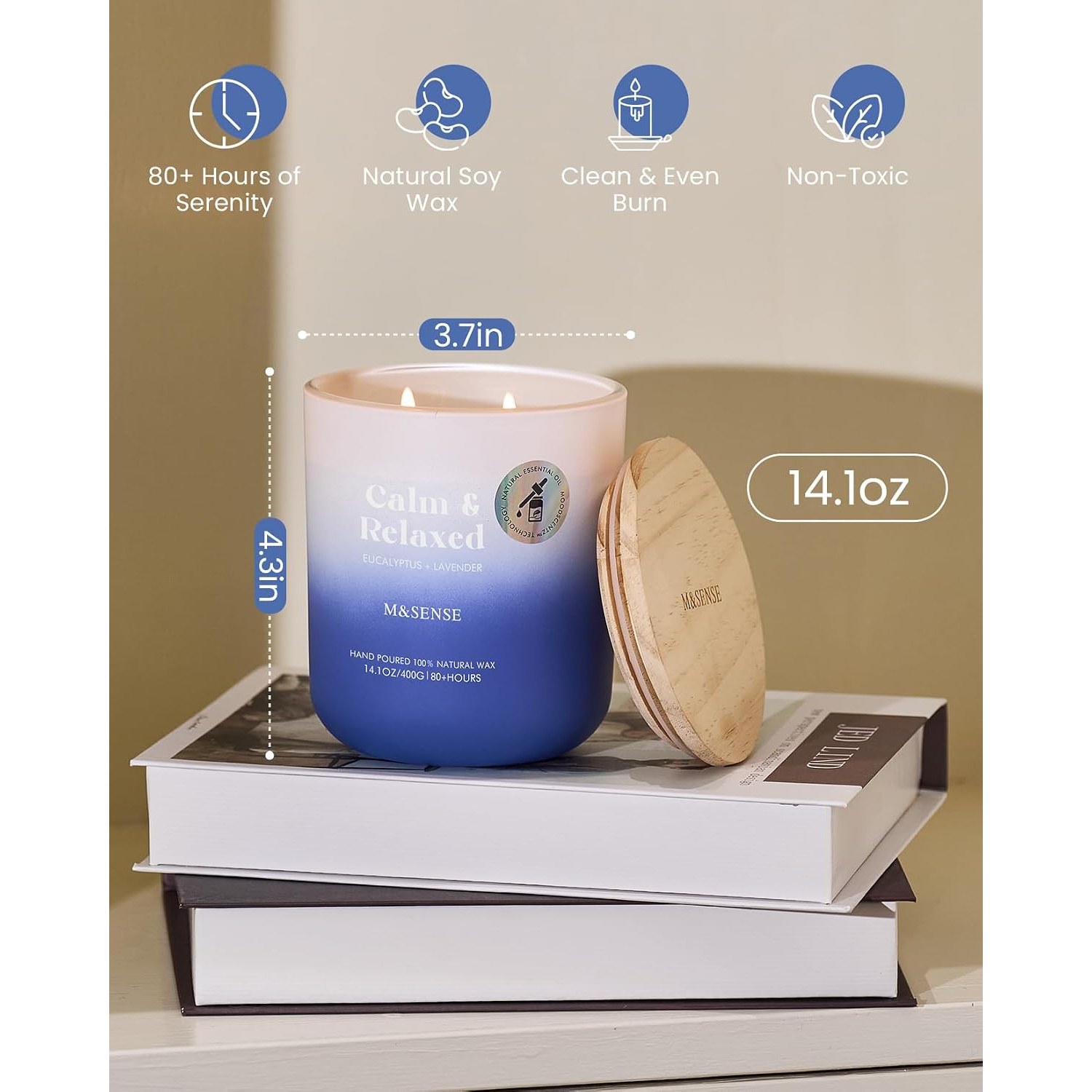
This is a 400 g eucalyptus and lavender soy candle with two cotton wicks in a reusable glass jar. The size is built for real rooms, the twin wicks are there so the wax melts to the edge instead of tunnelling, and the soy wax gives a slow burn rather than a quick blast.
The scent is clean and herbal with a soft floral edge, which makes it easy to live with and easy to gift. Trim the wicks, give the first burn enough time, keep it out of draughts, and stop at the last centimetre of wax. Then wash the jar and keep it.
Burn time, jar dimensions, colour and country of origin are not listed in this product record, so we have not guessed at them. Everything else above is based on how candles of this type are made and how they behave.