
The complete guide
How To Choose A Lambswool Tartan Scarf That You Will Actually Wear
The problem with most scarves
Most people own at least one scarf they never wear. It is usually too short, too scratchy, or made from something that looked warm in the shop and turned out to be useless at a bus stop in February. The scarf drawer fills up, and the same one piece gets worn every single day because it is the only one that works.
A scarf has a narrow job. It has to close the gap between your jumper and your coat collar, because that is where body heat escapes fastest and where cold air gets in. To do that, it needs three things: enough length to stay wrapped, enough width to cover the gap, and a fibre that holds warmth without irritating the skin on your throat. Miss any one of those and the scarf ends up in the drawer.
A lambswool tartan scarf hits all three, which is why the design has barely changed in a century.
Why lambswool specifically
Wool is not one material. The word covers everything from coarse carpet wool to fine merino, and the difference you feel on your neck is mostly down to fibre diameter. Thicker fibres are stiff, so they poke rather than bend when they touch skin, and your nerve endings read that as itch.
Lambswool is taken from a sheep's first shearing. The fibres are naturally finer, and crucially the tips have never been cut, so they are tapered rather than blunt. That combination is why a lambswool scarf feels soft where a standard wool one feels prickly. It is the same reason lambswool is used so often in jumpers worn close to the body.
Warmth comes from a different property. Wool fibres have a natural wave called crimp, and crimp stops the fibres packing flat together. The gaps left behind hold still air, and still air is an excellent insulator. That is why this scarf can be only 0.1 cm thick and still make a real difference to how cold you feel. Thickness is not the same as warmth.
Wool also deals with damp sensibly. It can absorb a fair amount of moisture before it feels wet to the touch, and it keeps insulating while it does. On a drizzly morning or when your breath condenses into the fabric, a pure wool neck scarf stays functional. A cotton one goes clammy.
Length, width and why the numbers matter
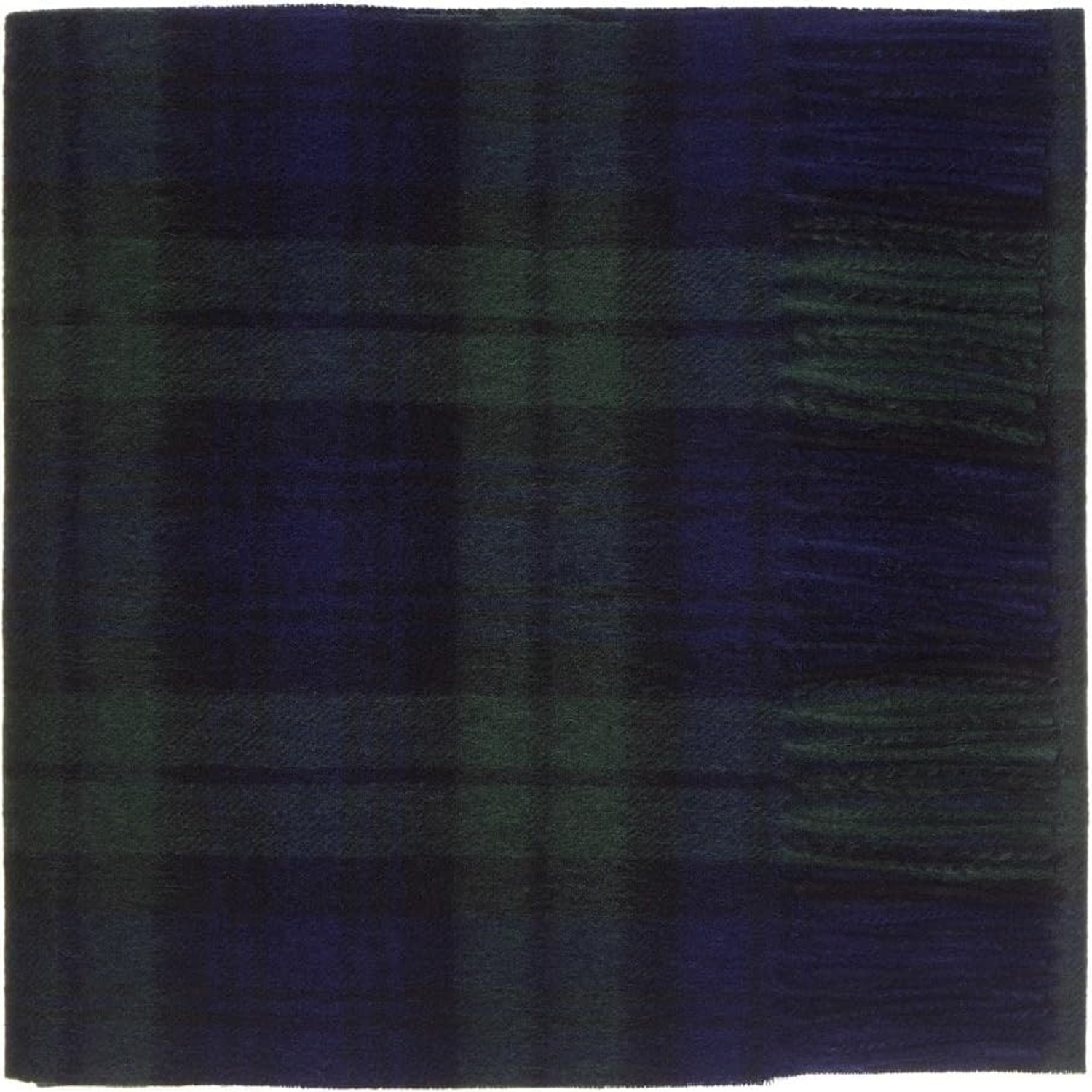
This scarf is about 164 cm long and 30 cm wide. Those numbers are worth thinking about rather than skipping.
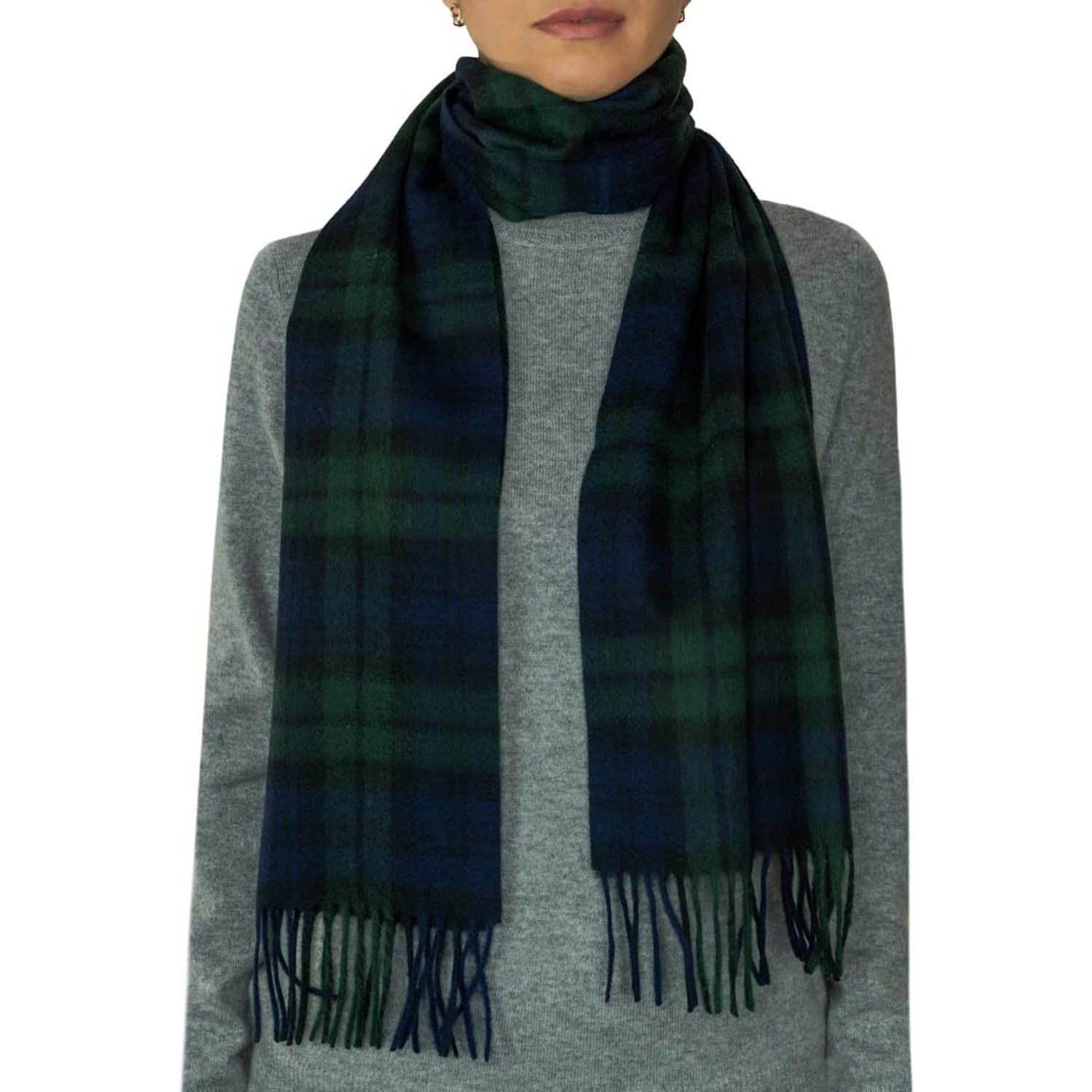
Length controls what you can do with it. Anything under about 140 cm limits you to draping, and a draped scarf works loose over the day. At 164 cm you have enough to loop the scarf around your neck once and still have both ends sitting at chest height, or to fold it in half, pass the ends through the loop and pull it snug. That knot sits flat under a coat and does not come undone.
Width controls coverage. A narrow scarf of 20 cm or less is really a decorative piece, because it covers a thin strip and leaves gaps either side. At 30 cm you can fold it lengthwise and still have a band wide enough to cover from collarbone to jaw. Fold it or leave it open depending on how cold it is, which is a useful bit of range.
Thickness of 0.1 cm tells you this is a flat woven scarf, not a chunky knit. For a lot of people that is the better choice. Thick knitted scarves bunch up under a coat collar, push the collar away from the neck and look bulky in photos. A flat weave disappears under a lapel.
Who a tartan scarf suits
Tartan has the useful quality of being formal and casual at the same time. Over a wool overcoat it looks deliberate and traditional. Over a parka or a denim jacket it looks relaxed. Very few accessories move between those two settings without looking out of place in one of them.
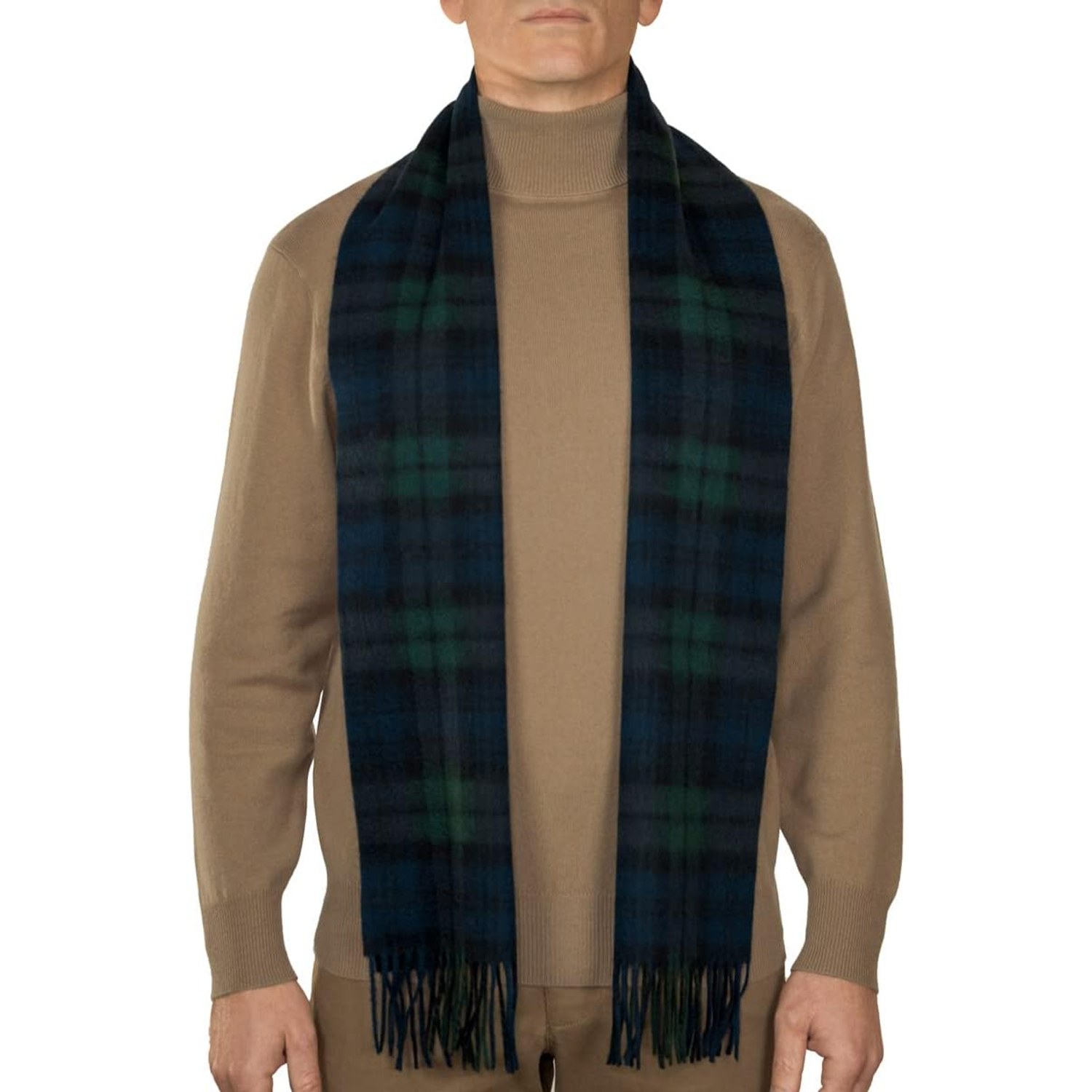
Because tartans are built from a small number of colours in a repeating grid, they also coordinate more easily than people expect. The grid breaks the colours into small blocks, so a tartan containing navy, green and a thin red line sits comfortably next to a plain coat in almost any dark shade. Pick up one colour from the scarf in your gloves or hat if you want the look pulled together, or ignore it entirely and it still works.
This is also a safe gift. There is no size to get wrong, the pattern is not a seasonal trend that dates after a year, and a wool scarf gift is useful rather than ornamental. If you are buying for someone who commutes, walks the dog in winter, or stands around at sport in the cold, it will get used.
How to choose between options
If you are weighing this against other winter accessories, a few points help.
Against cashmere, lambswool is the practical choice. Cashmere is softer and lighter, but it is also more delicate and costs considerably more. For a scarf that lives in a coat pocket and gets stuffed into a bag, lambswool holds up better.
Against acrylic or blends, the difference shows up in cold weather and in how the fabric ages. Synthetics often feel warm immediately then plateau, and they can hold sweat against the skin. Wool keeps working in damp air and tends to improve slightly with wear as the fibres relax.
Against a chunky knit, it comes down to how you dress. If you mostly wear open collars and want the scarf visible, a chunky knit has presence. If you wear coats with collars and want the scarf to do its job without bulk, a flat woven lambswool piece is the better match.
Looking after it
Wool care has a reputation for being fussy. It really is not, as long as you remember one rule: heat plus movement equals shrinkage. Wool fibres are covered in microscopic scales, and when you add hot water and agitation, those scales interlock and the fabric felts. That change is permanent.
So, hand wash only, which is the stated care instruction for this scarf. Cool water, a wool detergent, and gentle squeezing rather than rubbing. Rinse at the same temperature so the fibres do not get a shock. Press the water out between your palms or roll the scarf in a towel. Never wring it.
Dry it flat, reshaped to its proper rectangle, away from radiators and direct sun. It will take longer than a synthetic would. That is fine.
You will not need to wash it often. Wool resists odour naturally and airing it overnight handles most of what a week of wear puts into it. Twice a season is plenty for most people.
Over summer, store it clean. Moths go for skin oils, food and sweat traces more than the wool itself, so a scarf put away dirty is far more at risk than a clean one. Fold it, add a cedar block or moth sachet, and keep it somewhere dry. Hanging stretches the fabric over months, so a drawer or box is better.
If small pills appear where a bag strap rubs, that is normal friction and not a fault. A fabric comb or a gentle pass with a wool shaver removes them.
The short version
This is a 100% lambswool scarf in a traditional tartan check, roughly 164 cm long and 30 cm wide, with a flat weave that layers under a coat without bulk. The lambswool gives you softness against the neck and genuine warmth for its thickness. The length gives you enough fabric to loop or knot so it stays put. The tartan means it works with formal and casual clothes alike.
Hand wash it in cool water, dry it flat, and store it clean over summer. Do that and it will last you a long run of winters. Colour, weight and country of origin are not specified in our product record, so check the images if the exact tartan matters to you.