
The complete guide
How to Choose a Leather Catchall Tray That Actually Gets Used
The small mess problem
Walk into most homes and the clutter is not furniture. It is a layer of little things. Keys on the kitchen bench, coins on the hall table, a watch next to the sink, earrings somewhere near the lamp. Each one is tiny. Together they make a surface look chaotic and they turn leaving the house into a search.
The reason this happens is simple. Big things have a home. A coat has a hook, a book has a shelf. Pocket items do not, so they land wherever your hands happen to be when you walk in. That changes every day, which is why you can never remember where you put them.
A catchall tray is the fix. It is not clever technology. It is a defined spot with raised edges, placed where you naturally stop. Once your brain learns that keys go in the tray, you stop thinking about it. The hunting ends.
How a folding tray works
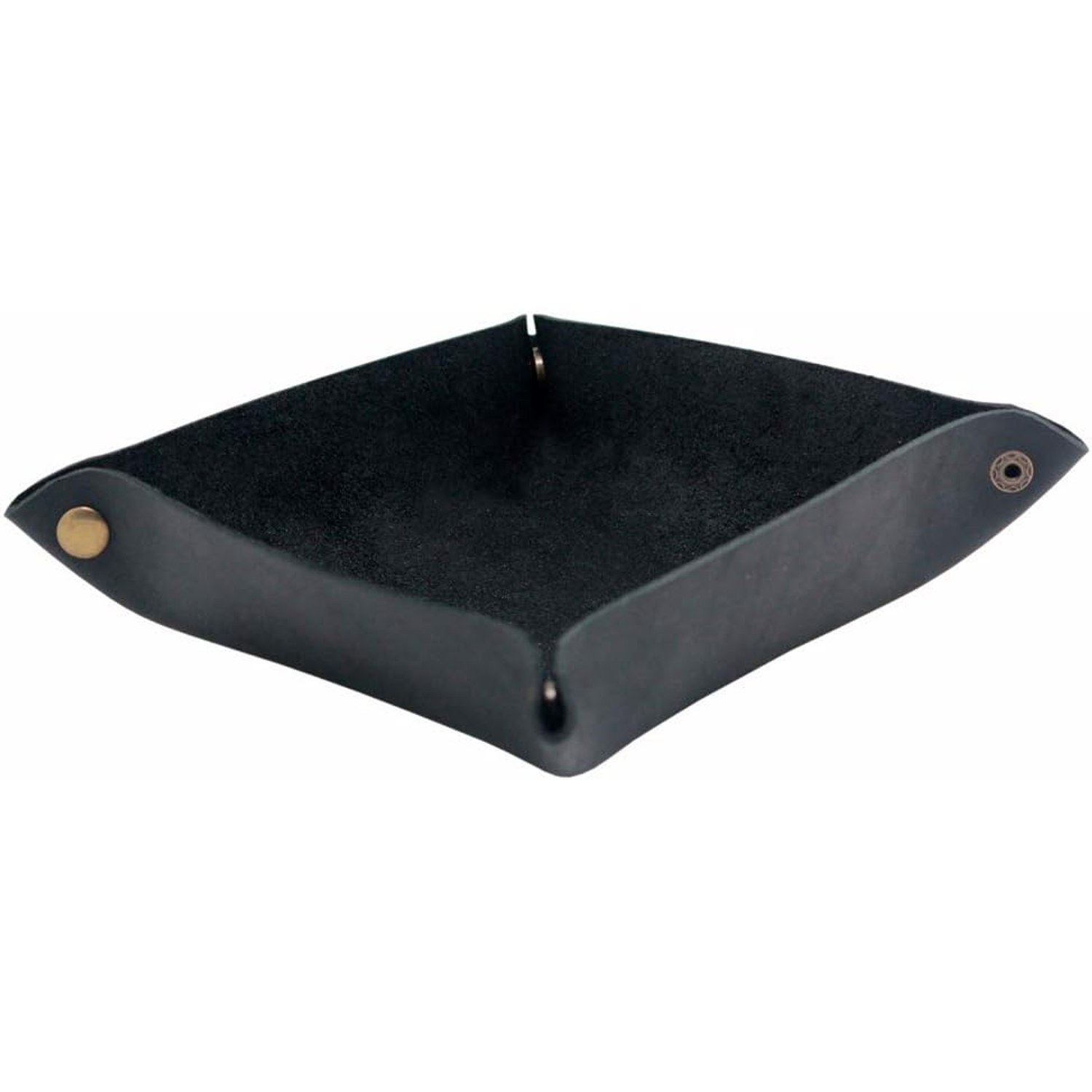
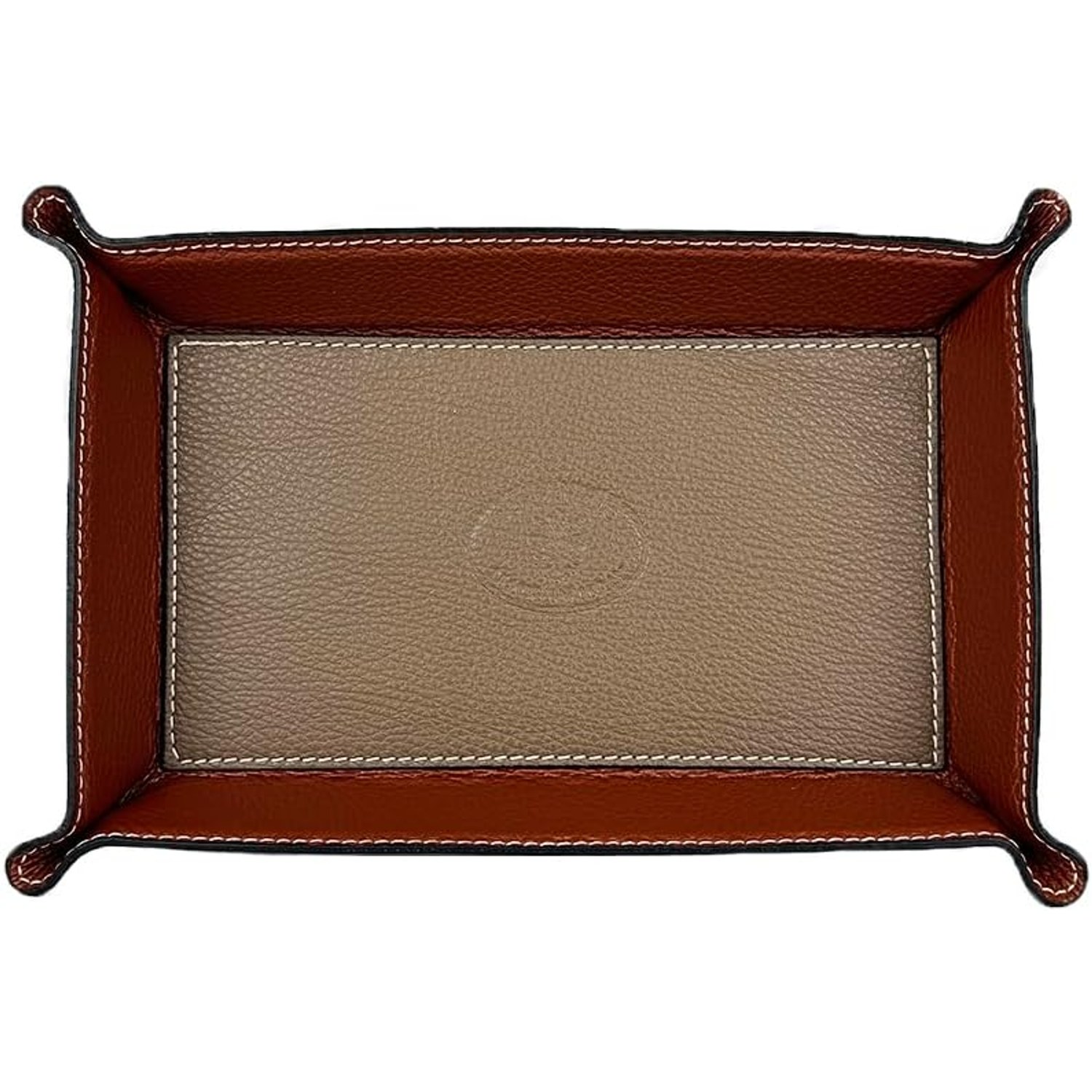
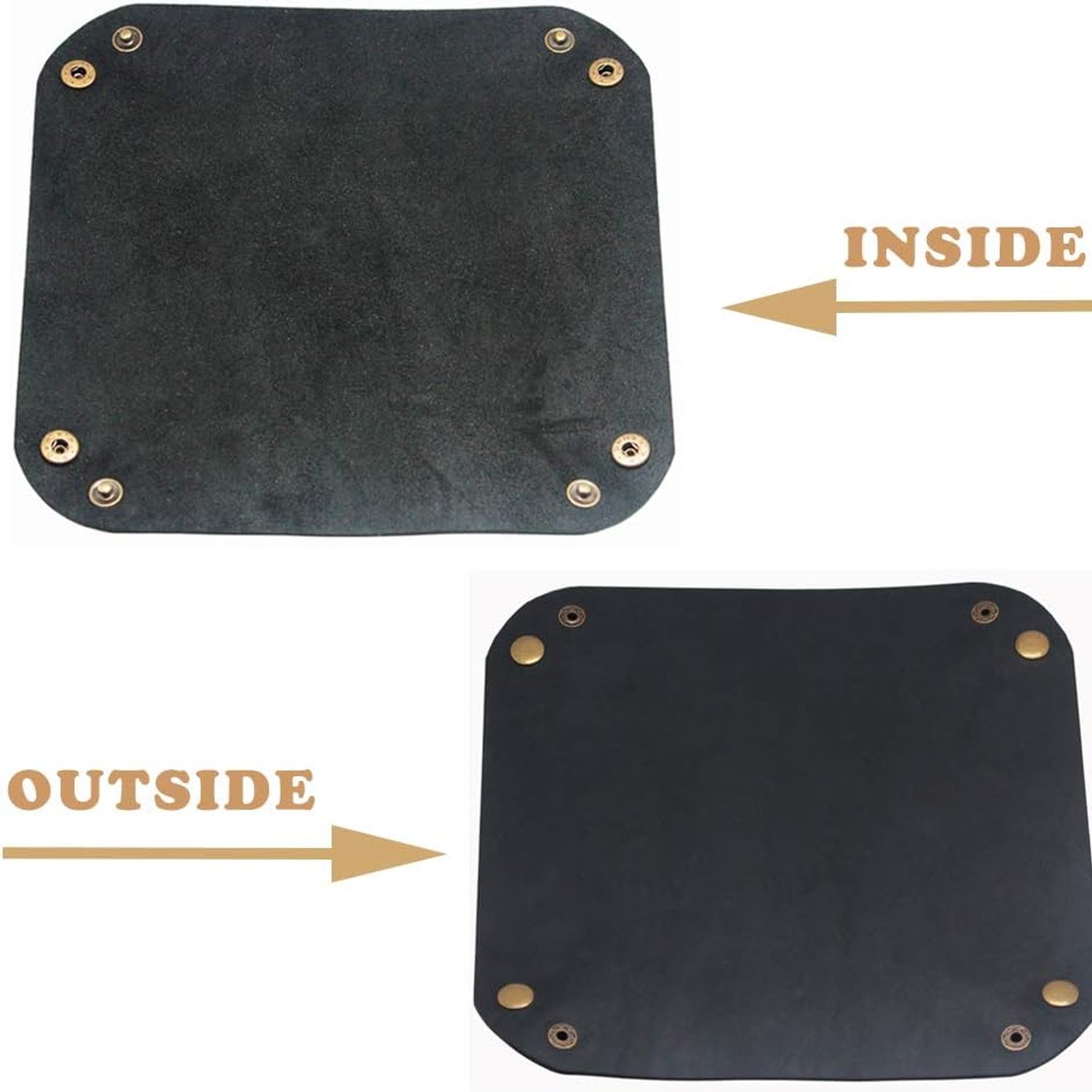
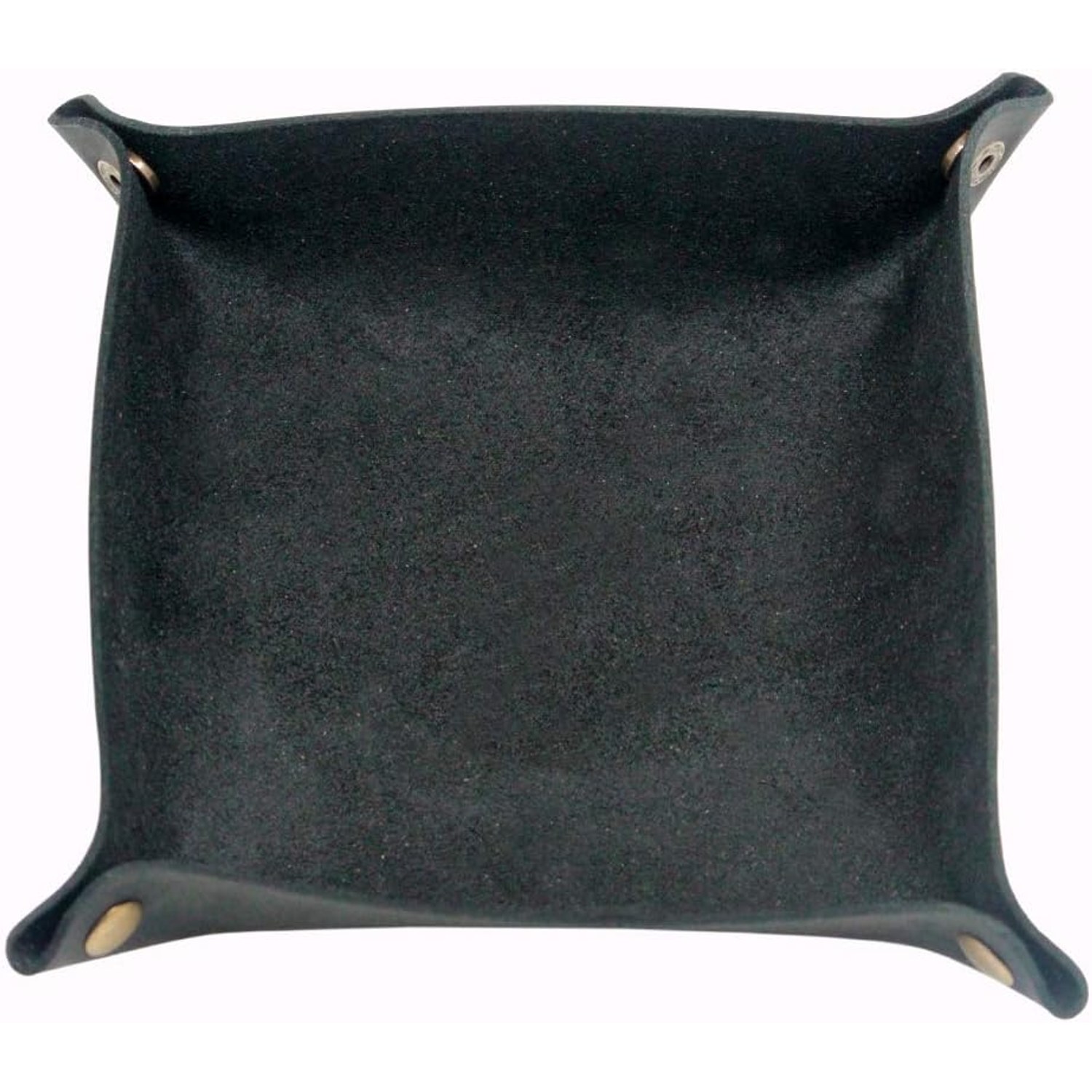
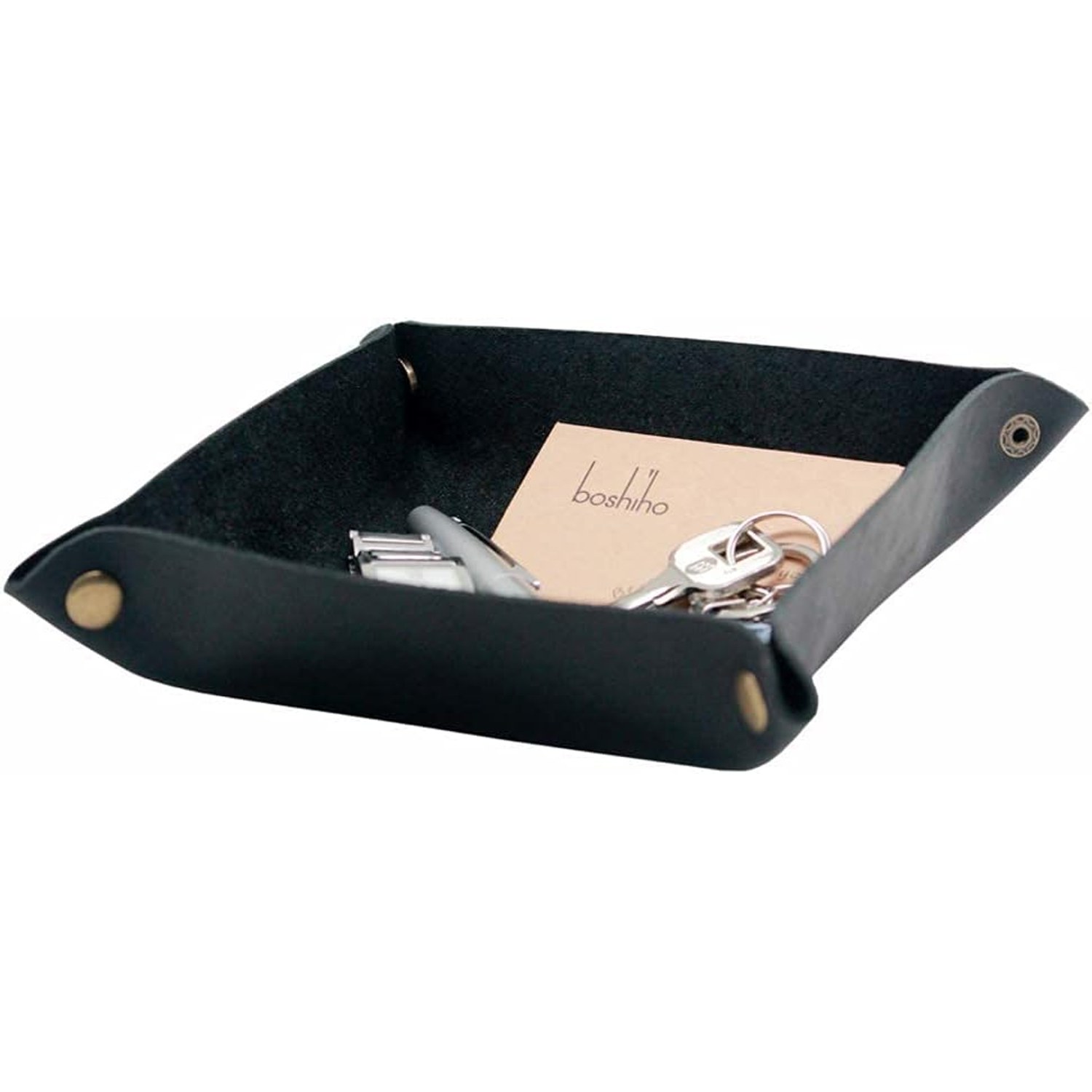
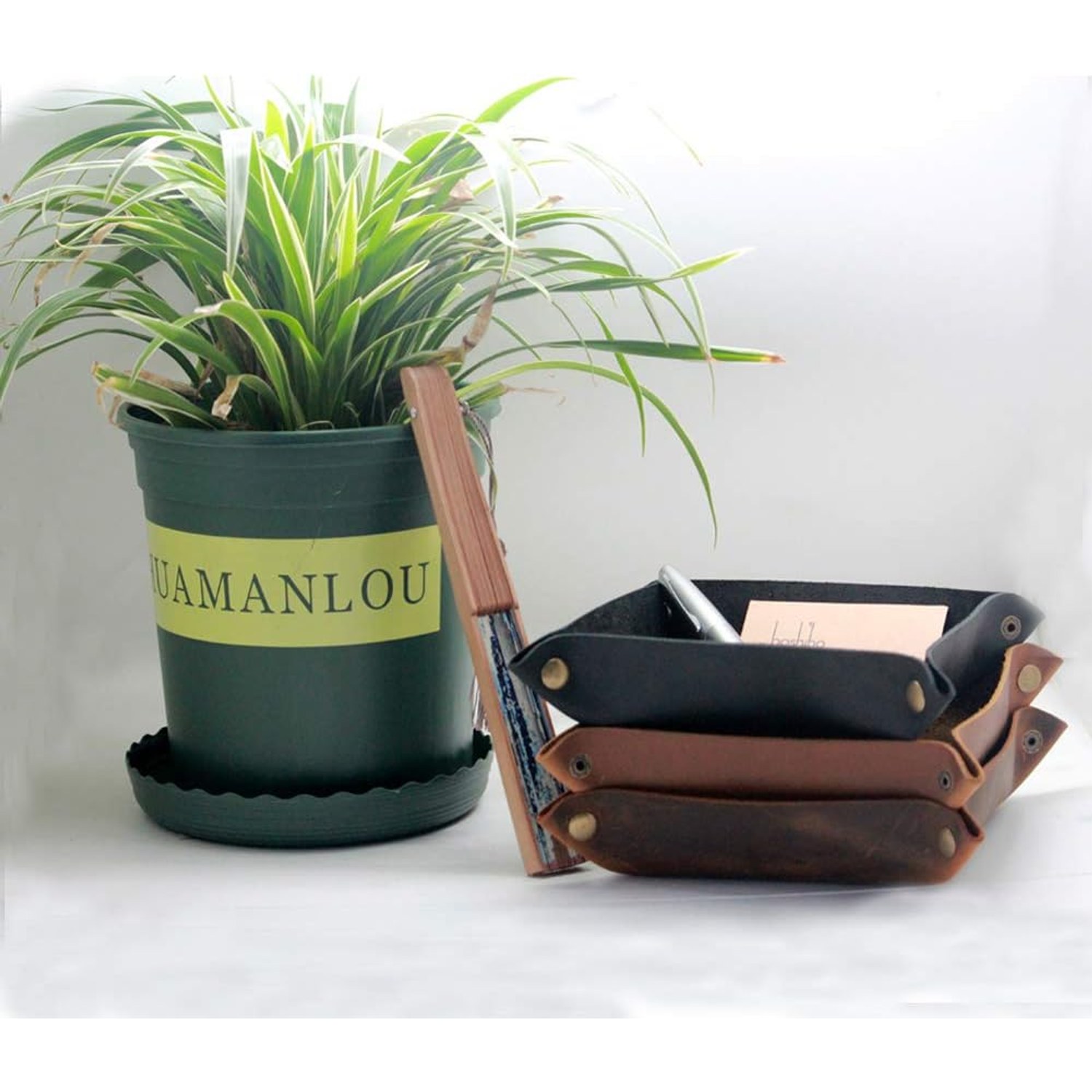
This tray starts life as a flat leather square, around 21 x 21 cm and about half a centimetre thick. At each corner there is a press stud. Push the two halves of a stud together and that corner pinches in, pulling the leather up into a wall. Do all four and you have a shallow open box, roughly 15 x 15 cm across and 4.5 cm deep.
The depth is what makes it work. A flat dish looks nice but a coin or a ring will skate off it the first time you set a laptop down heavily. Walls of a few centimetres hold everything in place without making it hard to reach in and grab your keys on the way out.
Unsnapping it is just as quick. Pull the studs apart and it lies flat again, thin enough to slide into a drawer, a folder or a suitcase pocket. That is the real advantage over a rigid wooden or ceramic tray. You can take it with you.
Who it suits
People who travel. Hotel rooms are the worst place for small items. There are unfamiliar surfaces everywhere and you are tired. A tray that packs flat and snaps up on the nightstand means your room key, phone and watch are always in the same place, even when the room changes every two nights.
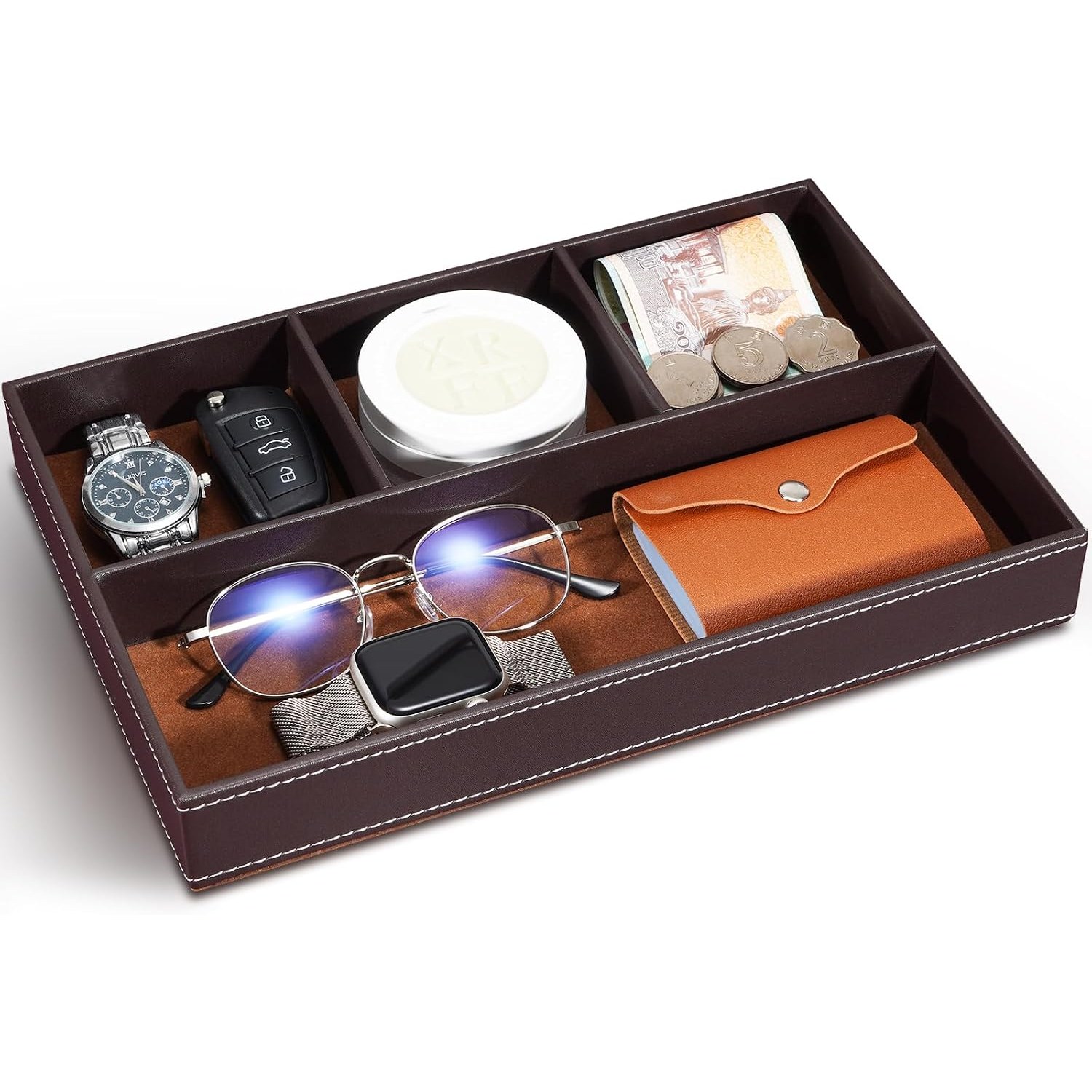
Desk workers. Office desks collect USB sticks, spare cables, pens, lip balm and a phone. One small tray near the keyboard keeps that pile from spreading across the whole desk. People who have tried every desk organiser tray going often end up back at something this simple, because a single open space is faster to use than compartments.
Anyone with a morning rush. If the first ten minutes of your day involve the phrase "where are my keys", a tray by the front door will pay for itself in a week.
Jewellery wearers. Rings and studs are small enough to vanish down a drain or into a carpet. Taking them off into a soft-lined tray instead of onto a hard counter means fewer losses and fewer scratches.
Gift buyers. There is no sizing, no setup and no battery. It is one of the easier things to buy for someone whose taste you do not know perfectly.
Choosing the right size
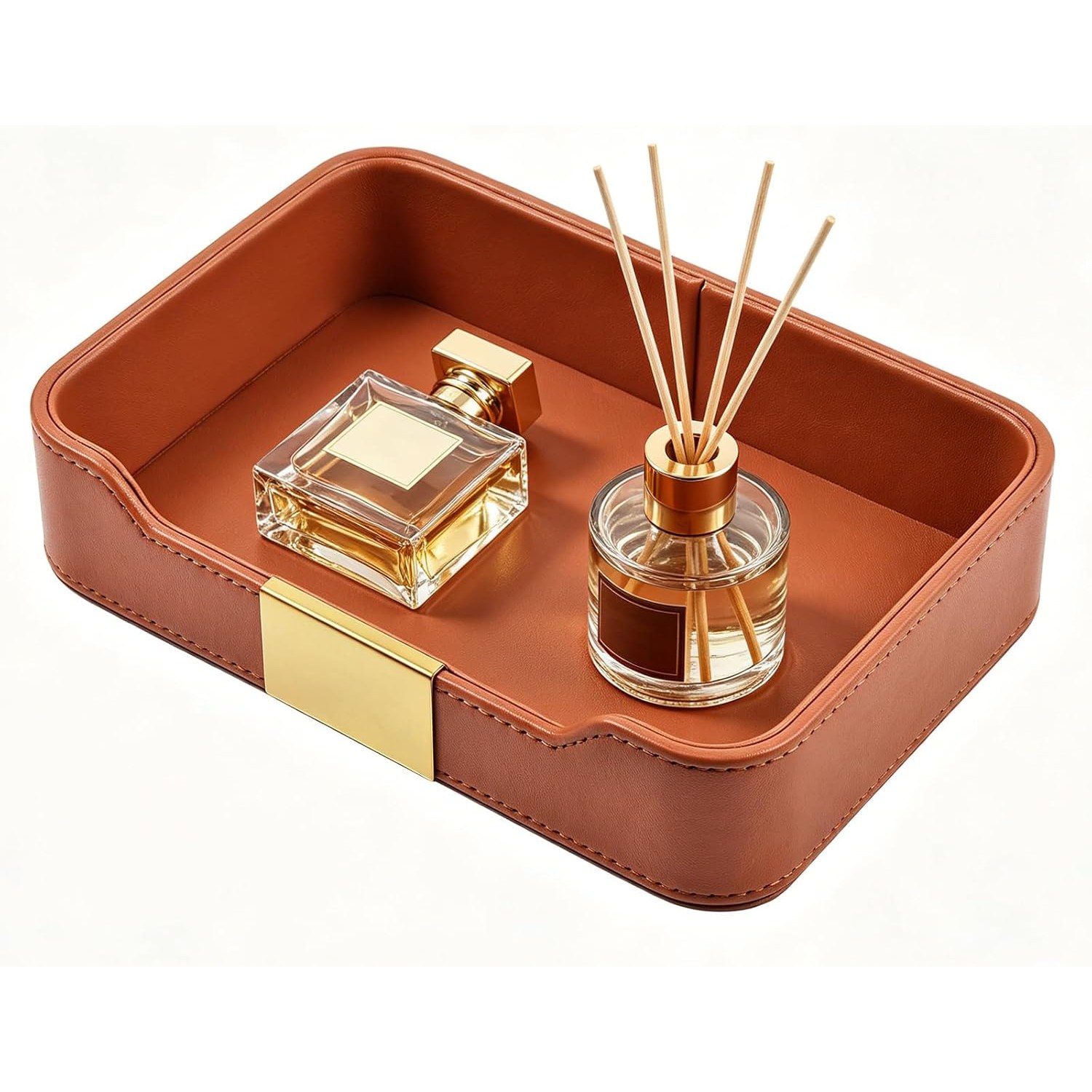
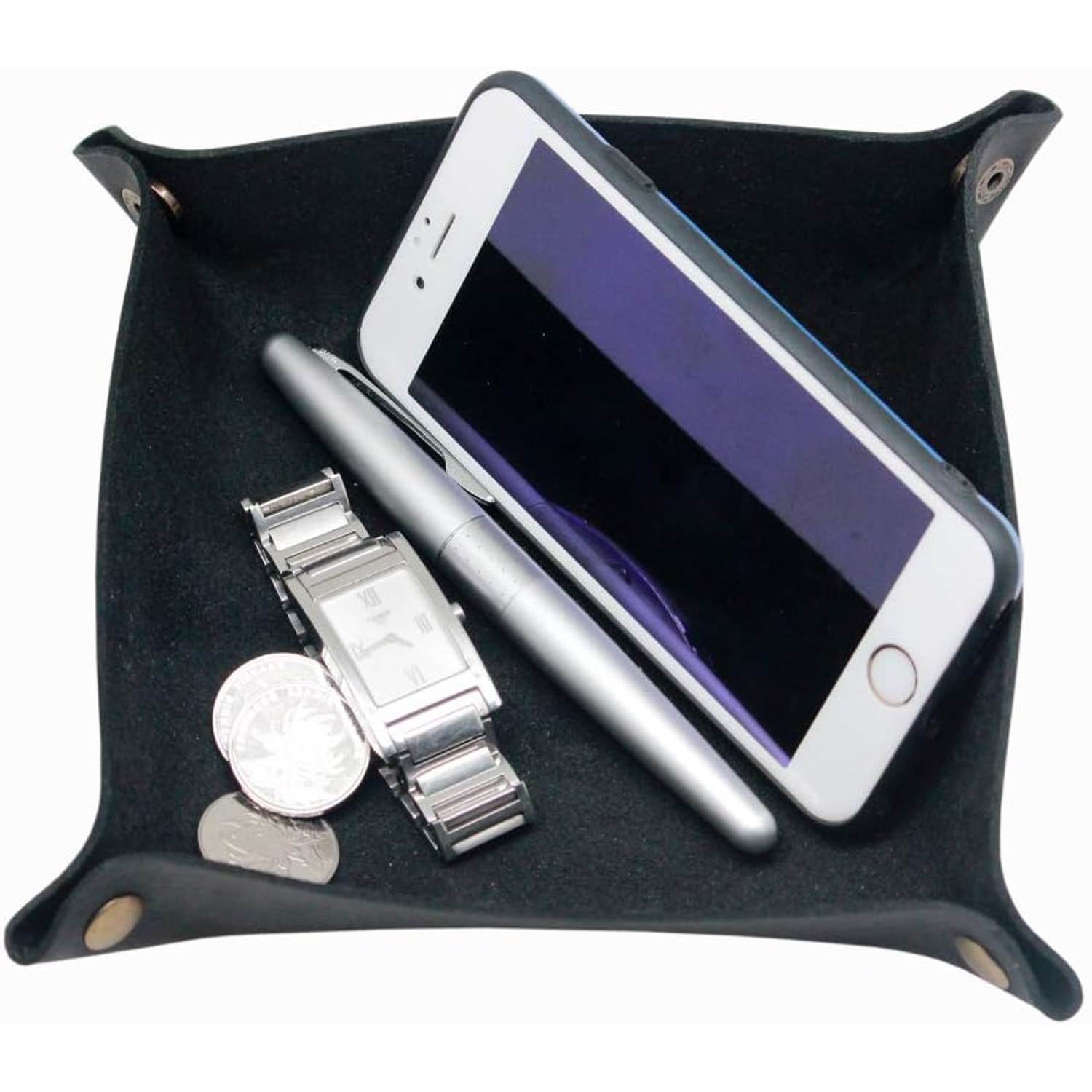
Measure what you actually put down. Most people's daily pile is a phone, a key fob, a wallet and some change. A 15 cm square base handles that comfortably, with the phone taking up roughly half the floor space.
If you carry a large phone in a thick case, check its length first. Anything over about 15 cm will sit at an angle rather than flat. That is not a problem for most people, but it is worth knowing before you order.
If your pile is bigger, two trays beat one big one. Split by category: keys and change in one, jewellery and watch in the other. You find things faster because each tray has a clear job.
Where to put it
Placement decides whether a tray gets used or ignored. Put it where your hands already stop, not where it looks tidiest.
For keys, that usually means within two steps of the door you actually use. Not the front door if you always come in through the garage. For a watch and rings, the nightstand or the spot where you get changed. For desk items, within arm's reach of the chair, not at the far corner where you have to lean.
A tray that is in the right place gets used from day one. A tray in the wrong place becomes an empty decoration while your keys keep ending up on the kitchen bench.
Looking after leather
Leather does not need much, but it does need the right treatment. Wipe it with a dry cloth, or a barely damp one if something sticky has got on it. Then let it dry naturally at room temperature. Do not put it near a radiator or in direct sun for long stretches, because heat dries leather and dry leather cracks.
Never machine wash it and never soak it. Water will mark the surface and may loosen the stitching over time.
Every month or so, unsnap the corners and wipe out the base. Coins carry grit and that grit is what scratches a watch case. Thirty seconds of maintenance protects the things you put in the tray as much as the tray itself.
If the leather starts to feel dry after a year or two, a small amount of a suitable conditioner on a soft cloth will help. Test it on a hidden corner first and go light. More product is not better.
What to expect over time
Leather changes. The surface will soften, the folds at the corners will develop creases, and the colour may deepen slightly in the spots your hands touch most. That is normal and it is why people like leather for everyday objects. A plastic tray looks the same forever until it cracks. Leather looks a bit more like yours every year.
The press studs are the part that sees mechanical wear. If you fold and unfold the tray daily for travel, they will get a lot of use. If it mostly lives assembled on a nightstand, they will barely see any.
A note on the details
Some specifics are not listed in this record. Colour, exact leather type, finished weight and country of origin are not given, so we have left them blank rather than guess. If any of those matter to your decision, check the product images on this page and get in touch before ordering. We would rather answer a question than have you receive something that is not what you pictured.
The short version
A catchall tray solves a small, daily annoyance: pocket items with nowhere to go. This one is a leather square that snaps into a 15 x 15 x 4.5 cm tray and unsnaps back to a flat 21 x 21 cm sheet for packing. No tools, no setup, no parts to lose.
Put it where you already stop walking. Keep it dry, wipe it out now and then, and it will quietly do its job for years. The best bedside tray for keys is simply the one that sits in the right place, and a folding leather version gives you the option of moving it, or taking it with you, when the right place changes.