
The complete guide
How to Choose a Desk Tray Catchall That Actually Gets Used
The pile that never goes away
Every home has one. A corner of the kitchen bench, the edge of a desk, the top of a chest of drawers. Keys land there. So does loose change, a watch, a receipt you meant to file, three pens and a charging cable. You tidy it on Sunday and by Wednesday it is back.
The reason is simple. Nothing on that surface is actually designed to hold objects, so items spread until they hit something. Without an edge, there is no reason for a pile to stop growing.
A tray solves this with one boundary. It says: things go here, and only this much fits. That small constraint does more for a tidy desk than any amount of willpower. A faux leather desk tray handles it while looking like a deliberate part of the room rather than an office supply.
What this tray is made of
Being plain about materials matters more than marketing language. The maker states this tray uses a PU (faux) leather outer over an MDF core. It is not genuine leather.
PU leather is a backing material coated in polyurethane to give a smooth, leather-like surface. It wipes clean easily, it does not need conditioning oils, and it holds its colour well indoors. It is a practical choice for something that will sit on a desk collecting fingerprints and dust.
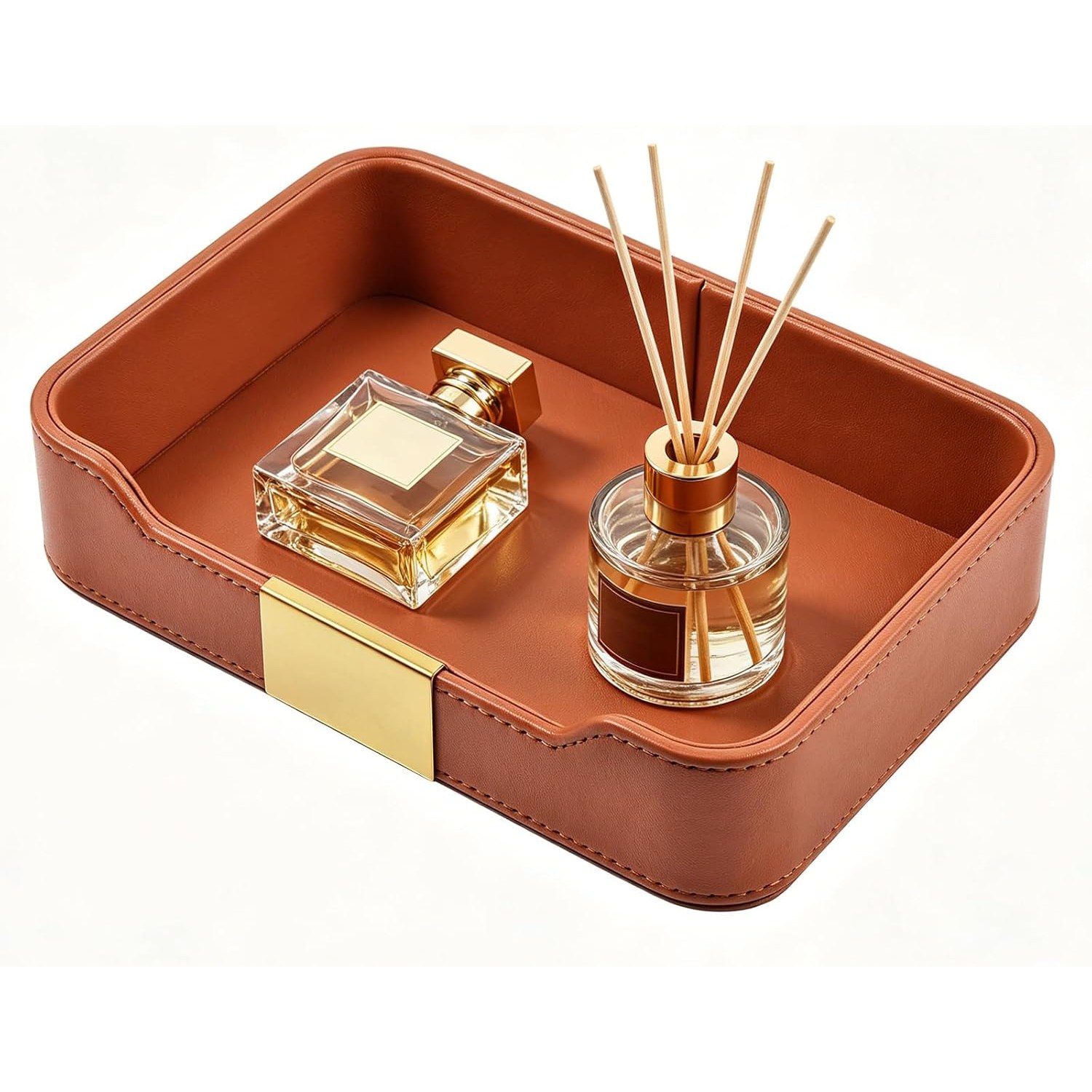
The MDF core is what keeps the tray from being floppy. Soft fabric trays sag the moment you drop keys in. A rigid board inside means the base stays flat and the sides stay upright, even when loaded. The maker also notes stitched edges and metal plates set into the leather, which is the detail that separates a finished piece from something that looks like it came out of a flat-pack box.
Where it earns its keep
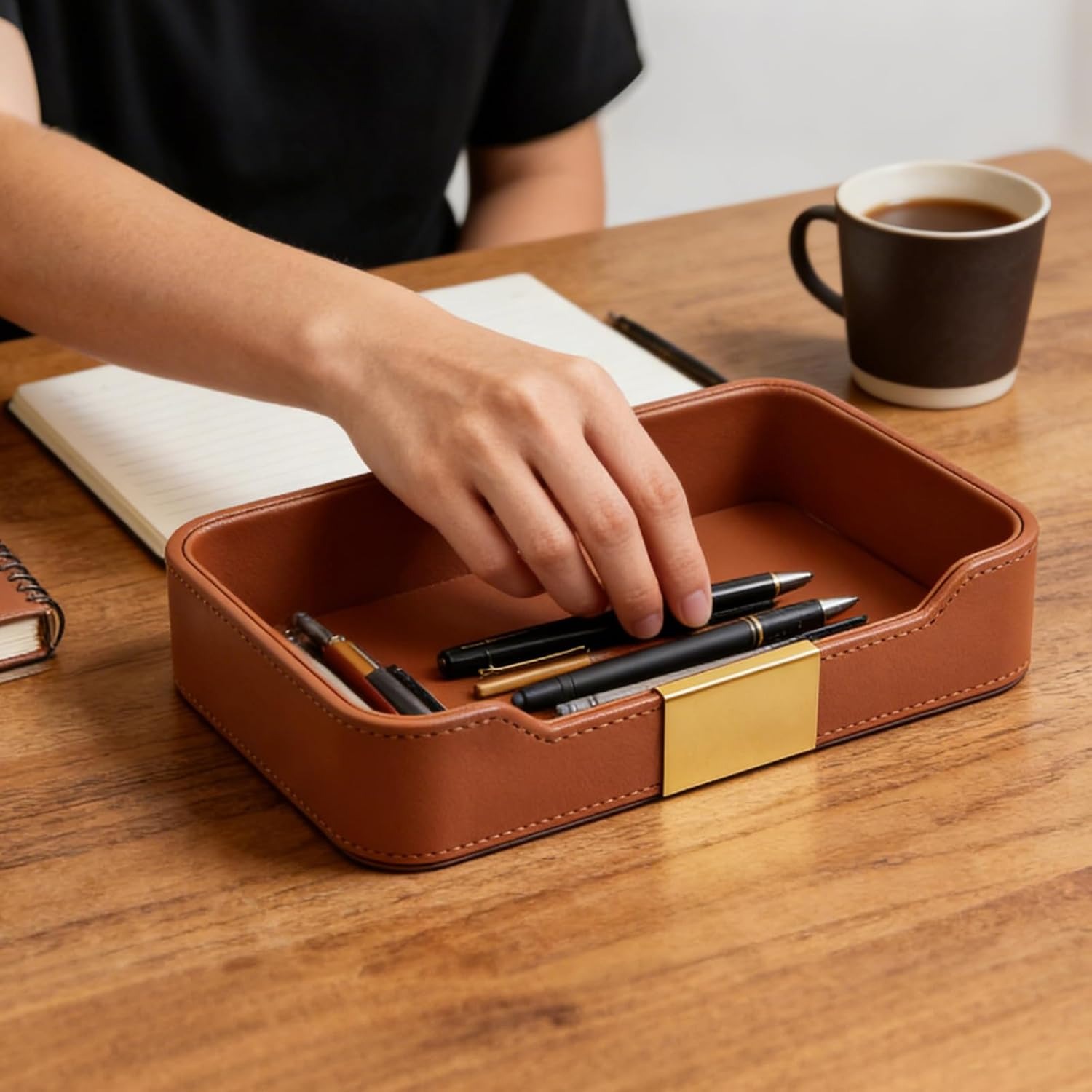
The obvious spot is a desk. Pens, paper clips, sticky notes, a phone and keys all collect in the tray instead of migrating across your work surface. If you work from home, this one change makes a visible difference to how the room feels at the end of the day.
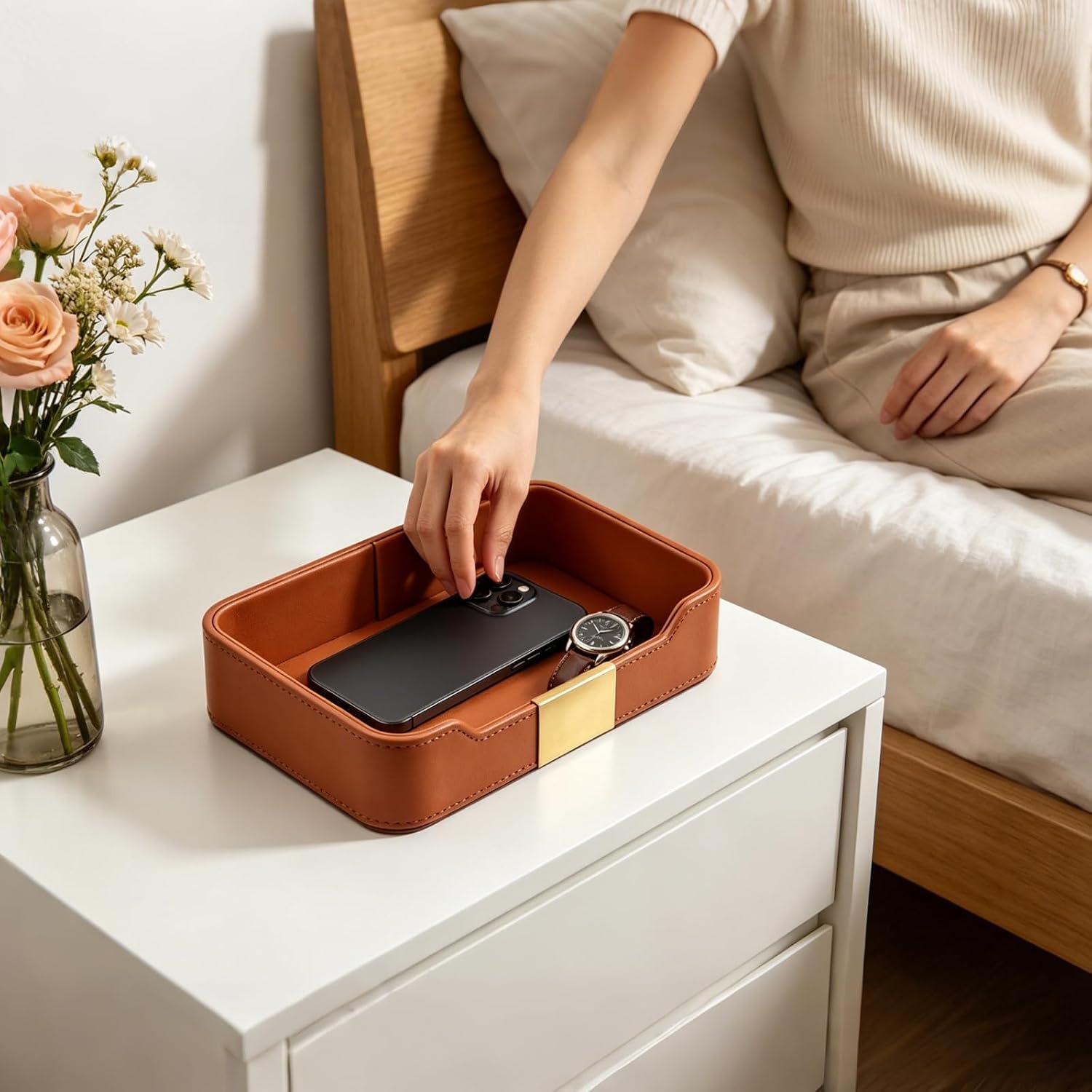
An entry table is the second strong option. If you have ever stood at the door running late and patting pockets, you already know why. Keys that always go in the same tray are keys you always find. Many people rate a catchall as the best entryway key tray solution precisely because it needs no training, just a consistent habit for about a week.
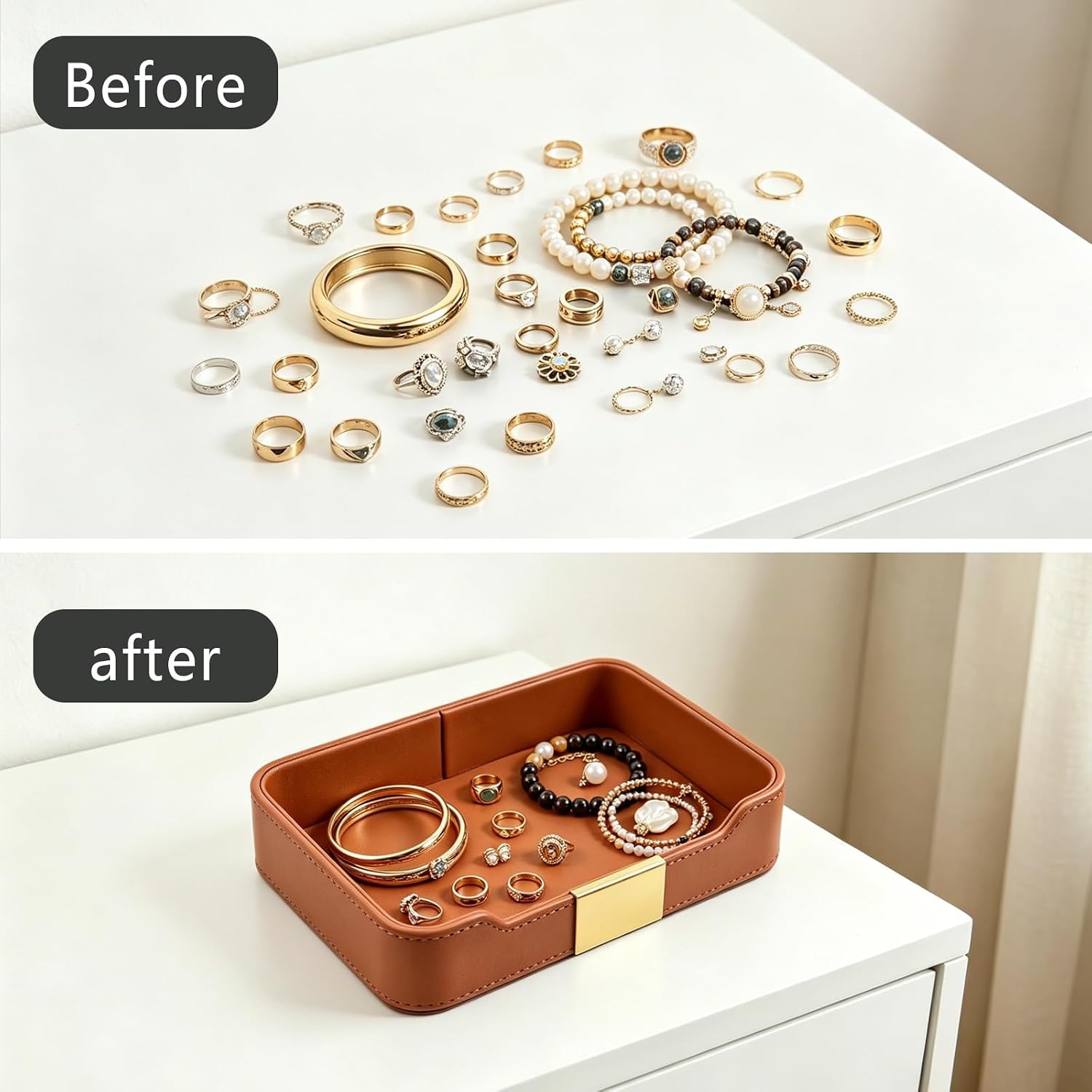
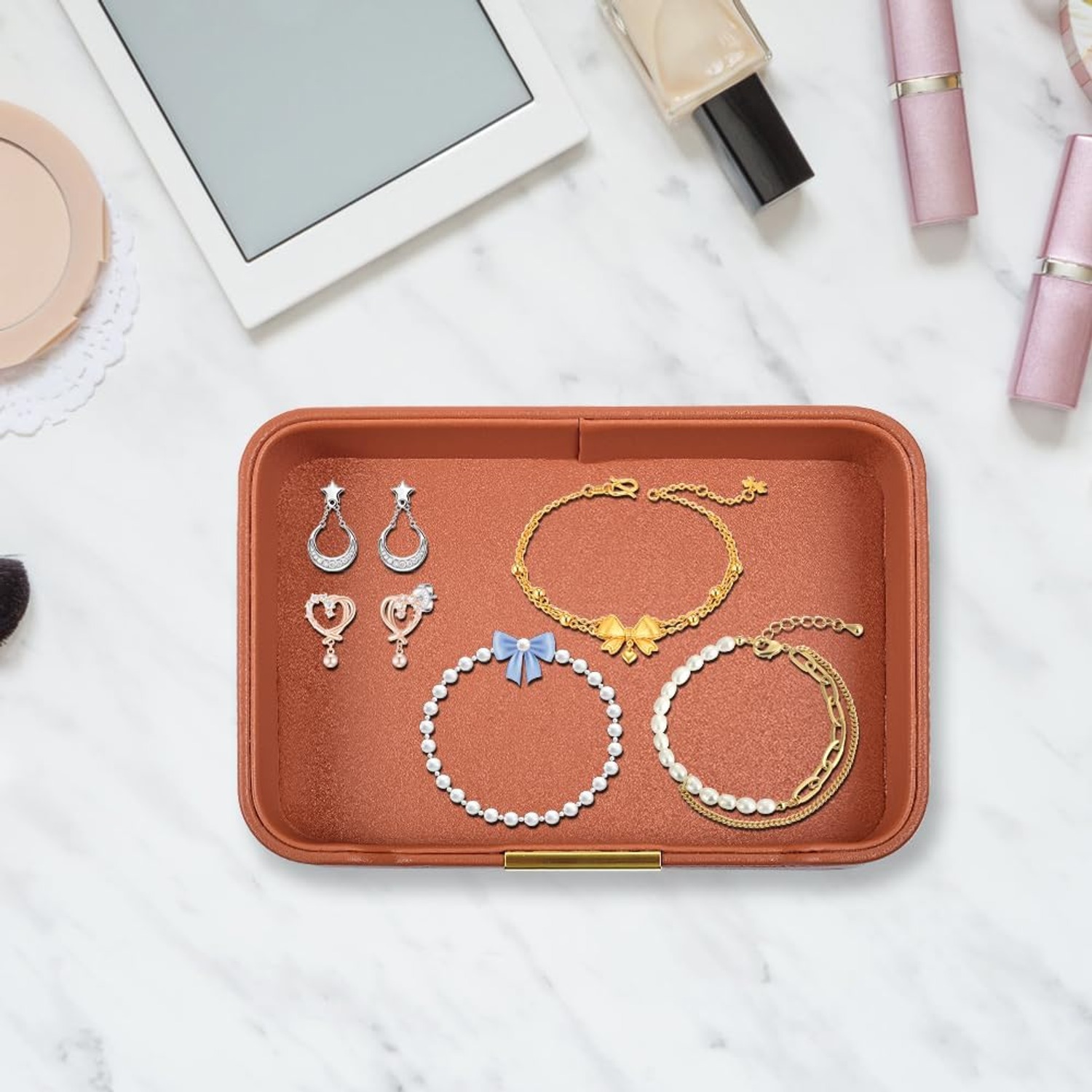
A nightstand or dresser is the third. A watch, rings, earrings and a bracelet sit together overnight rather than being slid into a book or pushed under a lamp. Used this way it works as a jewellery tray for a dresser, with the bonus that everything is visible in the morning.
There is a fourth use that people discover by accident. Cosmetics. Lipstick, a compact and a brush or two fit well on a bathroom bench or vanity, and the wipeable surface copes with the occasional smudge.
How to choose the right one
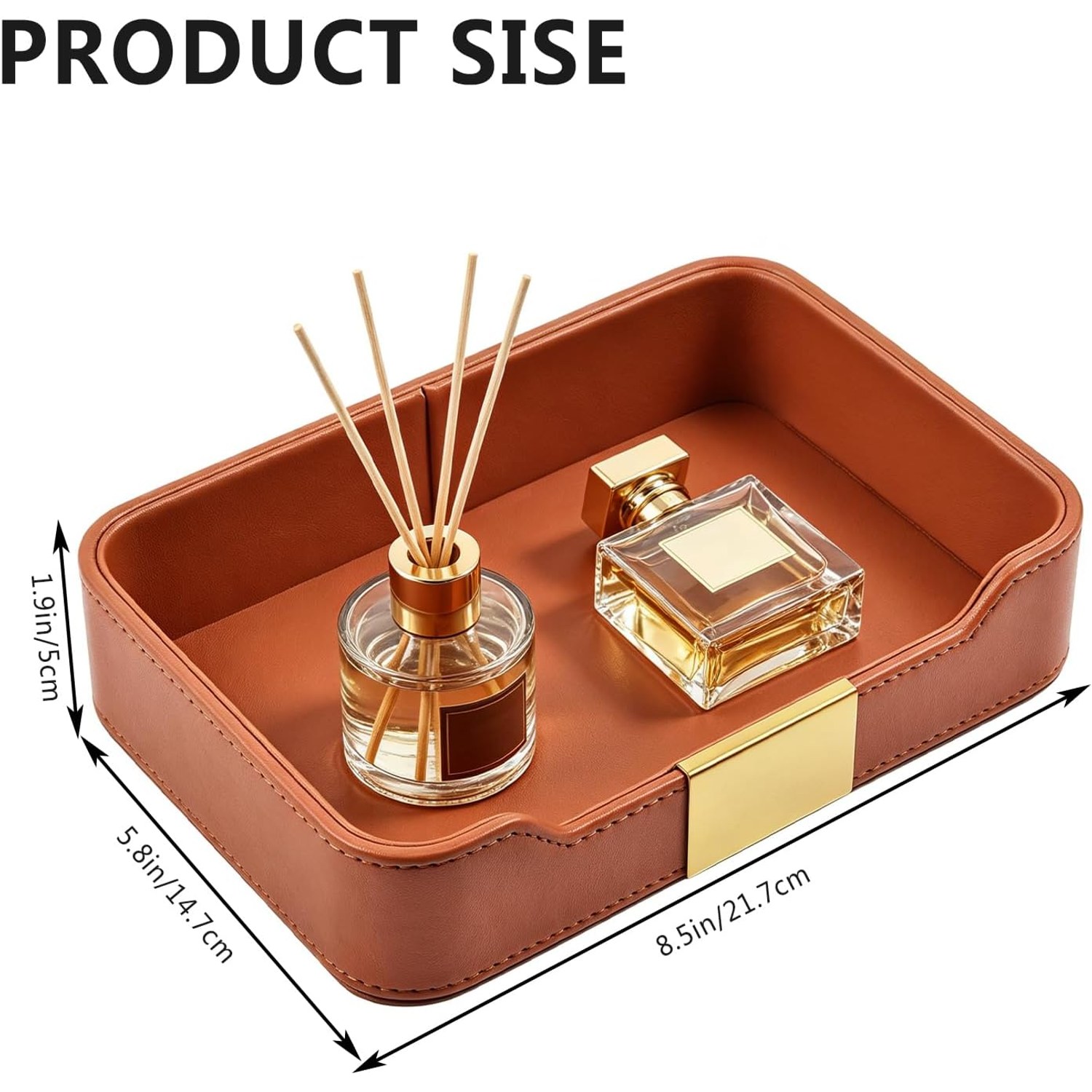
Start with size, not looks. Measure the spot where the tray will live. A tray that overhangs a narrow console looks awkward and gets knocked. A tray that is swallowed by a huge desk does not read as a defined zone. Compact trays like this one are built for small items, not paperwork or laptops, so match that expectation.
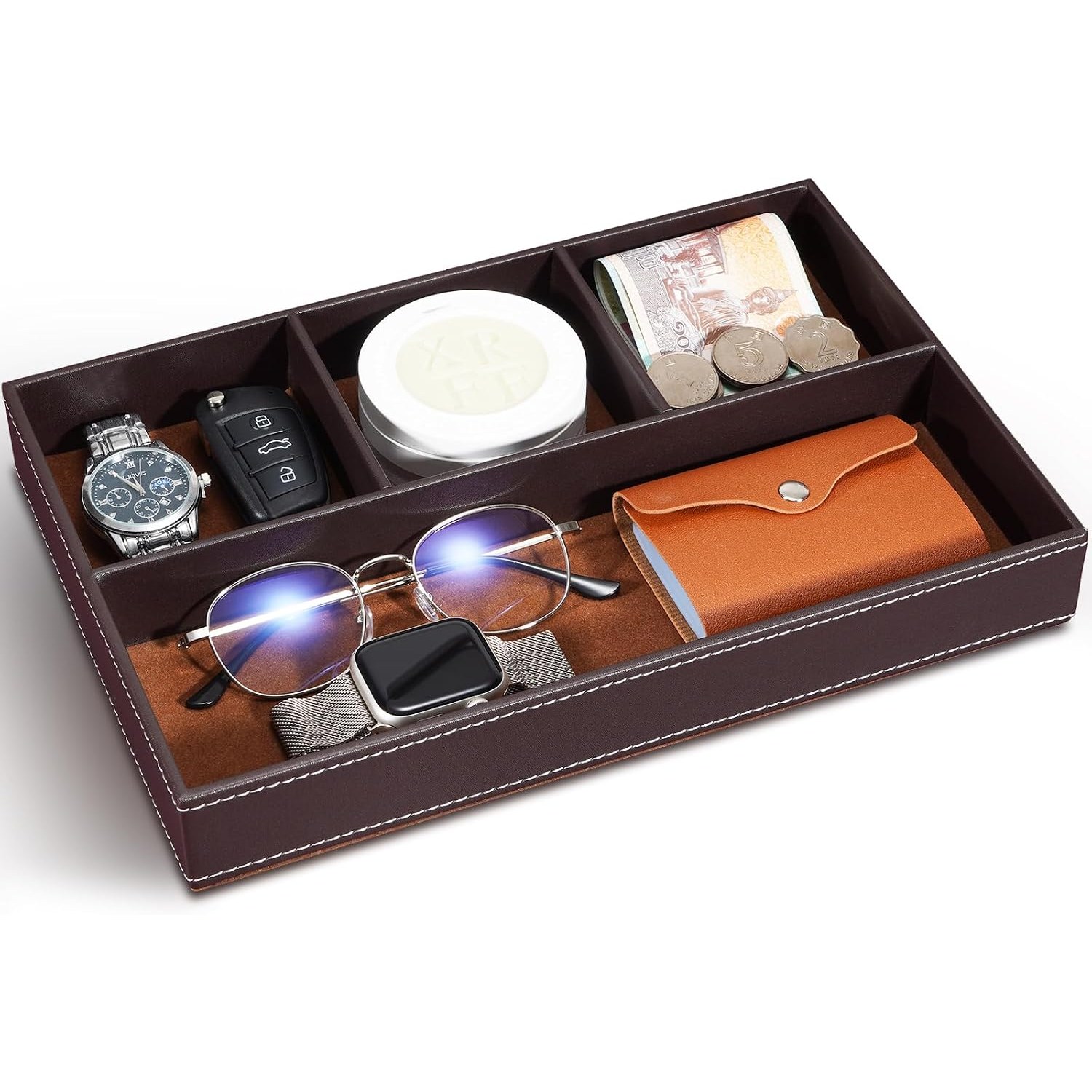
Then think about what will go in it. If your daily carry is a watch, wallet, keys and phone, a single open tray is ideal. If you want earrings separated from rings separated from coins, you either want a compartmented box or two trays side by side. Open trays win on flexibility, compartmented ones win on sorting. Pick the trade-off that matches how you actually behave, not how you wish you behaved.
Material comes next. Genuine leather develops a patina and costs considerably more. PU leather gives you a similar look at a far lower price, with less fuss in care. Plastic organisers cost less again but tend to look it, which matters when the item sits in plain view all day. For most people hunting for the best faux leather tray, the balance of appearance and price is the whole argument.
Finally, consider construction. Look for sewn edges rather than raw cut ones, and a core firm enough that the sides do not collapse. These are the two things that decide whether a tray still looks good in two years.
Making it stick as a habit
Buying the tray is the easy half. The habit is what delivers the result.
Put it where your hands already go. If you always dump keys on the kitchen bench, the tray belongs on the kitchen bench, not in the hallway where you think it should go. Work with your existing path, not against it.
Keep it for a small number of item types. The fastest way to ruin a catchall is to let it become general storage. Once it contains batteries, a spare button and an old parking ticket, it is just a smaller pile. Two to five item types is the sweet spot.
Empty it once a week. Thirty seconds, straight into the bin or the right drawer. Done regularly, it never becomes a job.
Care and what to avoid
PU leather is low maintenance, which is part of the appeal. Wipe the surface with a soft cloth that is barely damp, then let it air dry completely. That takes care of dust and fingerprints, which make up almost all the marks a desk tray will collect.
Keep solvents, bleach and alcohol-based cleaners away from it. These can dull or lift the polyurethane coating, and once that starts it does not stop. Plain water on a cloth is safer and does the job.
Do not soak it or submerge it. The MDF core does not like sustained moisture, so wipe spills quickly rather than letting liquid pool. No dishwasher, no washing machine, no leaving it out in the rain on a balcony.
Direct harsh sunlight and heat sources are worth avoiding too. Months of strong afternoon sun will fade most surfaces, PU included. A spot out of the direct beam keeps the finish even.
Lift the tray when you move it rather than dragging it. Grit caught under the base is the most common cause of scratches, both on the tray and on the furniture under it.
Is it a good gift?
Desk accessories are surprisingly hard to buy for other people, because many are too personal or too specific. A catchall sidesteps that. It is useful to nearly everyone, it does not assume anything about taste in stationery, and it suits a wide range of rooms.
It lands well for someone setting up a first home office, a new graduate, or anyone who has just moved. It also works as a gift tray for dad when you have run out of ideas and a tie is not happening again.
The short version
This is a small, firm, leather-look tray built from PU (faux) leather over an MDF core. It is not real leather, and we would rather say that plainly than dress it up.
It does one job, it does it quietly, and it keeps doing it with almost no maintenance. Keys, a watch, coins, rings and desk small-stuff get a boundary, and surfaces around it stay clear. Wipe it with a damp cloth now and then, keep it out of the sink, and it will hold its finish through years of ordinary daily use.
If your clutter pile has a permanent home and you would like to give it a smaller, better-looking one, this is the straightforward fix.