
The complete guide
Valet Tray Buyer's Guide, How To Pick One That Actually Gets Used
The problem with the pile
Every home has a drop zone. It might be the end of the kitchen bench, the top of a chest of drawers, or that small table just inside the front door. It starts with keys. Then coins join them, then a watch, a receipt, a charging cable, a hair tie and a half-used tube of lip balm. Within a fortnight you have a small archaeological dig, and the one thing you actually need is always underneath.
The frustrating part is that nobody chose this. The pile happens because there is nowhere obvious for small objects to go. Pockets have to empty somewhere, and a flat surface accepts anything. So you spend two minutes every morning patting down the pile looking for your keys, and that two minutes repeats for years.
A valet tray solves it with almost no effort from you. You put the tray down, and the pile moves into it. The habit forms in about three days because dropping keys into a defined space is just as easy as dropping them on wood, and far more satisfying.
How a compartment tray works
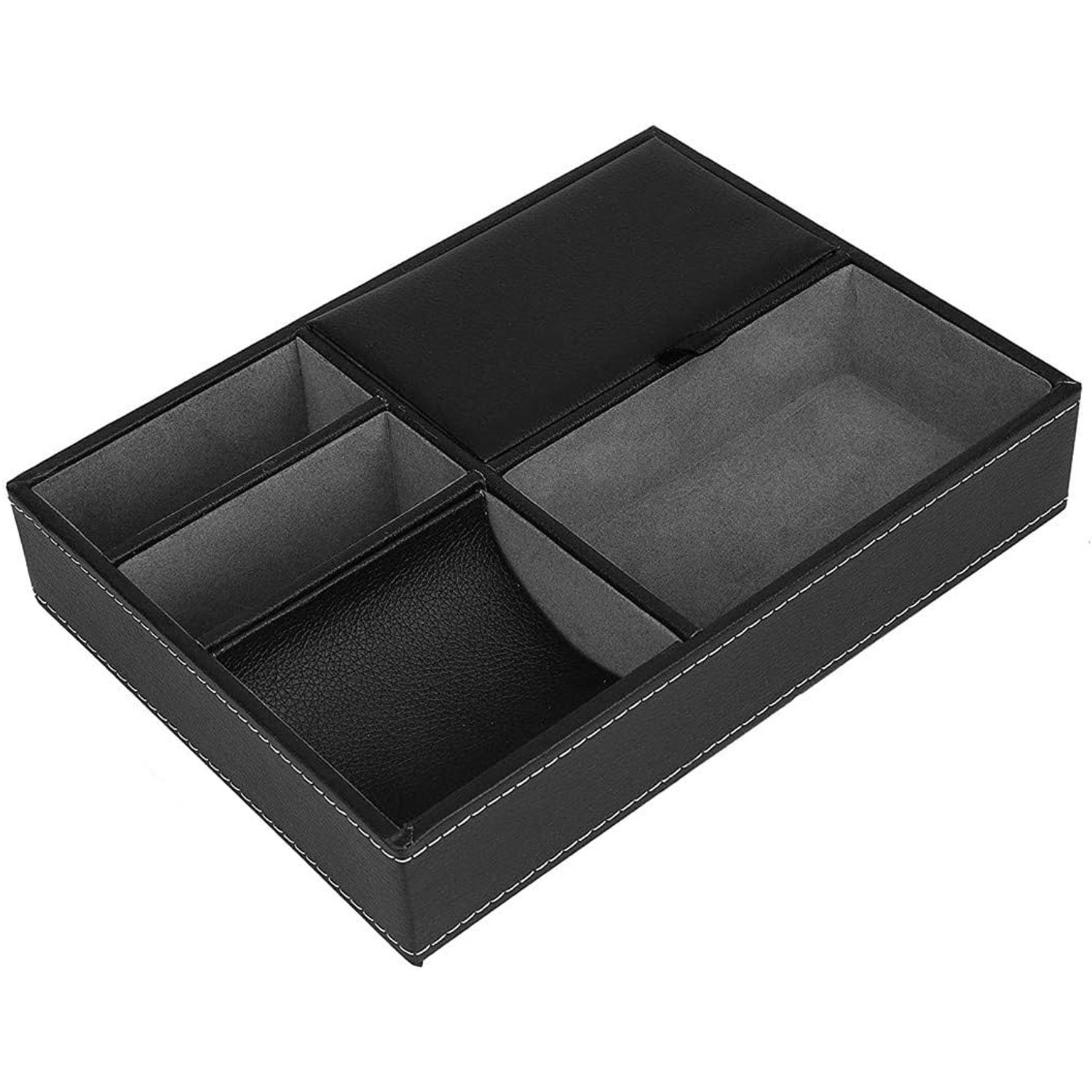
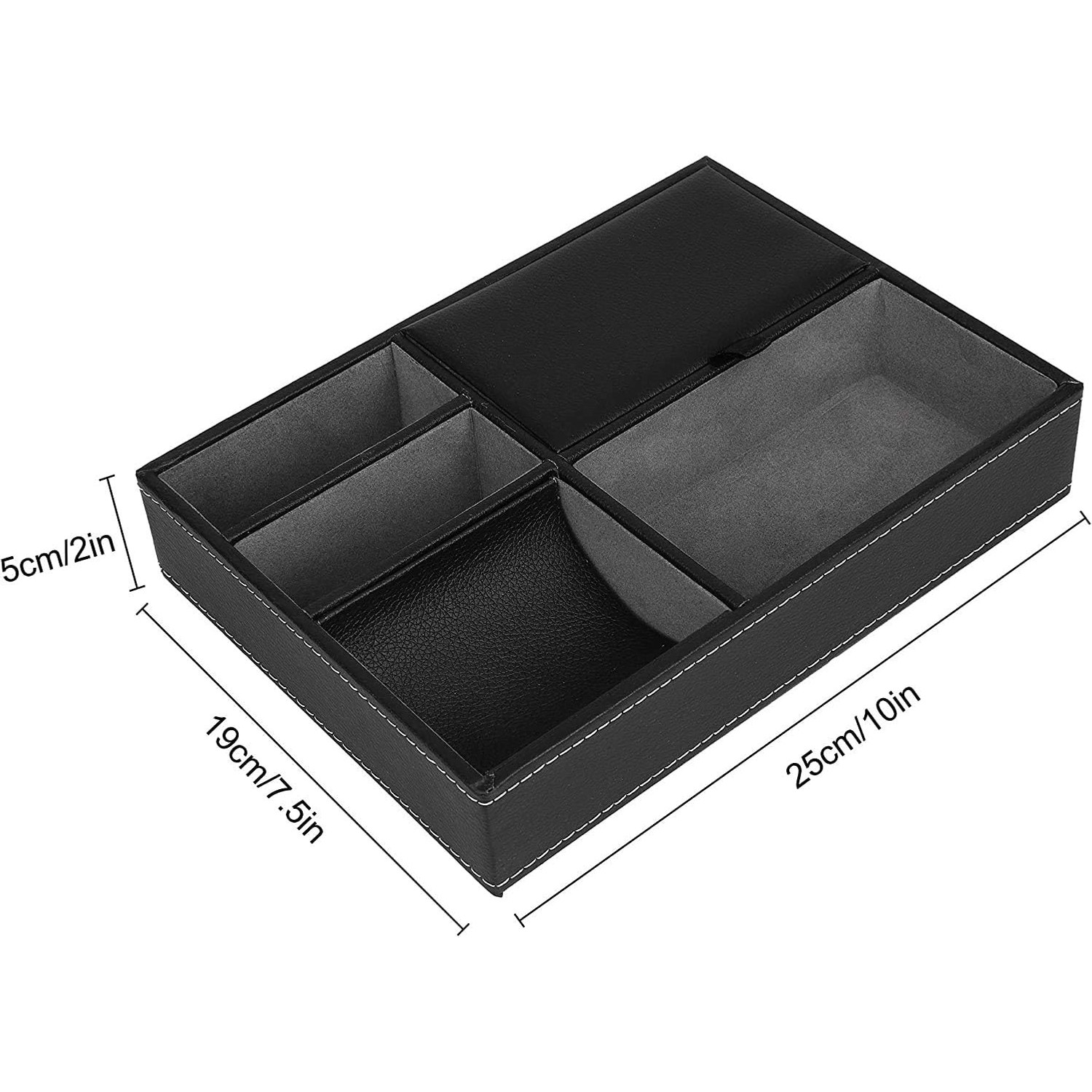
The jump from a plain tray to a five compartment dresser organiser is bigger than it sounds. A single open tray still produces a pile, just a contained one. Compartments force a small amount of sorting, and that sorting is what makes things findable.
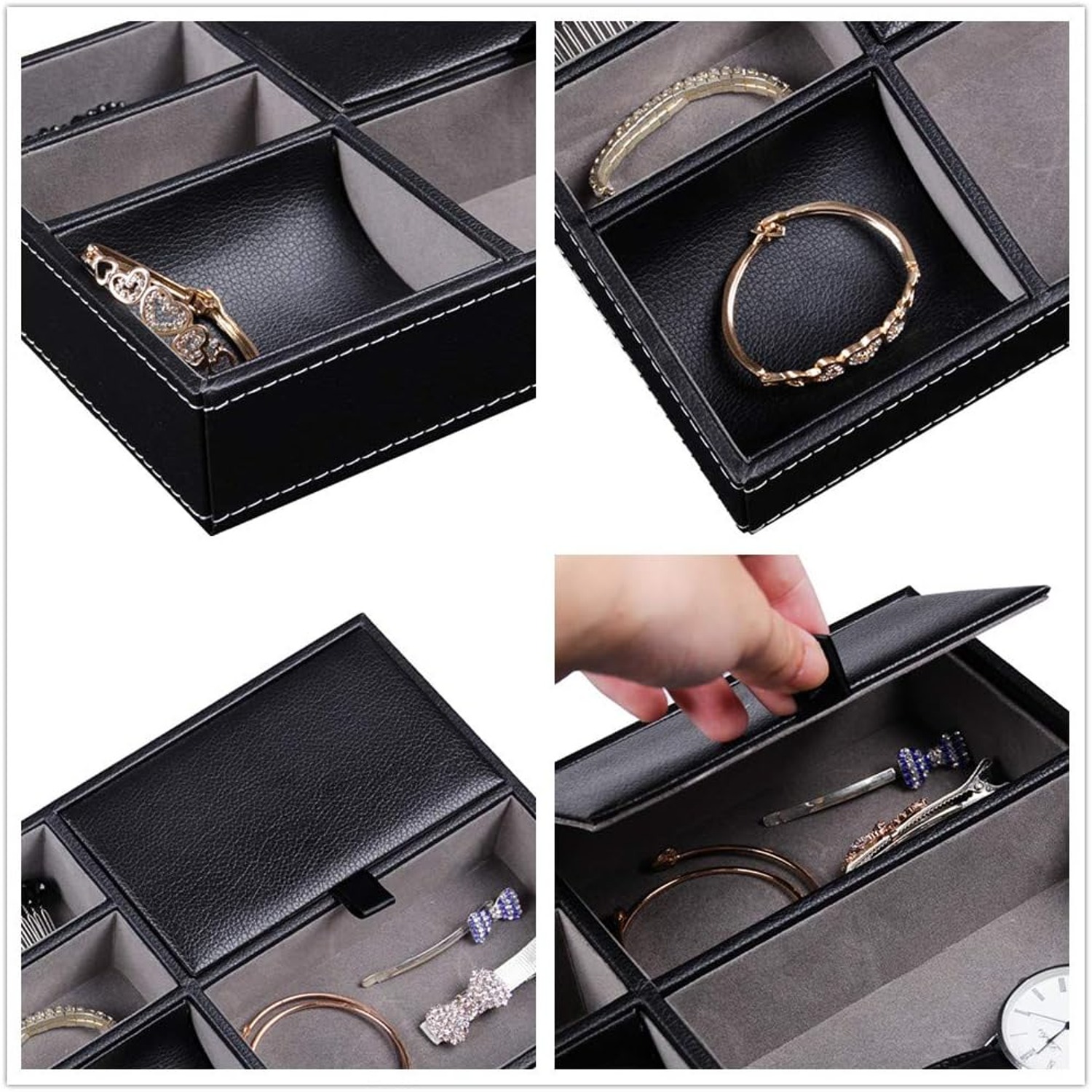
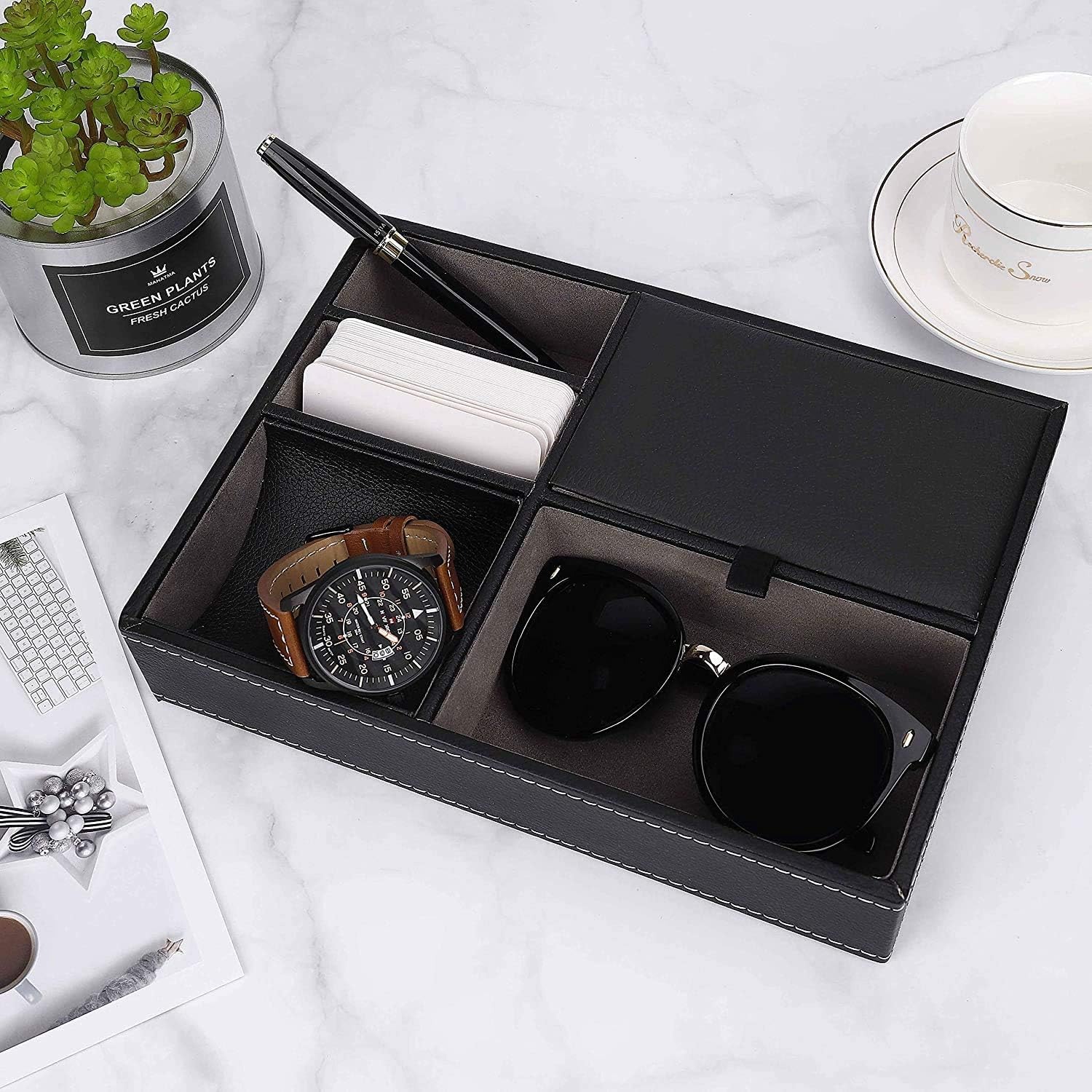
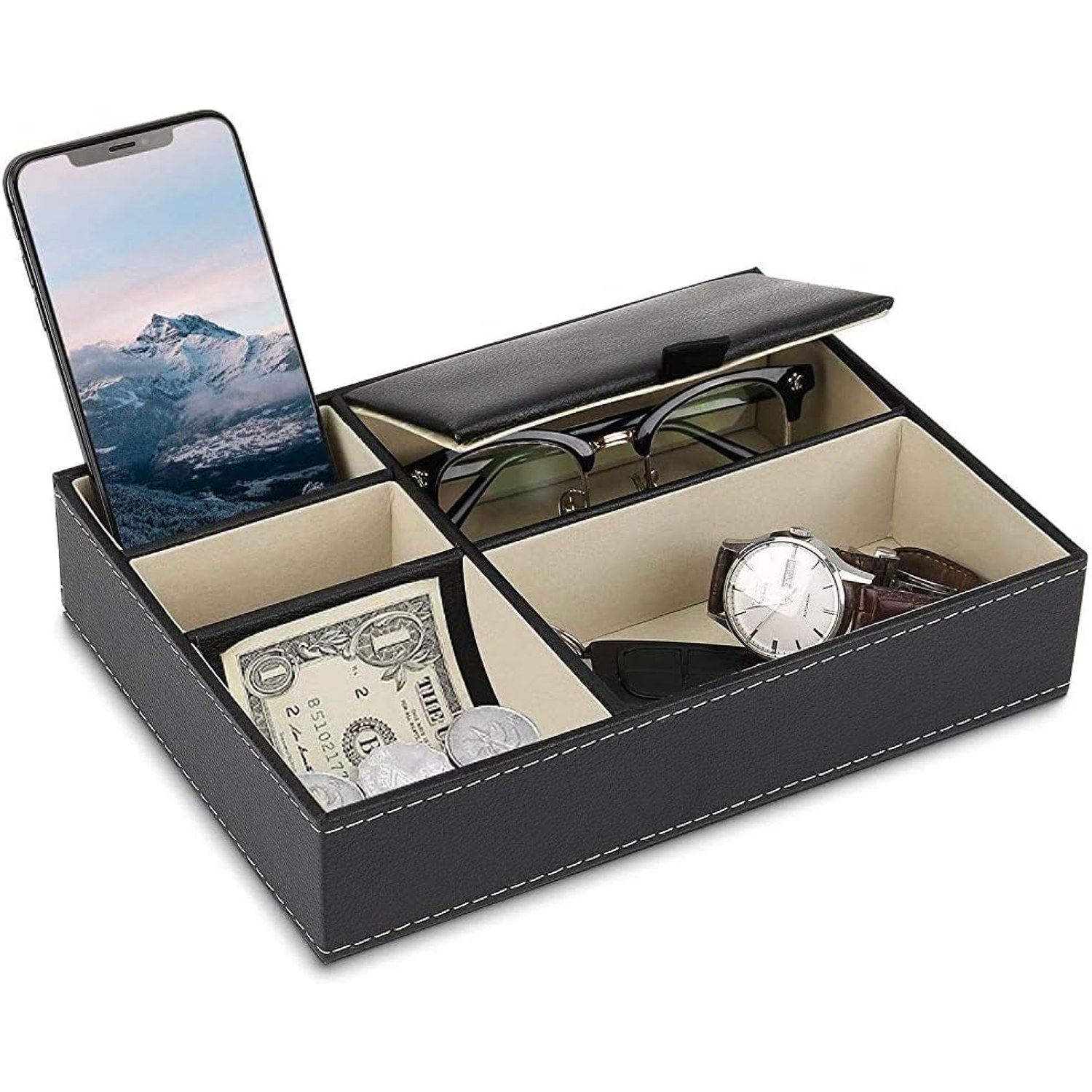
With five sections you can give each type of item its own home. A larger area takes a phone or a wallet. A medium section holds a watch, coiled with the strap tucked under so the buckle does not scratch the face. Smaller sections take coins, keys, rings and cufflinks. Once that layout settles, your hand learns it. You stop looking and start reaching.
This particular tray is made from synthetic (faux) leather with a faux suede interior, as the maker states. It is not genuine leather, and that is worth knowing before you buy rather than after. What the faux suede does well is cushion. Watch crystals, phone screens, glasses lenses and polished rings all land on something soft instead of timber, glass or stone. It is also quieter, which matters more than you expect when someone is already asleep in the room.
Where to put it
The bedroom dresser. The classic spot, and the one most people start with. Everything comes out of your pockets at night and goes back in the morning. If you share the room, two trays side by side stop the inevitable mixing of keys.
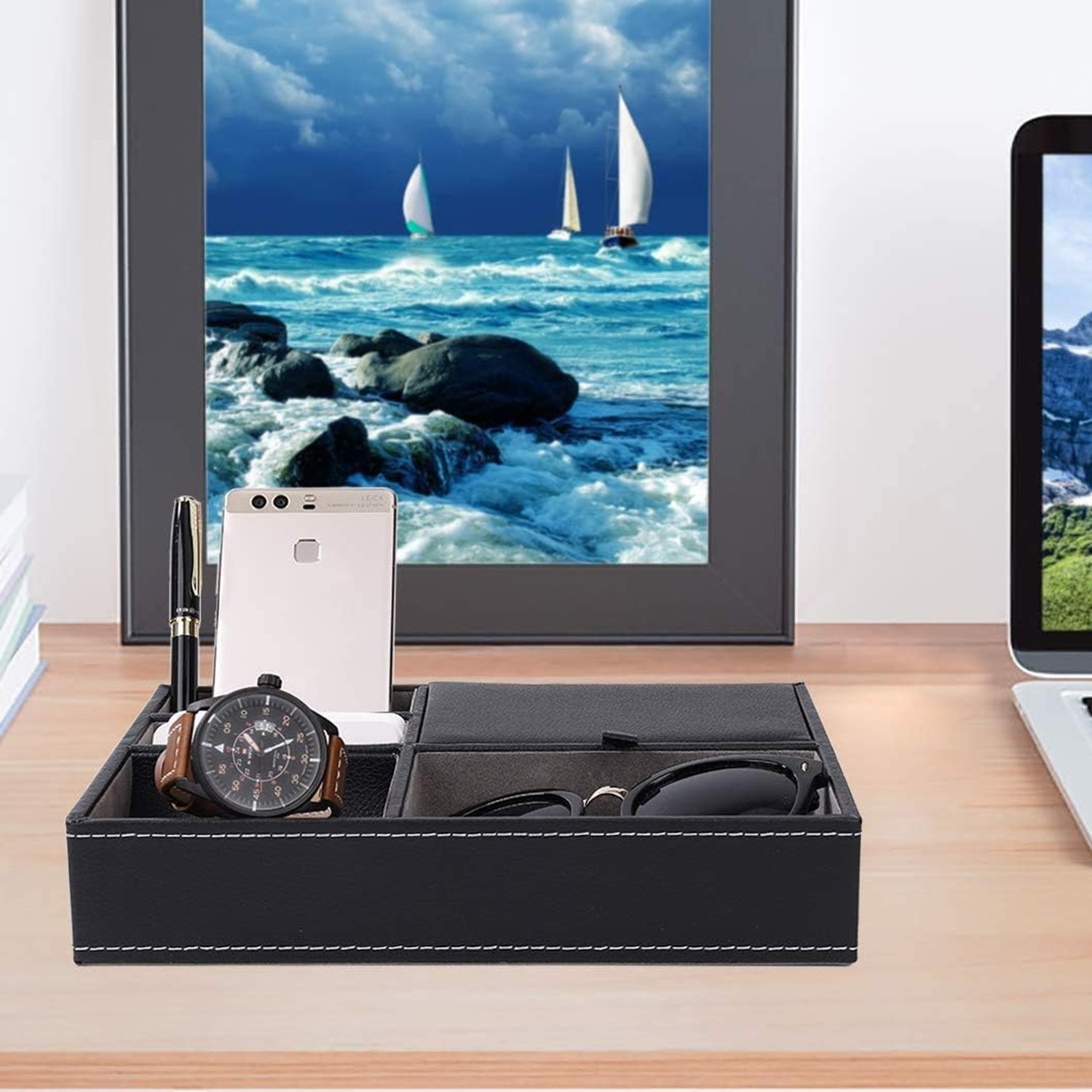
The nightstand. Good if you want glasses, a phone and a watch within arm's reach. The compartment edges stop a phone sliding off the edge of the table in the dark.
By the front door. An entryway catch all is the single best cure for lost keys. The rule is simple, keys live in the tray and nowhere else. Give it a week and you will never search again.
The office desk. Pens, earbuds, a building pass, loose change and a spare charging cable all end up scattered. A desk catch all tray gathers them into one footprint and clears the working surface.
The car. The maker mentions car use, and a tray in a console keeps coins and a parking card from rolling around. Just remember it is an open tray, so it is for stationary storage rather than holding things through a roundabout.
Choosing the right one
Count your things first. Empty your pockets onto the table and look at what is actually there. If it is a phone, a wallet and keys, almost any tray works. If you add a watch, rings, cufflinks, earbuds and a card holder, you need compartments. Five is usually the sweet spot for an everyday carry tray, enough to sort by type without turning it into a tackle box.
Think about the surface it will sit on. Soft-lined trays are gentler on the items inside, and they do not scuff a polished dresser the way a rough timber base can. A hard tray on a glass table is loud. A lined tray is not.
Be honest about material. Genuine leather develops character and costs accordingly. Synthetic leather holds a crisp shape, wipes clean in a second, and does not mind being handled with slightly damp hands. Neither is wrong, but you should know which one you are buying. This tray is faux, plainly stated.
Keep the look quiet. A tray lives on display, in a bedroom or an office, for years. Something plain and dark blends into almost any room. Something loud dates fast. There is a reason the best valet tray recommendations usually land on simple black rectangles.
Consider who it is for. If you are buying this as a gift, the fact that it arrives in a hard shell box removes a step. It is also the rare gift that someone who claims to want nothing will genuinely use daily.
Looking after it
Care for synthetic leather is easy as long as you avoid the two mistakes people make, which are soaking it and using strong cleaners.
Wipe the outer surface with a soft cloth. Dry is fine for dust, barely damp is fine for marks. Dry it off afterwards rather than leaving moisture sitting in a corner. Skip alcohol wipes, nail polish remover, kitchen degreaser and anything with a solvent in it, because those strip the finish from faux leather and leave a dull patch that will not come back.
The faux suede lining needs even less. Tip out the crumbs and grit occasionally, then lift the rest with a soft brush, a lint roller or the brush head of a vacuum held slightly above the surface. Do not scrub it wet. Suede-look material mats down when you rub it hard while damp.
Two other habits help. Keep it out of long direct sunlight, which fades dark synthetic surfaces over time. And keep sharp things, pocket knives, craft blades, keys with jagged new cuts, from being dropped in point first.
A quick word on what it is not
A valet tray is not a jewellery box. There is no lid, no lock, and no padded slots for long chains. If you own fine pieces that tangle or need protecting from dust, keep those in a proper box and use the tray for the items you wear every day.
It is also not a travel case. The structured shape that makes it good on a dresser makes it bulky in a bag. For trips, a zip pouch or a folding roll is the better tool.
Knowing the limits actually makes the tray more useful, because you stop asking it to do jobs it was never built for.
The short version
A pile forms because small items have nowhere to go. Put a tray in the spot where the pile already happens, and the pile becomes a system. Five compartments give you enough structure to find things without having to think about it.
This one is synthetic faux leather with a faux suede interior, which means it wipes clean easily, treats watch faces and screens kindly, and does not pretend to be hide. It suits a dresser, a nightstand, a hall table, a desk or a car console. It comes in a hard shell box, so it works as a gift with no extra effort.
Pick your drop zone, put the tray there, and give it a few days. The habit does the rest.