
The complete guide
Linen Look Cushion Covers, A Practical Buyer's Guide
The problem with a sofa that has gone flat
Most living rooms do not go wrong all at once. They fade. The sofa holds up, the rug is fine, but the cushions have gone tired. The covers have lost their colour from sitting in the sun, the fabric has gone slightly grey from washing, and the whole arrangement looks like nobody has touched it in three years.
Replacing the cushions outright is an expensive answer to a cheap problem. Inserts last a long time. A decent feather or polyester insert will keep its loft for years, long after the fabric wrapped around it has given up. So the sensible fix is to change the outside and keep the inside.
That is all a cushion cover set is for. Two covers, a hidden zip, half an hour of your time, and the room reads differently.
What you are actually buying here
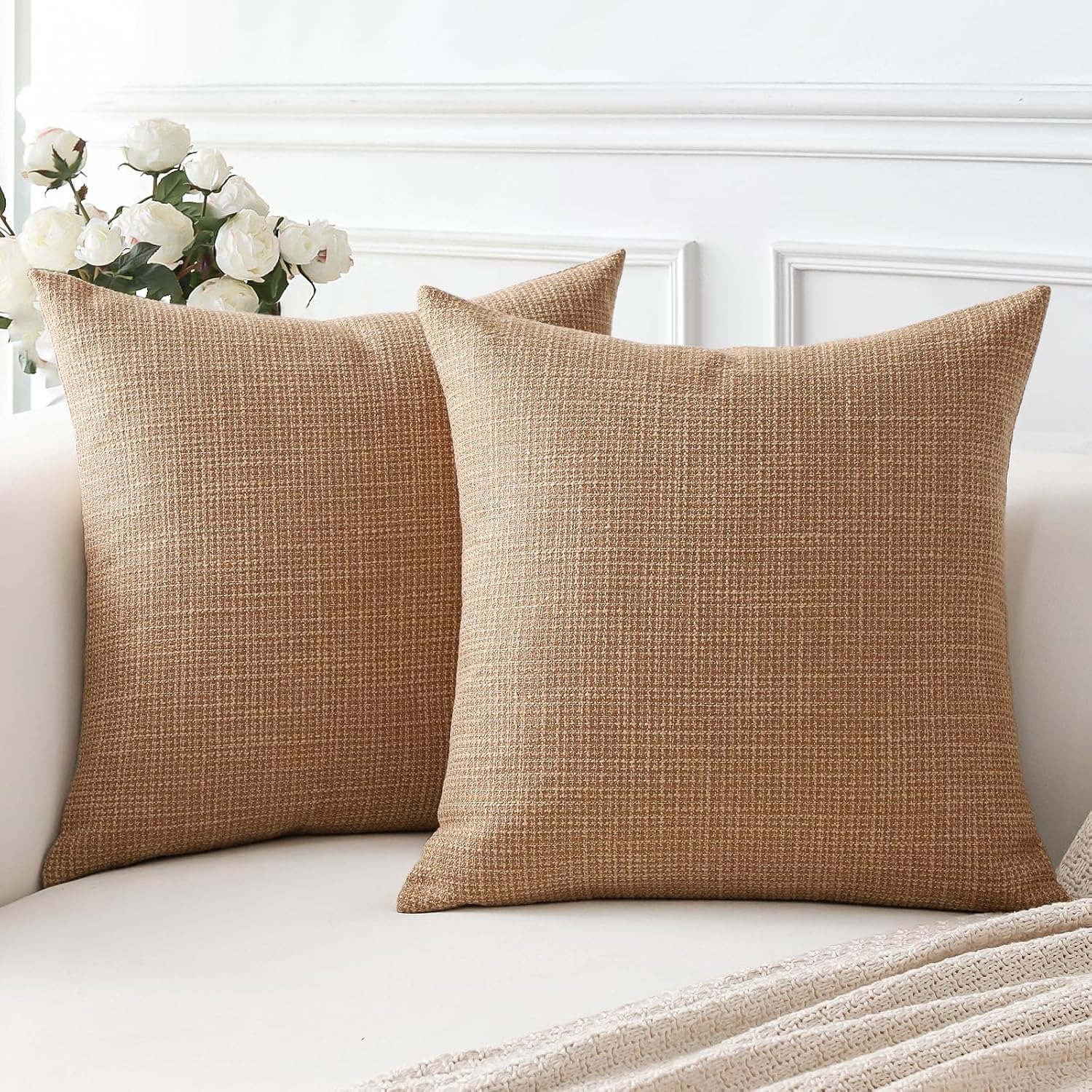
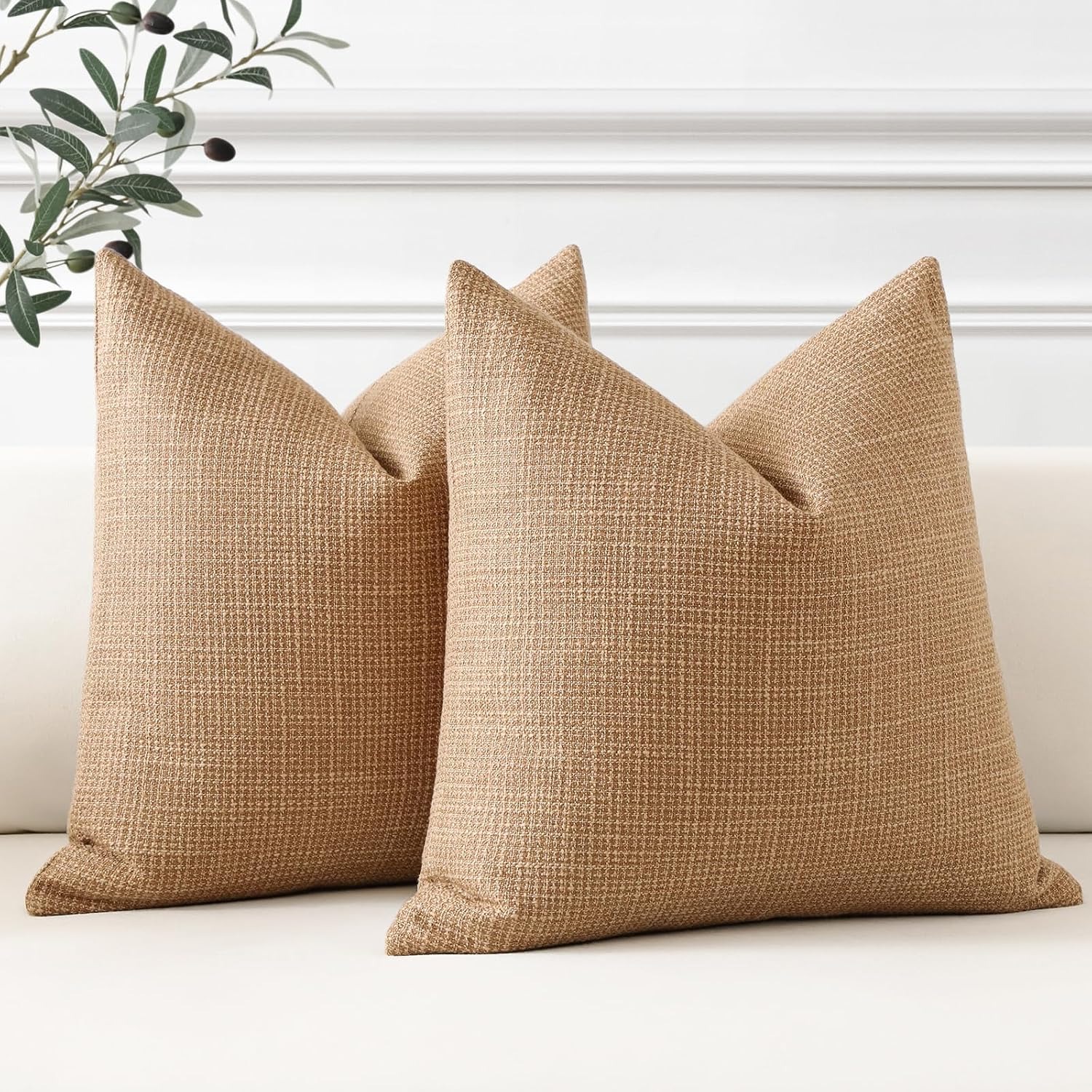
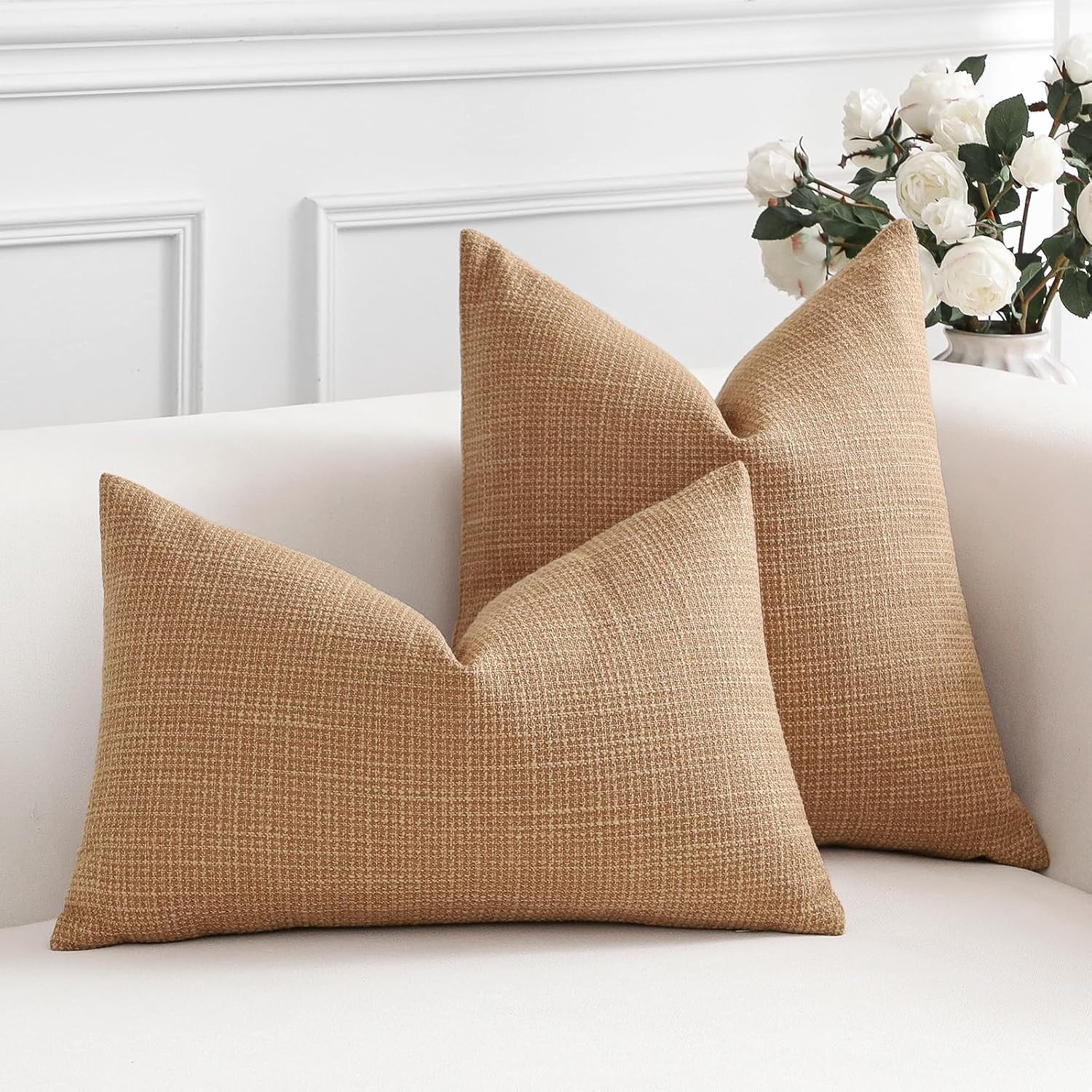
This is a two pack of light brown linen look cushion covers, each 50 x 50 cm. They are covers only. No inserts come in the box, which is worth saying twice because it catches people out.
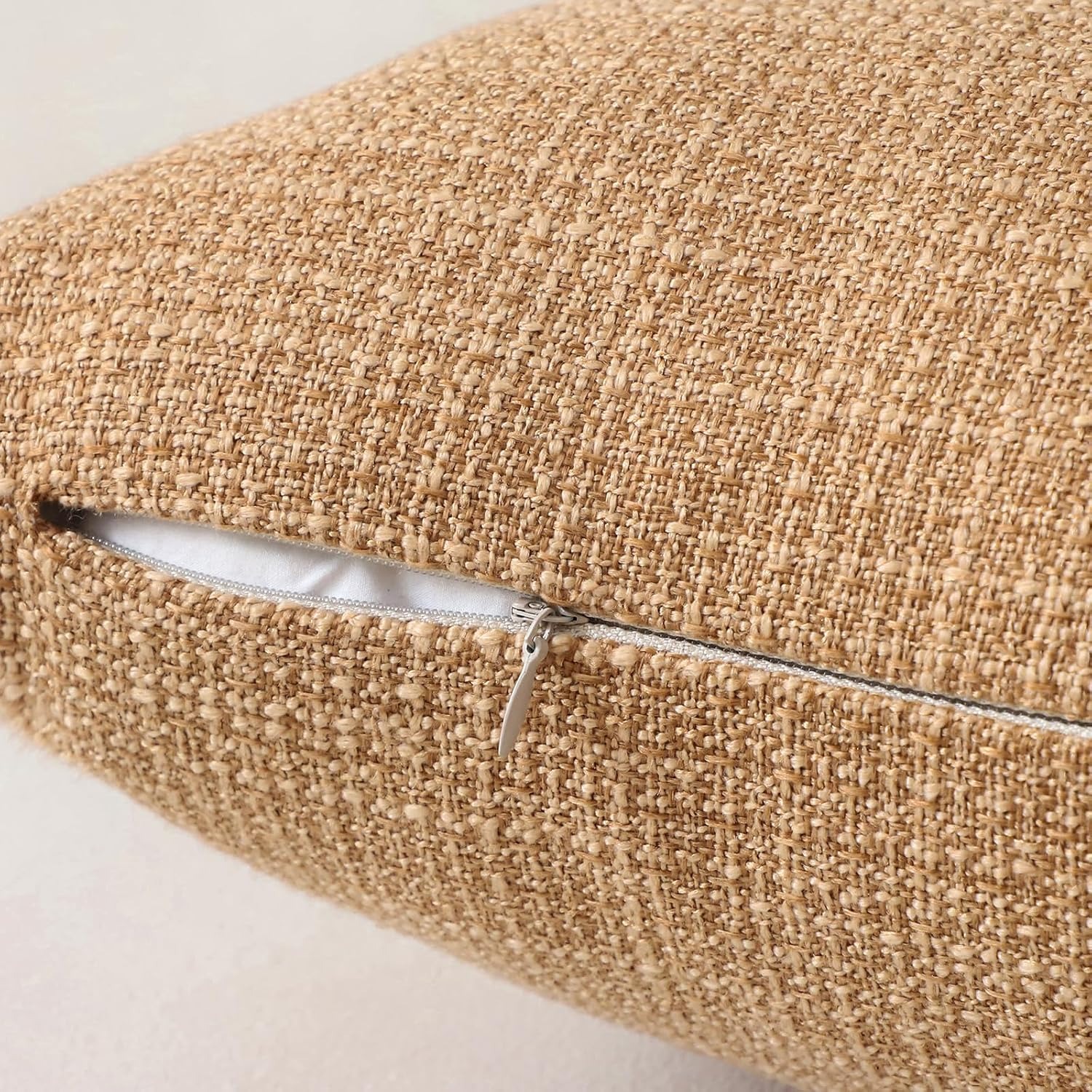
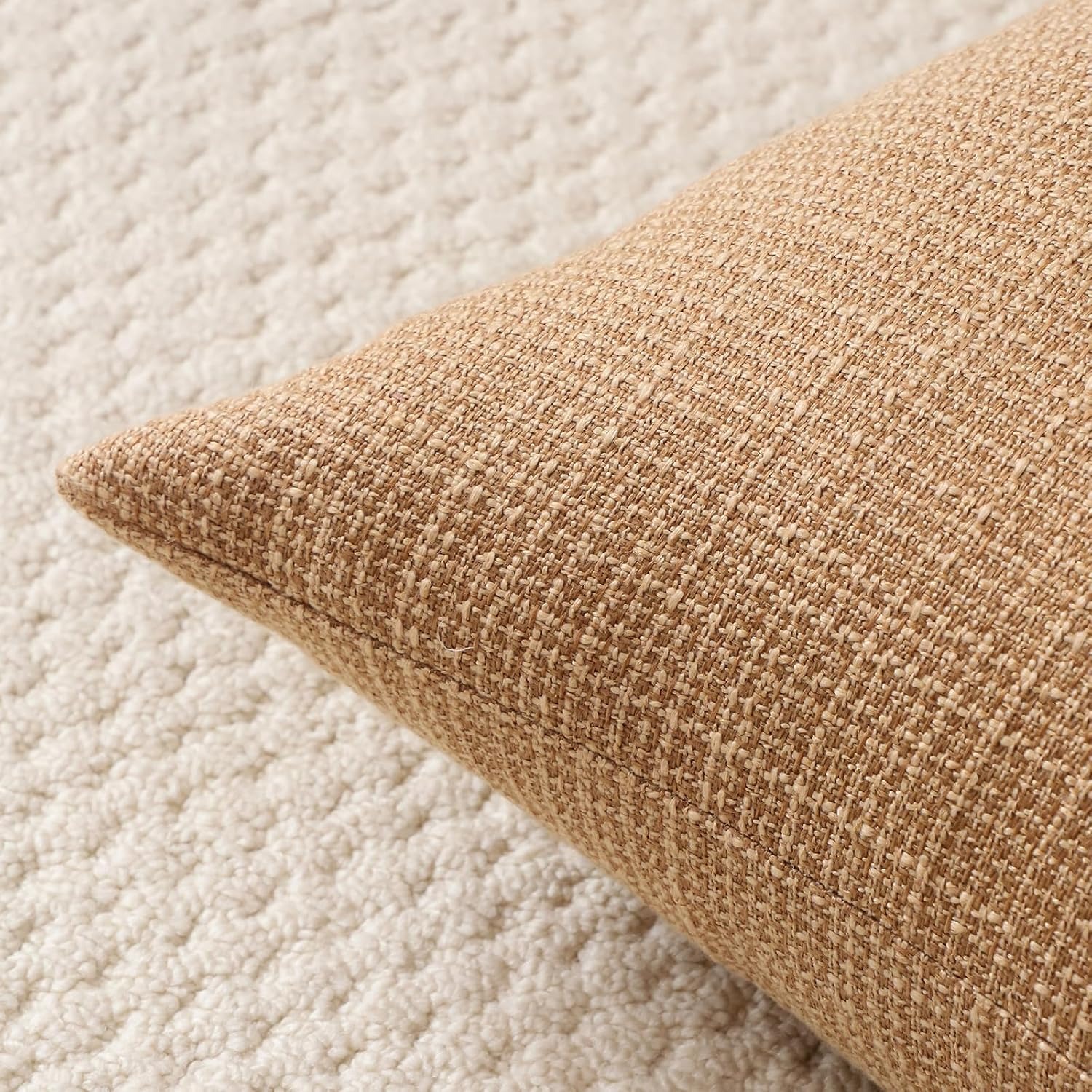
The fabric is polyester woven with a linen look. The maker describes it as polyester linen. That is a description of the weave style, not a fibre blend, and no linen percentage is stated. These are not pure linen covers and we are not going to pretend otherwise. What the weave does give you is the thing most people actually want from linen, which is a matte surface with visible texture instead of a flat, shiny finish.
Polyester has some real advantages here. It holds dye well, so the colour fades more slowly in a sunny room. It does not crease the way linen does, so a cushion still looks tidy after someone has been lying on it all afternoon. It also dries faster, which matters if you are washing covers between guests.
The zip is hidden in the seam and matched to the fabric colour. It is a small thing that makes a visible difference. A contrasting zip reads as cheap from across the room. A matched one disappears.
Getting the size right
A 50 cm square cushion is the standard size for a reason. It is big enough to support your back on a deep sofa and small enough that two of them do not swallow a two seater.
The cover is labelled 50 x 50 cm with a 1 to 2 cm tolerance, because the pieces are hand cut and sewn. This is normal at this price and it only matters when you pick an insert.
Use a 50 cm insert and you get a relaxed cushion with a soft edge. Some people love that look, especially in a casual room with a slipcovered sofa. Use a 55 cm insert and the cover stretches slightly, the corners fill out and you get the firm, well-fed shape you see in magazines. If you are unsure, go up. An overstuffed cushion almost always photographs and sits better than an underfilled one.
Avoid 45 cm inserts. They will slide around inside and the corners will fold in on themselves.
Who these suit
Renters, first-home buyers and anyone doing a low-cost refresh get the most out of covers like these. You are not committing to a colour forever. If light brown stops working for you in two years, you buy different covers and keep the same inserts.
They also suit households with kids and pets, because the fabric is washable and the covers come off in seconds. A cup of juice on a removable cover is an annoyance. A cup of juice on a fixed cushion is a problem.
If you are furnishing a rental property or a short stay apartment, neutral covers in a warm tone are a safe default. They do not clash with whatever sofa is already there, and replacements are cheap when a guest ruins one.
The people these do not suit are those who specifically want natural fibre. If you are after pure linen for breathability or environmental reasons, this is a different product. Be clear with yourself about which one you want before ordering.
Making light brown work in a room
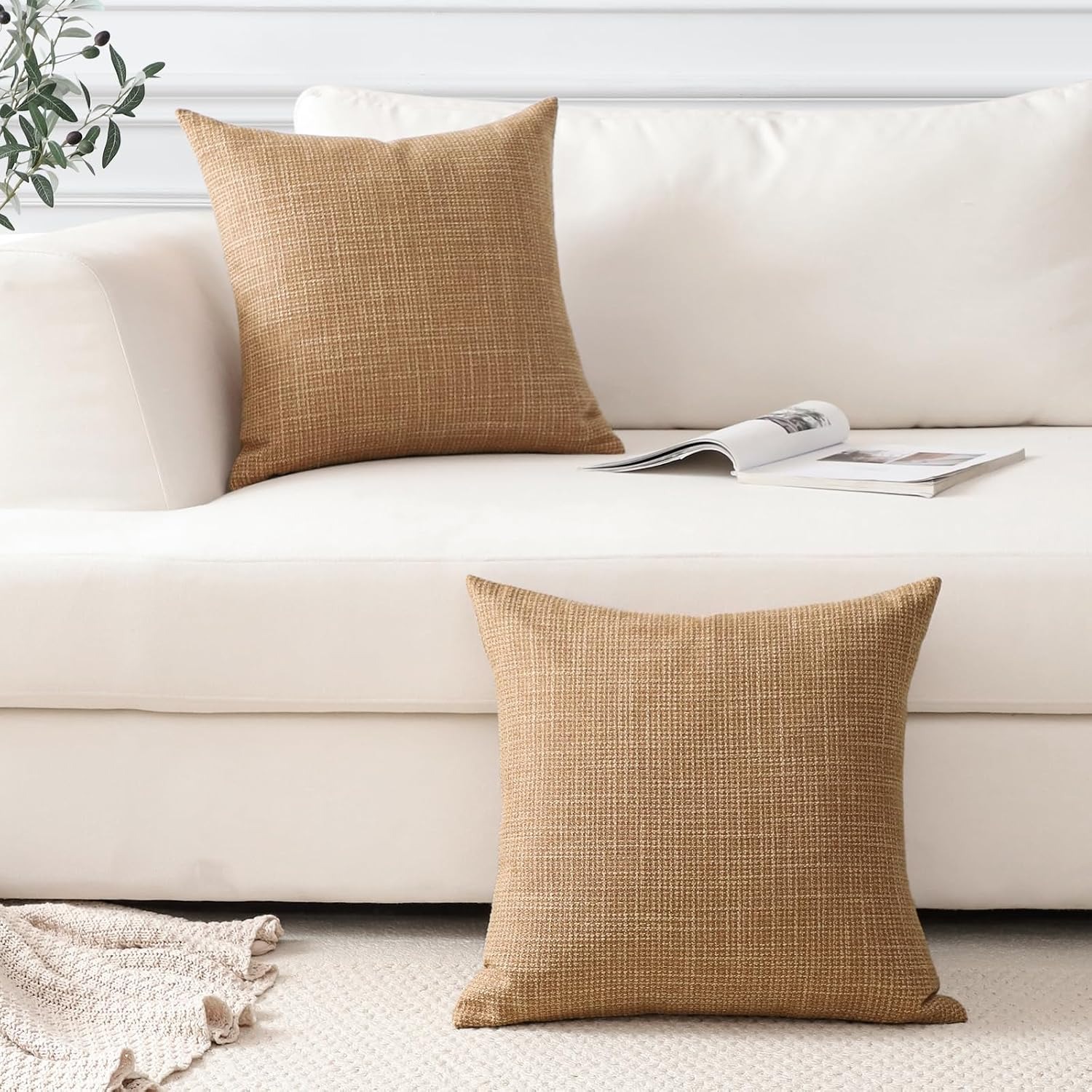
Warm neutrals are easy to place, which is why they sell so well. Light brown sits comfortably with grey, cream, white, oatmeal and most timber tones. It also works surprisingly well against deep green and navy, where it stops the darker colour feeling heavy.
A few practical combinations that tend to work:
On a grey sofa, two light brown covers plus a cream throw gives you three warm layers against the cool base. On a cream or beige sofa, the brown reads as a soft accent rather than a contrast, which suits a calm, tonal room. On a dark sofa, the brown lifts the corners and stops the whole thing reading as a block.
If you want more interest, mix textures rather than colours. A linen look weave next to a chunky knit or a velvet in a similar tone looks considered without being busy. That approach is more forgiving than trying to match exact shades, which rarely works across different fabrics anyway.
One honest caution on colour. Warm neutrals are the hardest tones to photograph accurately. Your screen may push the brown slightly pink, slightly yellow or slightly grey depending on its settings. Expect a small shift from what you see online.
Care that actually keeps them looking new
The care advice is short. Cold machine wash, gentle cycle, no bleach, tumble dry low, no iron, no dry clean.
A few habits make a real difference beyond that list. Close the zip before washing, or the slider will snag other items and the teeth can distort. Wash with similar colours, especially for the first wash. Do not overload the machine, because covers need room to move if you want the dirt out.
When drying, pull them out while still slightly damp and smooth them by hand. Then put them straight back on the inserts. The insert acts like a frame and the cover dries into shape. It is a trick that saves you ever thinking about ironing, which you are told not to do anyway.
Rotate your cushions every few weeks if one end of the sofa gets all the sun. Polyester holds colour well, but nothing holds colour forever under direct afternoon light.
For spot cleaning, blot rather than rub. Rubbing a textured weave pushes the stain deeper and can fluff the surface fibres.
How many you need
For a two seater, two covers is usually enough, one at each end. This pack covers that in one go.
For a three seater, two works if you like a sparse look, but four fills the back better. Buying two packs at the same time is smarter than buying one now and one later, because dye lots can shift slightly between production runs.
On a queen bed, two 50 cm squares in front of your sleeping pillows is the simplest arrangement. Add a lumbar cushion in front if you want a third layer.
Do not feel obliged to cover every seat. A sofa with too many cushions stops being a place you can sit.
The short version
This is a two pack of 50 x 50 cm light brown cushion covers in a polyester fabric woven to look like linen. Covers only, no inserts. Hidden matching zip, cold machine wash, allow 1 to 2 cm in the measurements.
Buy them if you want a cheap, quick way to warm up a room with a neutral tone you will not get sick of, and if a washable man-made fibre suits how your household actually lives. Skip them if you specifically need natural linen.
Pick an insert of 50 cm for a soft look or 55 cm for a plump one, wash them cold, dry them low, and they will keep doing their job for a long time.