
The complete guide
How To Choose A Linen Cushion Cover That Still Looks Good In Five Years
The problem with most cushion covers
Cushions are the thing people buy last and replace first. You pick a few to finish a room, they look fine for a season, and then the fabric goes bobbly, the colour dulls, and the whole thing starts looking tired next to the furniture it was meant to lift. The covers get shoved to the back of a cupboard and the cycle starts again.
A lot of that comes down to fibre. Cheap polyester blends look sharp in a product photo because synthetic fabric holds a flat, even surface. That same flatness is what makes them look cheap in a real room six months later, once the pile has flattened unevenly and the dye has shifted. They do not age. They just wear out.
Linen does the opposite. It starts with texture, so there is nothing crisp to lose, and the changes that happen over time mostly work in its favour. The fibres soften, the drape improves, and the colour settles. That is the whole argument for buying a linen cushion cover instead of something cheaper.
What pure linen actually gives you
Linen comes from the flax plant. The fibre is long, strong and hollow in cross-section, which is why linen fabric breathes well and feels cool against skin in warm weather. It is also one of the more durable natural fibres in common use, stronger wet than dry, which is the reverse of most materials and part of why it survives repeated washing so well.
The trade-off is creasing. Linen wrinkles, there is no getting around it, and if you want a surface that looks pressed at all times then linen is the wrong choice. Most people who buy washed linen have already decided they like the relaxed look. The creases read as soft and casual rather than untidy, particularly on a cushion where the fabric is meant to look inviting.
This Alicia cover is 100% linen with nothing blended in. That matters because blends behave like whichever fibre dominates. A linen-cotton mix will crease less but also breathe less and soften differently. A linen-polyester mix pulls in the synthetic problems you were trying to avoid. Pure is simpler.
Why pre-washed makes a real difference
Raw linen straight from the loom is stiff. It has a dry, papery hand that puts people off, and it takes a good number of home washes before it relaxes into anything you want to lean against. That is the gap that industrial pre-washing closes.
This cover has been pre-washed and stonewashed before sale. Stonewashing agitates the finished fabric so the fibres break down slightly and the weave loosens. The result is a cover that feels broken in from the first day rather than the fiftieth. It also pulls most of the shrinkage out in the factory, so the piece you measure on arrival is close to the piece you will have after a year of laundering.
If you have ever bought unwashed linen and been disappointed by how board-like it felt, that is the difference. Pre-washed linen skips the awkward phase.
Getting the size and insert right
The cover is 50 x 70 cm, a rectangle rather than a square. That shape does two jobs well.
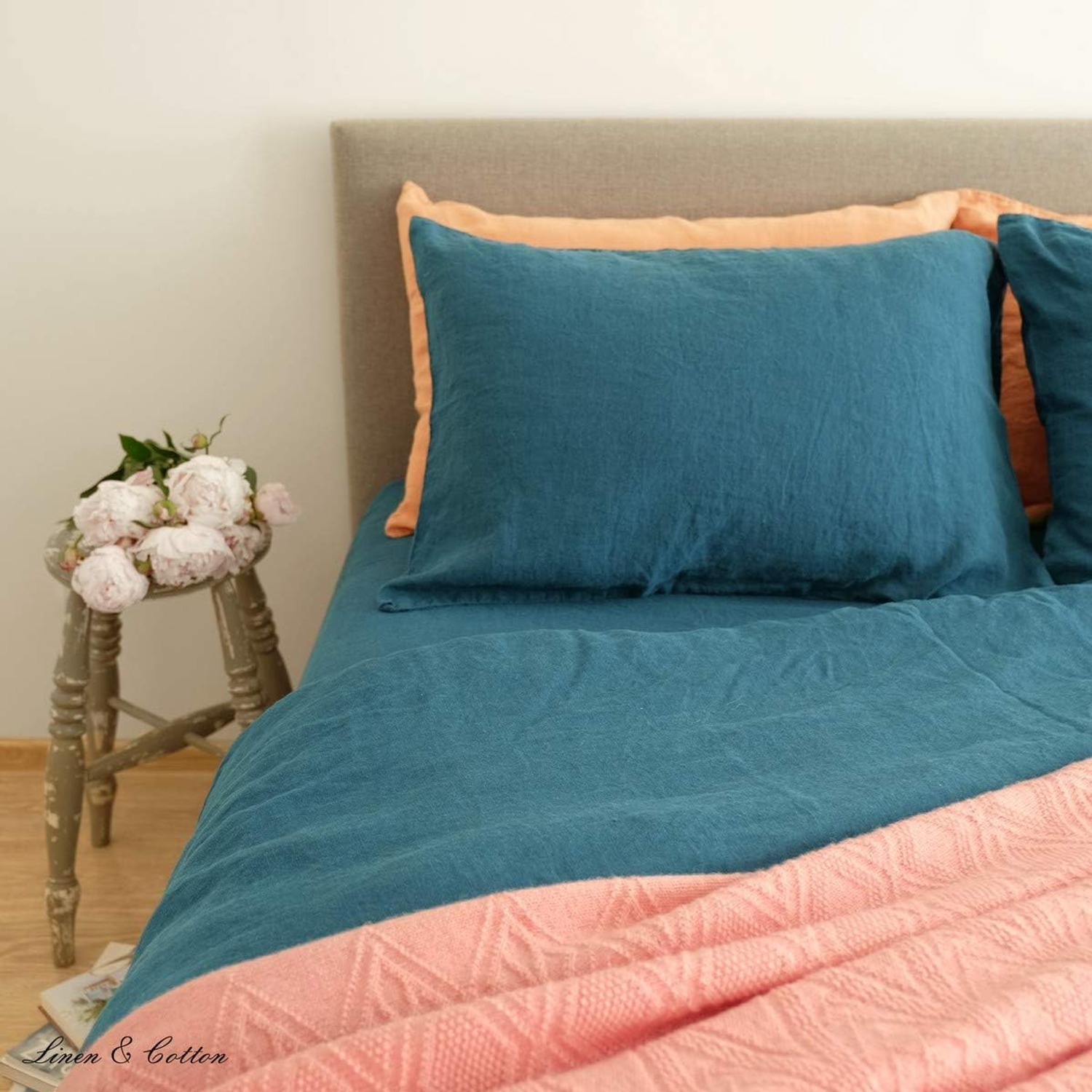
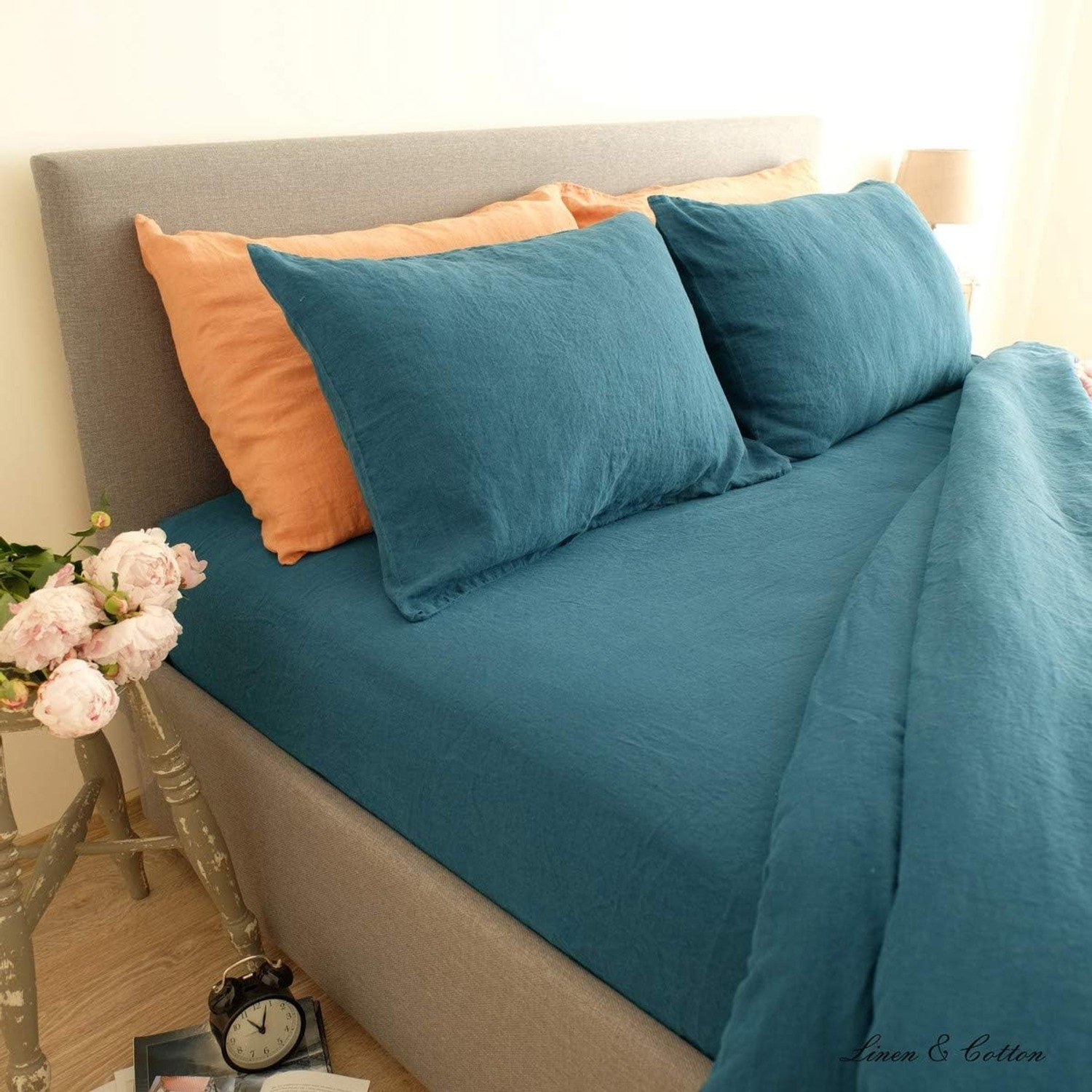
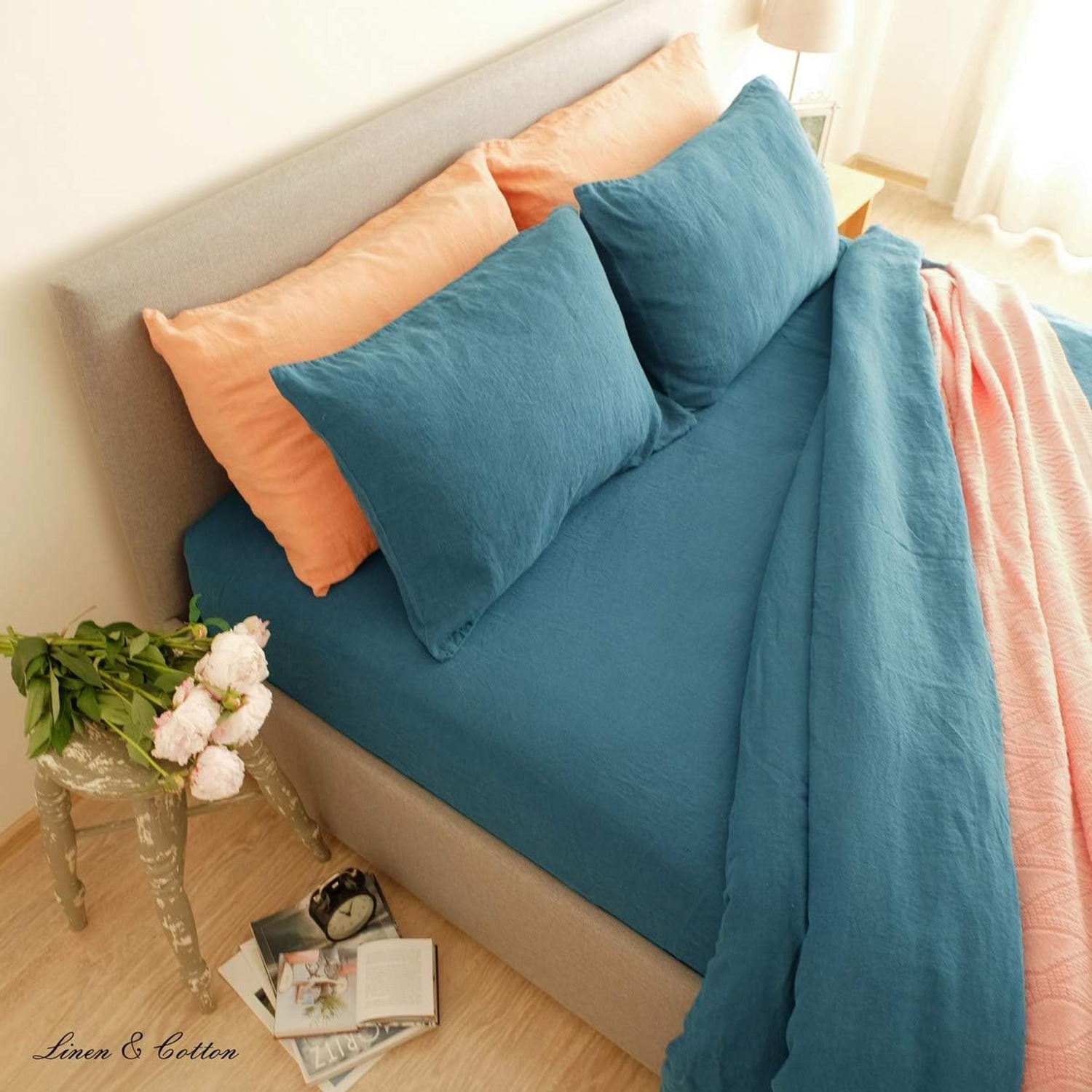
On a bed, 50 x 70 cm matches a standard pillow size in a lot of European sizing. It layers at the head of the bed in front of your sleeping pillows and adds depth without adding bulk. Two of them across a double bed covers the width neatly.
On seating, the same rectangle makes a lumbar cushion. That is the one you actually use, the one that goes behind your lower back when you sit down properly rather than perching. A square cushion in that position pushes your shoulders forward. A rectangle sits where it should.
For the insert, you have a choice to make about look. An insert the same size gives a soft, slightly slumped cushion with empty-looking corners, which suits the relaxed character of washed linen. An insert 2 to 5 cm larger in each direction fills the cover out and gives crisp, full corners. Neither is wrong. For a bed, the fuller look usually photographs and reads better. For a sofa you actually use, a firmer insert holds up to being leaned on every evening.
Feather and down inserts give the nicest drape but need plumping. Down alternative holds shape with no effort. Pick based on how much fussing you are willing to do.
Living with petrol blue
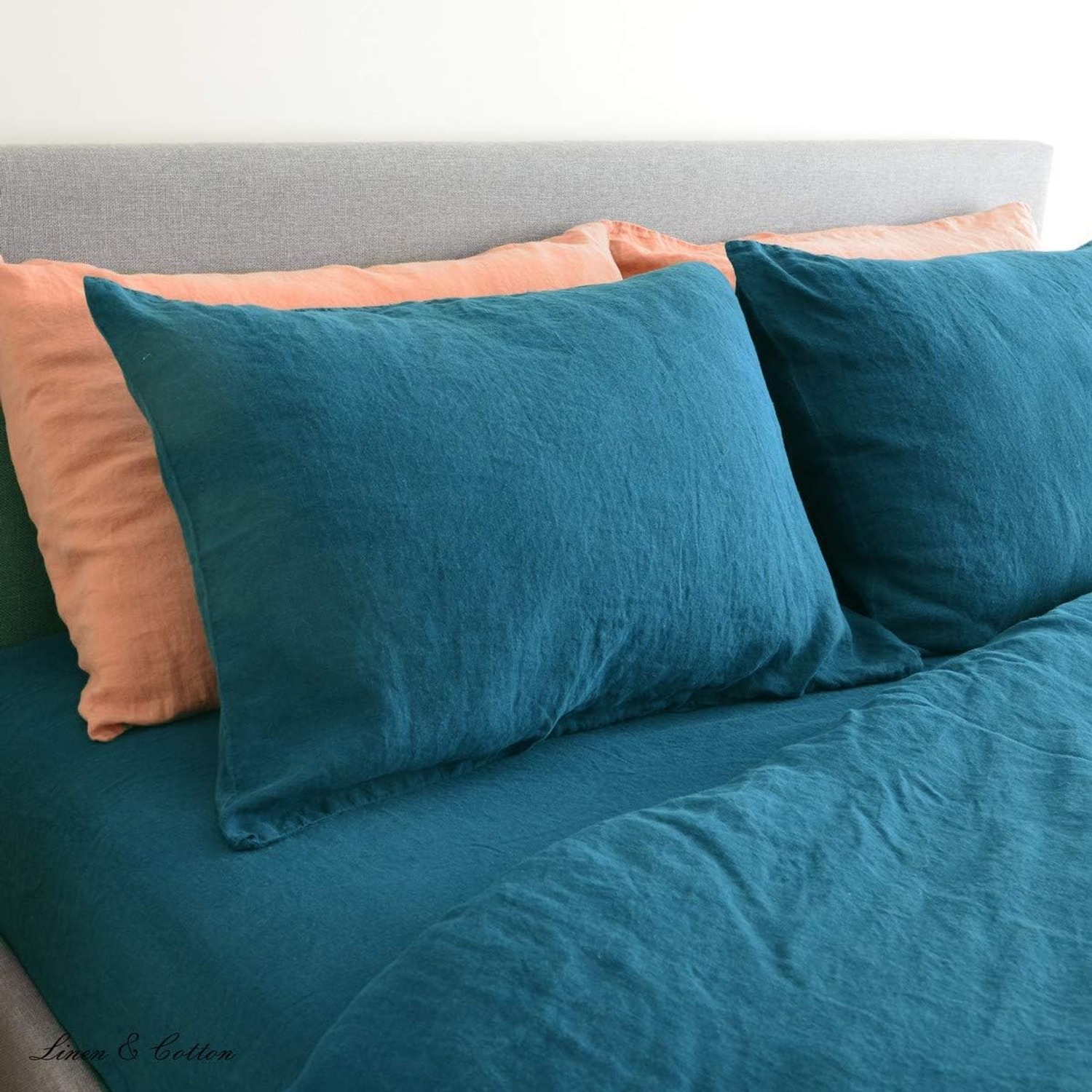
Petrol blue is a deep blue carrying a green undertone. It shifts with the light, reading close to dark teal in a dim corner and clearly blue by a window. That shifting quality is useful because it means the cushion does not look like a flat block of colour.
It pairs easily with neutrals. Oatmeal, bone, warm grey, sand and raw timber all sit well beside it without any effort. If you want something warmer in the mix, rust, terracotta and mustard make good partners. For a cooler scheme, pair it with pale grey and white and let the blue do the work on its own.
What petrol blue is not is a safe navy. It has more personality than that, which is good if your room needs a point of interest and less good if you were hoping for something that disappears. Keep that in mind if you are choosing a blue linen cushion cover for a space you want to stay very quiet.
Washing and daily care
The recommended care is a machine wash at 40°C on a gentle or linen cycle. That is it. No hand washing, no specialist detergent, no dry cleaning.
A few habits make the cover last longer. Wash with similar colours, because deep dyes can release a little in early washes. Use a mild liquid detergent rather than a heavy powder, and skip fabric softener, which coats natural fibres and actually reduces their absorbency over time. Do not use bleach or oxygen stain removers on coloured linen.
For drying, low heat in a tumble dryer works, or line dry out of direct sun. Either way, take the fabric out while it is still slightly damp and smooth it with your hands, or give it a shake and hang it. That alone removes most of the hard creasing. If you want it properly smooth, iron on the linen setting while damp.
Give the cushion a shake and a plump every few days. It takes five seconds and keeps the insert from settling into one shape permanently.
Who this suits
This works well if you like natural materials and are comfortable with a relaxed, textured look. It suits bedrooms, reading chairs, sofas in family rooms, and guest spaces where you want something that looks considered without being precious.
It is less suited to someone who wants a sharp, pressed, hotel-flat finish at all times, or who needs an insert included in the price. The pack is the cover only.
The short version
You are buying a 50 x 70 cm cover made from 100% linen, stonewashed so it is already soft, in a deep petrol blue, made in the EU, washable at 40°C. No insert is included. Measure your existing cushion before you order, decide whether you want the plump look or the relaxed one, and pick your insert size accordingly.
Linen costs more upfront than a synthetic cover. It also tends to still be in use when the synthetic one has gone in the bin. That is the trade, and for most people it is a reasonable one.