
The complete guide
How to Choose Linen Look Cushion Covers That Actually Suit Your Sofa
The problem with cushions nobody talks about
Cushion covers wear out long before the cushions do. The filling inside a square insert can stay perfectly serviceable for years. The outer fabric, meanwhile, is the part that takes the sunlight, the elbows, the pet claws, the dropped forkful of pasta and the slow greying that comes from being leaned on every single night.
So people throw out the whole cushion, buy new ones, and repeat the cycle in two years. It is an expensive habit, and it fills a lot of bins.
Buying covers on their own breaks that loop. You keep the inserts, which are the bulky part, and change only the skin. It costs less, it takes up less space in the cupboard, and it means you can change the feel of a room in an afternoon without a trip to a furniture showroom.
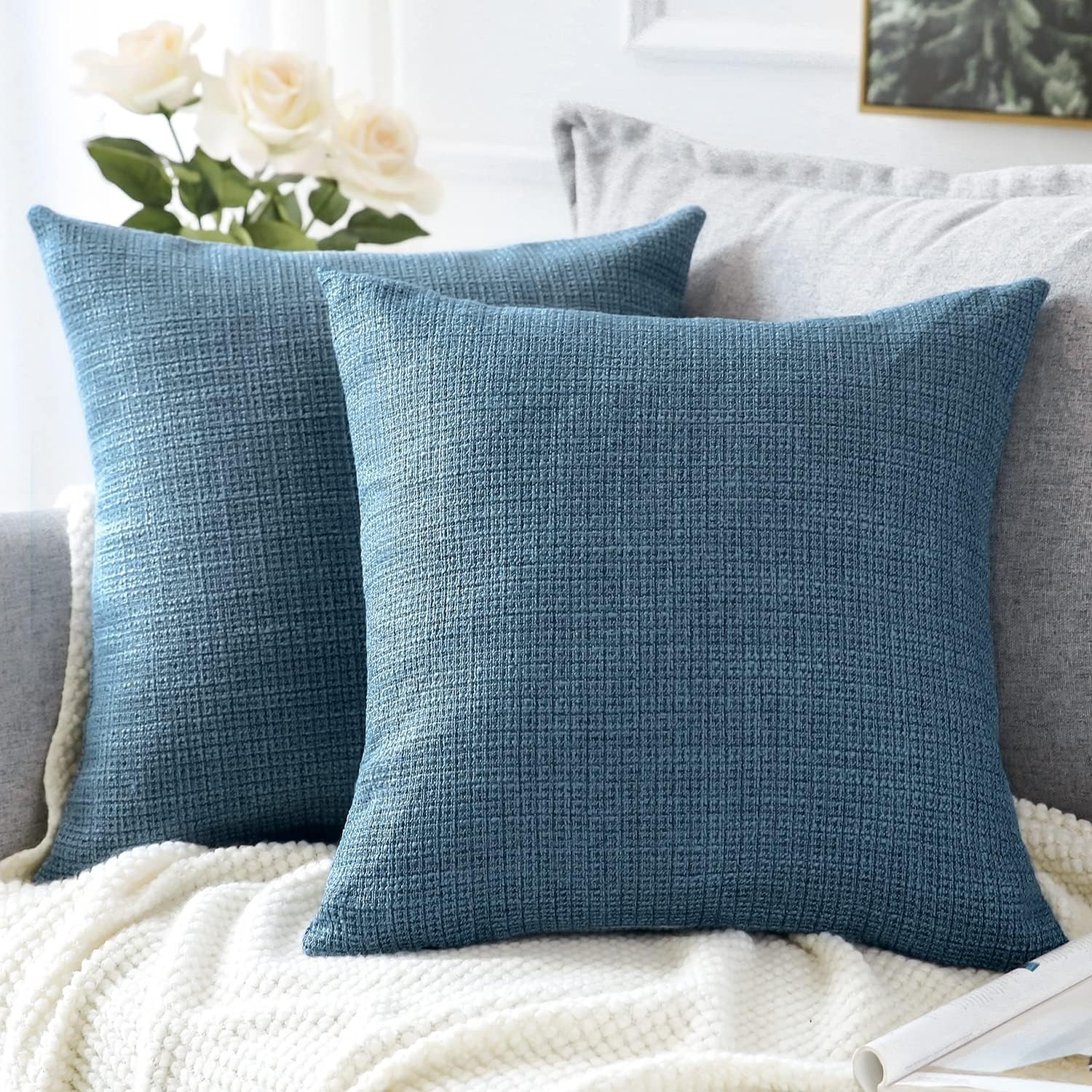
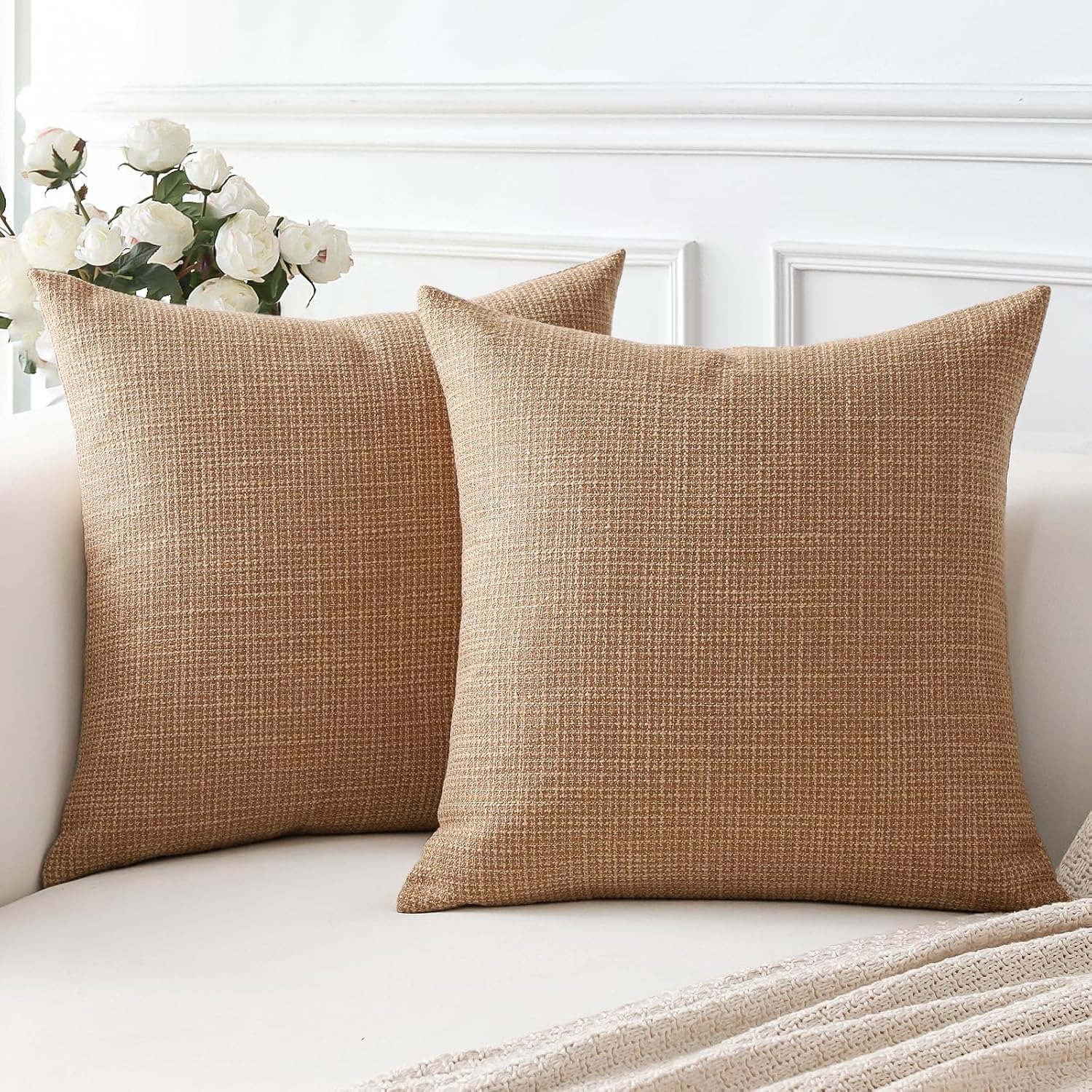
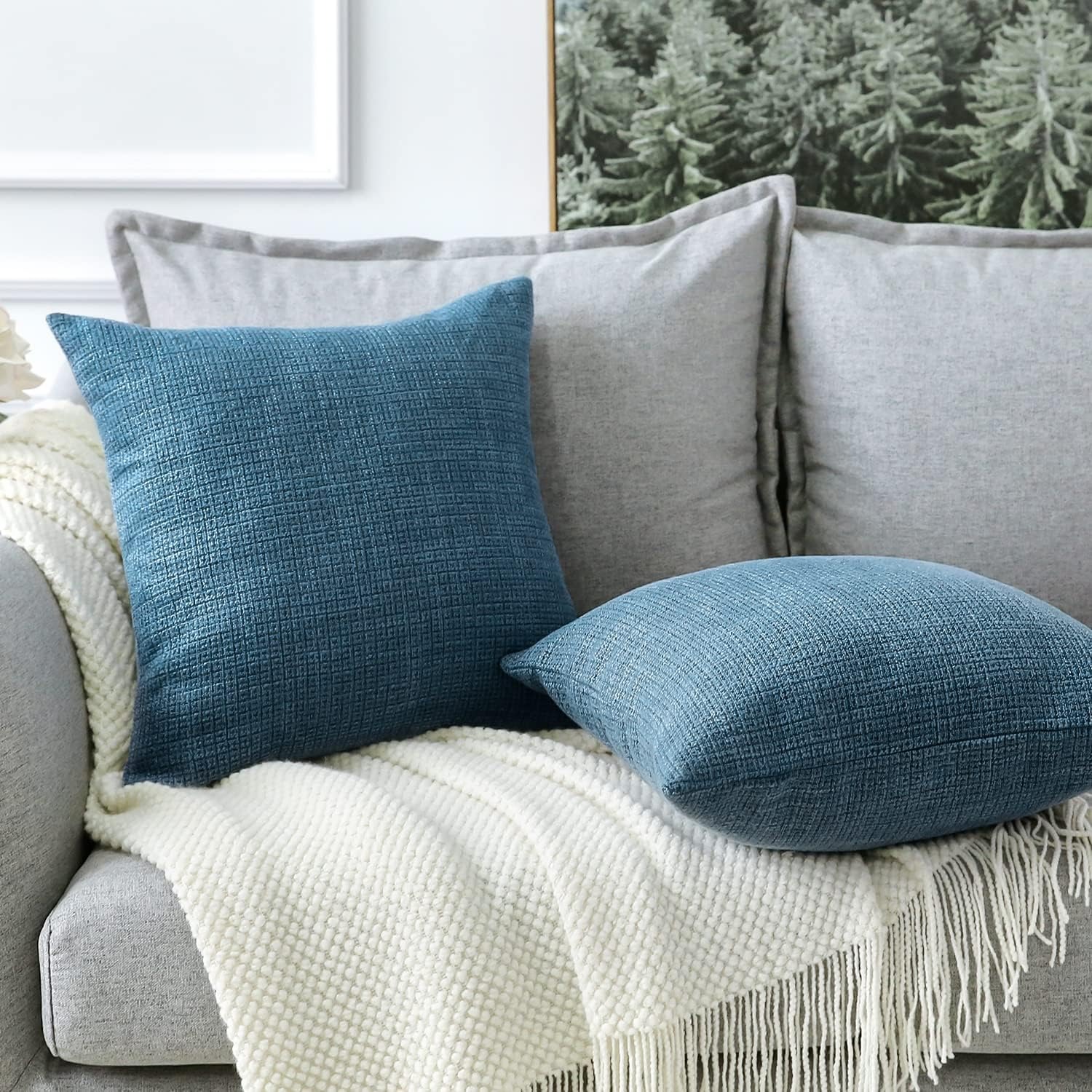
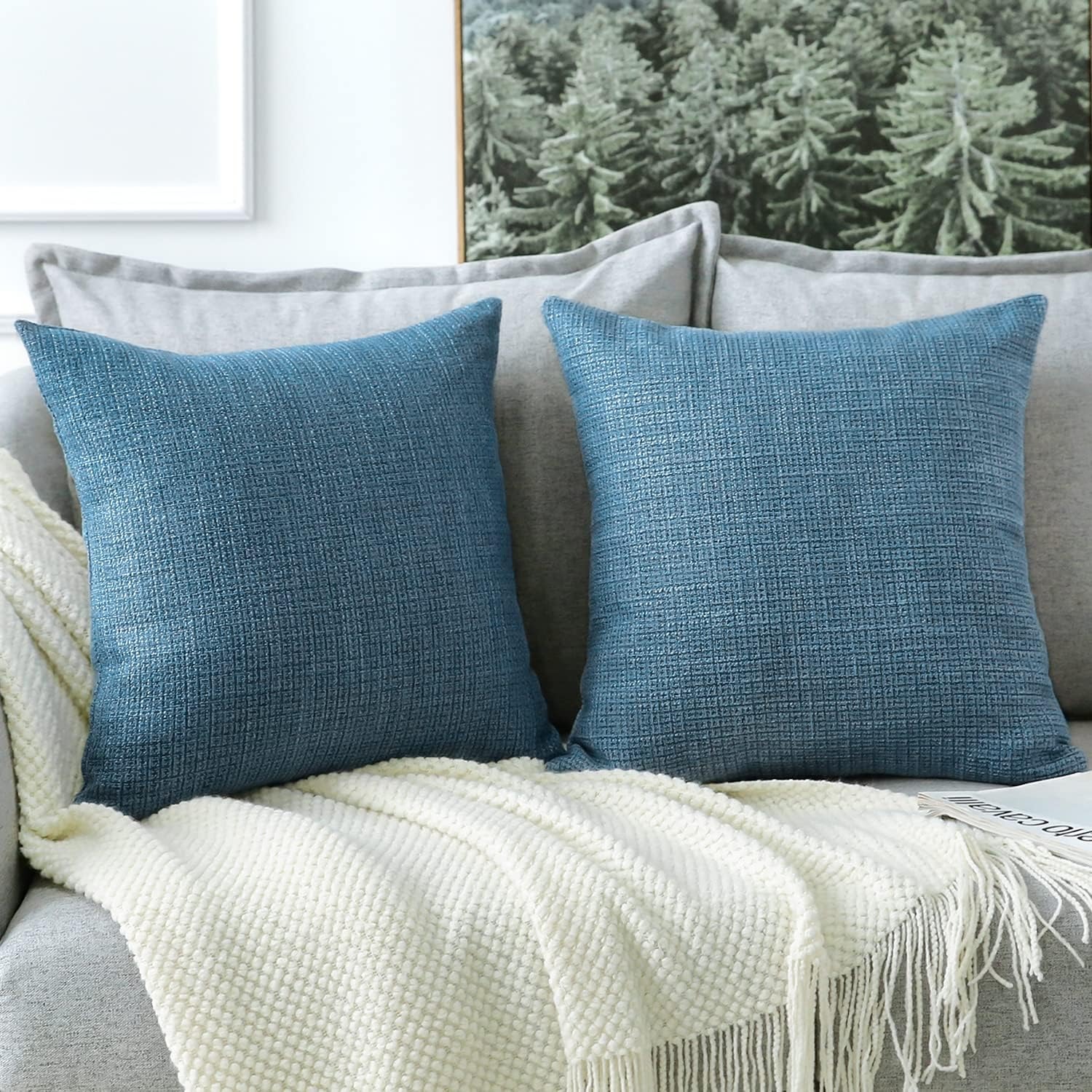
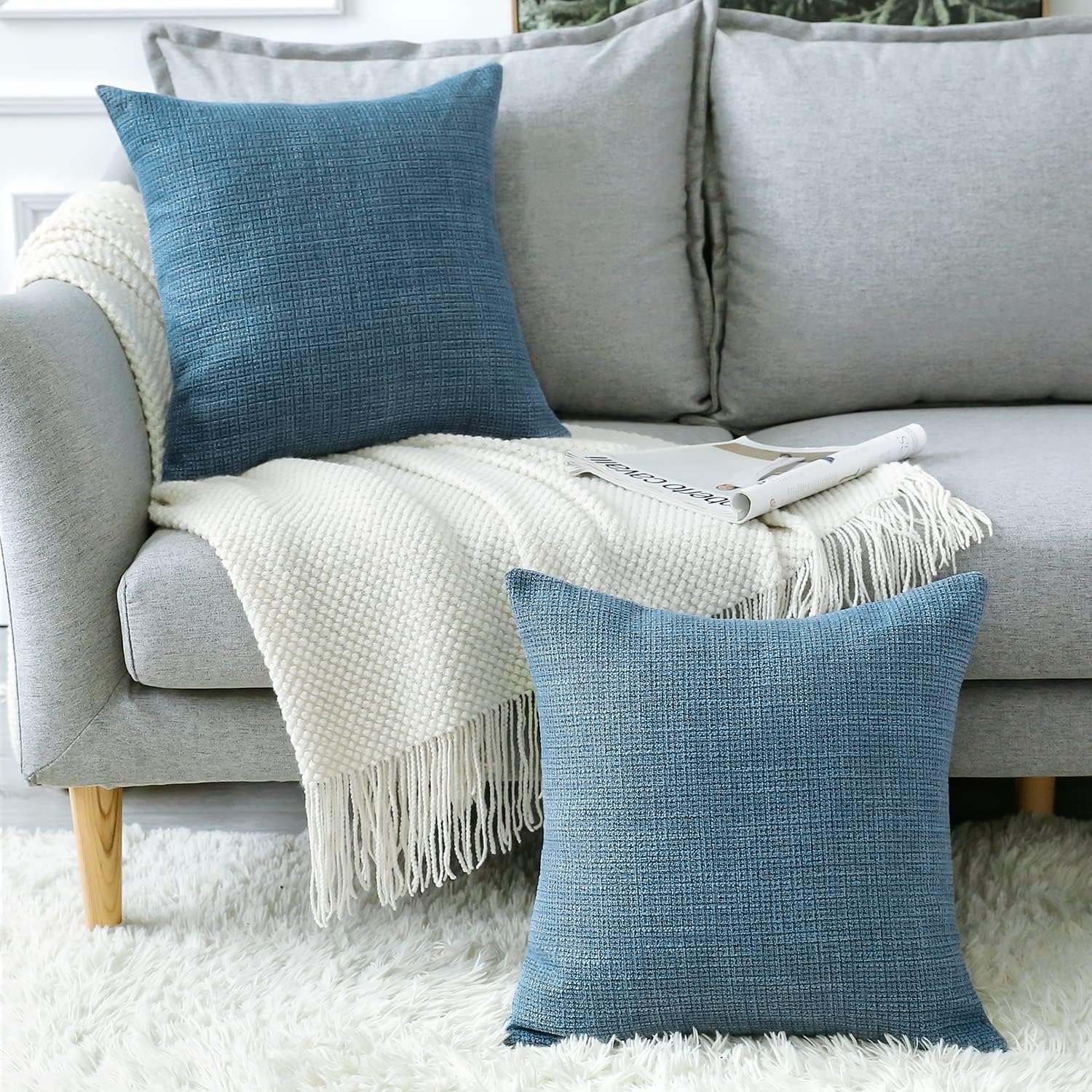
These linen look cushion covers come as a set of 2 at 50 x 50 cm, which happens to be the most common square cushion size in homes across most of the world. If you have square cushions on your sofa right now, there is a strong chance they are this size.
What "polyester linen" actually means
Let us be straight about the fabric, because this is where listings often go vague.
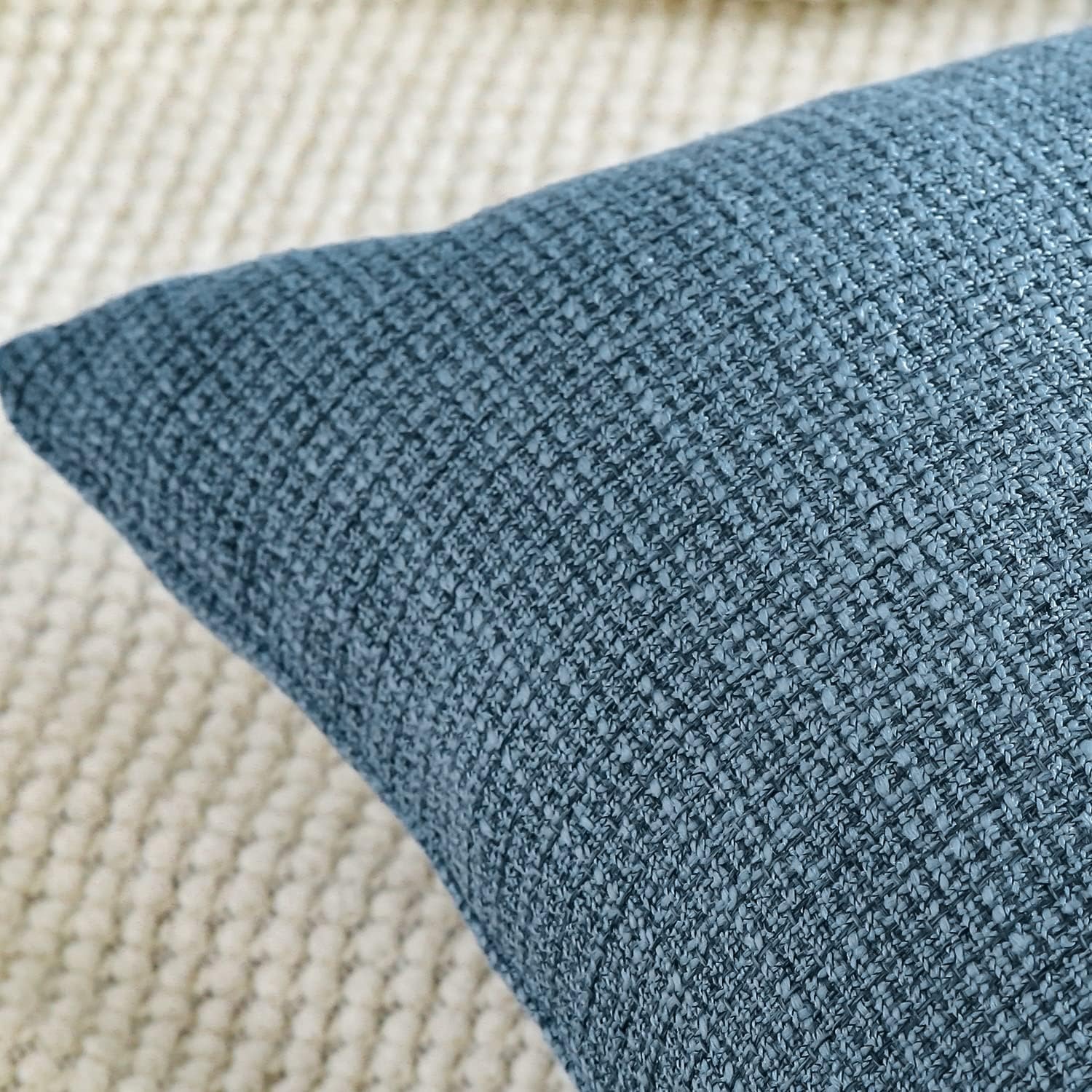
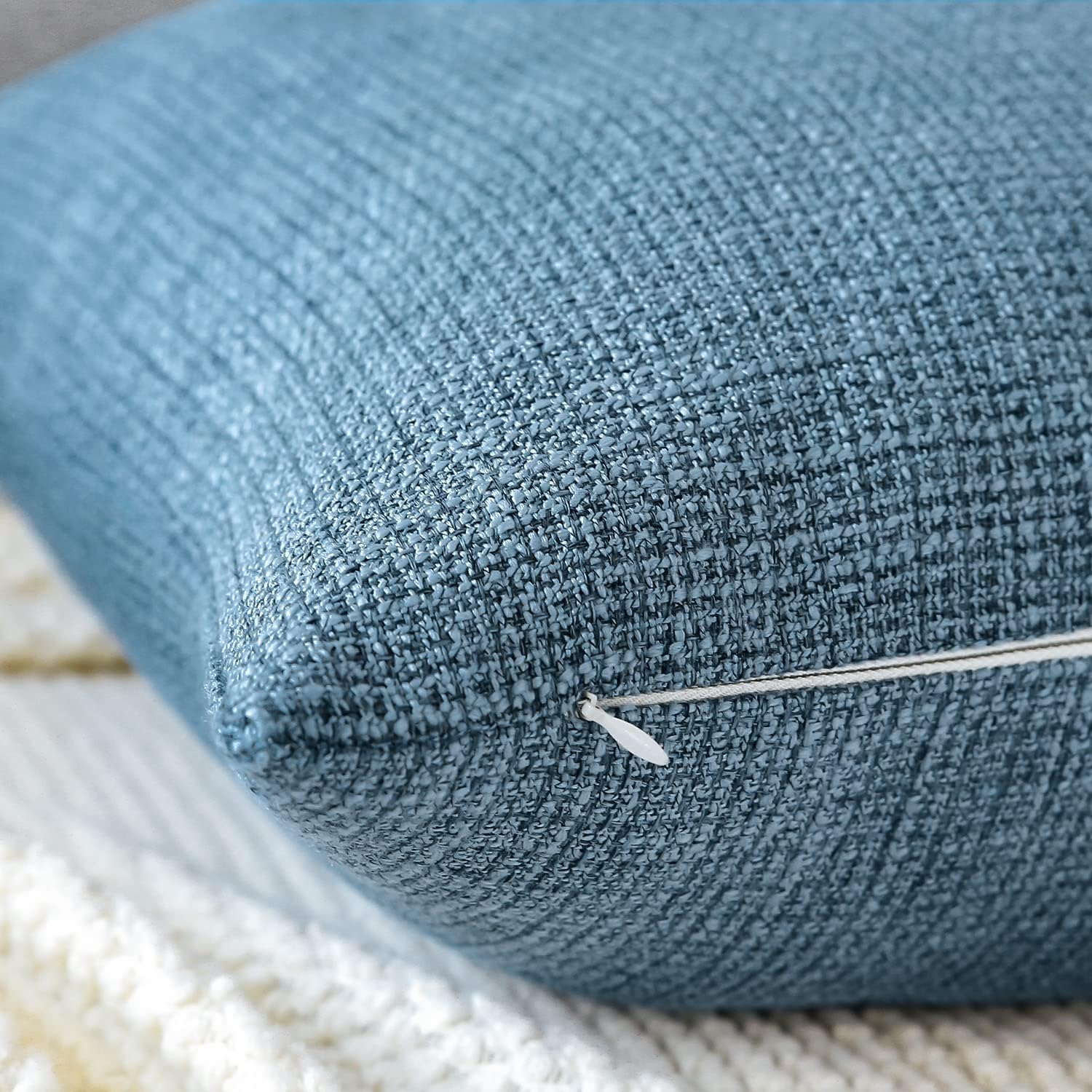
The material here is polyester, woven in a way that mimics the look of linen. The maker calls it polyester linen. No linen percentage is stated, and we are not going to pretend one exists. Treat these as faux linen cushion covers: the appearance of flax, the behaviour of a synthetic.
That is not a criticism. Real linen is wonderful, and it also creases if you look at it sideways. On a cushion that gets sat on and shoved around all evening, pure flax will look rumpled within an hour of being plumped. Some people love that lived-in look. Others find it reads as untidy.
A polyester linen weave sits in the middle. You get the matte, slightly uneven surface texture rather than a flat shiny finish, but the yarn springs back rather than holding every fold. It also tends to resist fading better in a bright room and costs noticeably less.
The trade-off is in the hand feel. Flax gets softer with every wash in a way synthetics do not quite match. If that softening process is the thing you want, you want genuine linen. If you want the look with less maintenance, this is the sensible category.
Getting the insert size right
This is the single biggest factor in whether your cushions look good or sad, and it has nothing to do with the cover itself.
A 50 cm cover with a 50 cm insert looks correct. A 50 cm cover with a 45 cm insert looks like a half-empty pillowcase, with limp, pointed corners and a hollow middle. It is the most common mistake in home styling, and once you notice it you cannot stop seeing it in other people's living rooms.
Many stylists go one step further and use an insert slightly larger than the cover, around 52 to 55 cm for a 50 cm cover. The extra fill pushes into the corners and gives you that plump, rounded shape you see in catalogue photos. You will have to work a bit harder to get the zip closed, but the result is worth the extra thirty seconds.
What goes inside also matters. Feather and down inserts collapse into a soft, slouchy shape and can be karate-chopped into that dented top you either love or hate. Polyester fibre inserts hold a firmer, more upright shape and bounce back without fuss. Neither is wrong. Feather suits a relaxed, lived-in room. Fibre suits a tidier one, and it is the better choice if anyone in the house reacts to feathers.
Who these suit
Renters, mostly. If you cannot change the sofa, the walls or the floor, cushions are one of the few levers you have, and a set of 2 polyester linen weave covers is about the cheapest meaningful change you can make to a room.
They also suit anyone with a busy household. The covers come off, go in a cold wash and go back on. That is a very different proposition to a fixed-cover cushion that you spot-clean and hope for the best with.
They work well for people who like a neutral base. Linen-look texture is quiet. It does not fight with a rug or a piece of art, and it lets you add one louder cushion without the whole arrangement getting shouty.
They are less ideal if you want something fully weatherproof for an exposed balcony, or if you specifically want the hand feel and ageing character of real flax. In those cases, look elsewhere in the range.
Building an arrangement that works
Two matching cushions on a two-seat sofa is a complete look on its own. One at each end, done.
On a three-seat sofa, two of these at the ends plus a third cushion in a different size or texture tends to look better than three identical ones in a row. Odd groupings read as deliberate. Perfect symmetry can read as a showroom.
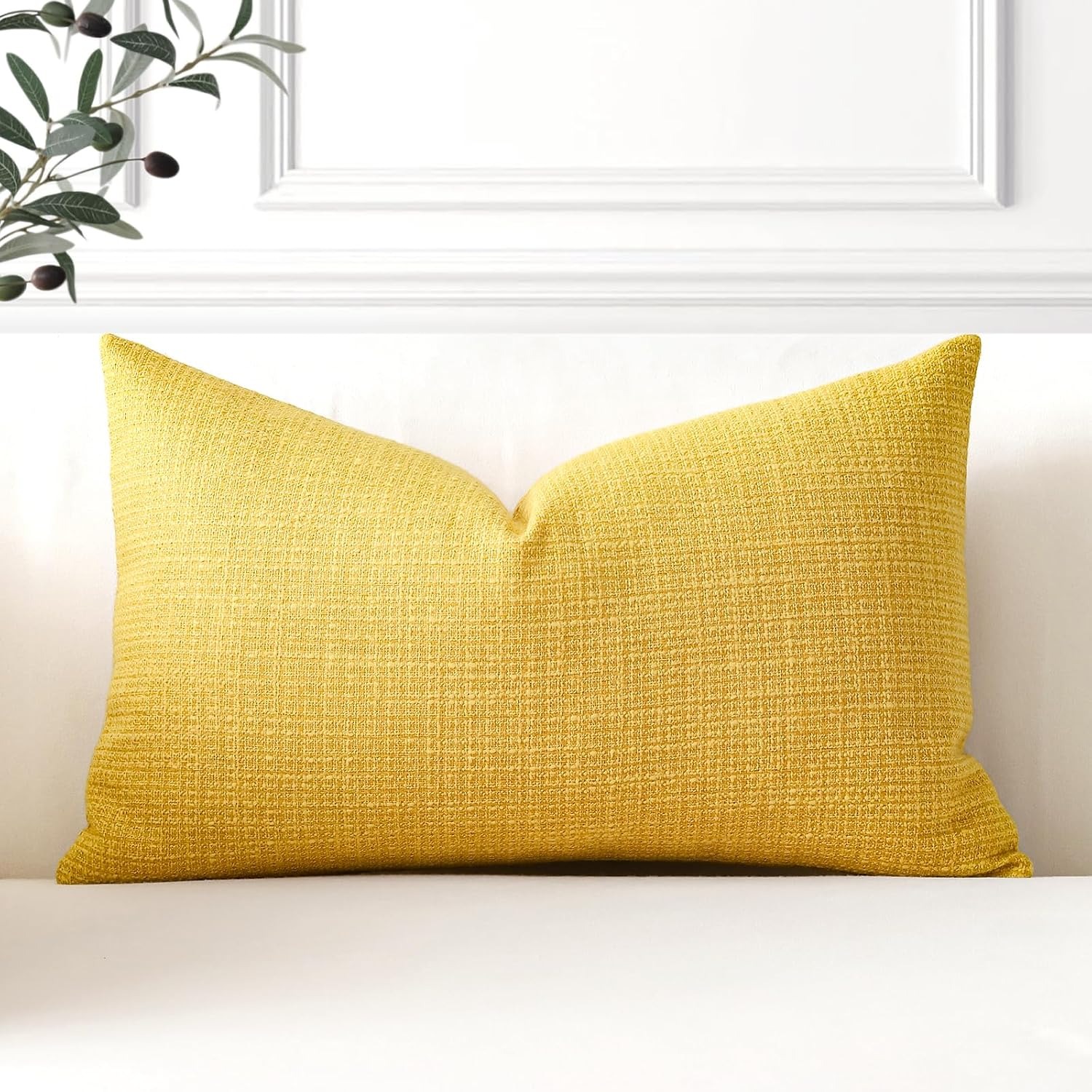
A useful trick is to vary shape rather than colour. Keep everything in a tight palette of two or three tones, then mix a 50 cm square with a lumbar cushion and maybe a smaller square. The eye reads variety from the shapes, so the colours can stay calm.
On a bed, 50 cm squares sit well in front of your sleeping pillows. Two at the back, a smaller pair or a bolster in front, and the bed looks made even when the sheets underneath are not perfect.
Looking after them
Washing is cold, gentle cycle, like colours. No bleach. Tumble dry low, or line dry out of direct sun.
Zip them closed before they go in the machine. An open zip slider is a tiny metal hook, and it will find your other laundry.
The trick that makes the most difference is putting the covers back on the inserts while they are still slightly damp. The weave settles as it finishes drying on the cushion shape, so creases flatten out on their own and you skip the ironing step entirely. The maker advises against ironing anyway, and with polyester a hot iron can glaze the surface.
Between washes, a lint roller handles pet hair and a soft brush lifts crumbs out of the weave. If something spills, blot it rather than rubbing. Rubbing works the stain into the fibres and can fuzz up the surface.
Rotate your cushions every few weeks if one end of the sofa gets more sun than the other. It evens out any fading and spreads the wear.
A note on colour and small differences
Two small things worth setting expectations on.
First, colour on a screen is never an exact match for colour in a room. Monitors vary, and so does the light where you sit. Expect the real item to be close but not identical.
Second, the maker notes a 1 to 2 cm variation in size because the covers are hand cut and sewn. That sounds like a lot written down. In practice, once an insert fills the cover, nobody has ever measured a cushion and noticed.
The short version
You are buying two 50 x 50 cm covers, no inserts, in a polyester fabric woven to look like linen. The zip is hidden. They wash cold.
Match them with a 50 cm insert for a neat fit, or go up to 52 to 55 cm if you want them plump. Keep the washing cool and the drying gentle, put them back on while damp, and they will keep looking tidy for a long time.
If your cushions have gone shabby but the filling inside is still fine, this is the cheap, quick fix. It takes about five minutes and changes the room more than you would expect.