
The complete guide
How To Choose Linen Lumbar Cushion Covers (And Make Them Look Right)
The problem with cushions nobody talks about
Cushion inserts last for years. Cushion covers do not.
Think about what a lumbar cushion actually goes through. It gets leaned on every evening, dragged across the sofa, sat on by a visitor who did not notice it, soaked in afternoon sun through a west-facing window, and occasionally used as a lap tray for a bowl of pasta. The pad inside stays perfectly serviceable. The outside picks up marks, loses its colour on one side and starts to look tired.
Most people respond by buying whole new cushions. That is an expensive habit, and it leaves you with a cupboard of perfectly good inserts you feel guilty throwing away. Buying covers only is the sensible version of the same refresh. You keep the pads, swap the outside, and the room looks different for a fraction of the cost.
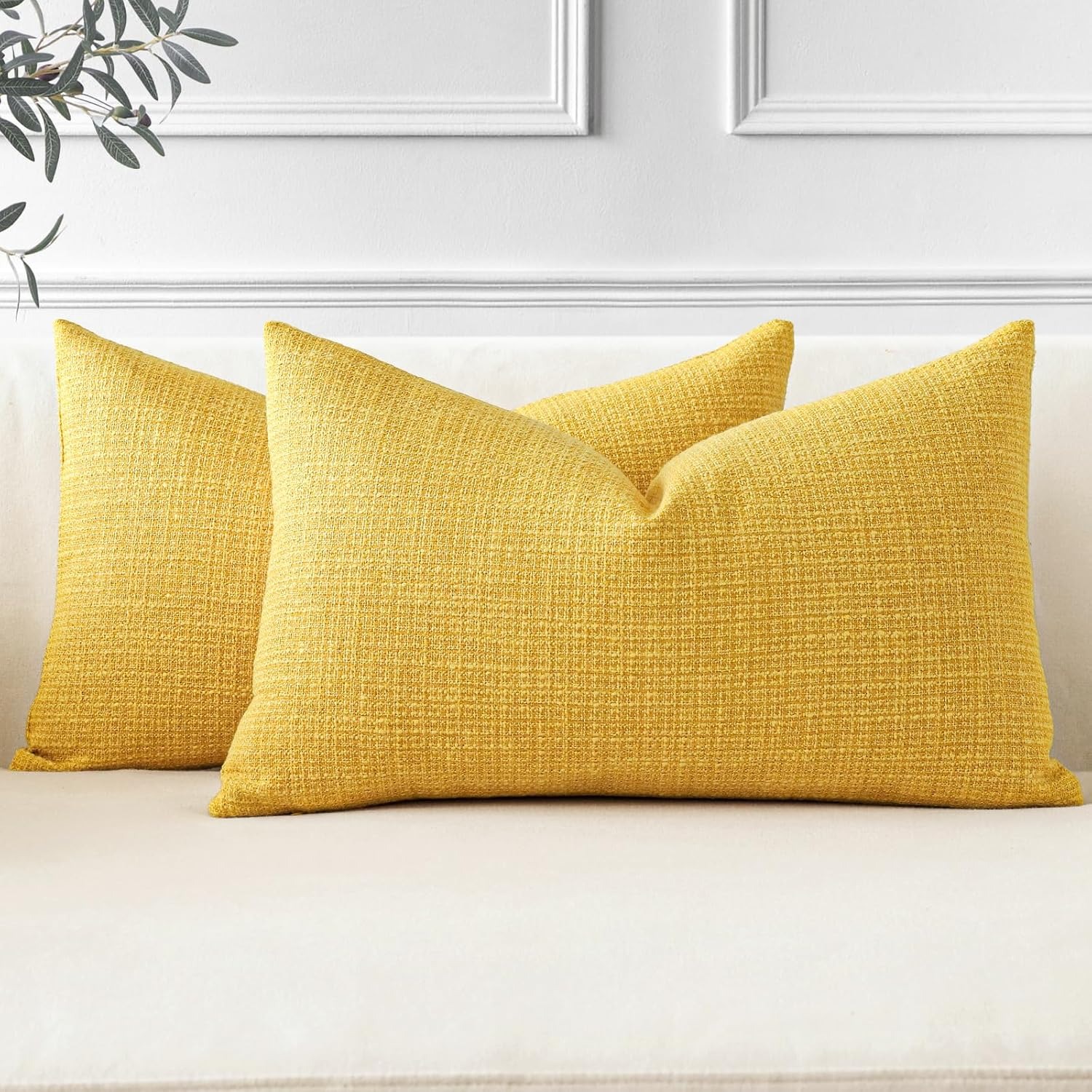
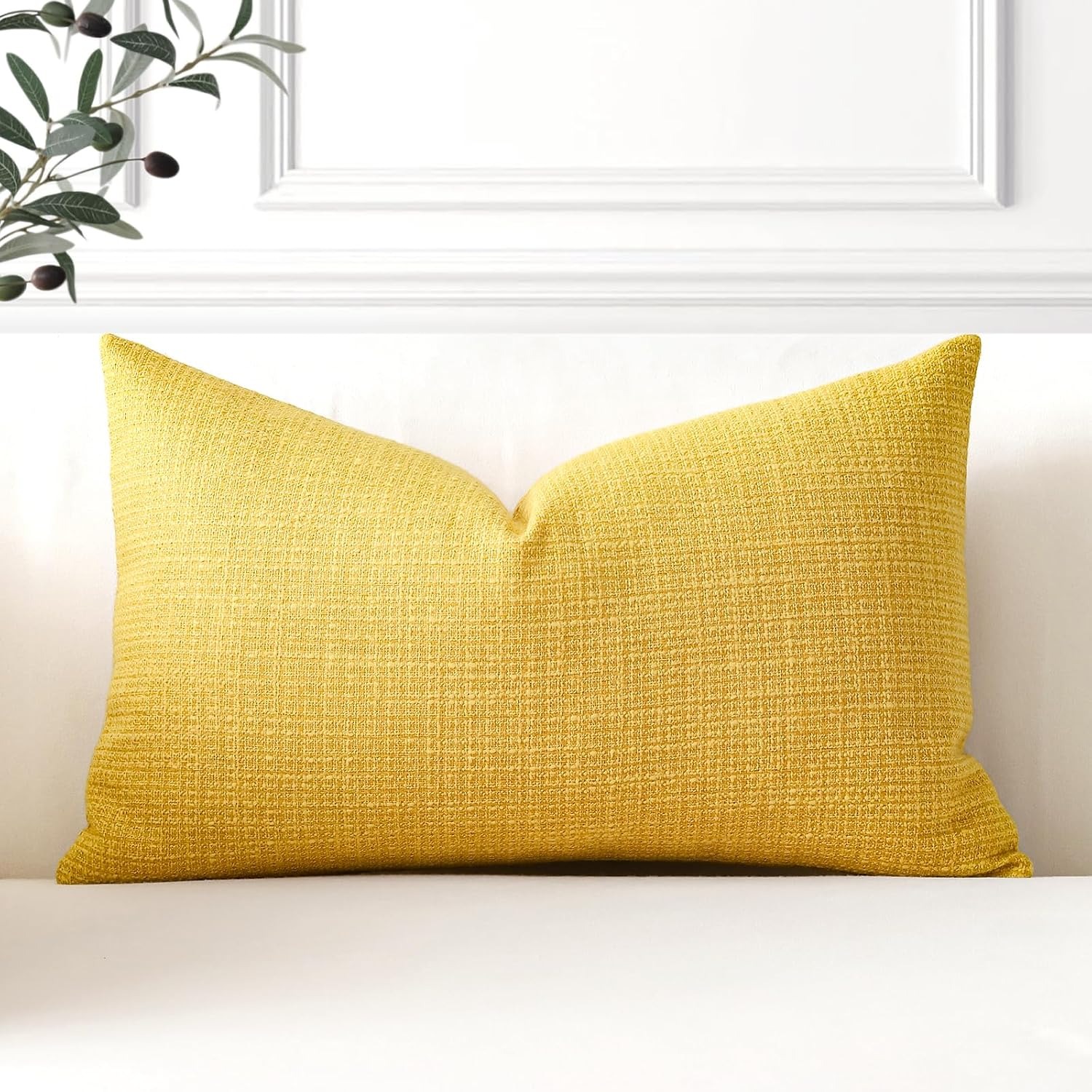
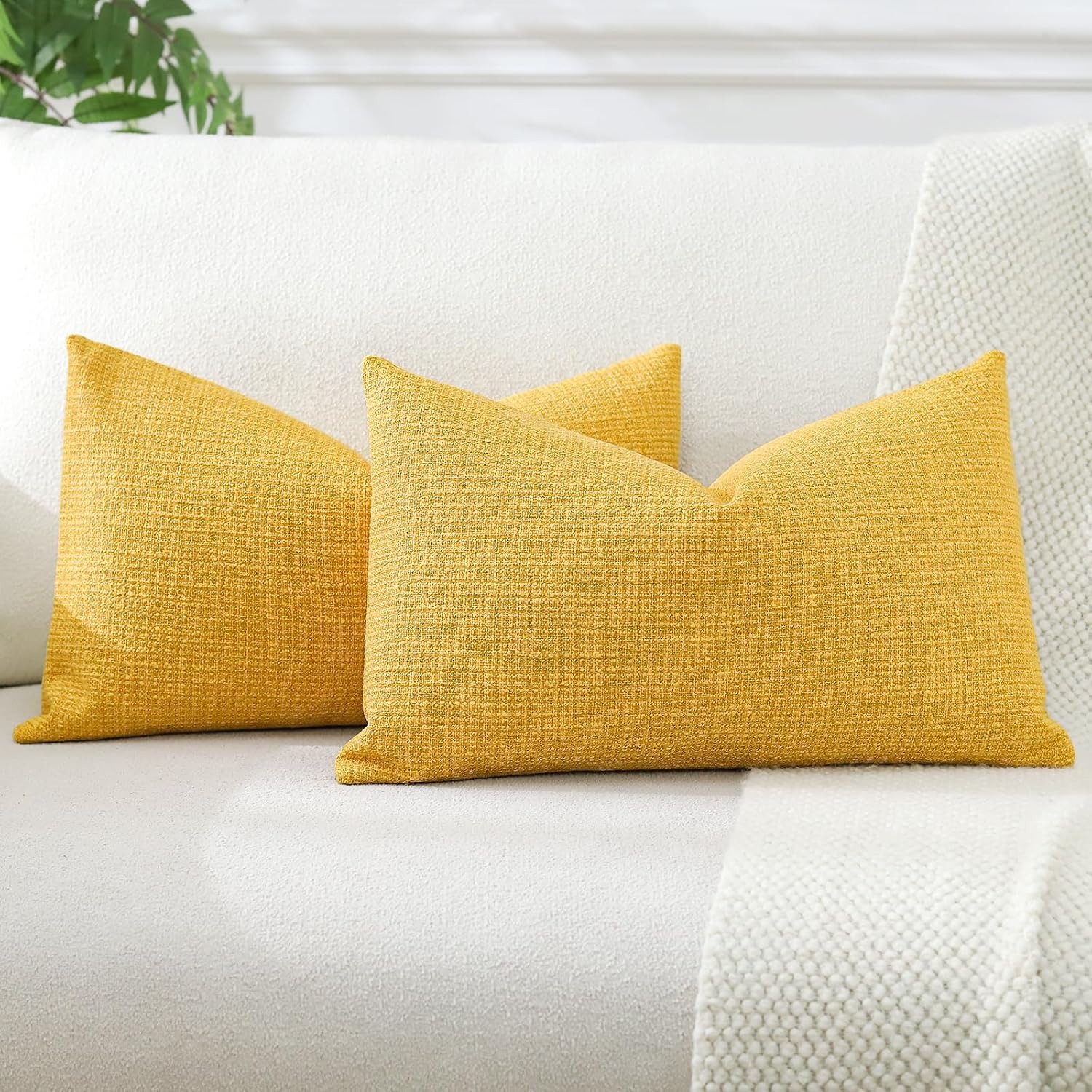
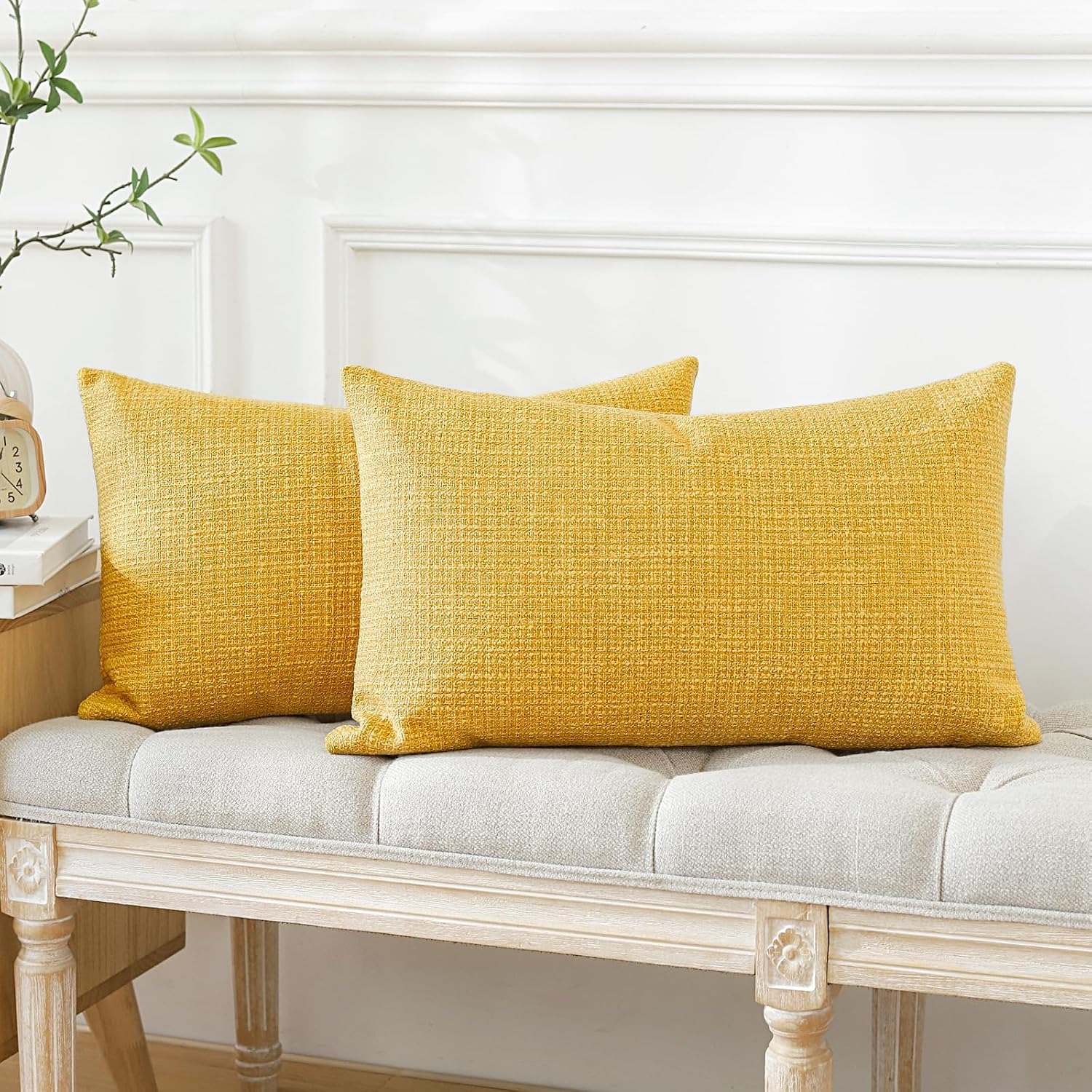
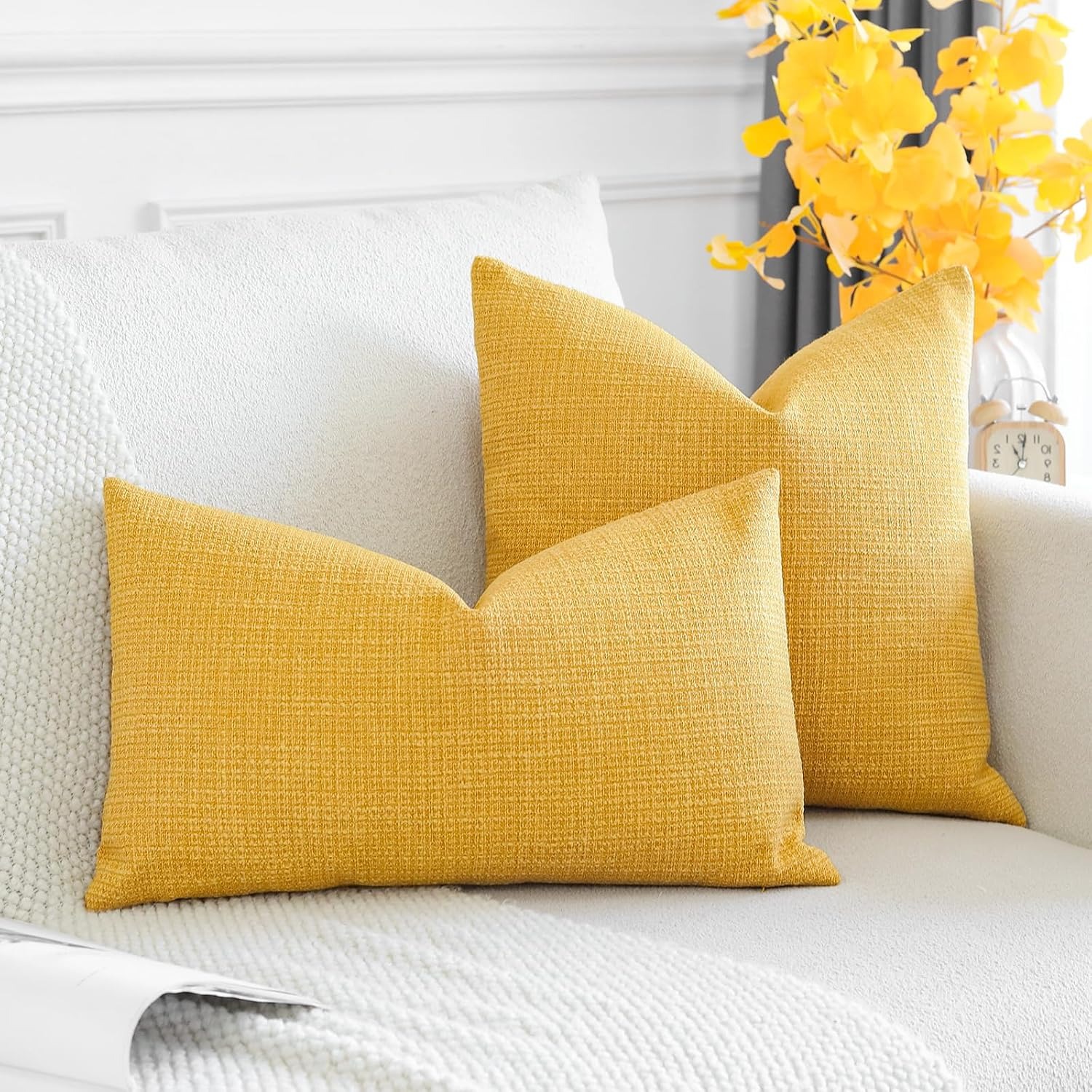
That is what this two-pack does. Two linen blend lumbar cushion covers at roughly 30 x 50 cm, a hidden zip, over-locked seams, no inserts.
Why the 30 x 50 size matters
Thirty by fifty centimetres (about 12 x 20 inches) is not a random number. It is the standard lumbar size, and it has stuck around because it fits the human body on a normal sofa.
A deep sofa seat is usually too deep for comfortable sitting. Your back ends up unsupported and you slide forward over the course of an hour. A rectangular cushion of this size slots into that gap, meets the curve of your lower spine and keeps you upright without feeling like a brace.
The practical benefit of a standard size is that inserts are easy to find. Whatever country you are in, 30 x 50 cm pads are stocked widely in feather, fibre and foam. You are never stuck hunting for an odd shape. If you have been looking for the best lumbar pillow covers for sofa use, this is the size to search for first.
What a linen polyester blend actually means
Let us be straightforward here. This is not pure linen. It is a linen polyester blend, and the maker has not published the split between the two fibres.
That is worth understanding rather than glossing over. Pure flax linen has a distinctive crisp hand that softens beautifully over years. It also creases the moment you look at it, costs considerably more and can shrink if you are careless with hot water.
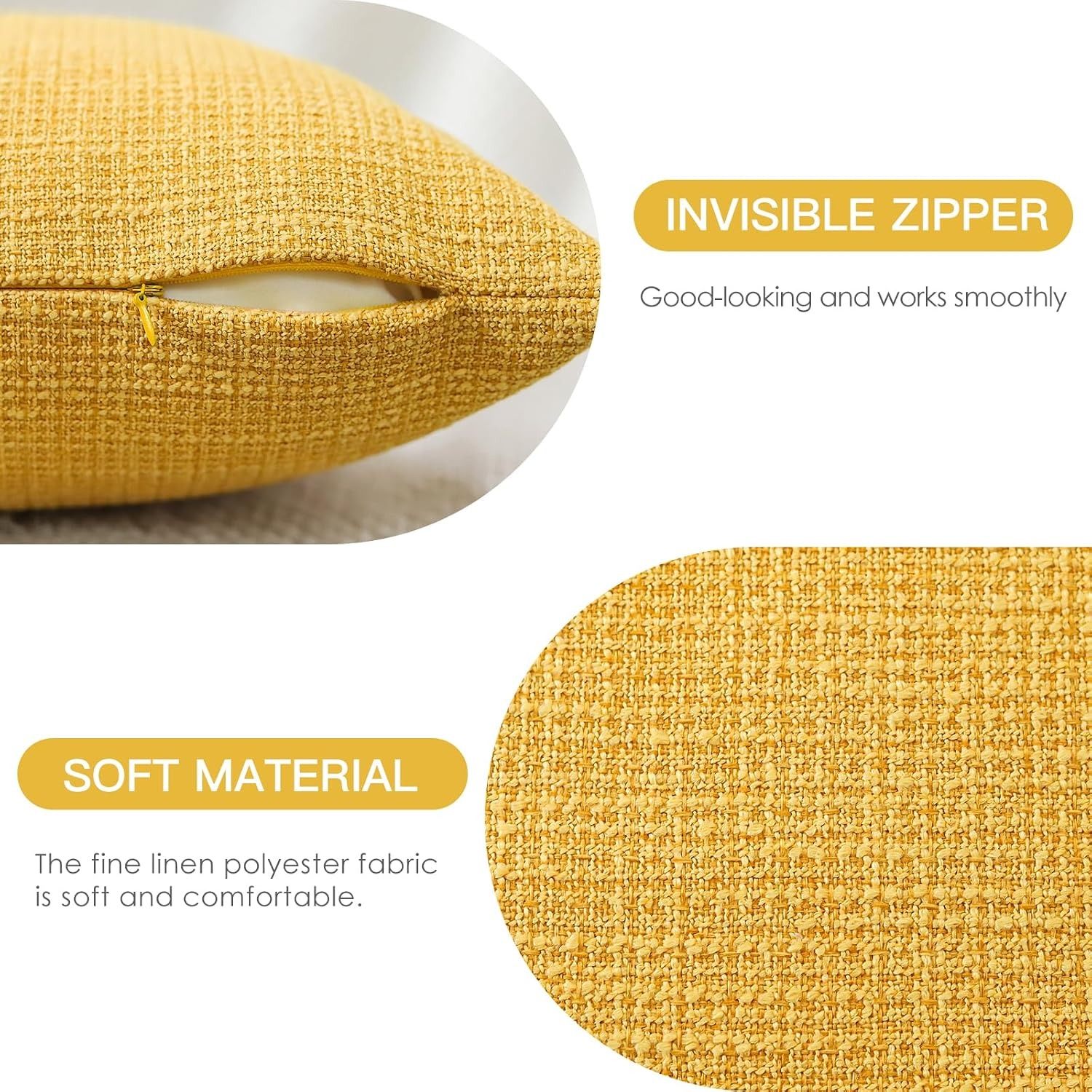
A blend takes the visual texture of linen, that slightly irregular slubby surface, and adds polyester for stability. The result is fabric that creases less, holds colour well through washing and does not need babying. On a cushion that gets sat against every night, most households find that trade worthwhile.
If you specifically want pure flax, this is not that product. If you want the linen look on a living-room cushion that has to survive real family use, a blend is the practical answer. People searching for the best linen look cushion covers are usually after exactly this balance.
The hidden zip and why it is worth having
Cushion covers close in three common ways. Envelope backs, where fabric overlaps at the rear. Buttons or ties, which are decorative but fiddly. And zips.
A hidden zip is set behind the seam so the slider and tape are invisible from the front. From the outside, the cover looks like a clean sewn rectangle. Practically, it means you can get the insert in and out without a fight, which matters more than you would think when you are washing covers for the first time and the pad is slightly too big.
Two small habits make zips last. Close the zip before washing, so the metal or nylon teeth cannot catch and pull the fabric. And ease the insert in from one corner at a time rather than shoving the whole pad in at once, which puts strain on the stitching next to the zip ends.
Picking the right insert
The cover is only half the story. The insert decides how the finished cushion feels and how it looks on the sofa.
Feather and feather-blend pads collapse softly, drape over the edges and give you that slightly rumpled, relaxed look. They need a shake every couple of days to stay plump. Polyester fibre pads are lighter, hold their shape longer with less fussing and are the easy option if anyone in the house has an allergy concern. Foam cores are the firmest, and they are the right choice if you genuinely need the cushion for back support rather than decoration.
Here is the single most useful sizing tip. Buy an insert the same size or up to two centimetres larger in each direction. A pad that is slightly bigger than the cover fills out the corners and makes the cushion look full. A pad that is smaller leaves the corners empty and flat, and no amount of styling hides it.
How to arrange a pair
Because the pack contains two covers, you have some options.
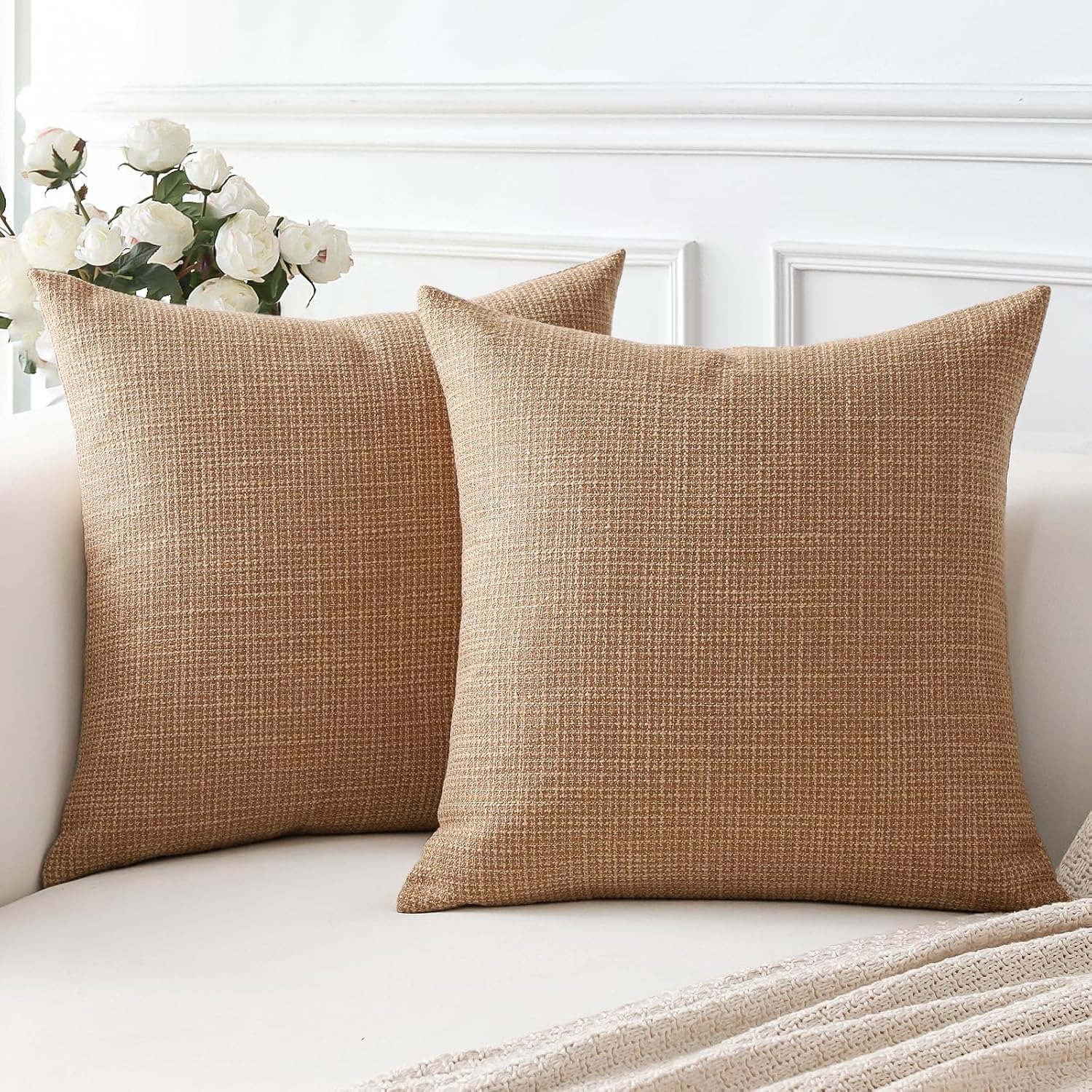
The classic arrangement is one lumbar cushion at each end of a three-seater, each sitting in front of a larger square cushion. The height difference between the square behind and the rectangle in front gives the sofa depth, which is what stops a line of identical cushions looking like a shop display.
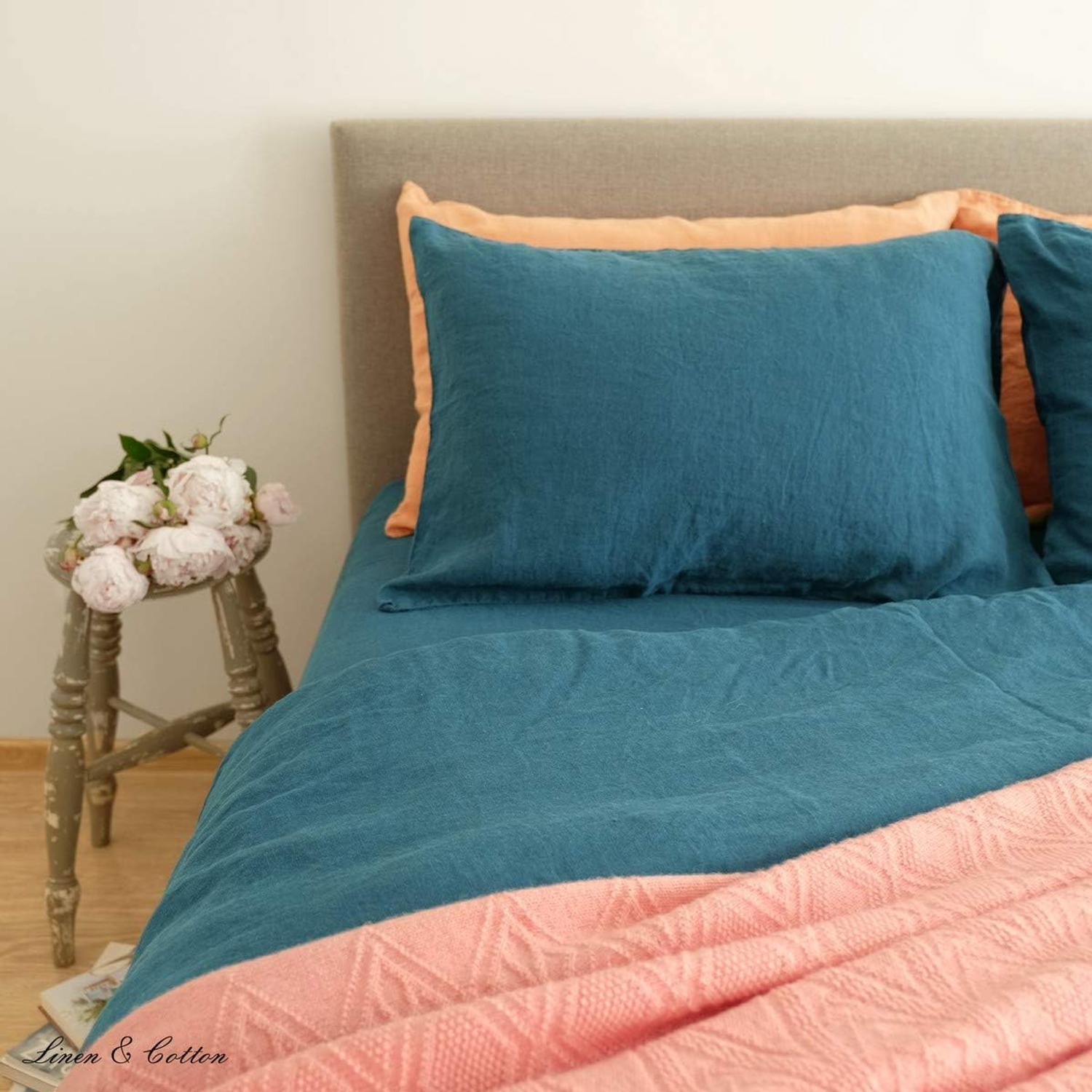
On a bed, lay both across the front of your pillows. On a pair of armchairs, one each. On a window seat, space them along the length with a gap between, which is more inviting than pushing them together. If you want the best cushion covers for a window seat, rectangles beat squares because they follow the line of the seat.
Try not to line everything up perfectly. A slight karate chop in the top of each cushion and a bit of asymmetry in the spacing reads as lived-in rather than staged.
Caring for them
Cool wash, gentle cycle, similar colours, mild detergent. That covers almost everything.
Skip the bleach, which will lift the print. Skip the fabric softener too, because it leaves a coating on a linen blend weave that flattens the texture you paid for in the first place. If something gets spilled, blot it rather than rub it, then wash the whole cover so you do not end up with a clean patch surrounded by a faintly dirtier one.
Line drying in the shade is the gentlest option. Direct sun will slowly fade any printed fabric, and that applies in the garden as much as on the washing line. A low tumble dry is acceptable if you are short on time. Take the covers out slightly damp, give them a shake and reshape them by hand, and you may not need to iron at all. If you do want a crisper look, press on a warm setting from the reverse side to protect the print.
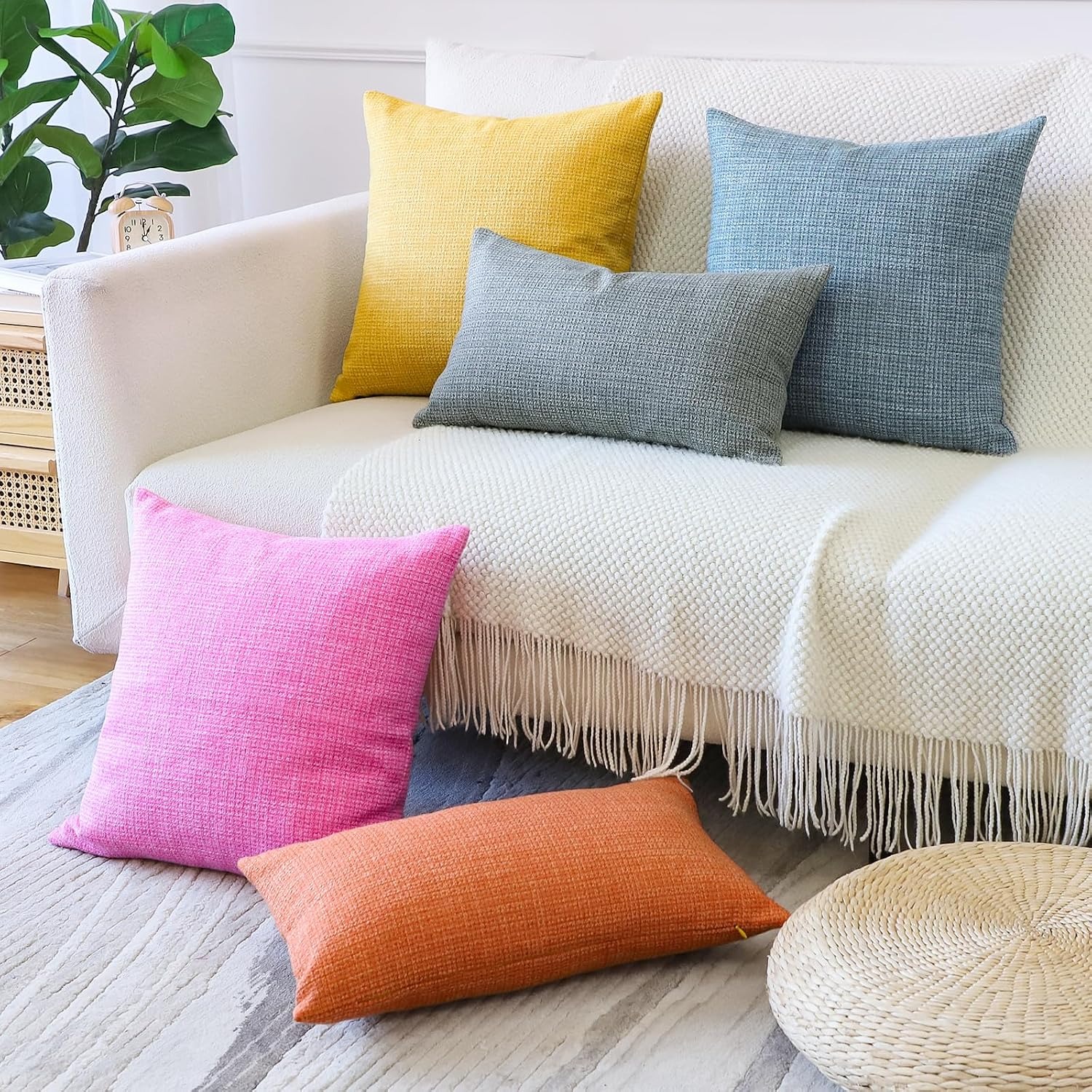
One more note on colour. The maker mentions that printed fabric can look different depending on the light and the angle it is photographed at. That is true of all printed textiles. The shade in your living room may read slightly warmer or cooler than it does on a screen, which is normal and not a fault.
Who these suit
They work for anyone who already owns 30 x 50 cm inserts and wants a change. They work for a rental where you cannot alter the furniture but can change what sits on it. They work in a home office, where a cover over a back support pad is far nicer to look at than factory grey foam. And they work as a gift, because cushion covers do not require you to know anyone's size or taste in a risky way.
They are less suited to someone who specifically wants pure flax linen, or who needs the covers to survive permanent outdoor exposure. Under a verandah is fine. Left out through a winter is not.
The short version
Two covers, roughly 30 x 50 cm, in a linen polyester blend with a hidden zip and over-locked seams. Inserts are not included, and the pattern is on one side only.
Buy them if you have pads that still have life in them and covers that do not. Pair them with inserts a touch larger than the cover, wash them cool, dry them out of the sun, and they will keep a sofa looking cared for with very little effort from you.