
The complete guide
How to Choose a Marble and Brass Taper Candle Holder
The problem with most candle holders
Candles are one of the cheapest ways to change how a room feels. The holder is where it usually goes wrong.
Think about the last dinner you sat at with tall candlesticks. Somebody probably moved one. Or leaned around it. Or spent the evening looking at a column of wax instead of the person across the table. Tall holders photograph beautifully and perform badly at an actual meal.
At the other extreme are the flimsy ones. A thin metal cup, a little spike, a base so light that a sleeve catches it and the whole thing skates across the table. They hold a candle, technically. They add nothing when the candle is out.
A low sculptural holder solves both problems at once. The flames sit under your eyeline, so conversation stays easy. The base has enough presence to stay on the table when the candles are gone.
What this piece actually is
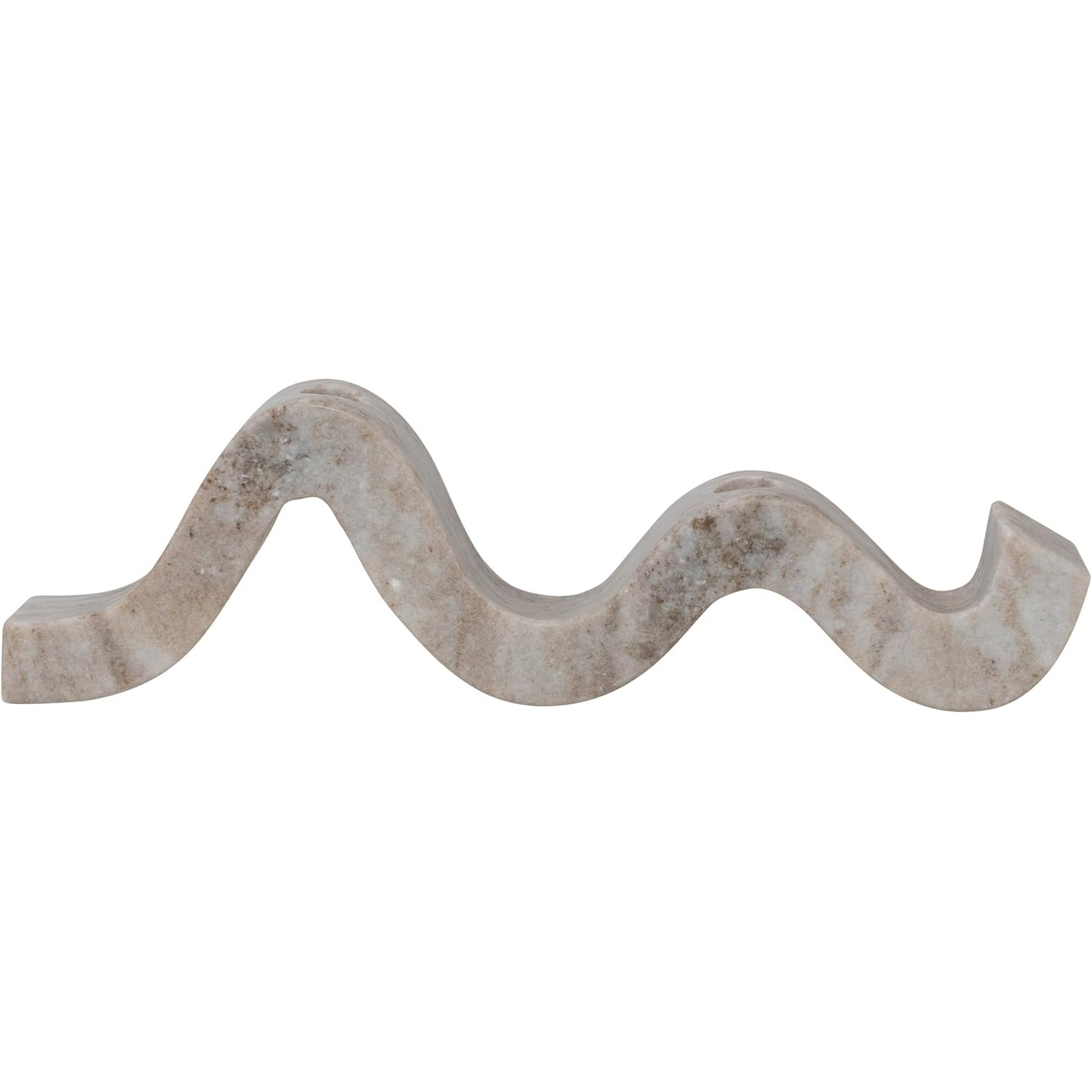
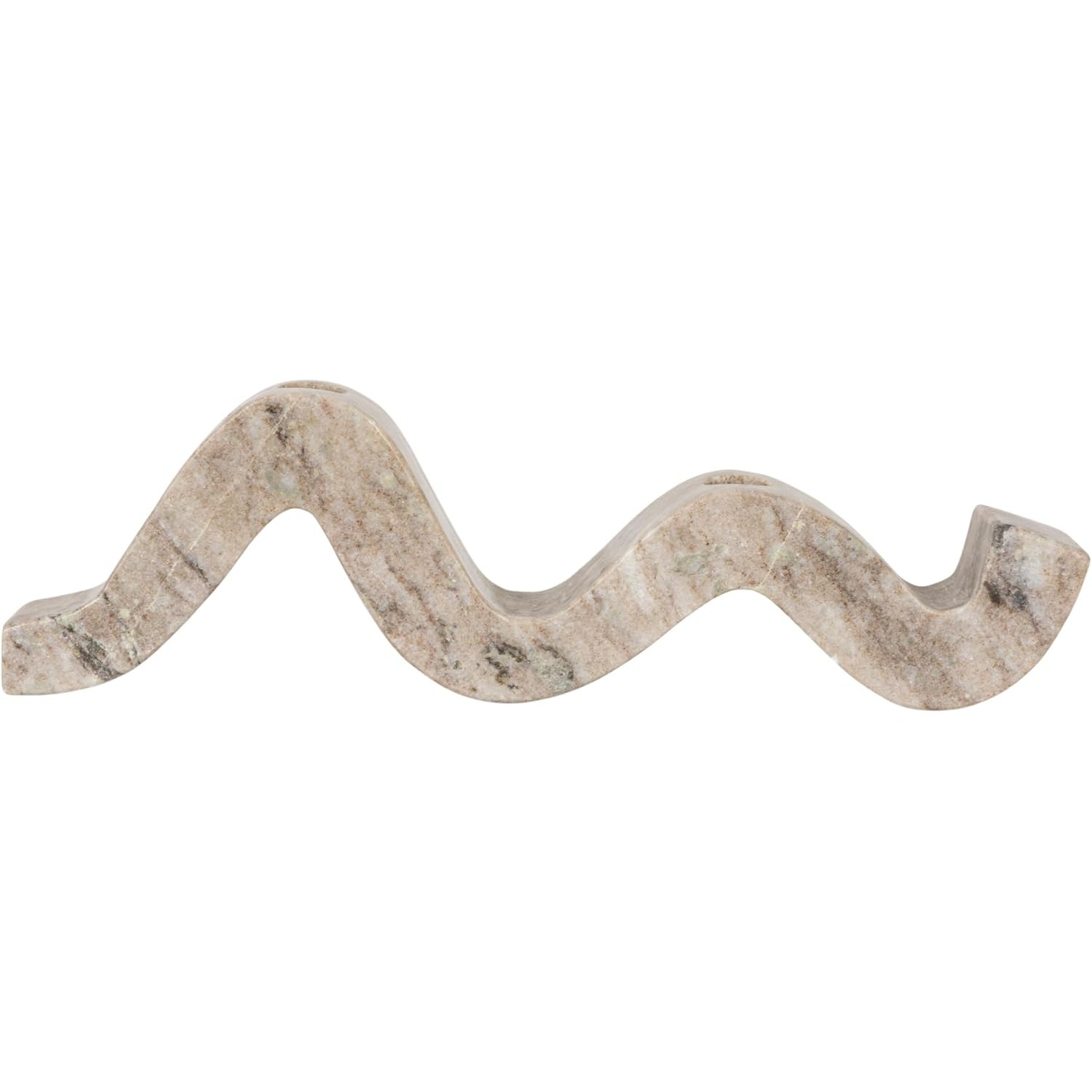
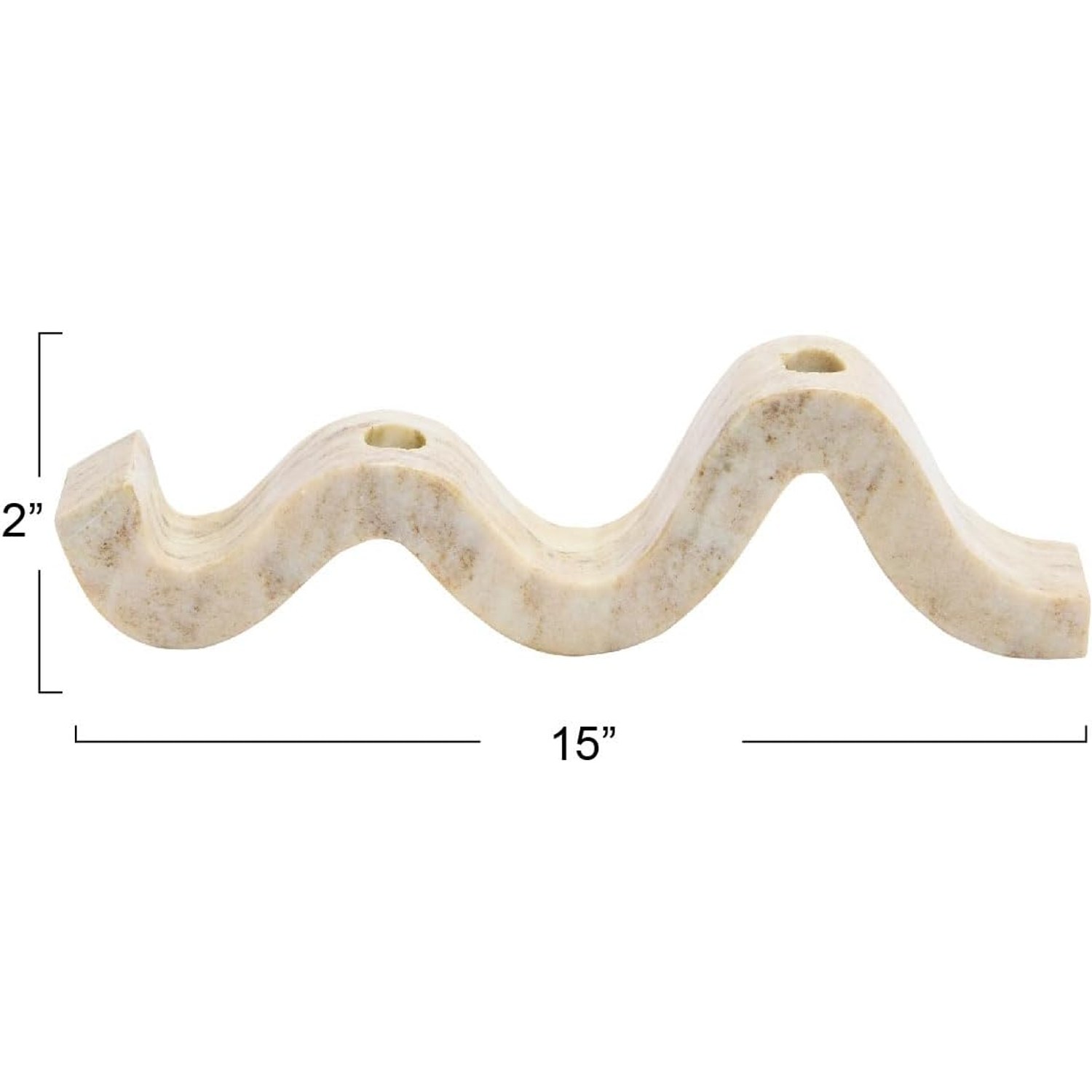
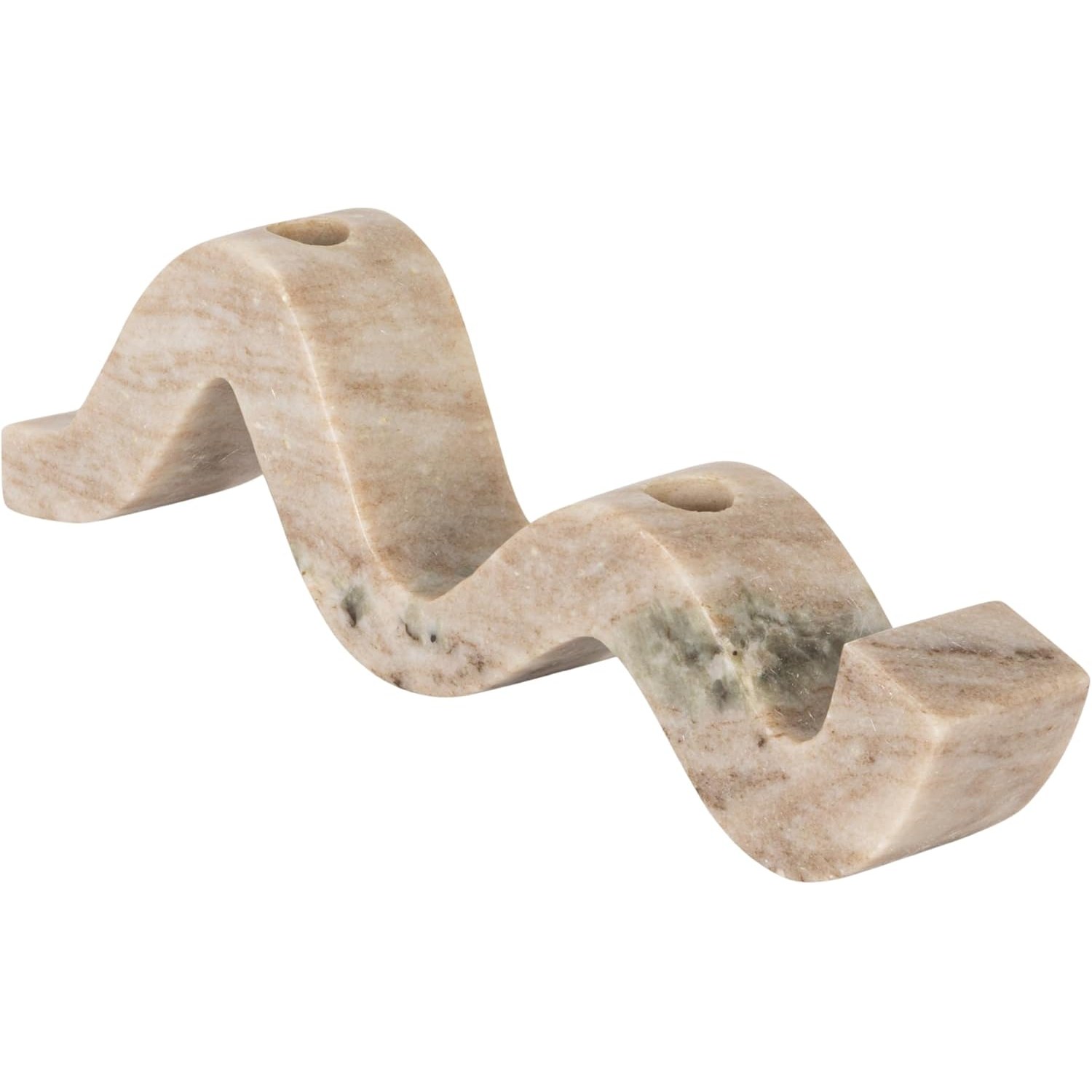
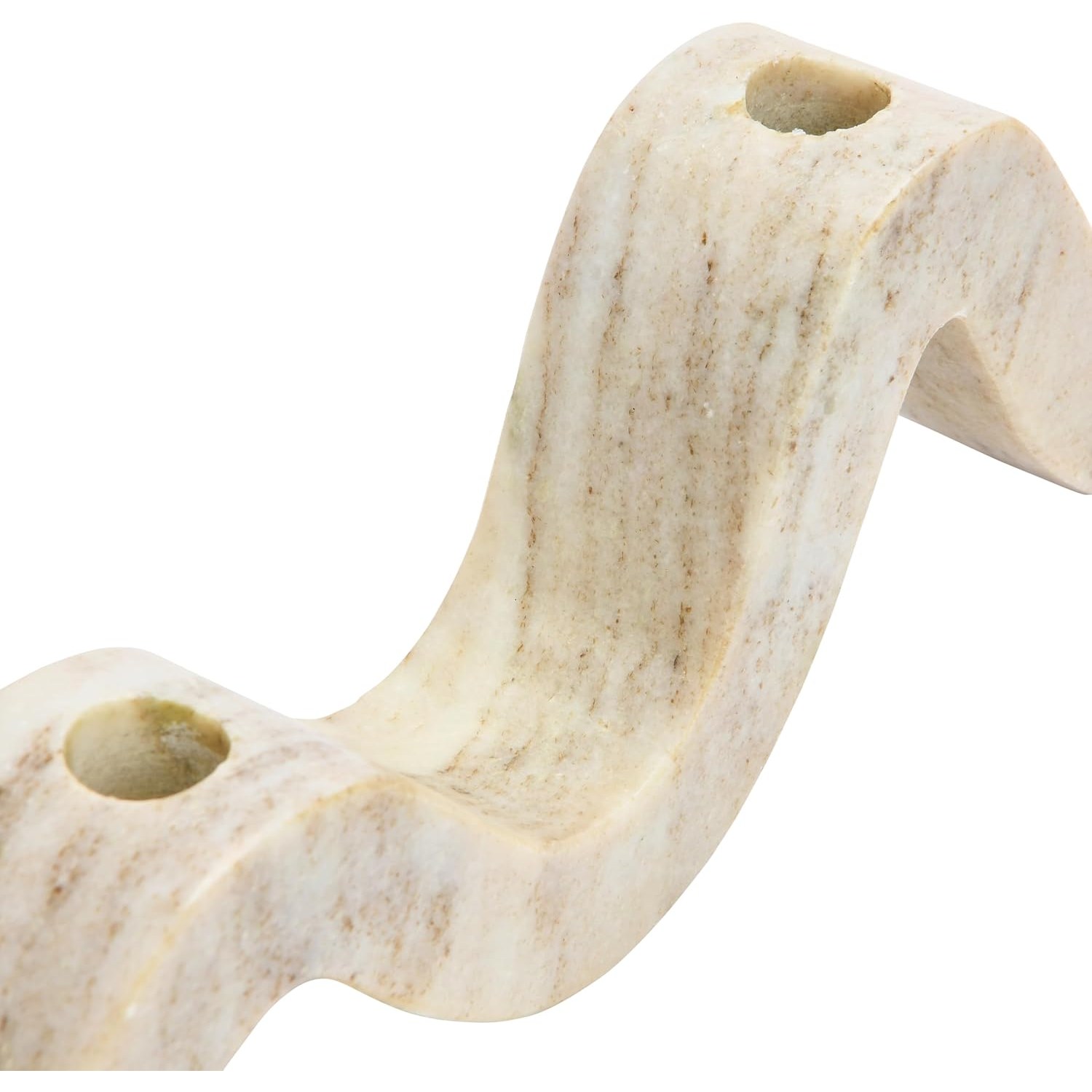
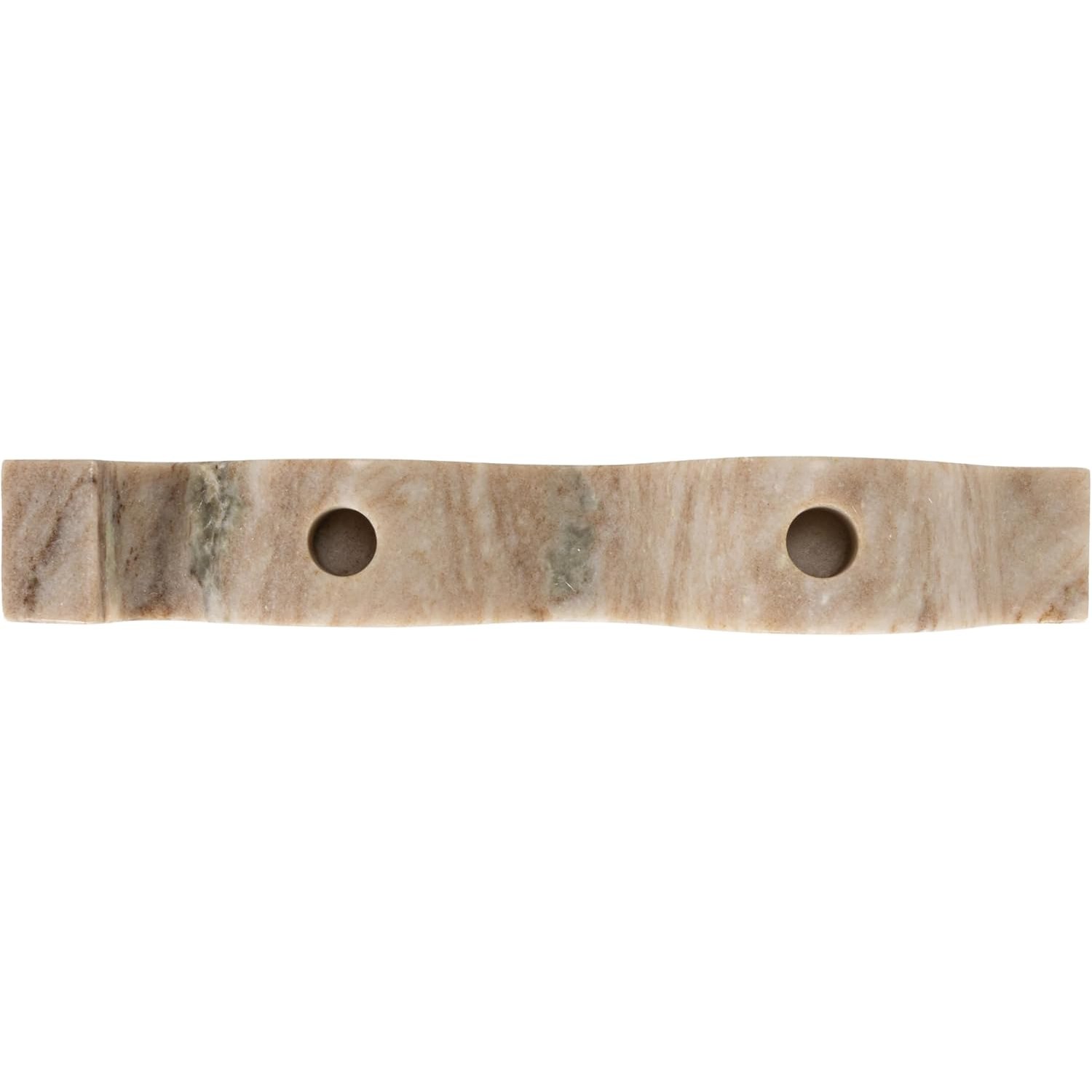
It is a double taper holder with a wave-shaped stone base. Two standard taper candles sit in line along the length of it. There is nothing to assemble and nothing to adjust.
The shape is the interesting part. Instead of a flat slab with two holes, the base curves, which gives it shadow and movement depending on where the light falls. In the morning with daylight across it, you notice the form. In the evening with the candles lit, the curve catches a little of the flame and the whole thing warms up.
We should be straight with you about what we do not know. This product record does not specify the exact material composition, the finished dimensions, the colour, the weight or the country of origin. We would rather say that than publish a number we cannot stand behind. If one of those details decides the purchase for you, ask us before you order and we will chase it up.
What we can tell you is the brand (Bloomingville), the condition (new), that it holds two tapers, and that no assembly is required.
How a low holder changes a table
There is a rule of thumb for table centrepieces that is worth knowing. Anything in the middle of a dining table should either sit below about thirty centimetres or rise well above head height. The space in between is the awkward zone, because that is exactly where faces are.
Low candle holders stay comfortably under that line. You get the light, the flicker and the soft shadows without the physical barrier. For a dinner party of six or more, that difference is not subtle. People talk across the table more when they can see each other.
The second benefit is scale. A horizontal piece reads as a line rather than a point. Place it along the centre of a rectangular table and it echoes the shape of the table itself. On a round table, it works better slightly off centre with a small bowl or a short vase beside it.
Who this suits
It fits well if you like a neutral, modern home with natural materials. Pale stone, warm metal, linen, light timber, plain ceramics. This is the palette that marble and brass decor sits in, and the shapes tend to be simple on purpose, because the material is doing the work.
It also suits people who entertain but do not want to build an elaborate tablescape every time. Two candles in a good holder plus a runner is enough. You do not need foliage and place cards to make it feel considered.
It is less of a match if your home is maximalist and colourful, or if you want something ornate and traditional. A brass candelabra with turned detailing speaks a completely different language, and neither is wrong.
If you have very young children or an enthusiastic cat, think about where it will live. A heavy base helps, but an open flame at table height needs supervision regardless. Battery-operated tapers are a genuine option here and nobody will notice from across the room.
How to choose the right candles
The holder only works as well as the candles you put in it.
Start with base diameter. Standard tapers are usually around two centimetres at the base, but there is variation between makers. If your candles sit loose, a small wrap of candle tape or a thin collar of foil at the base fixes the wobble. If they are too tight, shave the base very slightly with a knife rather than forcing them in.
Length is the next decision. Shorter tapers keep the whole arrangement low and discreet. Longer ones give you a more dramatic line and more burn time, though they do start to climb back into that awkward sightline zone. For a dining table, mid-length is usually the sweet spot.
Then there is wax quality. Cheap tapers drip, lean and burn unevenly. Better ones burn straighter and cleaner, which matters here because you are looking at a stone surface you would rather keep clean. Dripless is worth paying a little more for.
Colour is personal. Ivory and bone disappear into the base and let the shape lead. Black, rust or deep green make the candles the focus. Both approaches work. Try one of each and see which you reach for.
Looking after stone
Stone homewares are easy to live with as long as you treat them like stone and not like a dinner plate.
Dust with a soft dry cloth. For marks, use a cloth that is only just damp with plain water, then dry it. Avoid anything acidic, which means no vinegar, no lemon, no citrus-based sprays. Acid can etch and dull a stone surface in ways that are hard to reverse. Also skip abrasive pads and powders.
Wax is the most common thing you will need to deal with. Let it cool completely until it is hard and brittle, then lift it off with your thumbnail or the edge of a plastic card. Warmth softens the last film, so a cloth rinsed in warm water usually finishes the job. Resist the urge to reach for a metal knife.
Spills should be dealt with promptly. Red wine, olive oil and coffee are the usual suspects on a dining table. Blot rather than wipe so you are not spreading it, then clean with a damp cloth.
Never put it in a dishwasher. The combination of heat, detergent and pressure is rough on natural materials.
Placing it around the house
The dining table is the obvious home, but it is not the only one.
On a mantel, it works at standing height where the sculpted form is easy to see. On a console in a hallway, it gives you a small moment of interest as you walk past. On a sideboard, it pairs nicely with a stack of books and a low bowl.
Bedrooms are underrated. A pair of lit tapers on a dresser at the end of the day is a better light source than an overhead bulb, and the holder reads as an object rather than clutter during the day.
Bathrooms work too, provided the surface stays reasonably dry. A shelf above the basin, not on the edge of a bath.
For events and long tables, run two or three holders down the centre with equal gaps. Because the profile is low, they create a continuous line of light rather than a series of obstacles. This is why low holders have become a default for wedding styling.
Buying more than one
If you want a pair, order them at the same time. Natural stone varies, and pieces from the same batch tend to coordinate more closely than pieces bought months apart.
Accept some difference, though. Veining is not printed, so the pattern will not repeat. Most people come to see that as the point rather than a flaw. A matched set of identical objects can look a bit manufactured on a table that otherwise has handmade bowls and mismatched glassware.
Two holders handle a table of eight comfortably. Three suit a long trestle. One is plenty for a round table or a console.
The short version
This is a low, sculptural holder for two taper candles, sold under the Bloomingville name, with no assembly needed. The low profile is the main practical advantage, since it keeps flames below the conversation line at a dining table. The sculpted stone base means it still looks like something when the candles are out.
Material, exact dimensions, weight, colour and origin are not specified in this record, and we have not guessed at them.
Buy good dripless tapers, keep acidic cleaners away from the stone, let wax harden before you lift it, and never leave a flame unattended. Do those four things and it will sit on your table for a very long time.