

The complete guide
How To Choose A Marble Vanity Tray That Actually Works In Your Bathroom
The problem with a bare basin
Most bathrooms do not suffer from a shortage of storage. They suffer from a shortage of edges. Hand wash, face cream, a razor, a hair tie, a bottle of scent someone left out: each item is small and harmless on its own, but spread them across a basin surround with no visual boundary and the whole room looks untidy. You clean it, and two days later it is the same.
A tray solves this with geometry rather than willpower. Draw a rectangle on the bench and everything inside it becomes a group. The eye reads one object instead of seven. The side benefit is that cleaning gets faster, because you lift the tray, wipe the bench, and put it back rather than shuffling five bottles around.
That is the whole job of a marble vanity tray. The stone just makes it look like a decision rather than a fix.
Why stone instead of timber or rattan
Bathrooms are wet. That sounds obvious, but it rules out a surprising number of pretty trays. Rattan soaks up splashes and starts to smell. Untreated timber swells and can lift at the joins. Mirrored trays show every water spot within an hour. Painted metal eventually chips where a bottle lands on it.
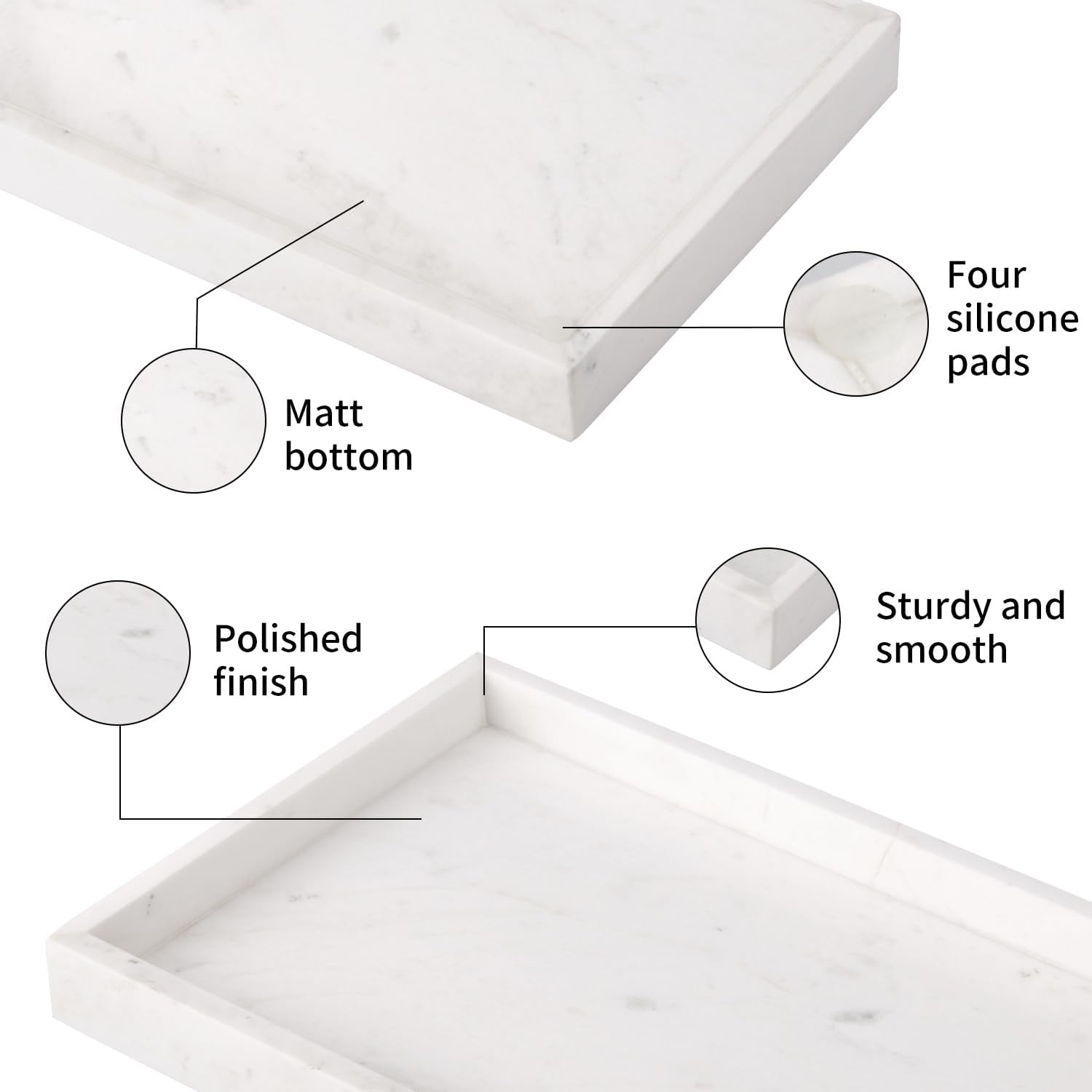
Marble has none of those issues. It is a dense, polished surface, so water sits on top until you wipe it off. A drip of hand wash, a ring of condensation under a glass, a smear of toothpaste: all of it comes away with a damp cloth. For a surface that lives a metre from a running tap, that matters more than almost anything else.
Marble does have one weakness worth knowing about before you buy. It reacts to acid. Lemon juice, vinegar, some descalers and a few strong bathroom sprays will etch the polish and leave a dull patch that does not buff out. This is not a defect, it is simply how calcium carbonate behaves. In practice it means you use mild soap and water on the tray and keep the heavy duty cleaners for the tiles. People who have owned a stone benchtop already know the drill.
What the 30 x 20 cm size actually holds
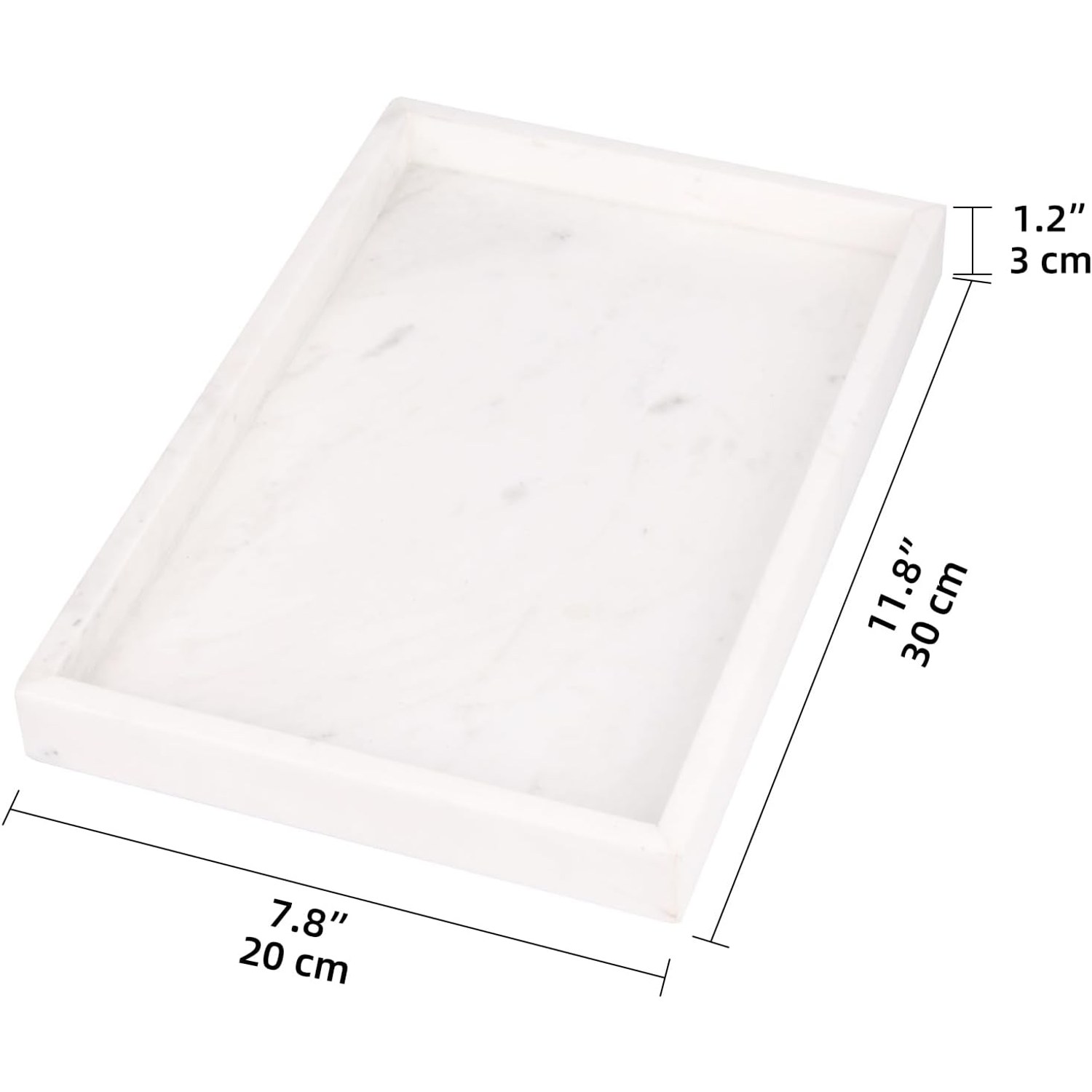
Numbers on a page are hard to picture, so here is the practical version. Thirty centimetres long is roughly the length of a standard ruler. Across that length you can comfortably fit a pump soap bottle, a small dish or ring holder, and one more item such as a tealight or a tiny plant. Twenty centimetres deep gives you enough room to stack a folded hand towel behind the bottles rather than beside them.
The 3 cm height is more useful than it looks. It lifts the contents off the bench slightly, which reads well visually, and it creates a lip. Rings, studs, cufflinks and hair clips stay inside the border instead of rolling toward the floor. Anyone who has lost an earring down a drain will appreciate that.
Before ordering, measure the clear flat area beside your basin. Many modern vanities have a surprisingly narrow surround, sometimes only 15 cm deep. If yours is tight, turning the tray so the long side runs parallel to the wall usually solves it.
Beyond the bathroom
People buy this as a bathroom piece and then discover it migrates. A few of the common second lives:
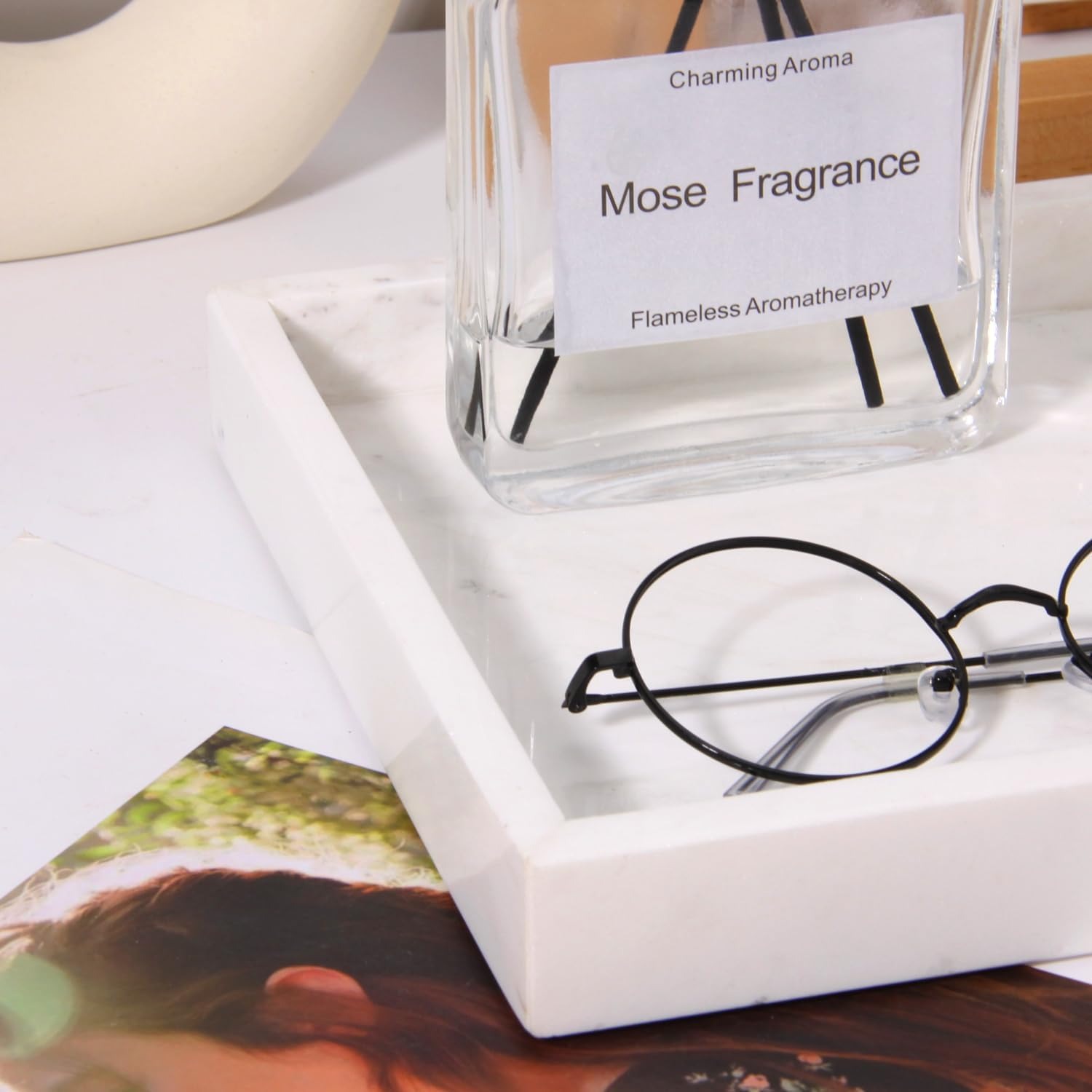
On a dresser, it becomes a jewellery and fragrance station. Perfume bottles look better grouped on stone than scattered, and the lip keeps chains from sliding off the back.
On a nightstand, it holds a glass of water, a book, a pair of reading glasses and a phone, which stops the bedside table turning into a shelf of random objects.
In the kitchen, it corrals oil, salt, pepper and a small jug near the cooktop. The polished top means an oil drip wipes off rather than soaking in.
On a desk, it works as a catchall for keys, a watch, cards and loose change at the end of the day.
None of these uses require anything extra. The tray is the same object. It is just that a plain rectangle of stone happens to be one of the more flexible objects in a home.
Understanding natural veining
This is the part worth reading twice, because it is the single most common surprise with any marble product.
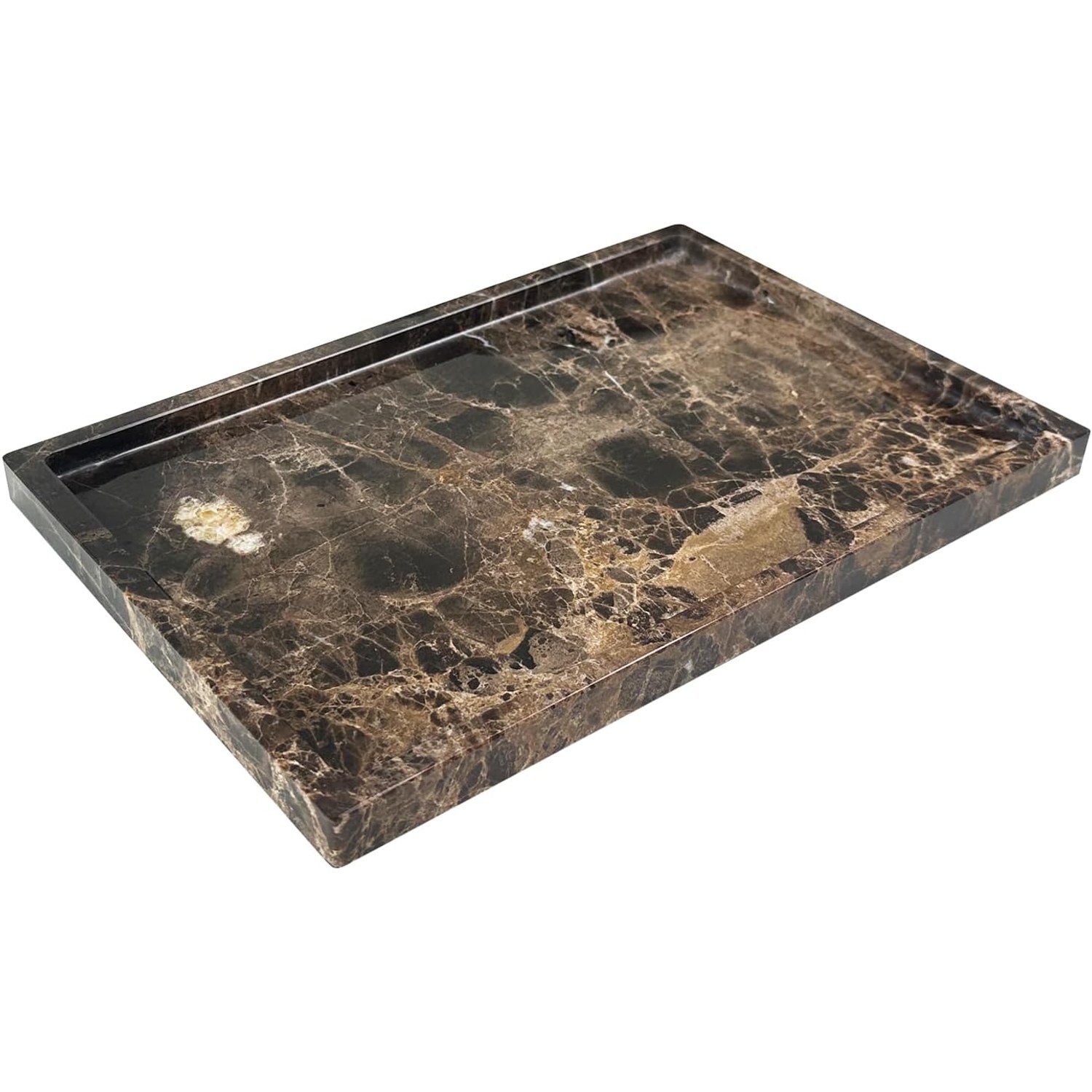
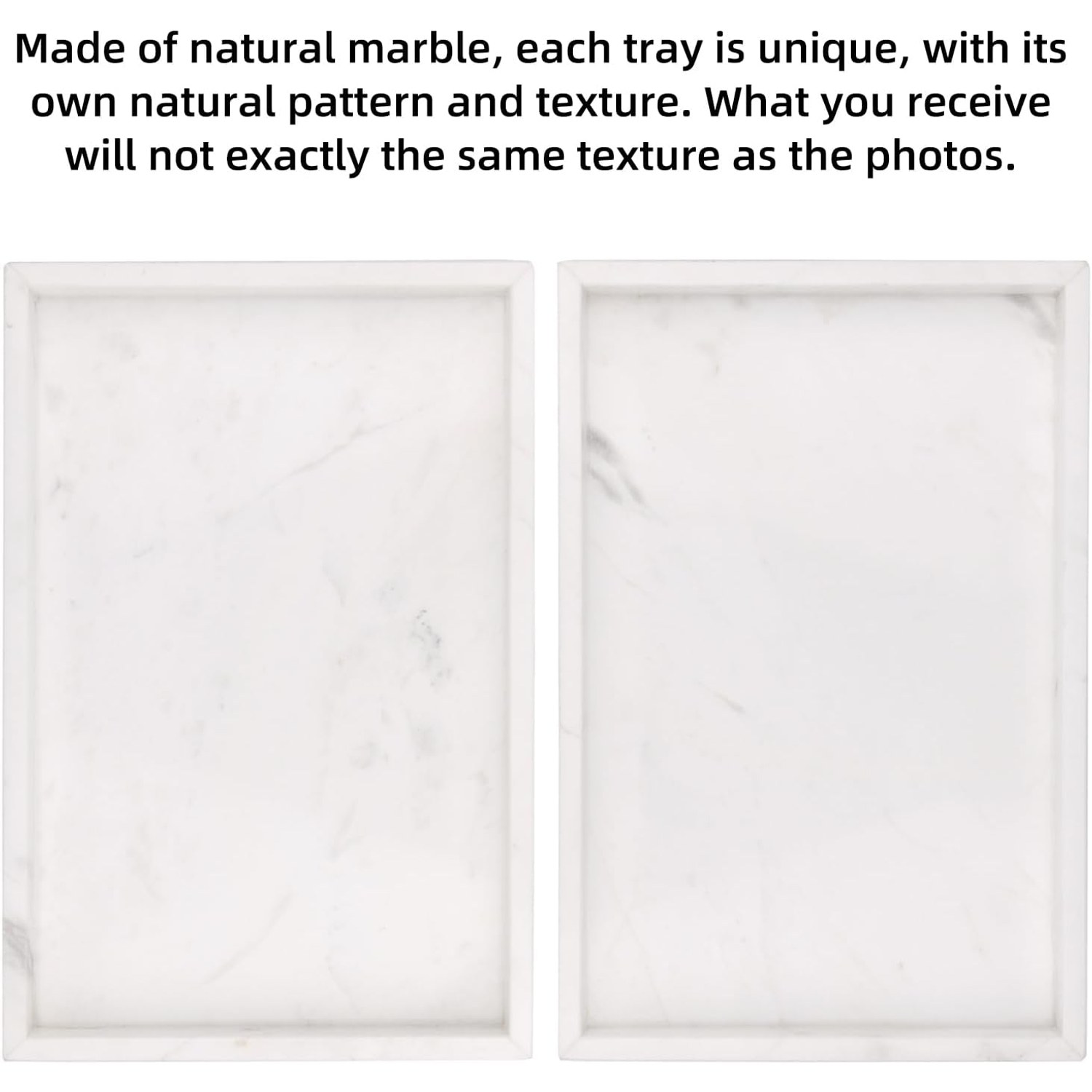
Marble is quarried. It is cut from a block that formed underground over a very long time, and the patterns in it depend entirely on which part of which block your piece came from. Some trays arrive with bold grey rivers running corner to corner. Some have soft, cloudy markings. Some are almost plain white with barely a line in them.
All three are correct. None of them is a flaw. But it does mean the photographs on this page show one example, not a guarantee. If you have a precise look in mind and need it to match a tile or a benchtop exactly, a printed or engineered surface will serve you better. If you like the idea of owning a piece that is genuinely one of a kind, this is the appeal rather than the compromise.
A small tip: if you are buying two trays for a double vanity, expect them to differ. Many people prefer that. If you want them to look like a matched pair, you are better off buying one and using a different material for the second spot.
Looking after it
Care is short and boring, which is how it should be.
Wipe with a soft damp cloth and dry it. That handles ninety percent of what a tray goes through. For anything sticky, a mild pH-neutral cleaner is fine. Dry afterwards so you do not leave water marks.
Avoid acids and abrasives. No lemon, no vinegar, no bleach, no scouring pads, no powdered cleansers. Those are the only real rules.
Wipe spills promptly. Perfume, bath oil, makeup and strongly coloured products can leave a mark if they sit for days. If you catch them within a few minutes, nothing happens at all.
Lift, do not drag. Stone against a benchtop can scratch, and a chipped corner usually comes from a knock rather than normal use. Felt pads on the underside are a cheap bit of insurance if the tray lives on polished timber.
If you want extra protection, particularly in a kitchen, a stone sealer made for marble is easy to apply at home. Test it on the underside first and follow the product instructions.
Styling it so it still looks tidy
The mistake with trays is treating them as storage. Fill one to the edges and you have just moved the clutter, not removed it.
Three or four items is the sweet spot. A tall element (a pump bottle or a stem of greenery), a low element (a dish or a tealight), and something soft (a folded hand towel) gives you a balanced little arrangement without any effort. Leave some bare stone visible. That empty space is what makes the tray read as decor rather than as a holding pen.
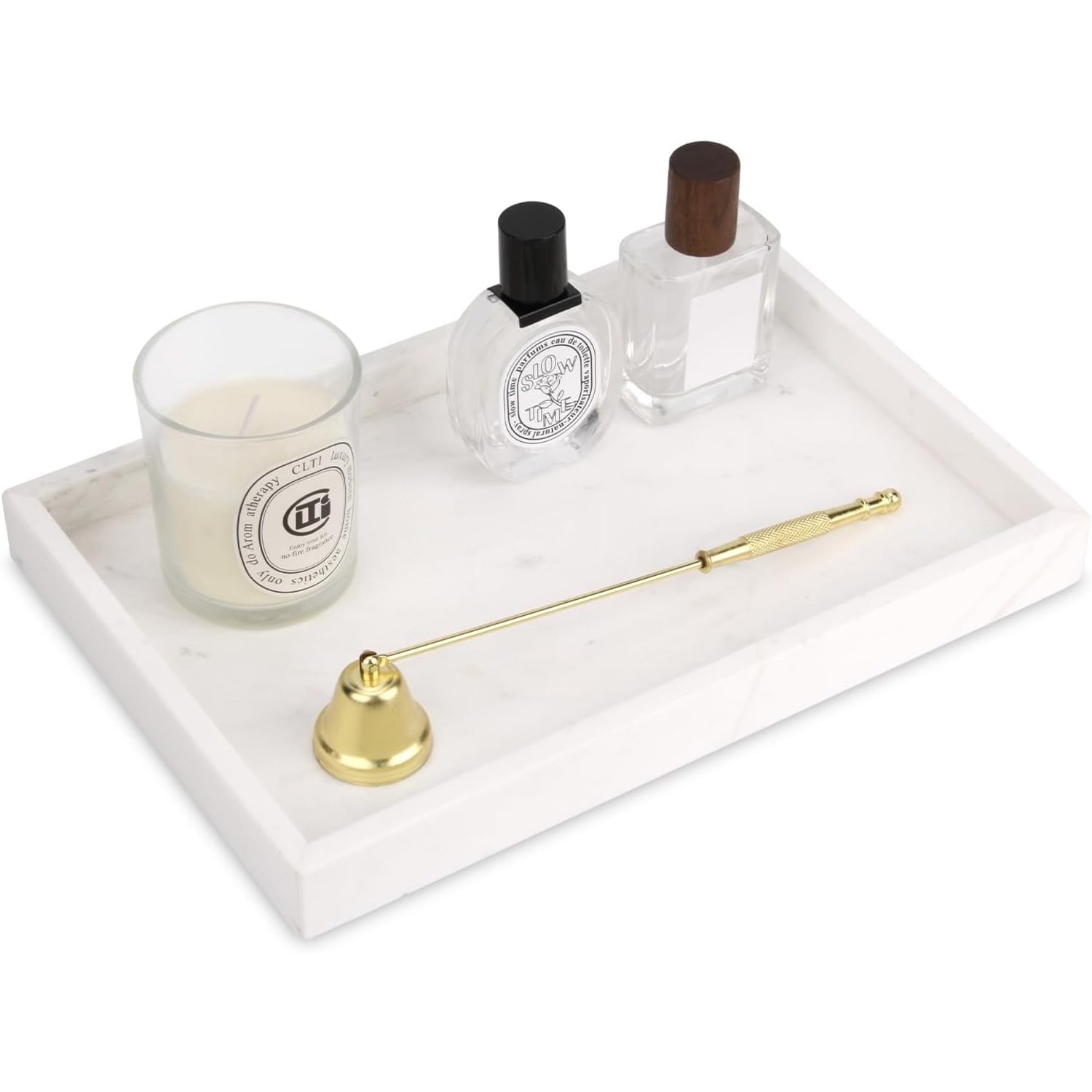
Warm metals suit pale marble particularly well, which is why these trays sit alongside brass pieces. A brass soap pump, a gold-rimmed dish or an amber glass bottle all pick up nicely against cool stone.
The short version
A 30 x 20 cm marble vanity tray is a simple fix for a basin that never quite looks clean. Real stone handles the damp, wipes down fast and brings its own pattern, so you get something practical that also holds its own as an object. Measure your bench first, keep acidic cleaners away from it, and accept that the veining on your piece will be its own. Do that and it will still look good in ten years, which is more than most bathroom accessories can claim.