

The complete guide
How To Choose A Merino Blend Blanket (And Get The Size Right)
The problem with most throws
Most blankets sold as "throws" are too small. They look right folded on an armchair in a photo, then you lie down under one and your feet are out in the cold. You spend the whole evening dragging it up, then it slides off when you shift.
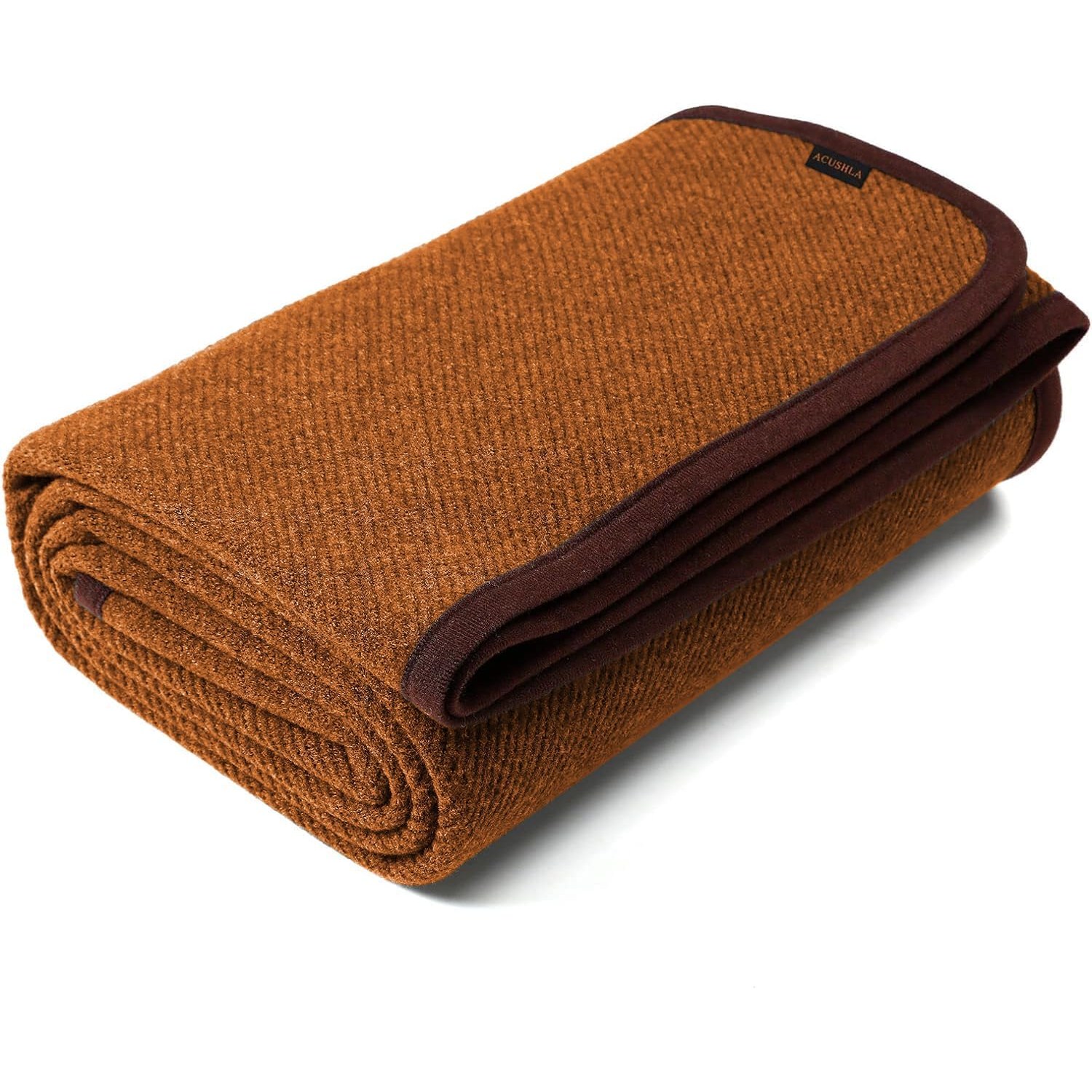
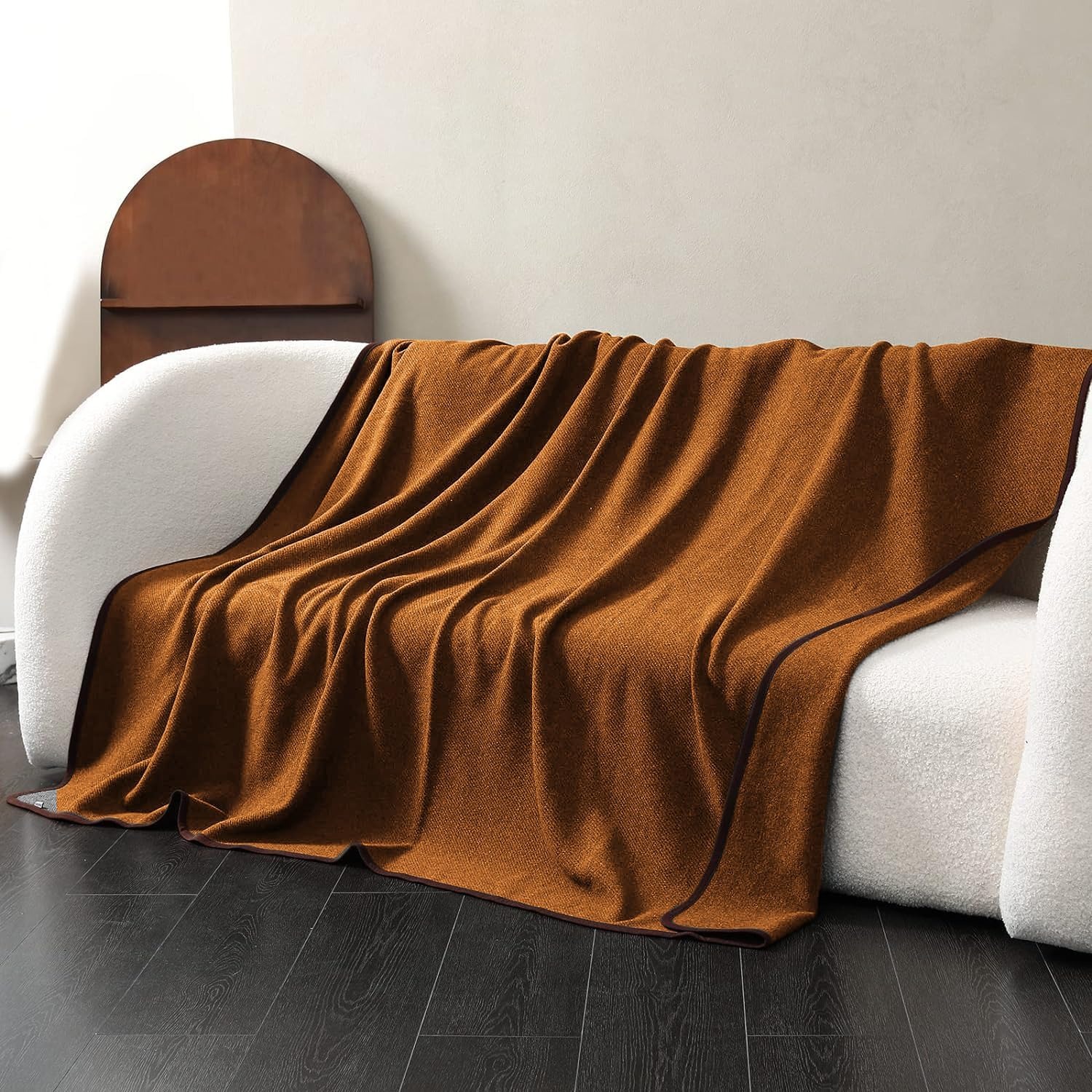
A blanket at 160 x 200 cm solves that. It is bed-sized rather than decoration-sized. One person can lie full length under it with room to tuck in. Two people on a sofa can share without a quiet war over the edges. And because it matches a double bed footprint, it does double duty as a bedspread when guests stay.
The other common frustration is fabric. Cheap fleece throws feel pleasant for about a month, then they pill, go flat and start holding static. Pure wool solves the warmth problem but brings a price tag and a careful wash routine that stops a lot of people from actually using the thing. A merino blend sits between the two.
What a merino blend actually is
This blanket is stated by the maker as 25% merino wool, 72% polyester and 3% nylon. We will keep repeating that, because the word merino does a lot of work in product names and plenty of listings never tell you the split.
Merino is a fine wool. The fibre diameter is smaller than standard wool, which is why merino clothing feels soft against skin instead of prickly. In a blanket, that fineness carries over into a softer pile.
The polyester does three jobs. It keeps the cost down, it holds the structure of the weave so the blanket does not stretch out of shape, and it takes washing better than wool alone. The small amount of nylon adds abrasion resistance, which matters for a blanket that gets dragged across gravel at a campsite.
What you give up is some of what pure wool does. A 100% wool blanket has a bit more insulating capacity gram for gram and handles moisture better. What you gain is a blanket you can throw in the machine after a muddy weekend without a second thought. For most households that trade is the right one.
How wool keeps you warm
Wool fibres have a natural crimp. That crimp traps small pockets of air, and trapped air is what insulation really is. It is the same principle as a double-glazed window.
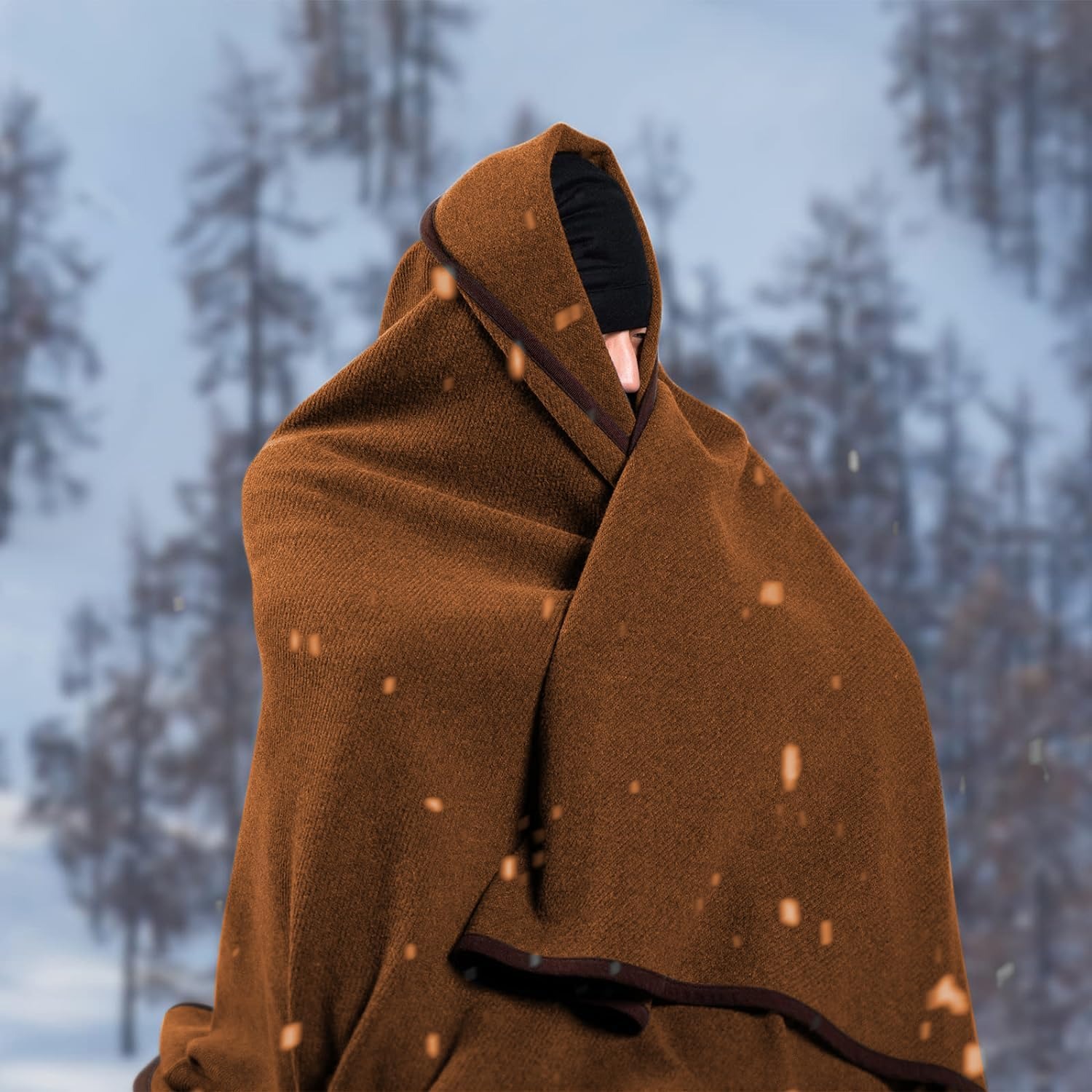
Wool also handles moisture in an unusual way. It can absorb a fair amount of water vapour into the fibre itself before the surface feels wet. That is why a wool layer feels warm rather than clammy over a long evening, and why wool keeps insulating even when it is damp. If you have ever sat out at a cold match under a synthetic blanket and felt faintly sticky after an hour, that is the difference.
With 25% merino in the mix you get a share of that behaviour, not the full effect of pure wool. In practice people describe a blend like this as comfortable over long stretches, which is the part that counts.
Who this blanket suits
Sofa users. If your main want is something to pull over you on a weeknight, the size is the selling point. It covers an adult properly.
Guest room hosts. A double-bed-sized throw folded at the end of a spare bed looks intentional and gives visitors an easy extra layer without you having to ask whether they were cold.
Campers and car owners. This is where the washability earns its place. A good camping blanket gets sat on, spilled on and packed away still slightly damp. You want one you can clean without stress.
People who run cold. If you are the one in the house adding a layer while everyone else is fine, a wool blend blanket over the duvet is a cheaper and more adjustable fix than turning up the heating.
It suits you less if you specifically want 100% wool, or if you need something machine-washable at high temperature for allergy reasons. Wool blends want cool water.
Getting the size right
Measure before you buy. It takes two minutes and saves a return.
For a bed, lay a tape across the mattress from edge to edge and add the drop you want on each side. A 160 cm width covers a double mattress (usually 135 to 140 cm) with a modest overhang. On a king it will not reach the floor on both sides, so treat it as a top layer rather than a bedspread.
For a sofa, measure the seat length. Most three-seaters run 180 to 210 cm, so a 200 cm blanket drapes nicely over the back or along the seat. On a two-seater you will have generous folds, which looks good.
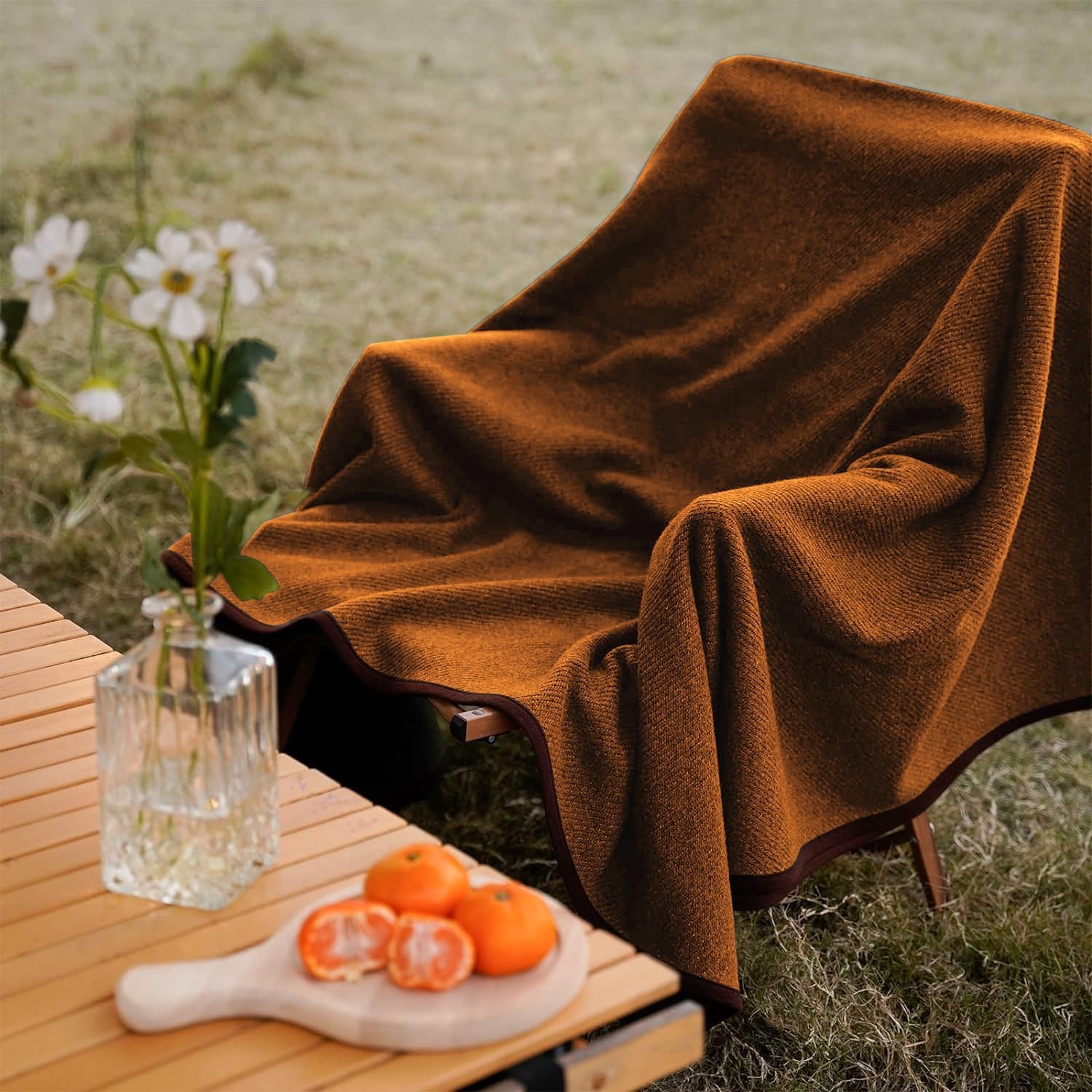
For outdoor use, think about how many people share it. Two adults sitting shoulder to shoulder need roughly 140 cm of width, so 160 cm gives you a little tuck-in on each side.
Caring for it so it lasts
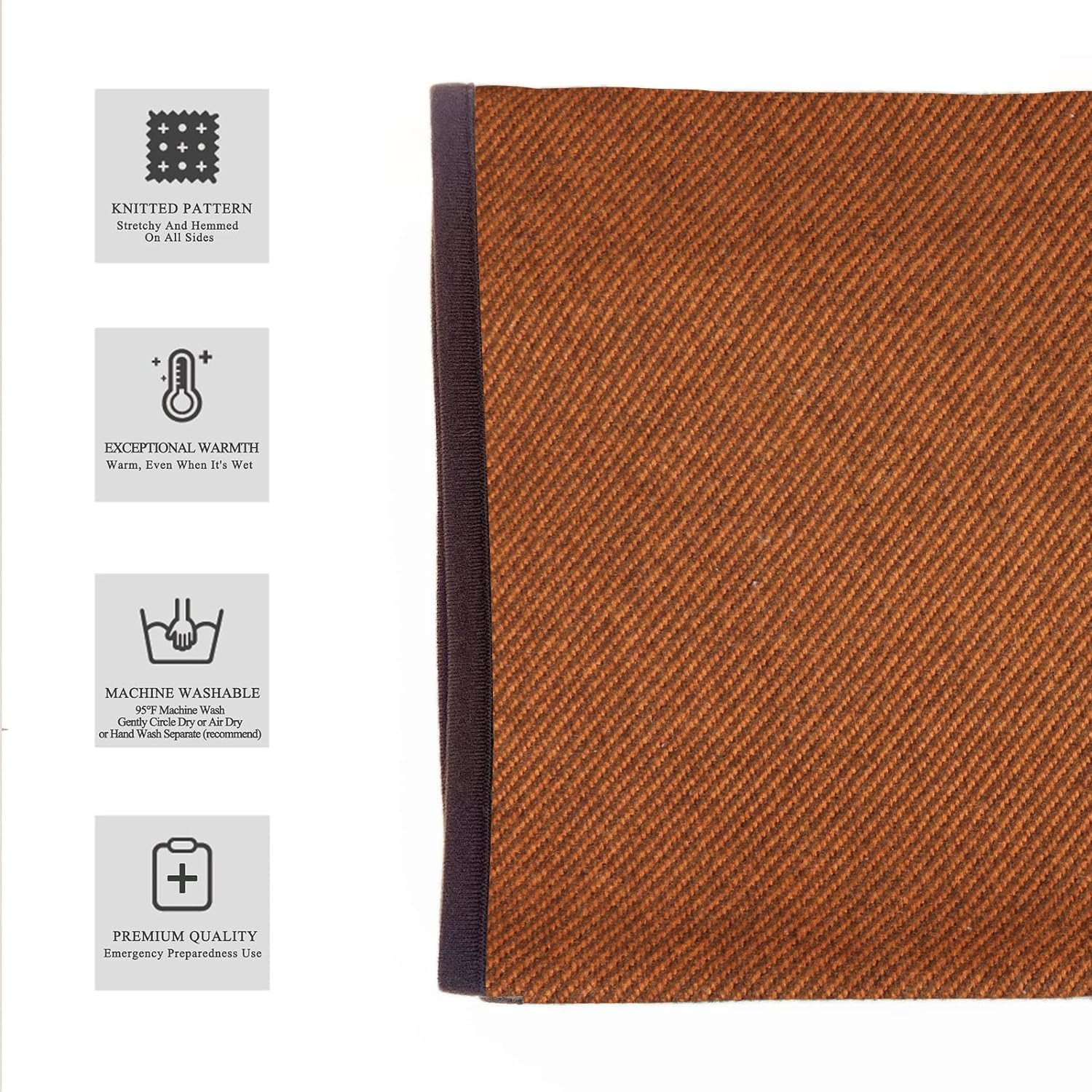
The rules are short. Cool water, gentle cycle or hand wash, wool-safe detergent. No bleach. No fabric softener, because it coats the fibres and flattens the pile.
Do not tumble dry. Heat is what makes wool fibres lock together and shrink. Instead, press the water out without wringing, reshape the blanket while it is damp, and dry it flat or over a line in the shade. Direct sun over many hours can fade colour.
Between washes, a good shake outdoors does more than you would expect. It lifts the pile back up and clears dust. If you spill something, deal with it straight away by blotting with cool water rather than scrubbing.
Store it dry and folded with air around it. Sealed plastic bins over a long, humid summer are how blankets end up smelling musty.
Expect a small amount of loose fibre in the first couple of weeks. That is normal for any new wool pile and settles quickly.
A note on honest labelling
A fair number of blankets on the market lean on the word merino without saying how much is in there. Sometimes it is 5%. We would rather lose a sale than have you open a parcel expecting pure wool and find a blend.
So, once more: 25% merino wool, 72% polyester, 3% nylon, as stated by the maker. If that split works for you, this is a good blanket at a sensible price. If it does not, buy pure wool and accept the higher cost and the fussier wash.
The short version
A merino blend blanket at 160 x 200 cm is one of those items that quietly gets used every day. It is big enough to be a real blanket, soft enough for the sofa, warm enough for a cold night outside, and easy enough to wash that you will not be precious about where it goes.
Check your bed or sofa measurements, be clear that you are buying a blend rather than pure merino, and wash it cool. Do those three things and it should serve you for years.