
The complete guide
How to Choose a Merino Wool Check Blanket That You Will Actually Use
The cold-sofa problem
Most homes have a spot that is just a bit too cold. The end of the sofa furthest from the radiator. The armchair by the window. A bedroom that cools fast overnight because the heating clicks off at eleven. You could turn the thermostat up for the whole house, or you could put something warm over the one person who is cold.
That is what a wool blanket is for. Not decoration first, though a check pattern does look good folded over an arm. The point is that it does a job, every evening, for years.
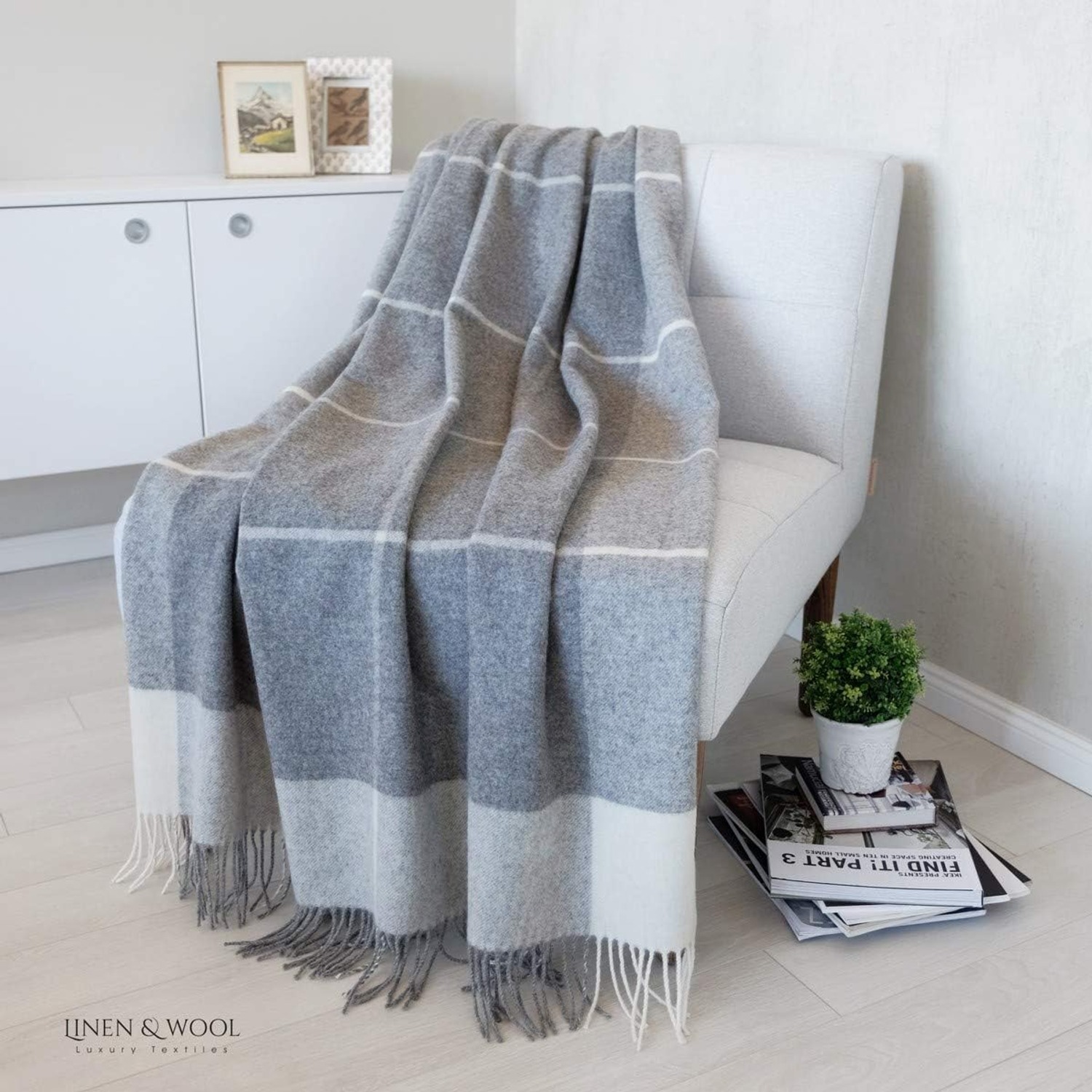
The trouble is that "wool blanket" covers a huge range. Some are stiff army-surplus things that feel like a doormat. Some are mostly acrylic with a wool label. And some, like this one, are pure merino woven at a size you will actually reach for. Knowing the difference saves you money and saves you from a blanket that lives in a cupboard.
What merino actually changes
Wool fibres vary in thickness. That one measurement drives most of how a blanket feels. Thick, coarse fibres have stiff ends that push back when they meet your skin, and your nerves read that pressure as itch. Finer fibres bend instead of pushing, so the same amount of wool feels soft rather than scratchy.
Merino sheep grow a notably fine fleece, which is why merino turns up in base layers, socks, and blankets meant to touch skin. If you tried a wool blanket as a kid and hated it, you probably met coarse wool, not merino.
Warmth works differently from what people assume too. The fibre itself is not doing the insulating. The crimp in wool, the natural waviness, holds pockets of still air, and still air is a poor conductor of heat. So your body heat stays near your body. A wool blanket of modest thickness can beat a thicker synthetic one because of how the air sits inside it.
There is one more thing wool does that plastic cannot. It absorbs a decent amount of moisture vapour into the fibre before the surface feels wet. Under a fleece, your own sweat has nowhere to go, so you overheat and then feel clammy. Under wool, that moisture moves away quietly. This is the reason people reach for the best breathable wool blanket in shoulder seasons rather than just in deep winter.
Is 140 x 200 cm the right size
Size is where most blanket buying goes wrong. People picture a blanket and order whatever is in the basket, then find it too small to cover two people or too big to fold anywhere.
140 x 200 cm is a practical middle. Here is how it plays out in real rooms.
On a single bed, it works as a bedspread. You get full coverage of the mattress top with a short drop each side, which looks neat rather than skimpy. On a double bed it becomes a foot-of-the-bed layer, decorative and useful for extra warmth on your feet, but it will not tuck in both sides.
On a sofa, it covers a two seater generously and still handles a three seater with people sharing. Thrown over the back it reads as part of the furniture. Over your lap, the 200 cm length means your feet stay covered.
Wrapped around shoulders, the 200 cm runs down past most adults' knees. That is the test for whether a throw is big enough to actually warm a person rather than just a chest.
For outdoor use, it folds small enough for a car boot. Picnic rugs, cold touchlines, a camping chair at dusk. Wool keeps working when it picks up a little damp, which is why it has survived in outdoor kit while fashions came and went.
Who this suits and who it does not
This blanket suits someone who wants natural fibre and is willing to look after it a little. If you like the idea of one good thing that lasts rather than three cheap ones, it fits.
It suits cold sleepers who do not want another heavy duvet. It suits people in older houses where rooms cool fast. It suits anyone buying a long-term gift, since a merino throw has a decent chance of outliving the occasion it was given for.
It is less suited to a few situations, and it is fairer to say so. If a dog sleeps on your sofa every night, claws and hair will get into the weave and the fringes. If you need something you can throw in a hot machine wash weekly after small children, wool will not forgive that. And if your household genuinely cannot do a cool hand wash or a trip to the dry cleaner once a year, pick something easier.
How to compare wool throws properly
A few questions cut through most of the marketing.
First, what is the actual fibre content. "Wool rich" and "wool blend" can mean 30% wool and the rest acrylic. This one is stated as 100% soft merino wool, which is a different product entirely from a blend.
Second, what size is it, in centimetres, not in words like "large". Compare that number to the furniture you own. A throw that is 125 cm wide behaves very differently from one at 140 cm.
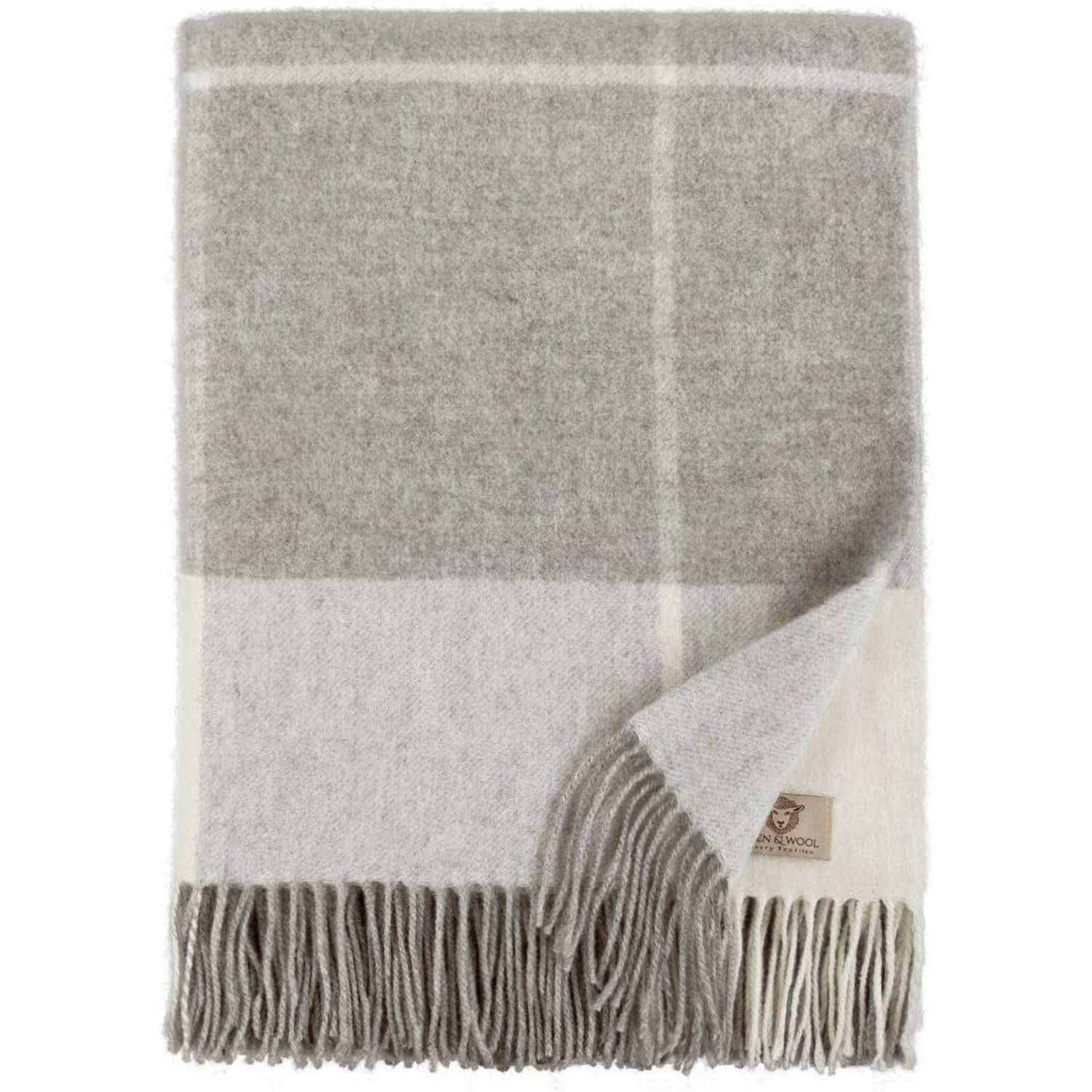
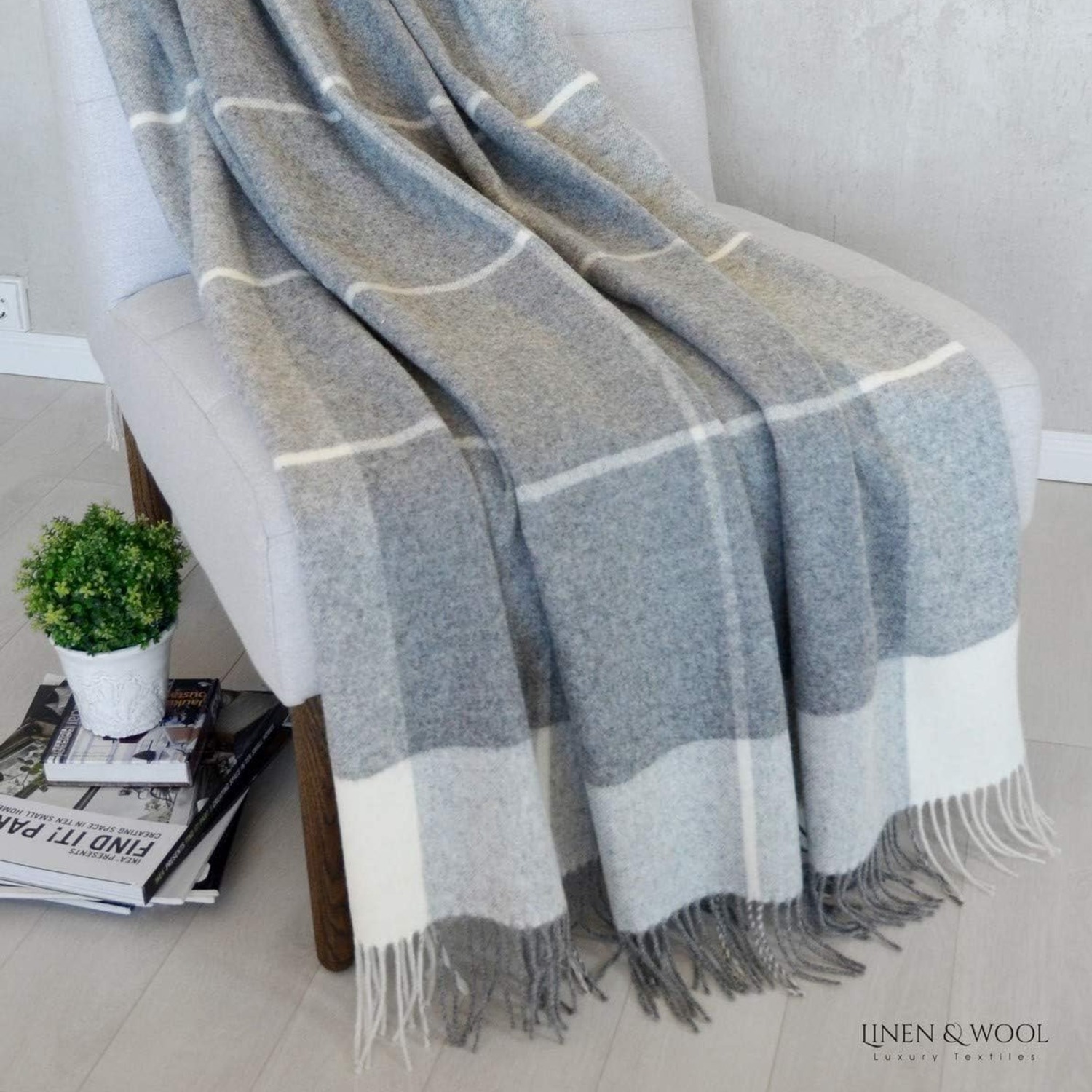
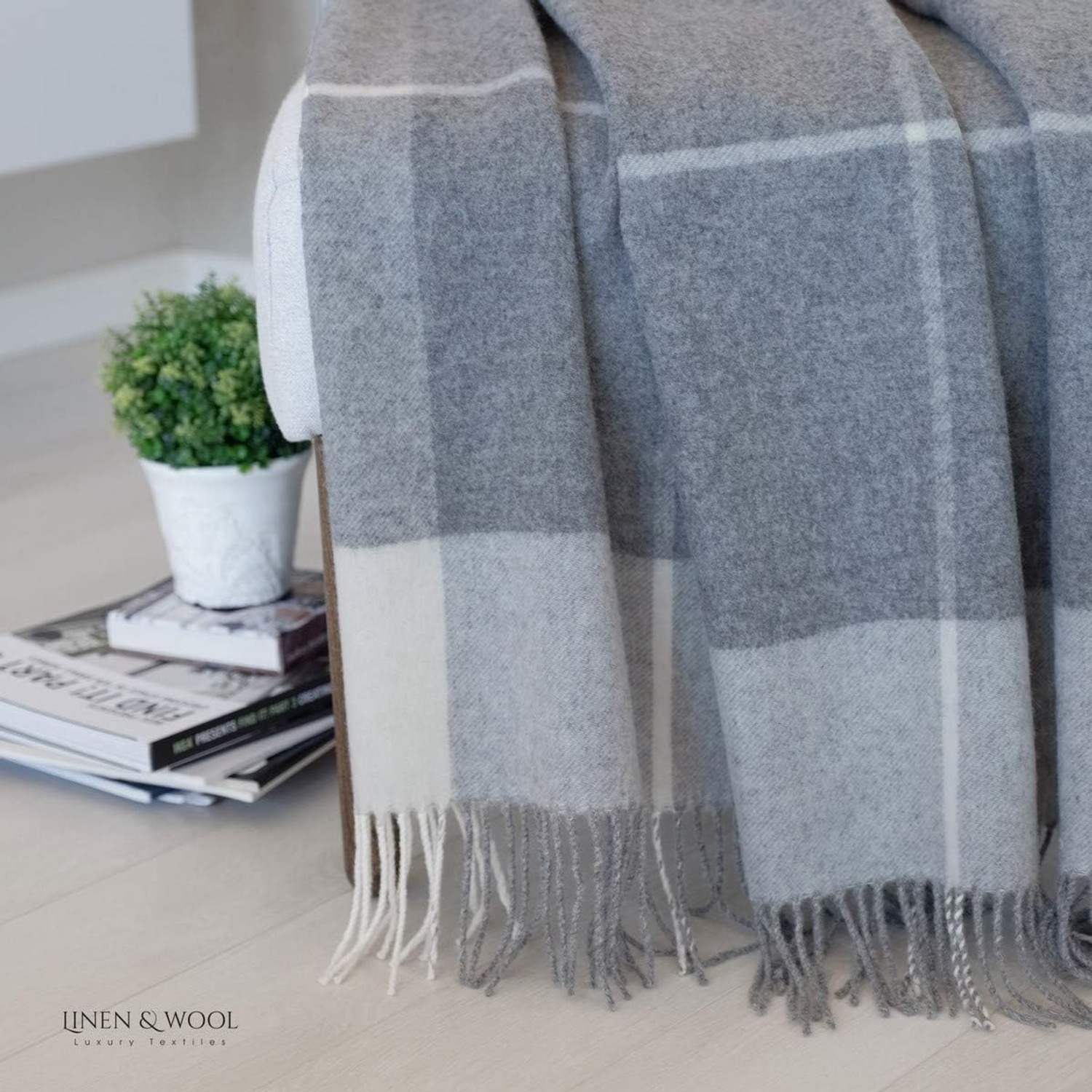
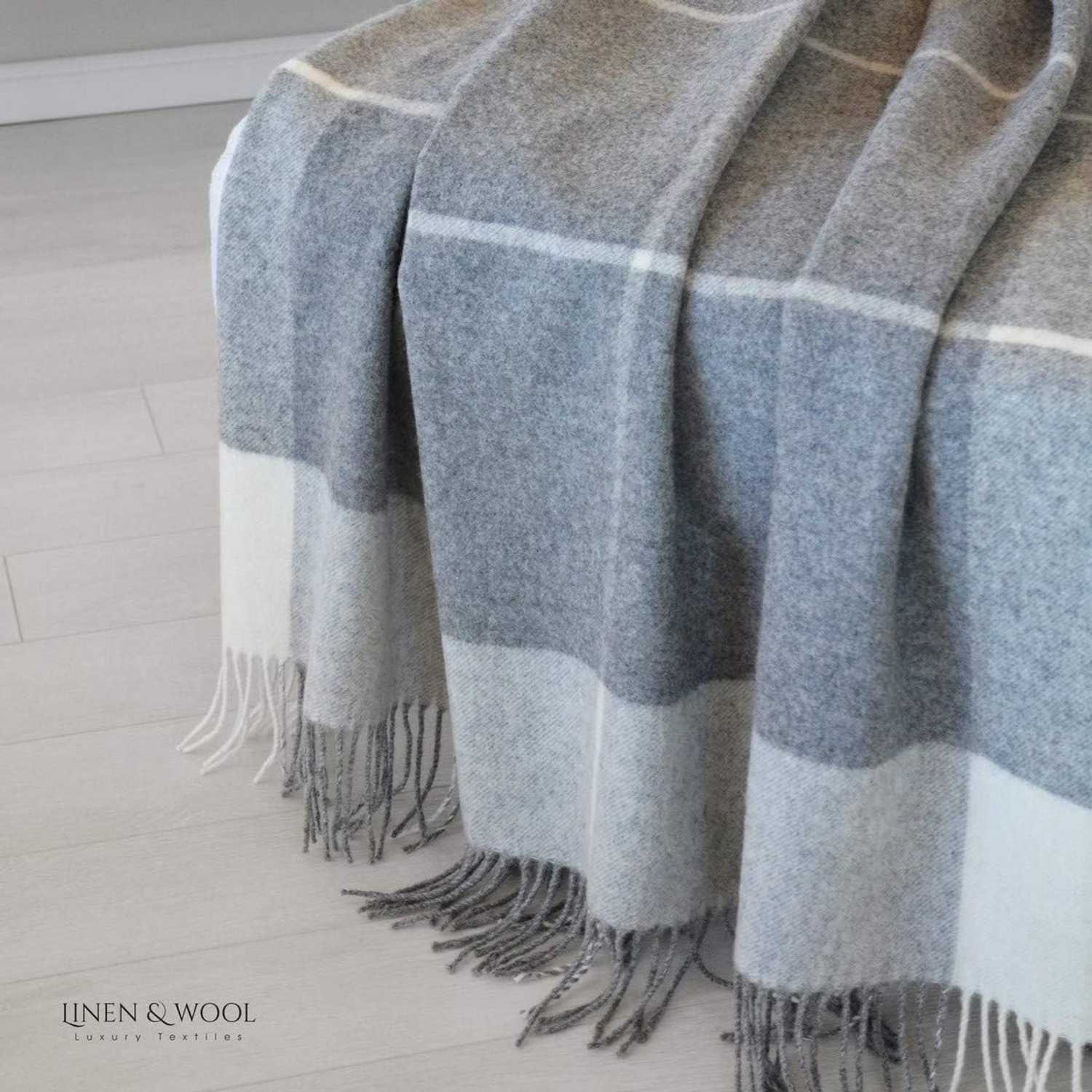
Third, how is the edge finished. Fringes give a relaxed, traditional look and are typical of woven wool throws. Stitched hems look tidier and tolerate rougher handling. Neither is better, they just age differently.
Fourth, where was it made. This blanket is made in the EU by Linen & Cotton Ltd. Country of manufacture is not a guarantee of anything on its own, but it tells you something about the supply chain.
Fifth, what does the care label ask of you. Dry clean recommended, as here, means the maker is being cautious with the finish and the fringes. A low temperature wool wash is still possible if you are careful.
Looking after it
Wool care is simple once you know the two enemies, which are heat and agitation. Together they make wool fibres lock into each other, the fabric shrinks and stiffens, and nothing brings it back.
So the rules follow naturally. Cool water only. No tumble dryer. No vigorous scrubbing or wringing. Use a detergent made for wool, since regular detergents with enzymes attack protein fibres.
Dry it flat. A soaked wool blanket is heavy, and hanging it on a line lets gravity stretch it out of shape permanently. Lay it on towels, pat it back into a rectangle, and give it time away from direct heat.
Most of the time you will not wash it at all. Wool resists odour well, so hanging it outdoors on a dry breezy day usually freshens it completely. Spot clean spills right away by blotting, not rubbing.
Store it clean. Moths go for wool carrying food traces, sweat, and skin oils more than clean fibre. A cotton storage bag lets it breathe, where a sealed plastic box traps moisture. A cedar block in the cupboard is a cheap extra layer of defence.
Expect some pilling where the blanket rubs against itself or against clothing. This is normal for natural wool and not a fault. A fabric comb or a wool shaver lifts them off in minutes and the blanket looks new again.
The short version
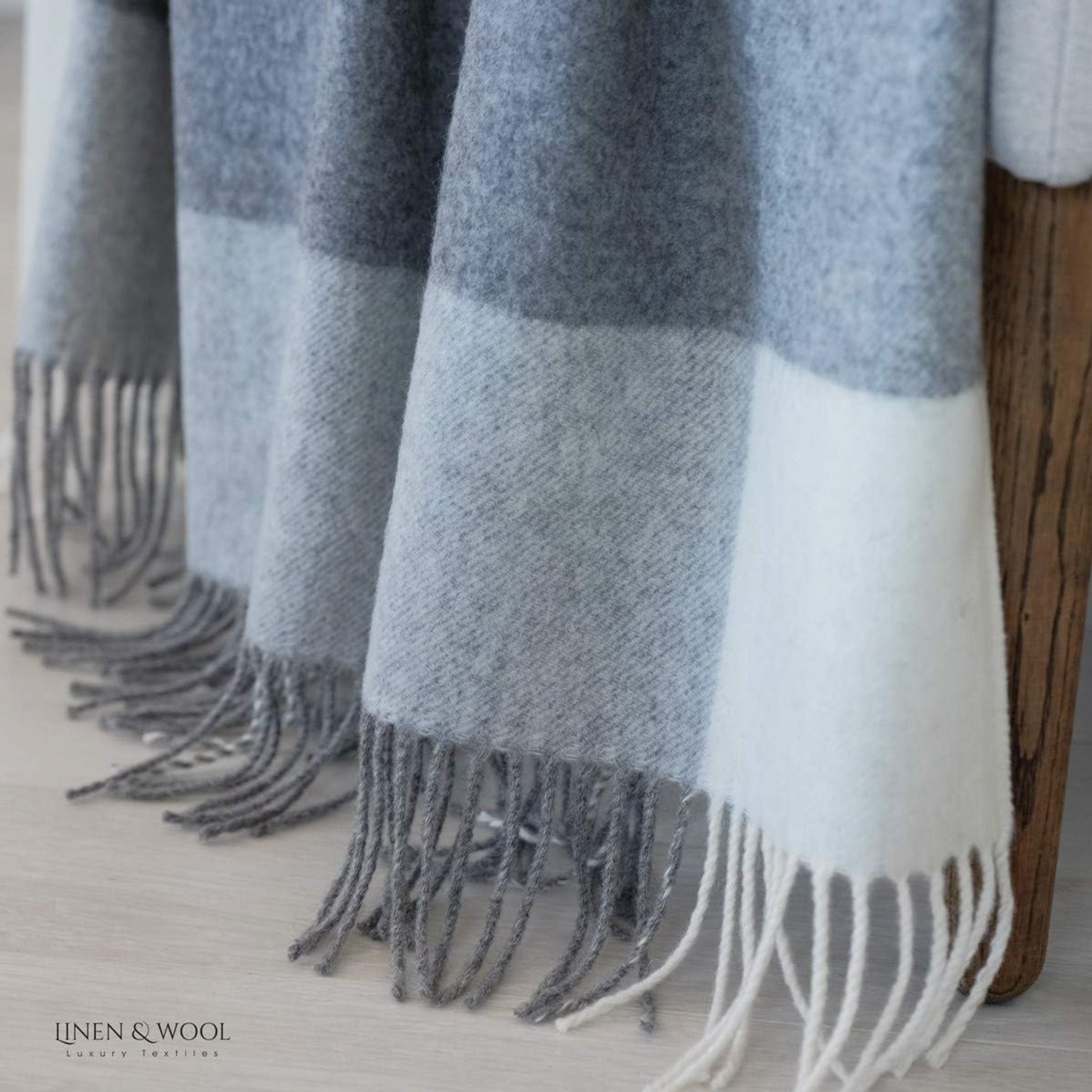
This is a pure merino wool check blanket measuring 140 x 200 cm, with fringed edges, made in the EU by Linen & Cotton. Merino means it is fine enough to feel soft against skin rather than scratchy. Wool means real warmth that breathes, instead of the sweaty heat you get from synthetics.
The size works as a single bed cover, a sofa throw, or a wrap. Care is straightforward if you avoid heat and hard agitation, and dry cleaning is the route the maker recommends.
If you have been using a fleece that always feels either too hot or not warm enough, this is the upgrade. Buy once, look after it reasonably, and it will outlast several of the cheap alternatives.