
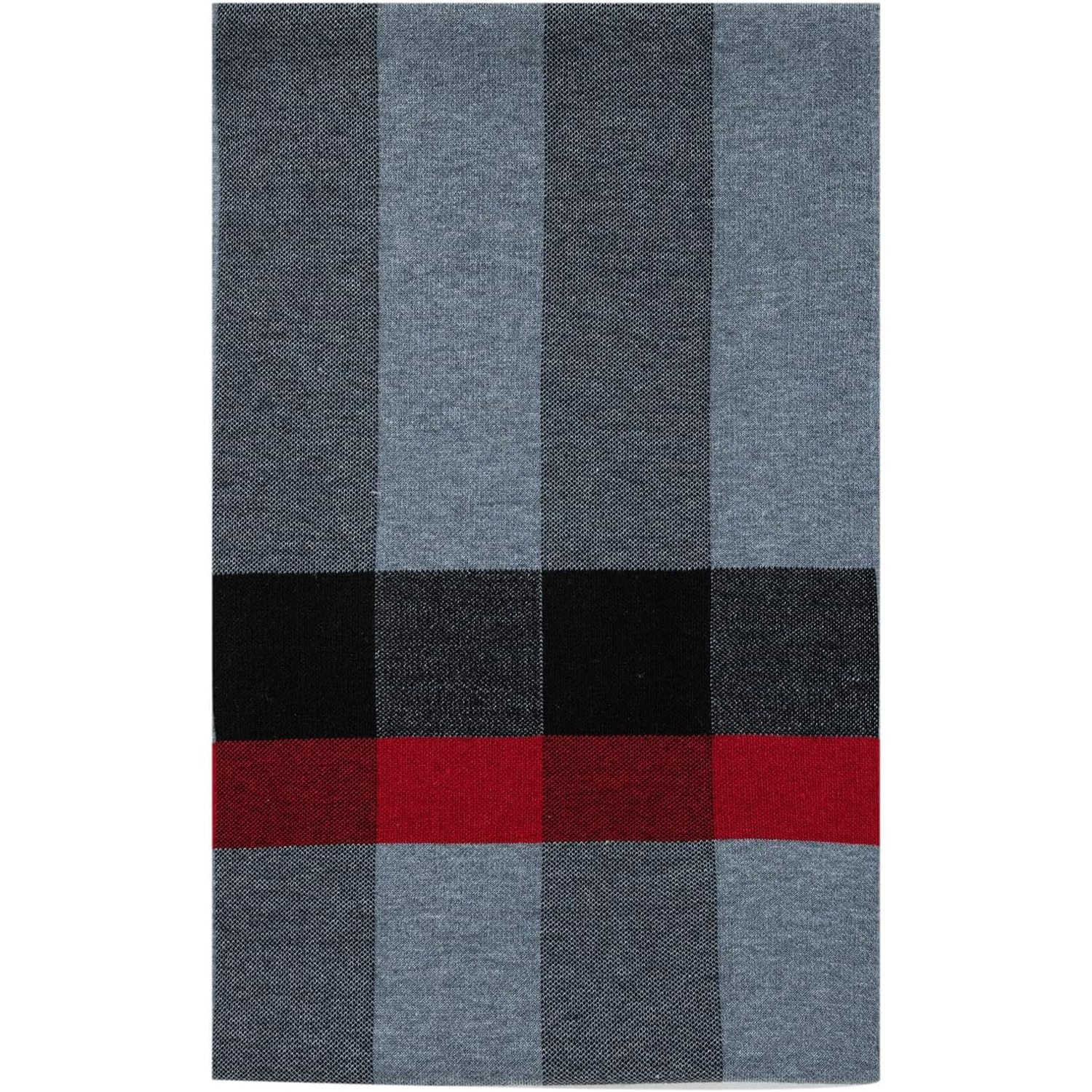
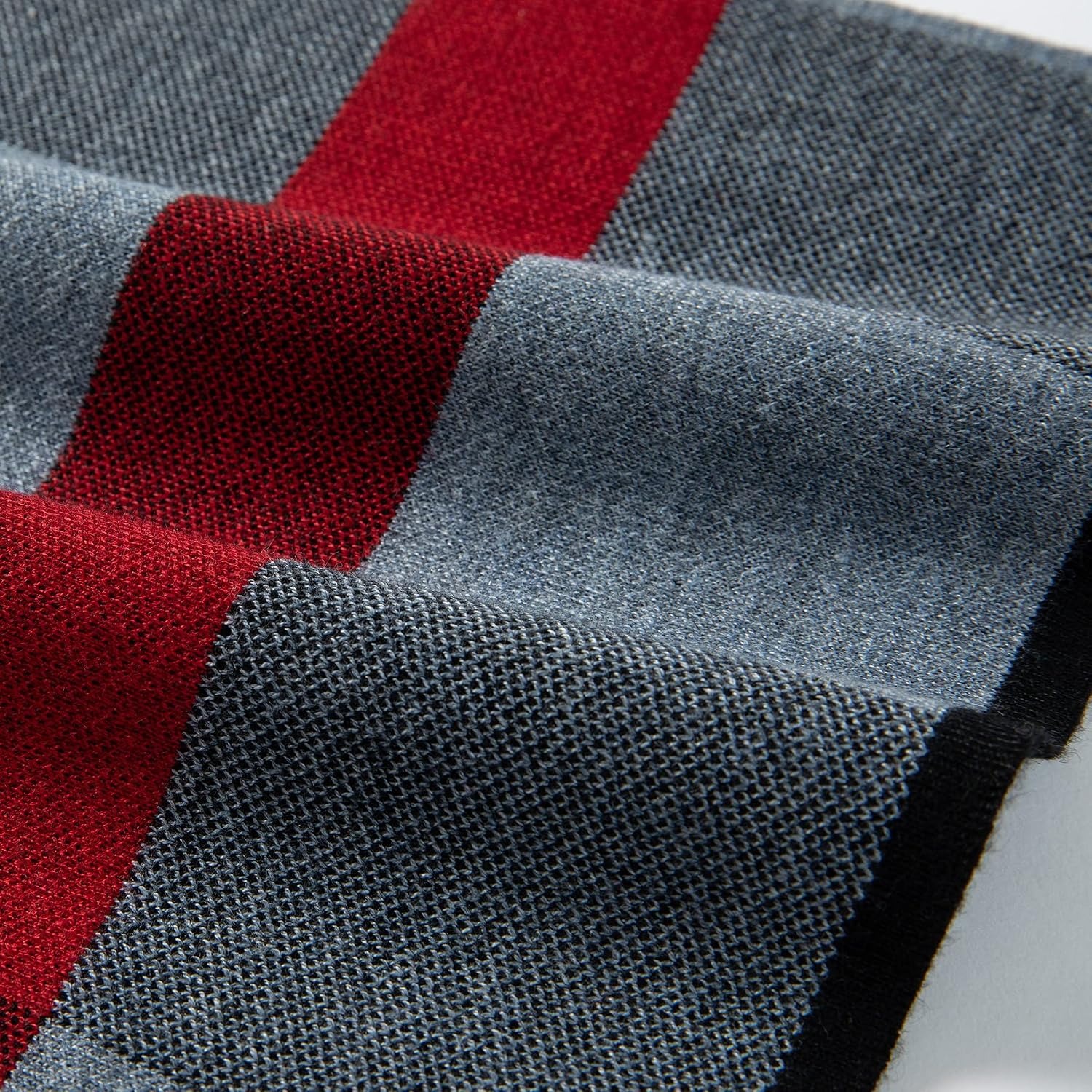
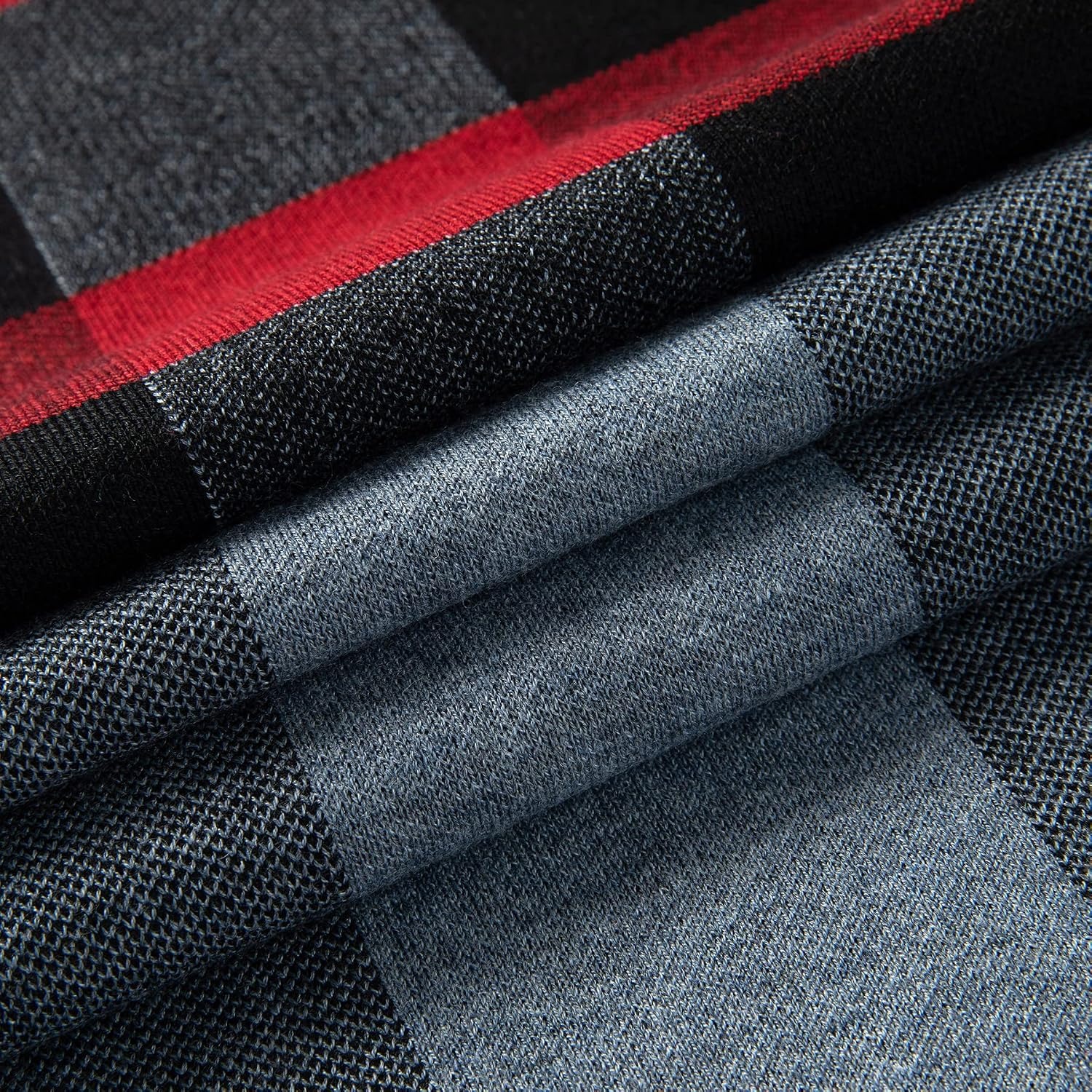
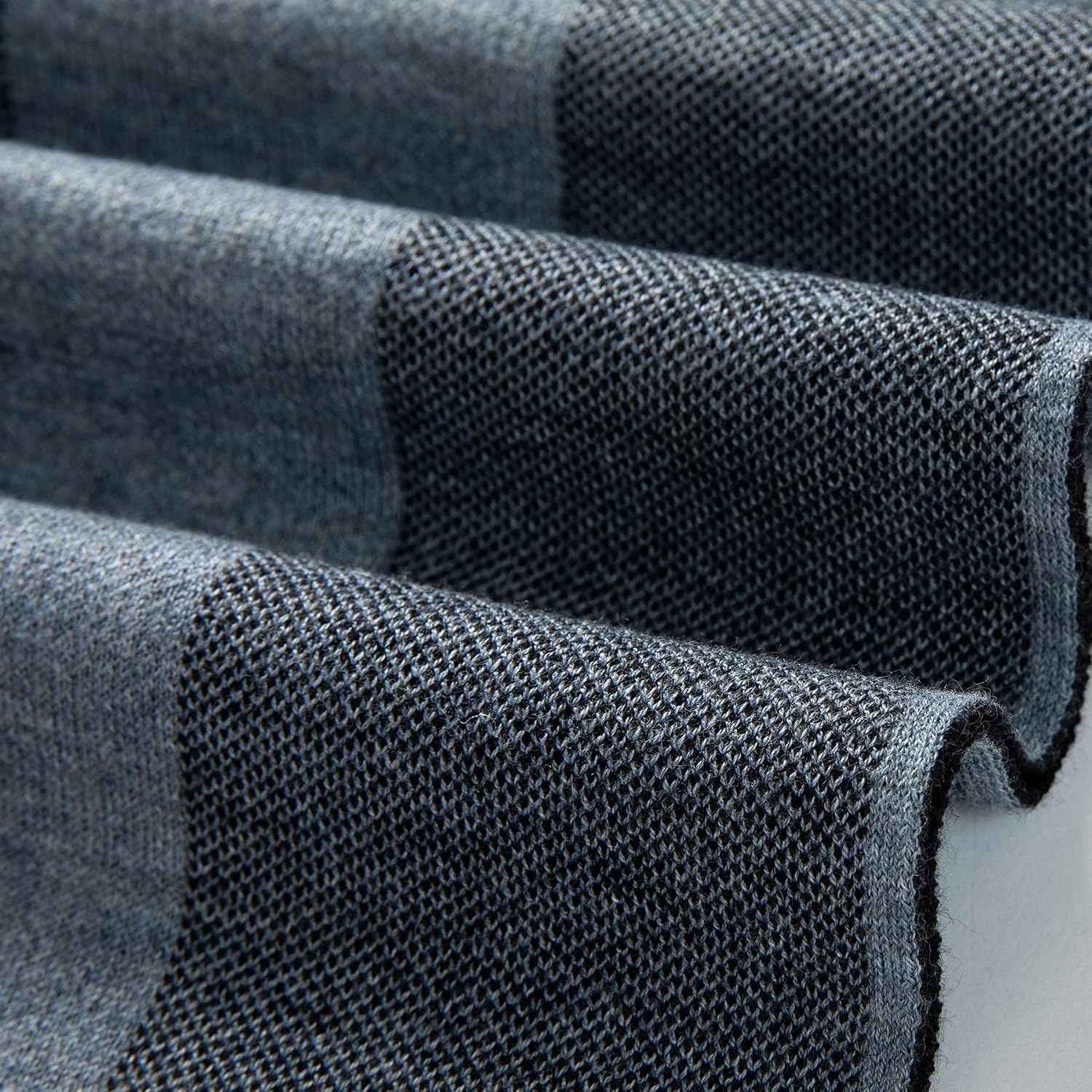
The complete guide
How to Choose a Merino Wool Scarf for Men
The problem with most scarves
Cold does not get you through your coat. It gets you at the gap between your collar and your jaw, and at the back of the neck when the wind turns. That is a small area, but it is the one that makes you feel properly cold on a platform in February.
A lot of men solve this with whatever scarf turned up as a present five winters ago. Usually it is one of two extremes. Either it is a thick acrylic knit that works outdoors and becomes unbearable the second you walk into a warm office, or it is a thin fashion scarf that looks fine and does almost nothing. Neither is a great daily answer.
A fine wool scarf sits in the middle, and that is the gap this one fills. Enough warmth to matter, little enough bulk that you can leave it on indoors for five minutes without sweating, and a pattern that does not look out of place over a suit jacket.
Why merino works
Merino wool comes from sheep bred for fine fibre. The difference between merino and ordinary wool is mostly fibre diameter. Thinner fibres bend more easily against the skin, so instead of a prickle you get softness. That is the main reason people who swore off wool jumpers as kids get on fine with merino as adults.
The warmth comes from structure rather than thickness. Wool fibres are naturally crimped, which means they do not pack flat. They hold thousands of tiny air pockets, and still air is one of the better insulators available. Your body heats that trapped air and the wool keeps it near your neck.
Wool also handles damp better than most synthetics. It can absorb a fair amount of moisture before it feels wet to the touch, which matters on a drizzly walk to the station. And it does not hold onto odour the way polyester does, which is why wool accessories need cleaning far less often than people assume.
What that adds up to day to day is a scarf you stop noticing. It is not heavy on the shoulders, it does not slide off, and it does not need babying between wears.
Who this suits
This scarf makes most sense for a few kinds of buyer.
The commuter who is outside in short bursts. Ten minutes to the station, ten minutes at the other end, heated carriage in between. A lightweight winter scarf is ideal here because you are constantly moving between temperatures.
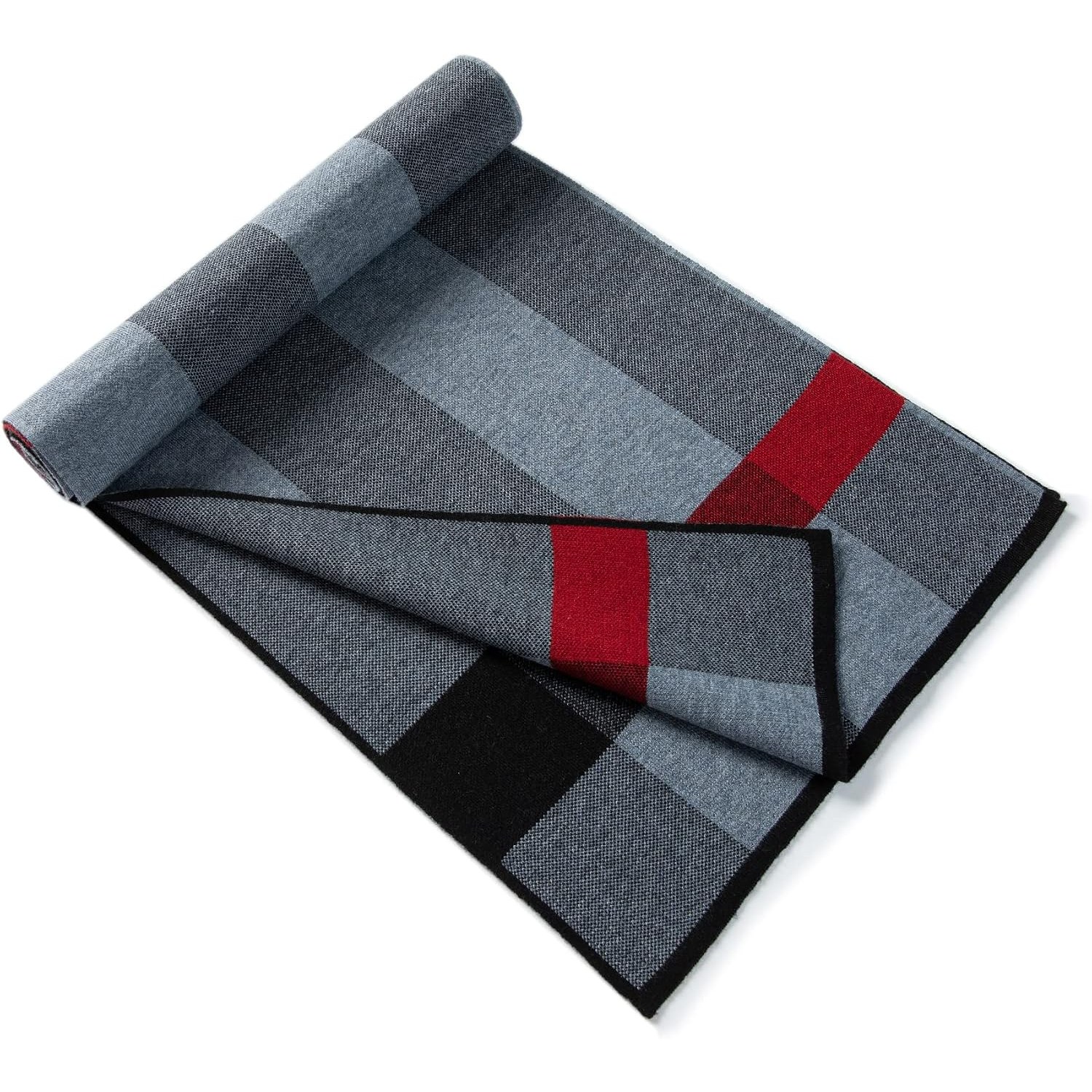
The man who wears a coat to work. A tartan check in fine wool is one of the few accessories that reads correctly over tailoring. It breaks up a plain overcoat without turning into a statement piece.
The gift buyer who does not know a size. Scarves do not need measuring, which is why a gift scarf for him is such a reliable present. The gift box removes the wrapping problem too.
The man upgrading from acrylic. If your current scarf is pilled, static and slightly shiny, the jump to fine wool is immediately obvious the first time you put it on.
It suits people less well if you need extreme cold-weather gear. For sub-zero conditions with real wind chill, you want a heavy knit or a fleece-lined neck gaiter. This is a layering accessory, not expedition kit.
How to choose
A few things separate a scarf you wear for ten years from one that lives in a drawer.
Pattern. Tartan is one of the safest patterns in menswear because it has been in circulation long enough to stop looking like a trend. The trick is matching it to the coat. If the coat is plain navy, grey or black, a check scarf is a good contrast. If the coat is already patterned, keep the scarf plain. Trying to run two patterns at once rarely ends well unless you are very confident.
Length. Longer scarves give more options. A long wool scarf can be draped flat for a formal look, looped once for everyday, or wrapped twice when the wind picks up. Shorter scarves only really do one thing. The finished dimensions are not stated in this product record, so if you have a strong preference, ask us before you order and we will check with the supplier.
Weight. This is the trade-off that matters most. Heavier equals warmer, but also bulkier under a collar and more likely to come off indoors. Fine merino leans toward the light end, which is the right call for most people who are not standing outside for hours.
Presentation. If it is a gift, boxed packaging saves a job. If it is for yourself, the box still works for off-season storage.
Care demands. Check these before buying, not after. This one is dry clean only, which is normal for fine wool but worth knowing if you were hoping for a machine-washable option.
Looking after it
Wool rewards light handling. The instinct to wash something after every use comes from cotton, and it does not apply here.
Air it instead. Hang the scarf somewhere with moving air for a few hours after a cold, damp day and it will freshen itself. Wool releases moisture and odour on its own, which is most of why it needs so little cleaning.
When it does need cleaning, take it to a dry cleaner. The care instruction for this scarf is explicit, no washing, no bleach, no tumble dryer. Hot water and agitation cause wool fibres to lock together permanently, and once a scarf has felted there is no undoing it.
If it gets soaked, lay it flat or drape it over a rail at room temperature. Keep it away from radiators and direct sunlight, both of which make wool brittle.
Pills will appear eventually where the scarf rubs against a bag strap or a coat collar. This is friction, not a fault. A cheap fabric comb or a battery wool shaver removes them in a couple of minutes and the scarf looks new again.
For summer storage, fold it loosely and put it in a drawer or its gift box with a cedar block. Moths go for wool, and they go for it hardest in dark, undisturbed cupboards. Do not leave it on a hook for six months, because gravity will stretch one end.
A note on what we do not know
We only list what the supplier record confirms. For this scarf that means the manufacturer, the men's department listing, the tartan styling, the gift box and the dry clean only care instruction.
The exact finished length and width, the colourway, the fibre percentage breakdown, the weight and the country of origin are not specified in this record. We would rather leave those blank than fill them with plausible guesses. If any of them is a deciding factor for you, message us first and we will find out what we can confirm.
The short version
A merino wool scarf for men earns its place by being useful more often than a heavy scarf is. It is warm at the neck, light enough to keep on indoors, and patterned in a way that works with both a suit and a jumper.
This one is a tartan check from Lindoro, dry clean only, and it arrives in a gift box so it is ready to give. Choose it if you want one good scarf that covers most of the cold season and most of your wardrobe. Skip it if you need serious sub-zero gear, because that is a different product entirely.