
The complete guide
Choosing Linen Napkins That You Will Actually Use
The drawer problem
Almost every household has the same thing going on. There is a set of nice cloth napkins somewhere, usually in the bottom of a sideboard, and they come out twice a year. The rest of the time it is a roll of paper on the bench.
The reason is rarely laziness. It is usually that the nice napkins are too few, too fussy or too fragile. Four napkins do not cover a dinner for six. A pale set with embroidery feels wrong next to a weeknight pasta. And if washing them feels like a separate project, they stay in the drawer.
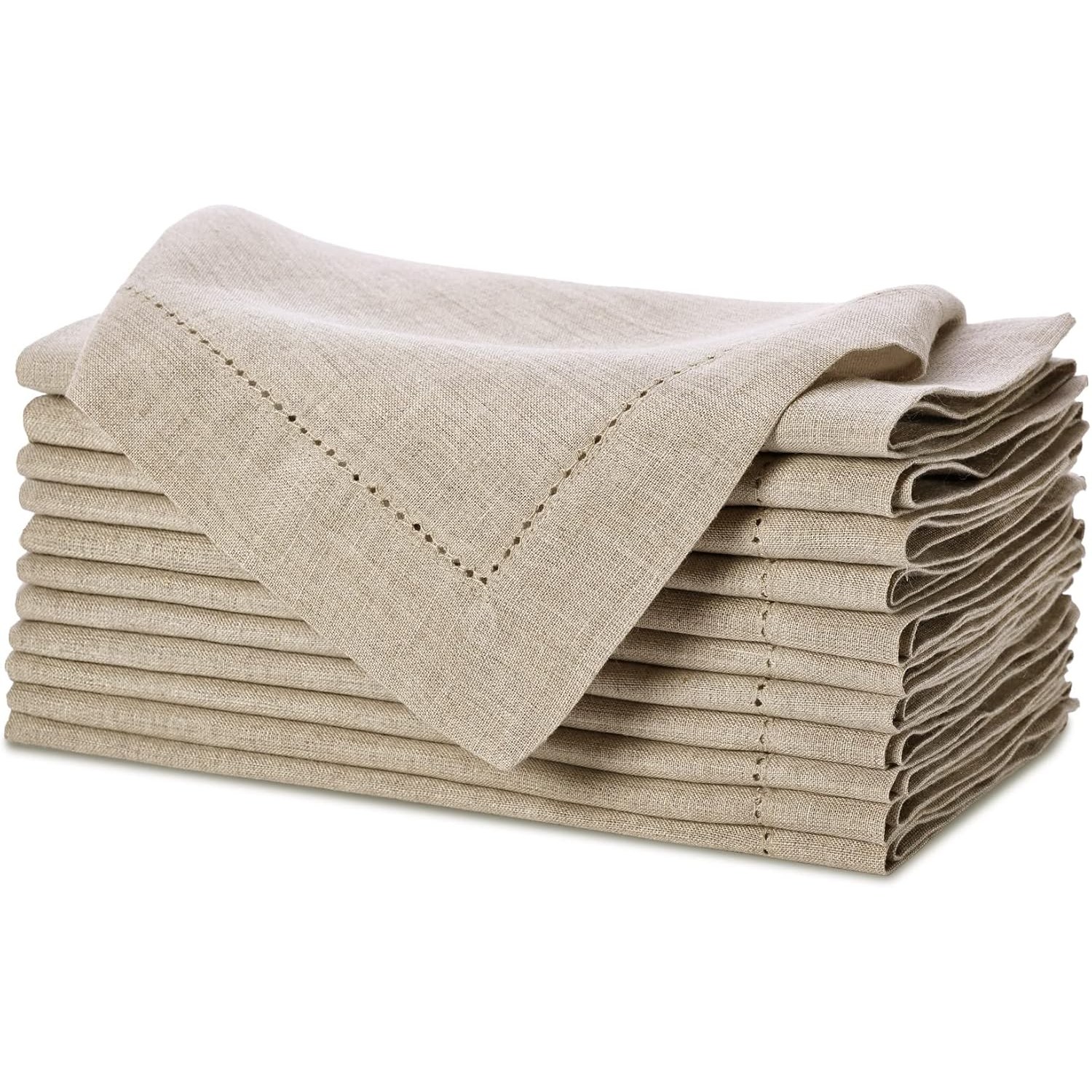
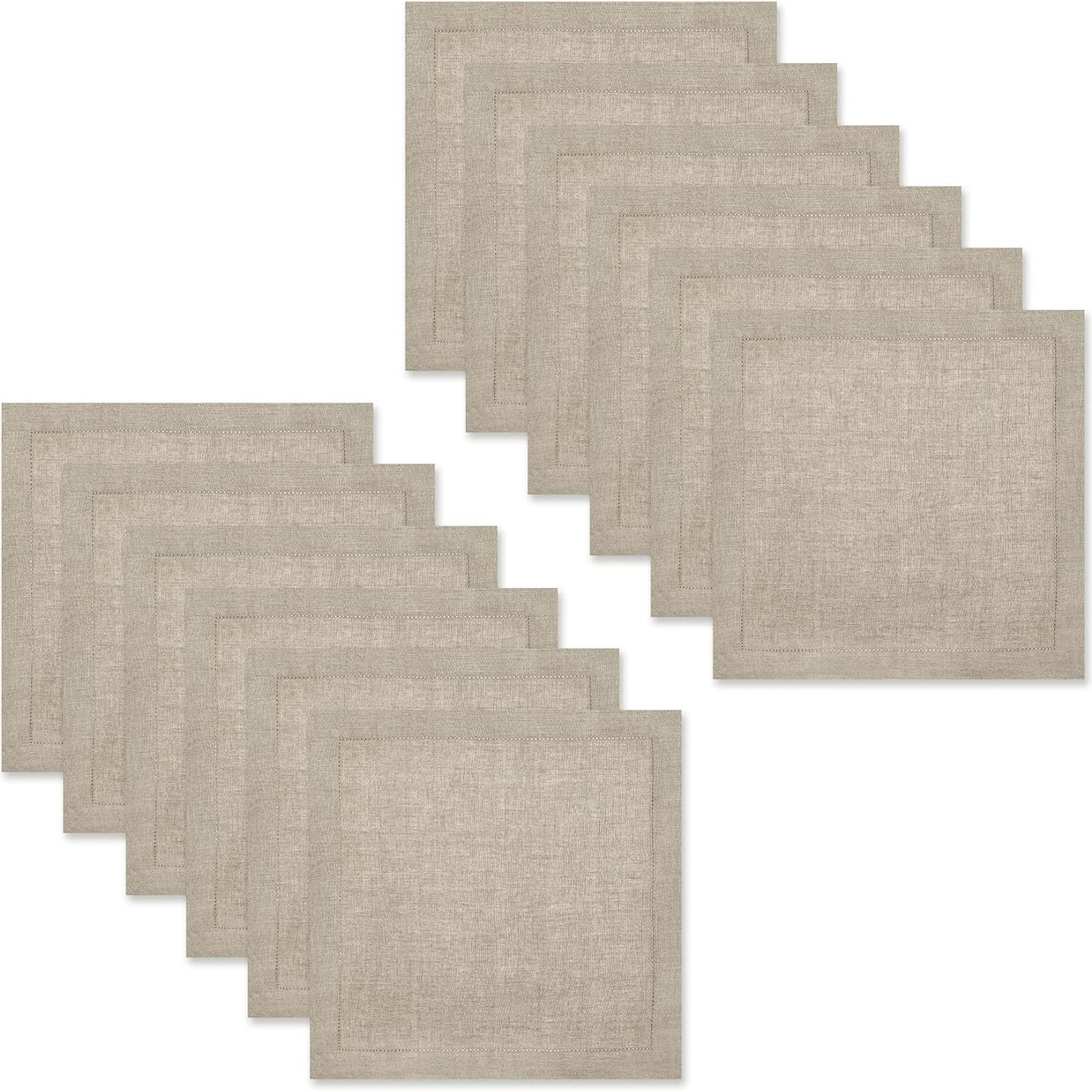
A set of twelve natural linen napkins solves most of that in one go. You have enough to cover a table and still have clean ones ready. The styling is plain enough that it does not look like you are making an occasion out of Wednesday. And they go in the washing machine with the towels.
Why linen, and not cotton
Cotton is the default for cloth napkins, and it works fine. Linen is better, and the reasons are practical rather than snobbish.
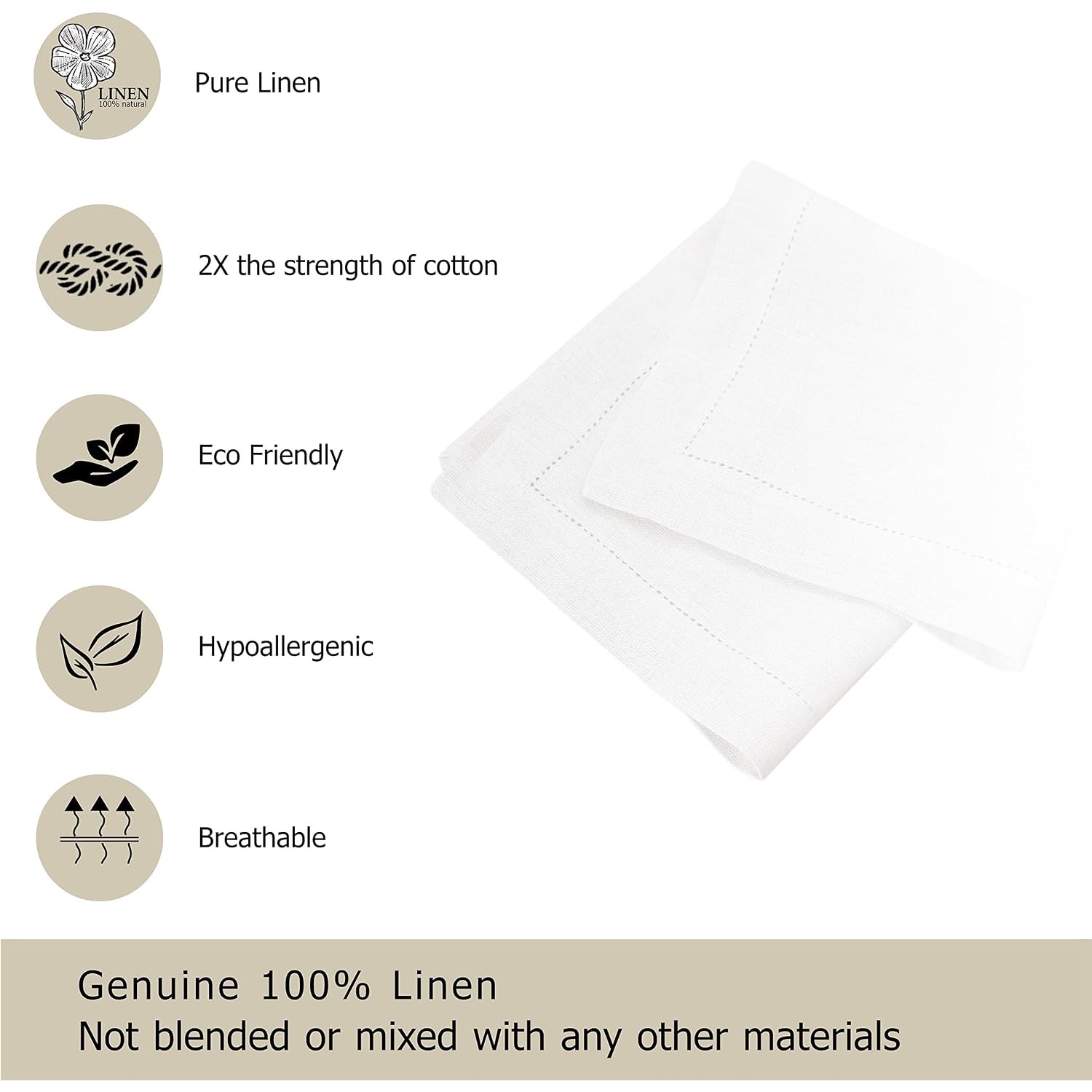
Linen is made from flax, which has a longer, stronger fibre than cotton. That means the fabric resists tearing and holds up to repeated washing. It also means linen starts out firmer. A new linen napkin can feel almost papery. That is normal and temporary.
The interesting part is what happens next. Linen softens with every wash and it gets more absorbent as it does. Cotton tends to peak early and then slowly degrade. Linen improves for a long time, then holds steady. A set of linen dinner napkins that has been in rotation for five years is usually the nicest thing in the drawer.
Linen also breathes. It does not cling to damp skin and it dries quickly, which matters more than you would think at a warm-weather lunch or an outdoor dinner.
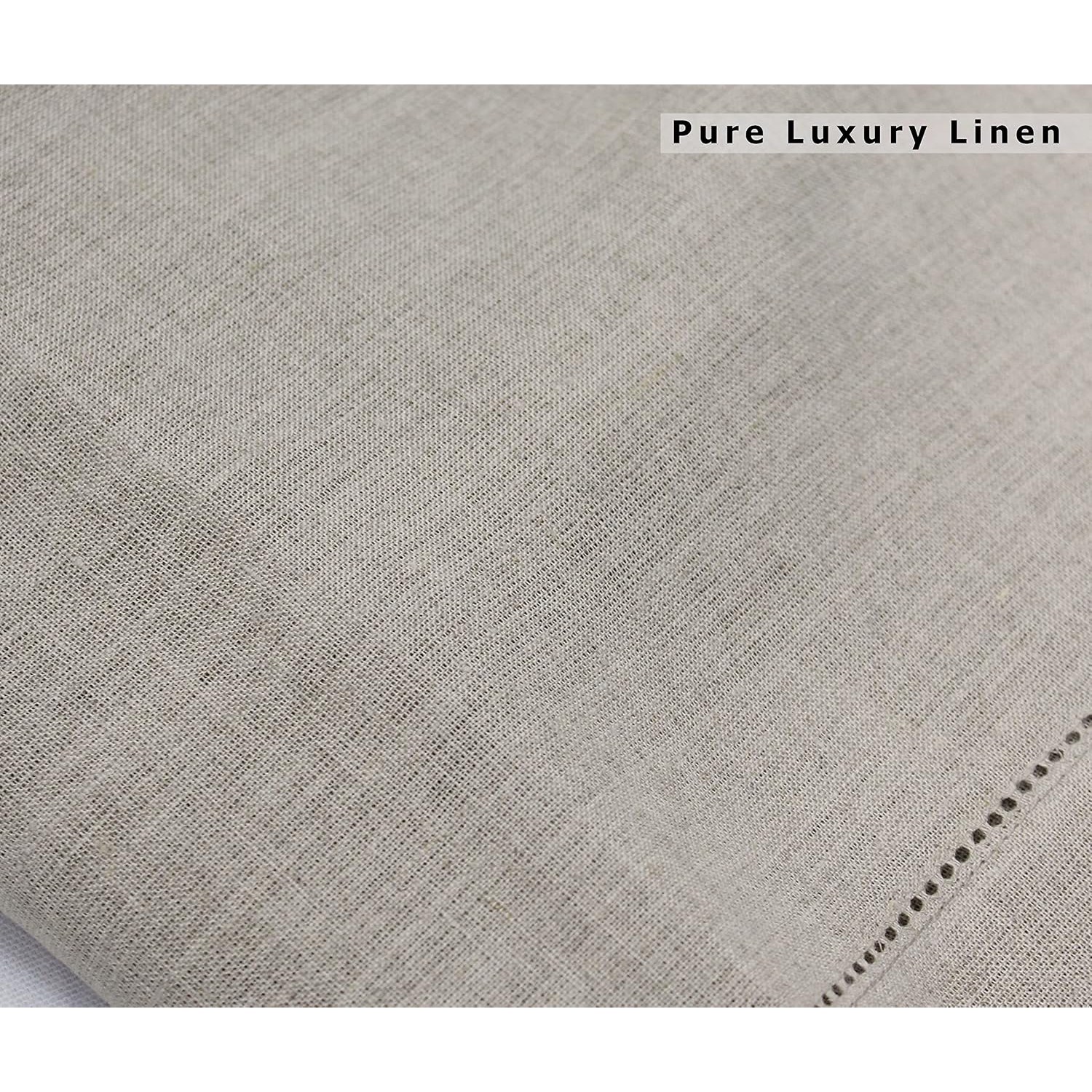
The visual difference is worth mentioning too. Linen has a slight slub and a matte surface, so it catches light unevenly. That texture is what gives a table a relaxed, lived-in look rather than a flat, synthetic one.
What the hemstitch actually does
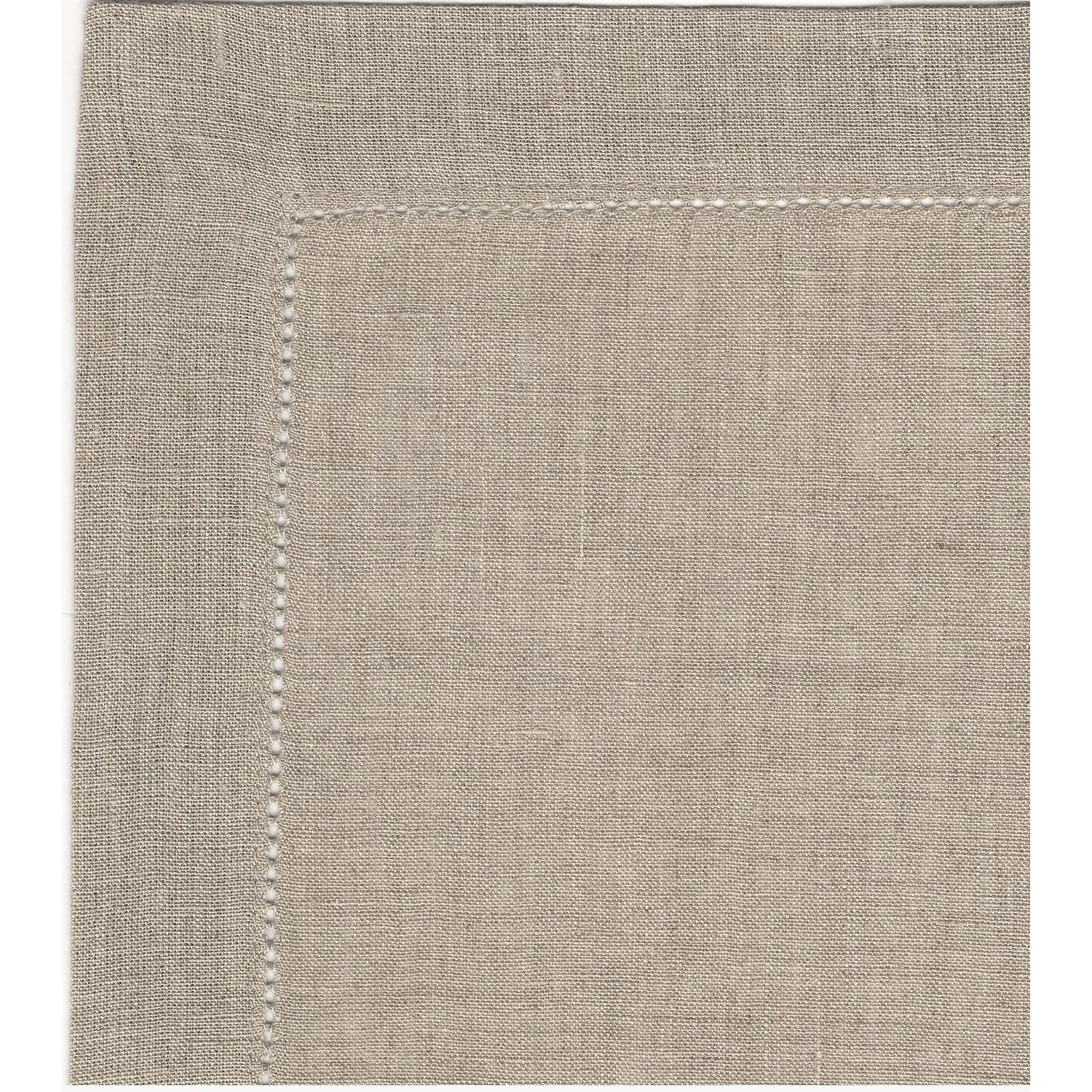
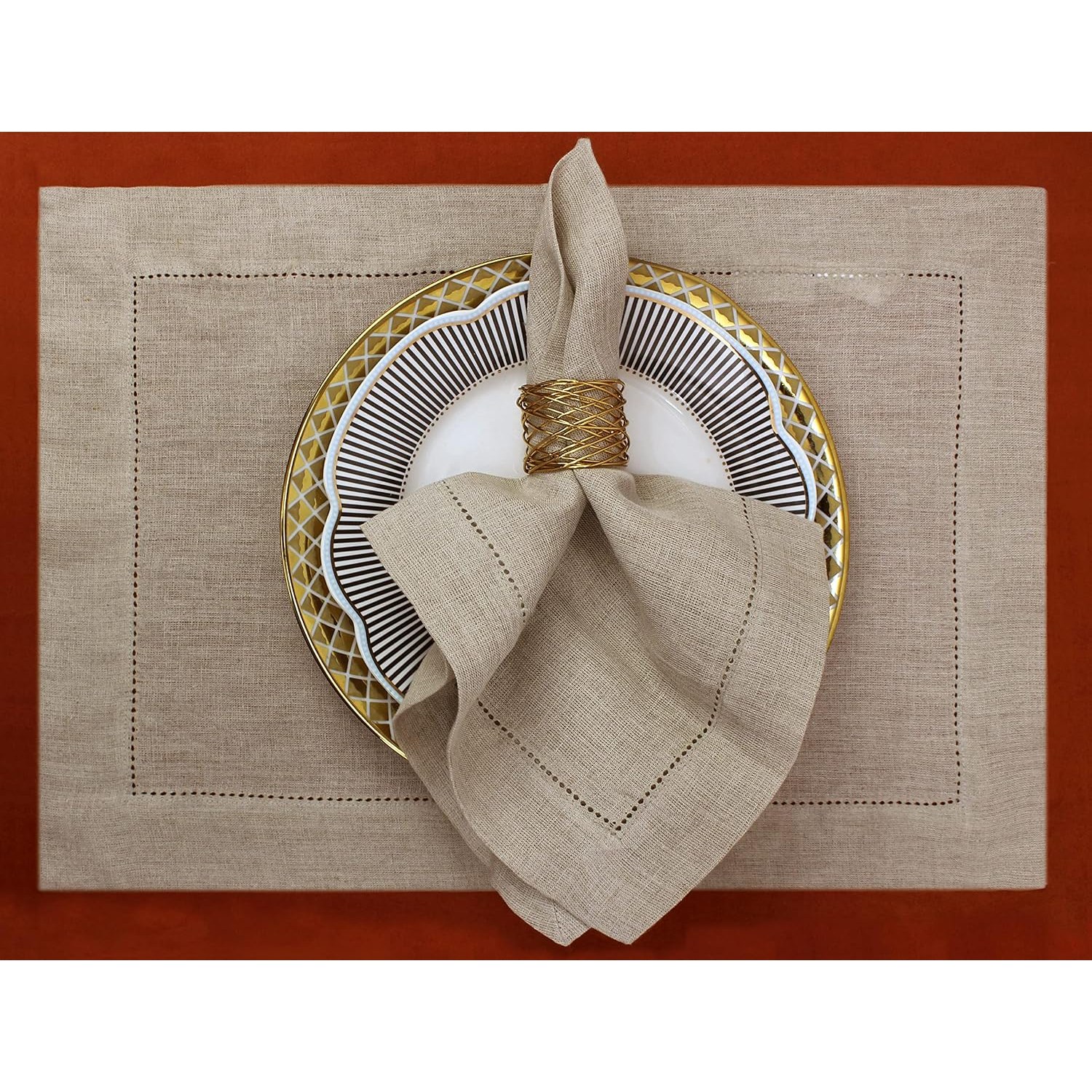
Hemstitching is an old finishing technique. Threads are drawn out of the fabric near the hem, and the remaining threads are bundled together with stitching. The result is a fine line of openwork running parallel to the edge.
It serves two purposes. It secures the hem properly, and it gives the napkin a decorative border without adding colour, pattern or anything that could clash with your plates.
Pair that with mitered corners and you get a napkin that folds flat and squarely. Mitering means the hem is folded diagonally at each corner so the fabric does not bunch. It is a small detail that separates tailored table linen from a hemmed square of cloth, and you notice it most when you fold a napkin into anything more structured than a rectangle.
Size is the thing most people get wrong
There is a real difference between a cocktail napkin, a lunch napkin and a dinner napkin, and the gap is not subtle.
Small napkins look neat folded on a plate. Then you sit down, shake it out, put it on your lap, and it slides onto the floor within ten minutes. An oversized dinner napkin has enough fabric and enough weight to stay where you put it. It also gives you room to wipe your hands without turning the whole thing grubby in one pass.
These are described as oversized pure linen hemstitch napkins, which puts them at the generous end of the dinner napkin range. Exact finished measurements are not listed in this record, so if you need a precise number for a specific napkin ring or a particular fold, ask us first.
Who this set suits
If you host regularly, twelve is the number that stops you from doing a load of washing between courses. Two tables of six, or one long table with spares for spills.
If you have a small household and you just want to stop buying paper, twelve is still a sensible quantity. You use four or six at a time and wash them once a fortnight with everything else. The rotation means no single napkin wears out faster than the rest.
If you are setting up for a wedding, a milestone birthday or a long lunch, linen photographs better than almost anything else on the table. The texture reads clearly in close-up shots and the neutral colour does not fight with flowers, food or glassware.
And if you are buying a gift, a twelve pack of cloth napkins is rarely a duplicate. Most people own four.
Choosing the right quantity
Work out your usual table size and add half again. If you normally seat eight, twelve covers you with four spares. If you seat twelve, buy two sets so you are never scrambling.
Buying the same product in multiples has a second advantage. Natural fabrics vary slightly between production runs, so ordering together keeps the colour and finish consistent. If you think you will want more later, it is worth getting them now.
Looking after them properly
The care routine is short, which is the point.
Wash before first use. This relaxes the weave and starts the softening process. Wash with similar colours, on a normal cycle, and tumble dry. The napkins are described as dryer safe.
Two things to avoid. Skip the bleach, because it weakens natural fibres and can leave patchy discolouration on a natural tone. Skip the fabric softener too. Softener works by coating fibres, and a coated napkin is a less absorbent napkin. Linen softens on its own with washing, so the softener is doing nothing useful and quite a lot of harm.
For stains, speed beats strength. Rinse in cold water straight away and blot rather than rub. Red wine, oil and sauce all respond far better to immediate cold-water treatment than to a hot wash two days later.
Ironing is optional. If you want crisp, press while the napkin is slightly damp. If you want relaxed, fold them straight out of the dryer and let the natural crumple do its thing. Both look correct with linen, which is part of why it is forgiving.
Store them folded loosely rather than crammed in. Hard creases set in over months of compression and take real effort to press out.
The cost question
A set of twelve cloth napkins is a bigger upfront spend than a packet of paper. The comparison that matters is cost per meal.
Paper napkins get used once. Every dinner party, every family meal, every takeaway night adds to a cost that never stops. Washable cloth napkins have one cost at the start and then effectively nothing, since they wash with laundry you are already doing.
If you host even once a month, the maths turns in favour of cloth within the first year. If you use them daily, it turns much faster than that. The waste reduction is a genuine bonus rather than the main argument.
The short version
Twelve oversized linen napkins with a hemstitch border and mitered corners. Machine washable, dryer safe, neutral enough to suit most tables.
Linen starts firm and gets better. Wash it, dry it, skip the softener, and the set improves for years. The quantity is what makes the difference between napkins you own and napkins you actually use.
If you are not sure whether one set covers your table, get in touch and we will work it out with you.