
The complete guide
How to Choose an Oval Linen Tablecloth That Actually Fits
The problem with dressing an oval table
Oval tables are the quiet achievers of dining furniture. They seat more people than a round table of the same footprint, they let everyone see each other, and they have no sharp corners for hips and toddlers to find. Then you try to put a cloth on one.
Most tablecloths are rectangles. A rectangle on an oval table gives you two stiff flaps hanging off the curved ends and a hem that wanders in and out as it goes round. It looks like a sheet. Round cloths are worse, because the long sides of the table sit bare while the ends drown. The fix is simple and surprisingly hard to find: a cloth cut in the same shape as the table.
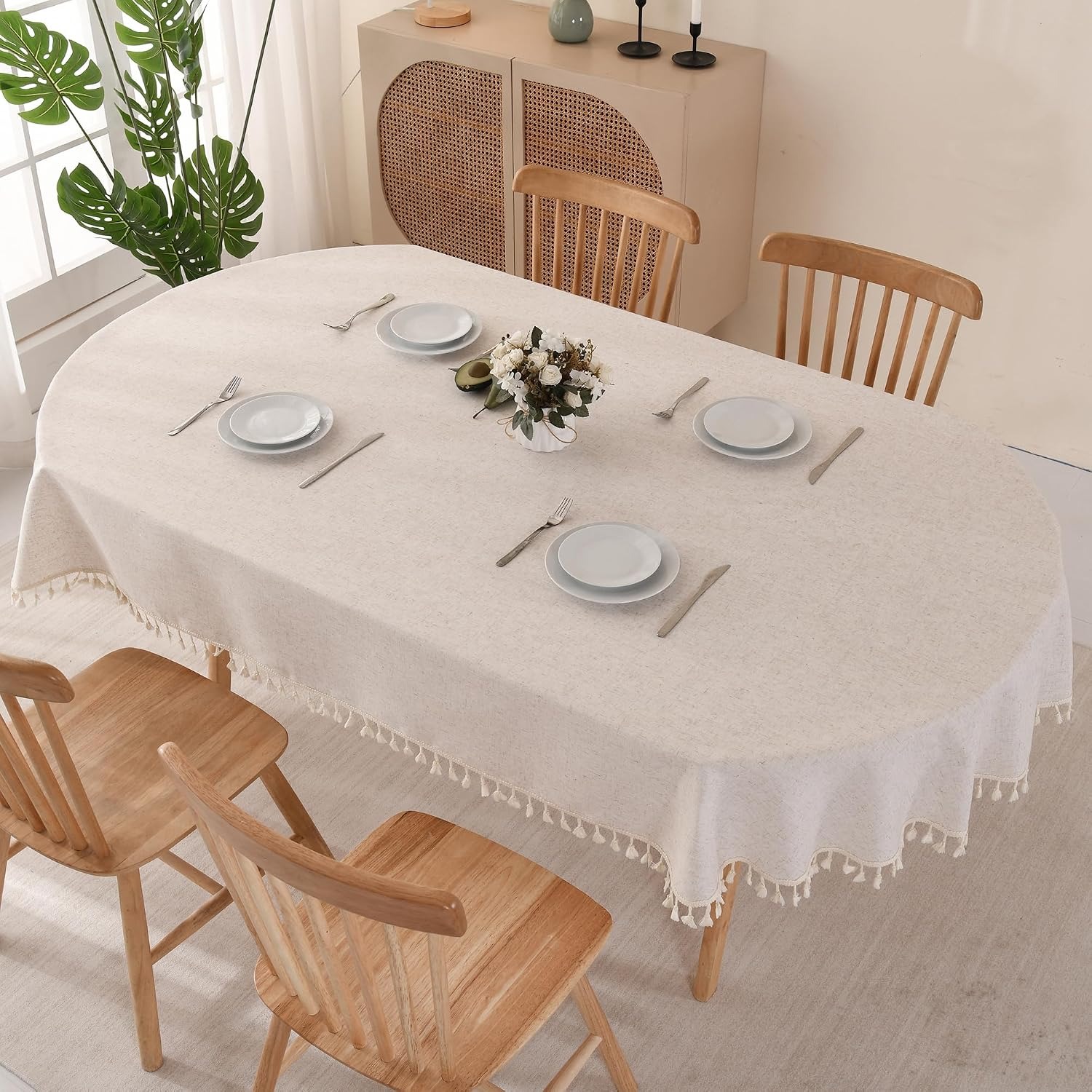
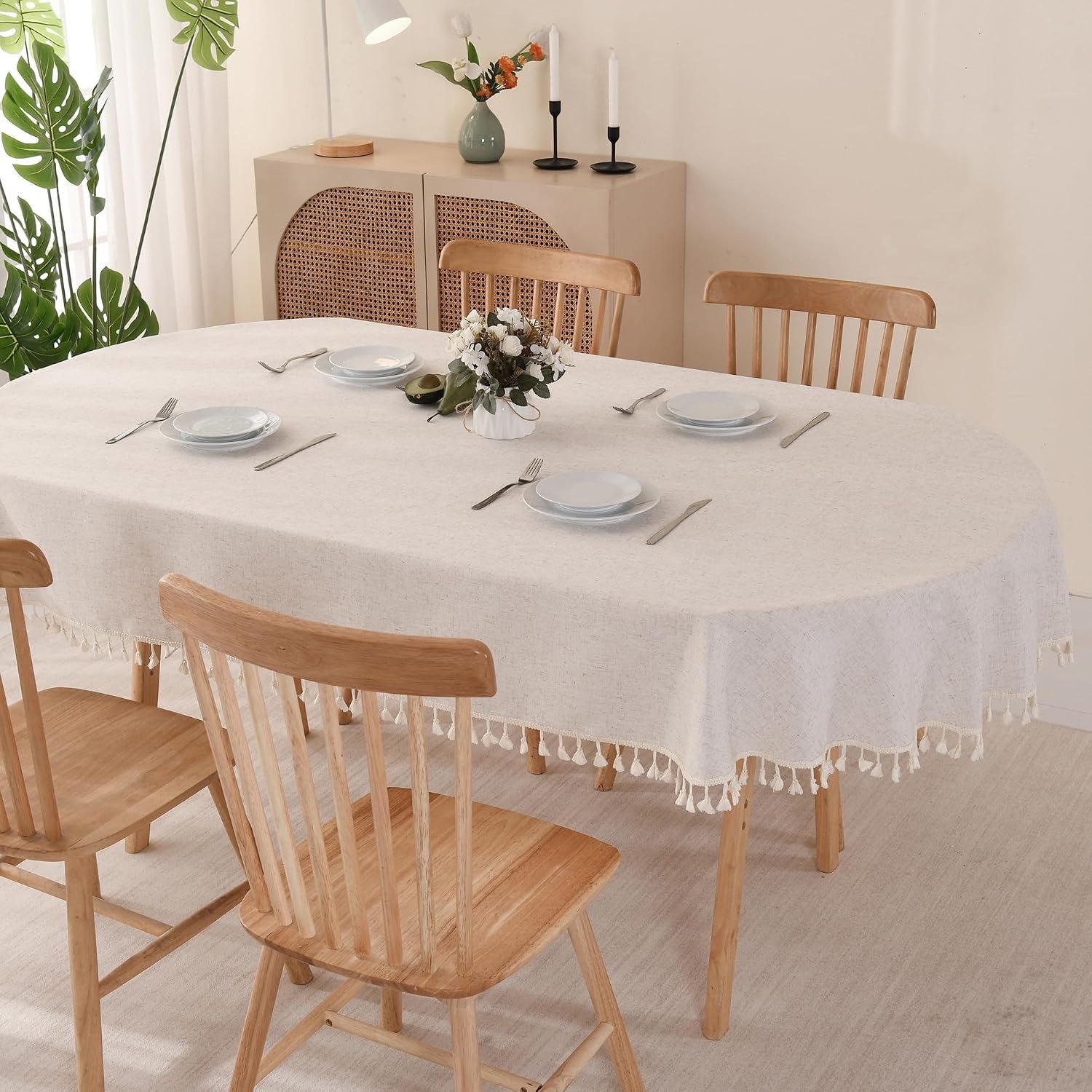
That is what this one is. An oval linen tablecloth at 140 x 220 cm, with the hem shaped so the drop stays even the whole way round. It is a small structural decision that does most of the visual work before you have put a single plate down.
What a cotton linen blend gives you
Fabric choice on a dining table is a trade between look and life. Pure linen has the best texture of any table fabric, but it creases if you look at it and needs careful handling. Polyester behaves perfectly and looks it, with a slight sheen under light that reads as cheap at close range.
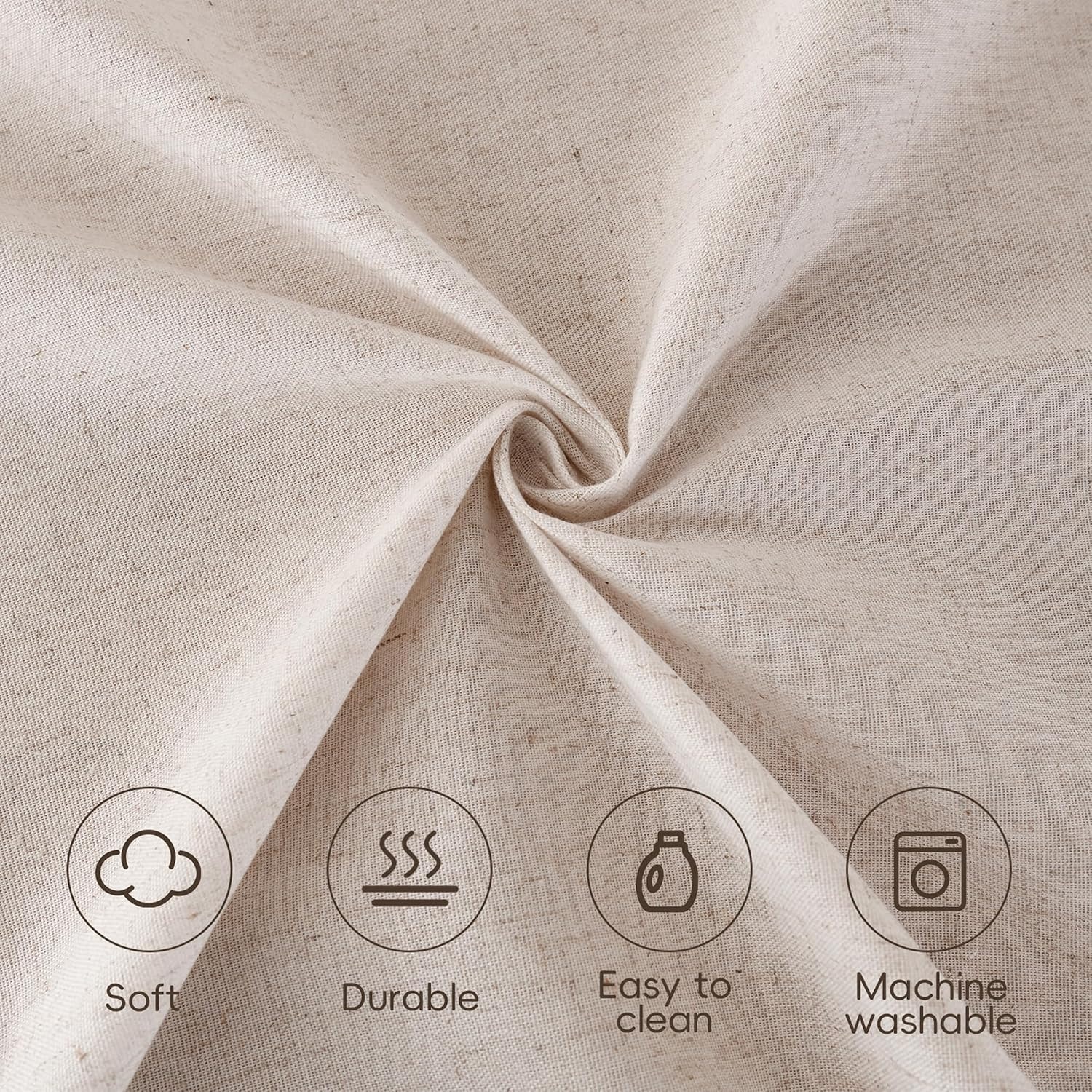
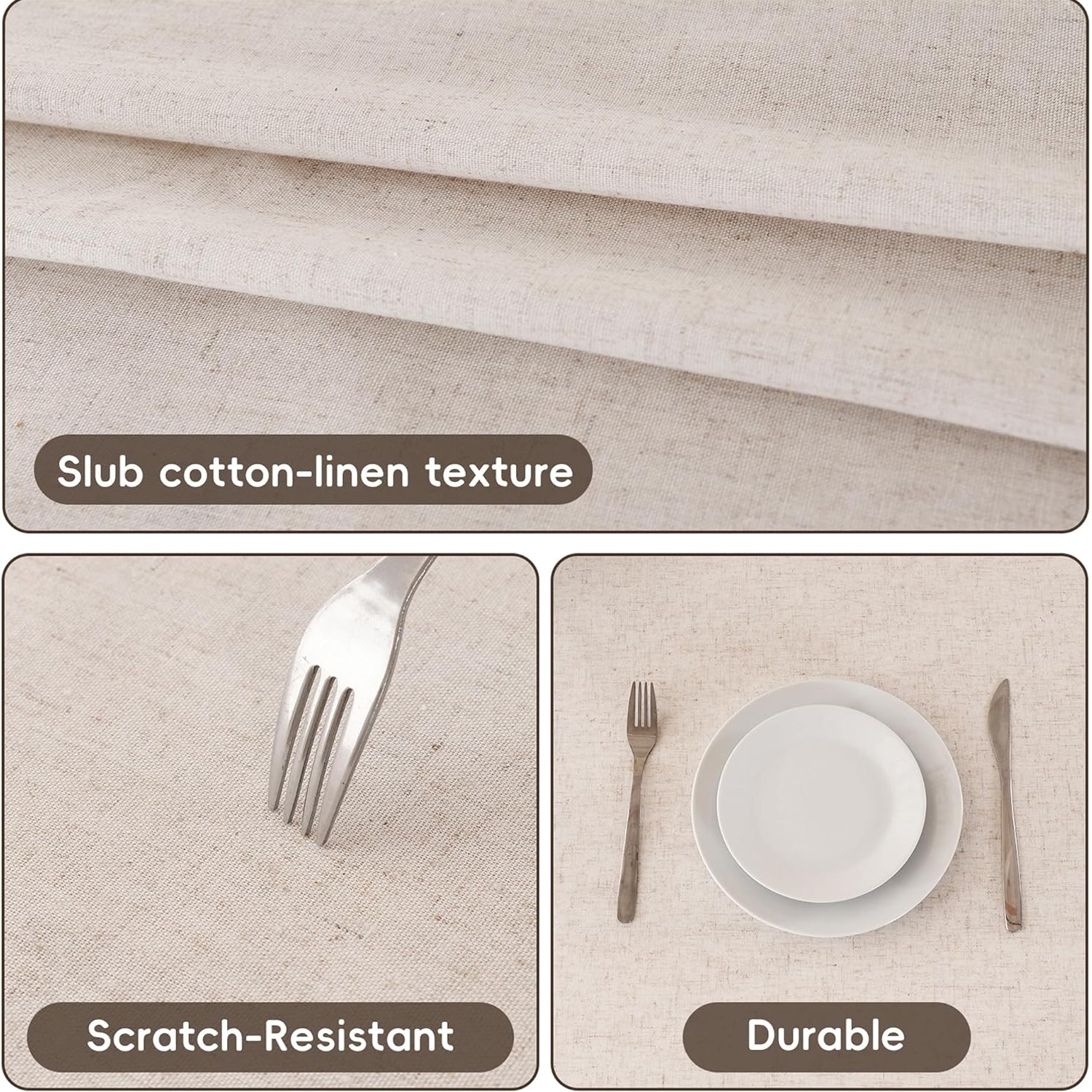
A cotton and linen blend sits in the middle and tends to be the practical answer for a house where people actually eat. The cotton gives softness, takes dye evenly and washes at home without drama. The linen gives the matte, faintly irregular surface that makes a table setting look considered rather than catered. Together they produce a cloth with enough weight to stay put and enough give to curve over the table edge instead of standing out in a stiff plane.
The exact fibre split is not published for this cloth, so we are not quoting one. What matters day to day is how it behaves, and a blend of this type behaves well: it creases less than pure linen, washes cool, and softens rather than wears out.
The tassels, and why edge detail matters
Look at any table styled by someone who does it for a living and you will notice the edge is never an afterthought. A plain overlocked hem disappears. A deep hem reads formal. Tassels read relaxed and handmade.
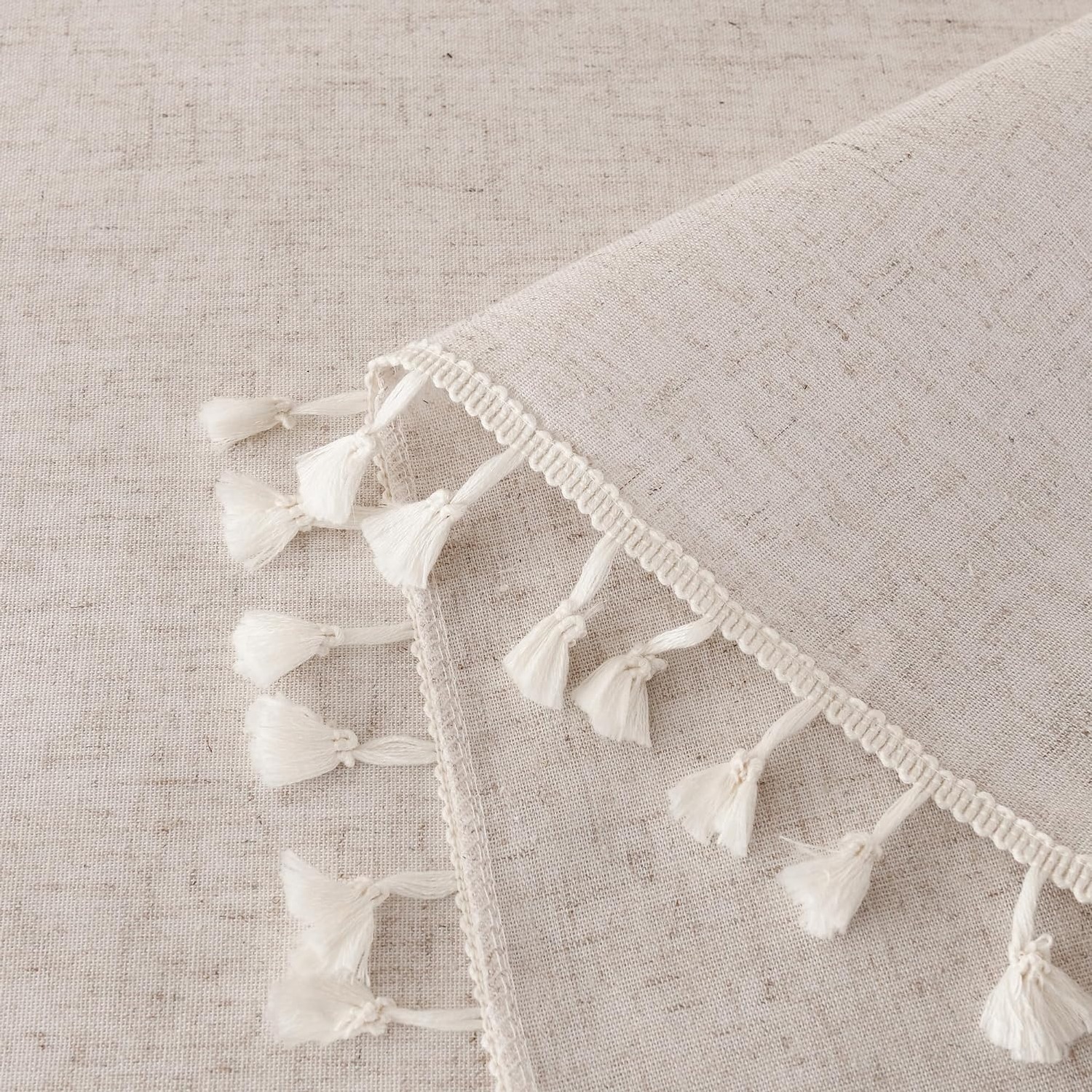
This cloth has fine tassels running the full way around the oval. They move slightly when you walk past, they catch lamplight in the evening, and they give the beige a bit of life it would not have as a flat expanse of fabric. If your dining room leans rustic, coastal or farmhouse, a tasselled tablecloth is doing exactly the job you want. If your room is very minimal and architectural, the tassels may be a touch softer than your scheme, so it is worth being honest with yourself about that before ordering.
Practically, tassels are low maintenance. Wash gently, air dry, and keep the iron on the body of the cloth rather than the fringe. They are not fragile, but they are not something to shove in a hot dryer either.
Why beige keeps working
Colour choices on table linen age fast. A bold pattern is exciting for a season and tiring by the second year. Beige is boring in the showroom and brilliant in the house.
Three reasons. It warms a room in a way white cannot, especially under warm bulbs in the evening. It hides minor marks far better than white between washes, which matters when children are involved. And it is a background rather than a statement, so your crockery, glassware and flowers get to be the interesting part.
It also plays well with timber. If you have an oak or walnut table, beige keeps the room in the same warm family. On a painted or white table it adds contrast without the hardness of grey. For most people a neutral table linen is the one they reach for ninety percent of the time, and the patterned one is the novelty.
Getting the size right
This is the part people rush, and it is the only part that can go properly wrong.
Measure your table top at its widest point and its longest point. Write both numbers down. Then decide your drop, which is how far you want the cloth to hang below the edge.
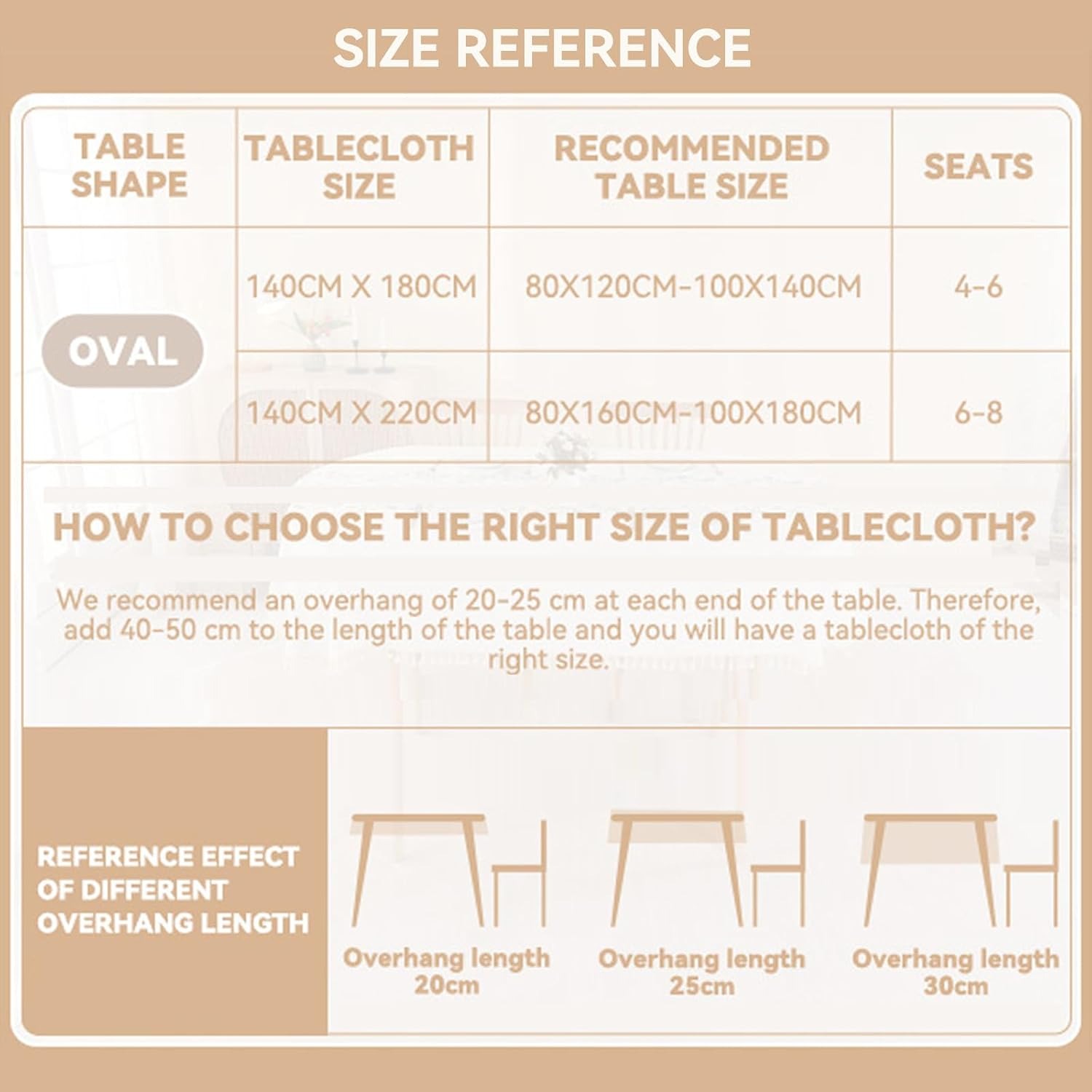
The supplier recommends 20 to 30 cm of overhang, and that is a sensible range for home dining. A 20 cm drop looks neat and casual, and it keeps the fabric clear of laps and knees. A 30 cm drop looks more formal and dressed, closer to what you see at an event. Much more than that and guests end up sitting on the cloth.
The maths is straightforward. Add twice your chosen drop to each table measurement. So a table 90 cm wide by 165 cm long, with a 25 cm drop, needs roughly 140 x 215 cm. That is the kind of table this 140 x 220 cm cloth was cut for.
Two things to watch. First, if your table has a centre leaf, measure it both extended and closed and decide which setting matters more. Second, if the table has a thick apron or lip, the effective drop looks shorter than the number suggests, so lean towards the longer end of the range.
Where it earns its place
The listing describes it as suitable for indoor and outdoor use, which widens its life considerably. Inside, it is a dining room cloth for weeknights and for occasions. Outside, it takes a garden table through summer lunches and evening meals.
Outdoors, one bit of advice: use clips or weights. Any light natural cloth will lift in a breeze, and chasing a tablecloth across the lawn is not the mood you were going for. Bring it in before dew settles overnight, because damp fabric left folded will mark.
For events, it is a reasonable wedding tablecloth or party cloth precisely because it is neutral. It will not clash with whatever florals or place cards you have chosen, and it photographs softly rather than bouncing light back at the camera. If you need more than one, order early so you can confirm the batch shades match.
Keeping it looking good
Care here is genuinely easy, which is the whole point of a washable tablecloth.
Machine wash at a low temperature on a gentle cycle with similar colours. Skip the bleach entirely, since it can lift beige unevenly and leave patches that never come back. Air dry rather than tumble dry. Air drying protects the shape, keeps shrinkage down and leaves the tassels tidier.
For spills, blot rather than rub. Rubbing pushes the stain into the weave and roughs up the fibres. Cold water first, then a cool wash as soon as you can manage. Oil and red wine both respond far better to speed than to scrubbing.
If you want a crisp finish, iron on the reverse with a warm setting while the cloth is slightly damp. If you prefer the softly rumpled look, skip the iron and let it be. Both are legitimate. Natural fibres earn a bit of character.
Store it folded flat in a cupboard rather than crammed into a drawer, or drape it over a spare hanger. Fewer hard creases means less work next time.
The short version
An oval table needs an oval cloth, and that is the main reason to choose this one. At 140 x 220 cm it fits oval tops of roughly 80 to 100 cm by 160 to 180 cm with the recommended 20 to 30 cm drop. The cotton linen blend gives you a matte, textured surface that still washes cool at home. The beige keeps the attention on your food and your table, and the tassel border stops the edge looking flat.
Measure first, pick your drop, then order. Two cloths if you eat at the table most nights, so one is always clean and on duty.