
The complete guide
How To Choose A Pure Cashmere Scarf That Lasts
The problem with most winter scarves
Most people own a scarf drawer rather than a scarf. There is the chunky knit that looks great and makes your neck sweat. There is the thin woven one that goes with everything but blocks exactly no wind. There is the souvenir one with the pattern that only works with the one jacket you no longer wear.
What is missing is the plain, mid-weight scarf you actually reach for on a normal Tuesday. That is the gap a pure cashmere scarf fills. It is light enough to keep on indoors and warm enough to be worth putting on in the first place, and because the surface is solid rather than patterned, it does not fight with anything else you own.
This guide covers how cashmere works, what ply means in practice, how length changes the way you wear a scarf, and how to look after one so it is still good in five years.
What cashmere actually does
Cashmere comes from the fine undercoat of cashmere goats. The fibres are much thinner than standard sheep wool, and they have a natural crimp. That crimp is the useful part. It creates tiny pockets of still air inside the fabric, and still air is what insulates you. Heat does not move easily through it.
The practical result is a high warmth to weight ratio. You get the same amount of insulation from less material, which is why a cashmere scarf feels almost weightless around the neck while still cutting a cold breeze. Compare it to an acrylic scarf of similar thickness and the difference is obvious within about ten minutes outdoors.
Fineness also explains the hand feel. Coarse wool fibres are stiff enough to poke at the nerve endings in your neck, which is what people describe as itchiness. Cashmere fibres bend instead of poking. That is why it suits people who gave up on wool scarves years ago.
There is one trade-off worth knowing. Fine fibres are more delicate than coarse ones. Cashmere does not love hot water, rough handling or rubbing against velcro and zips. Treat it with a bit of thought and it rewards you. Throw it in a washing machine and you will own a small stiff mat.
Why ply matters more than price
Ply is the number of yarn strands twisted together before the fabric is made. This scarf is a classic 2-ply, and that number tells you quite a lot.
A single-ply scarf uses one strand. It can feel beautifully soft in the shop because there is less structure resisting your fingers. The problem shows up later. With less twist and less density, the fabric stretches, loses shape at the ends, and shows wear faster at the fold lines.
Two plies twisted together create a rounder, stronger yarn. The woven fabric has more body. It drapes rather than droops, holds a knot without working itself loose, and resists the sort of stretch that turns a neat scarf into a saggy one. For an everyday scarf that gets pulled on and off several times a day, that structure earns its keep.
Higher plies exist, mostly in heavy winter wraps and blankets. They are warmer but considerably bulkier, and they start to defeat the point of cashmere, which is warmth without weight. A 2 ply cashmere scarf is the sweet spot for most climates and most coats.
Getting the length right
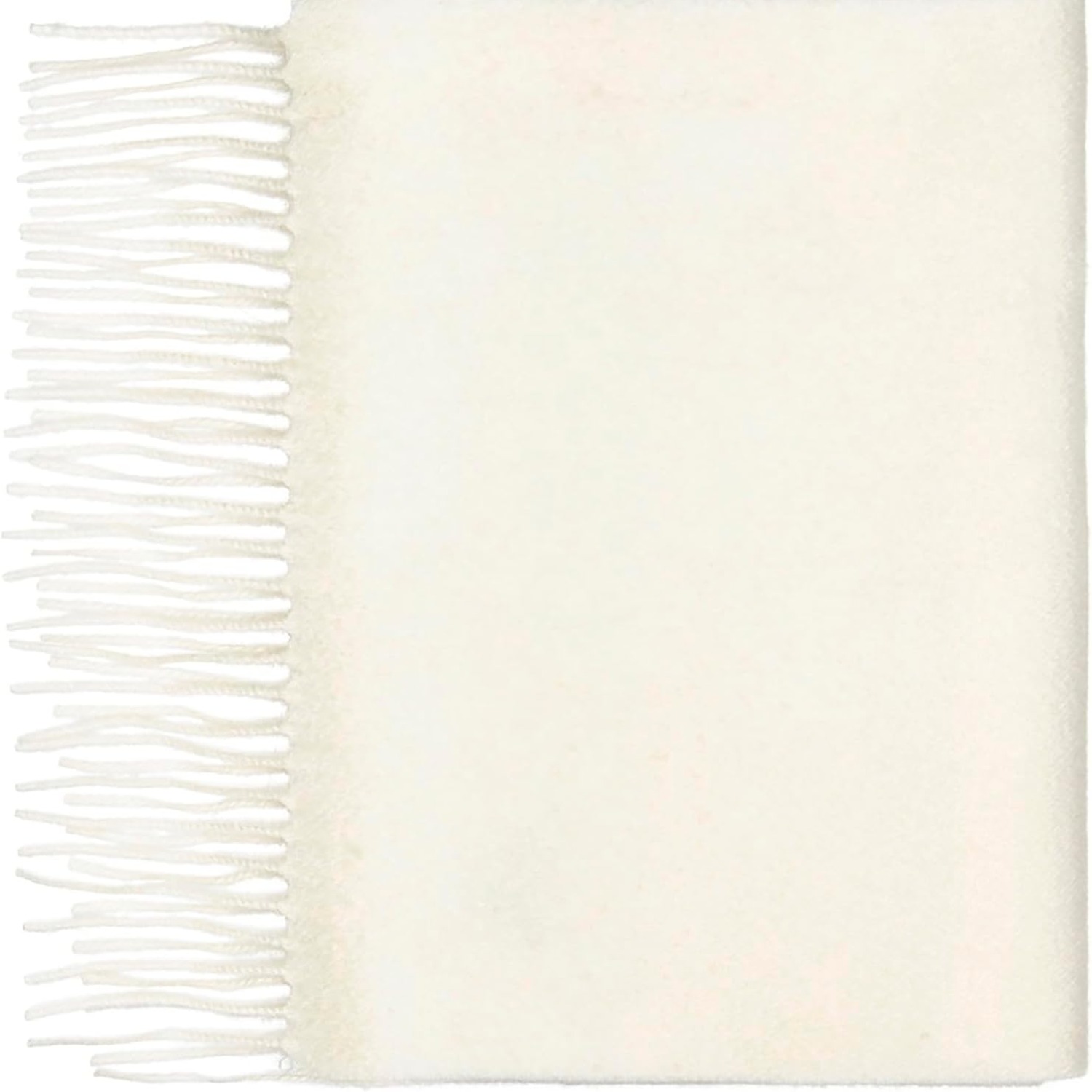
This scarf measures 164 x 30 cm, about 65 inches by 12. Length changes how a scarf behaves more than any other measurement.
Under about 140 cm, you are limited. A short scarf drapes, and that is roughly it. Try to loop it and the tails disappear, which looks stubby and leaves the back of your neck exposed.
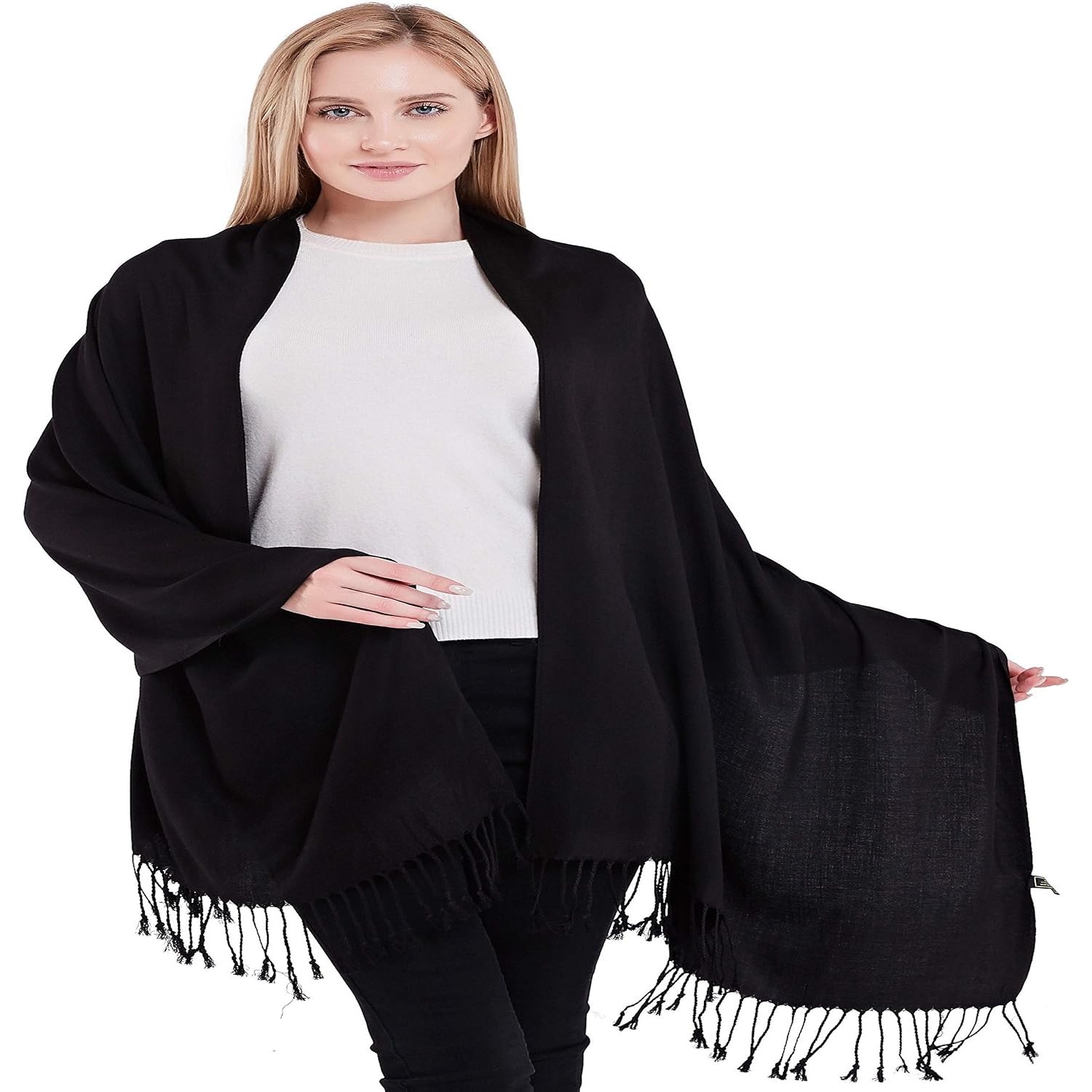
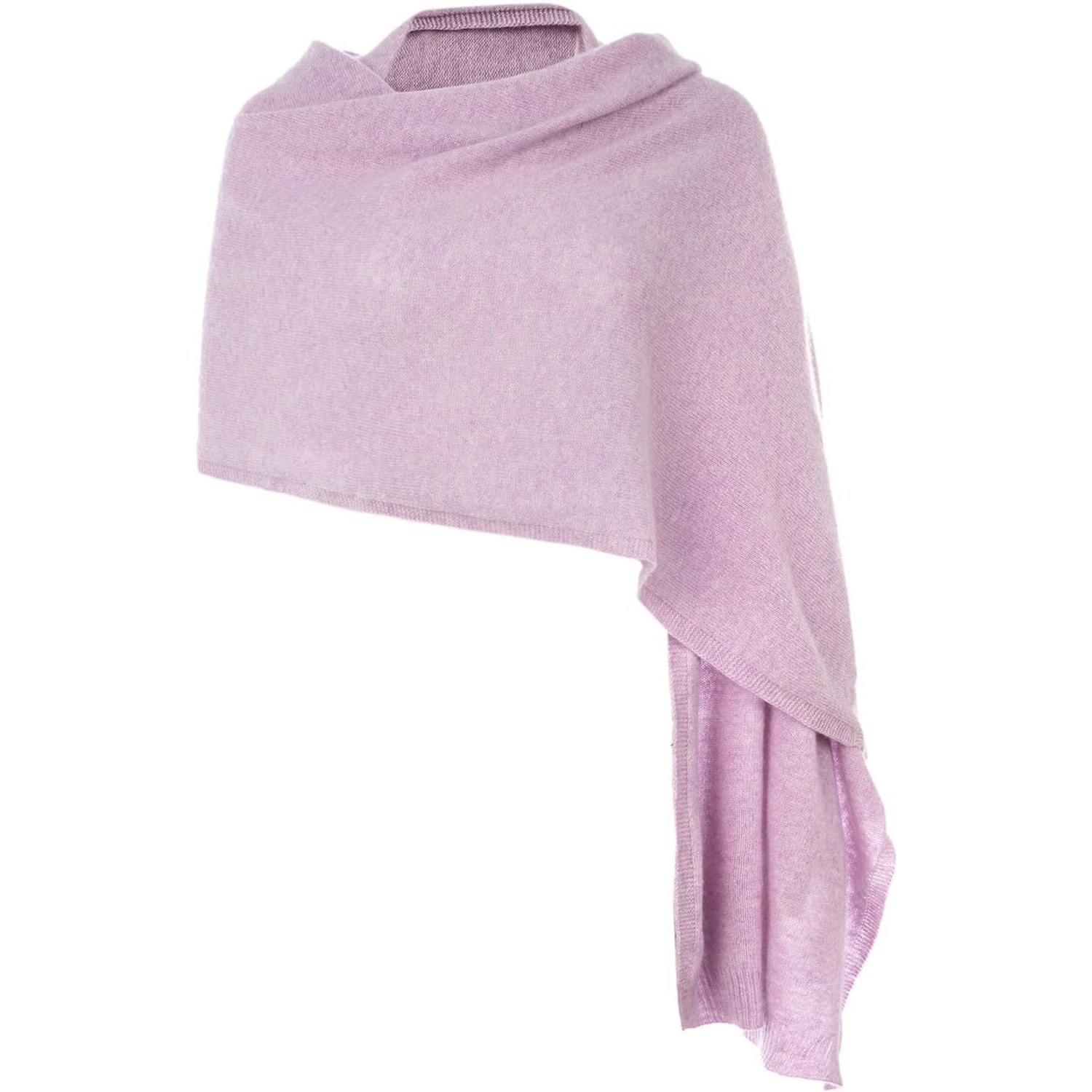
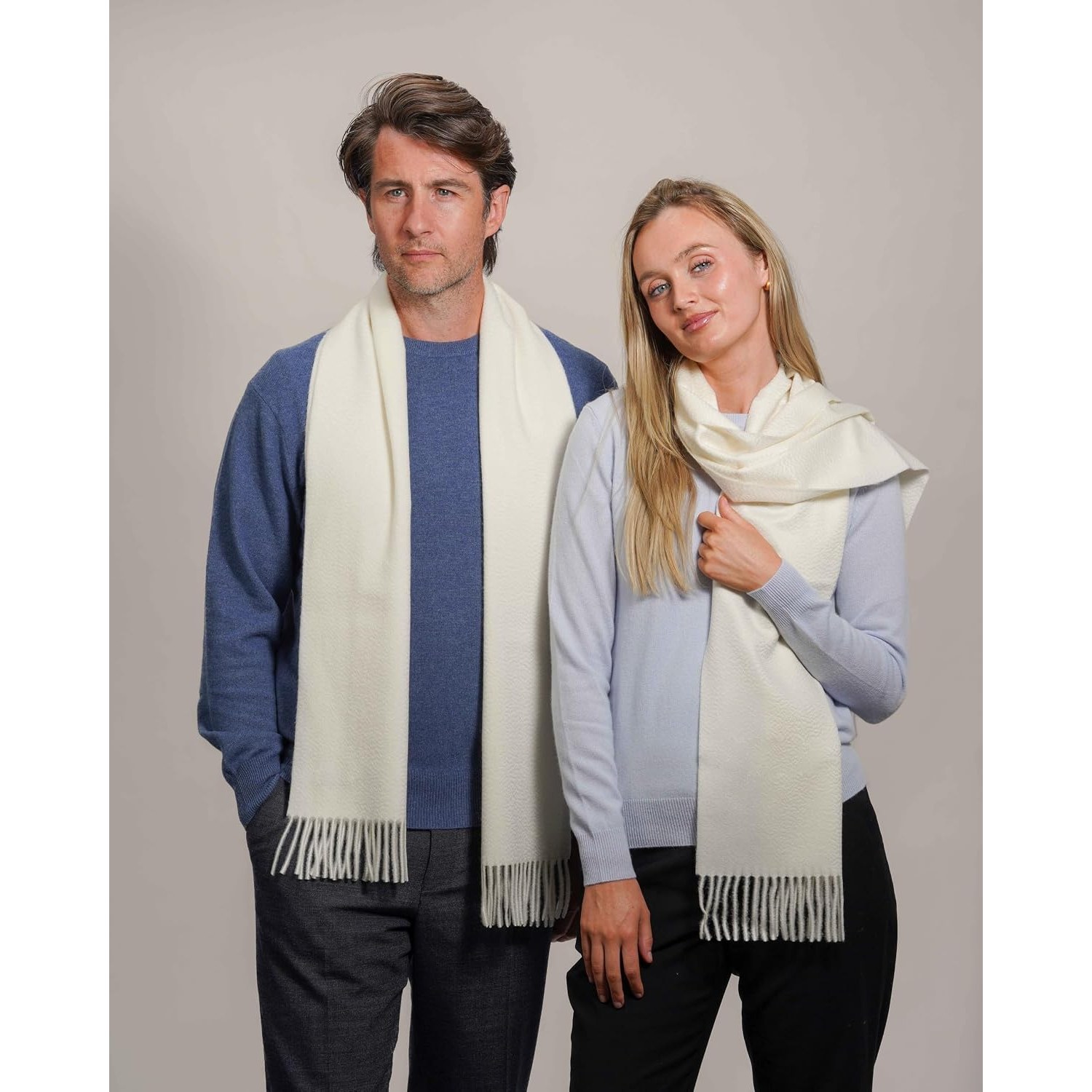
At 164 cm you can do everything. Drape it open over a long coat and the ends fall to roughly hip level, which is the relaxed look that works with casual outerwear. Fold it in half, pass the tails through the loop, and you get the neat knot that stays put in wind and sits flat under a lapel. Or wrap it twice for a dense collar of fabric on genuinely cold days.
The 30 cm width is also doing work. Narrower scarves look thin around a bulky coat collar. Wider ones bunch up and push your chin. Thirty centimetres folds down to a comfortable band and opens out wide enough to sit across the shoulders indoors.
Plain versus patterned
There is a reason most people who own several scarves wear the plain one most. Pattern is a commitment. A check or a stripe sets a colour palette and a formality level, and it needs the rest of the outfit to agree with it.
A solid, unbroken surface does not make demands. It works over a printed shirt, a tweed jacket, a windbreaker or a plain black coat. It also shifts register easily. Knotted neatly under a wool overcoat, it reads formal. Thrown over a jumper with the ends loose, it reads casual. Same scarf, no effort.
Plain also ages better visually. Patterns date. Solid colour does not, which matters for something you are buying at this level of quality and expect to keep for a long time.
Who this suits
If you commute, walk to work, stand on platforms or wait for buses, this is squarely aimed at you. That is where the warmth to weight ratio pays off, because you need insulation outside and then you walk into a heated building and need it to stop being a burden.
It also suits people who dress up occasionally. A good cashmere scarf finishes a coat the way a decent watch finishes a sleeve. Nothing else in a winter wardrobe does that job as quietly.
It is a strong gift choice too, mostly for practical reasons. There is no size to get wrong, no fit to guess, and a plain colour avoids betting on someone else's taste in pattern. A cashmere scarf gift tends to get used rather than politely stored.
It is less suited to anyone who wants a wash and wear item. Care here is dry clean only, and if that sounds like too much admin, a merino or lambswool scarf is the more honest choice.
Looking after it
The care instruction is short. Dry clean only. Cashmere is a protein fibre and domestic washing, especially warm water with agitation, causes the fibres to interlock and shrink permanently. There is no undoing it.
In between cleans, air it. Hang it somewhere with moving air for a few hours after heavy wear and most odours and moisture leave on their own. That alone cuts your cleaning frequency down to once or twice a season for most people.
Store it folded and flat, not on a hook. Hooks put all the weight on one point and stretch the weave over time. A drawer or a breathable storage bag is better. Add a cedar block for summer storage, because clothes moths genuinely love natural fibres and will find them.
Watch for snags. Zips, velcro cuffs, brooch pins and rough bag straps are the usual culprits. If a thread pulls, do not cut it. Ease the loop back through to the reverse with a blunt needle and it will usually vanish.
Some pilling is normal where fabric rubs. A cashmere comb, used lightly and in one direction, handles it in a couple of minutes. Most scarves pill a little in the first season and then settle.
The short version
A plain 2-ply cashmere scarf is the least exciting and most useful thing in a winter wardrobe. It is light, it is genuinely warm, and because it has no pattern to manage it goes with whatever you happen to be wearing.
At 164 x 30 cm you get every tying option rather than one. The 2-ply weave gives it the body to hold a knot and keep its shape over seasons rather than months. The only real commitment is the dry clean only care, and in exchange you get a scarf that gets softer rather than shabbier with age.
If you have been cycling through cheap scarves every couple of winters, this is the one that breaks the cycle.