
The complete guide
How To Choose And Burn A Large Coffee Soy Candle
The problem with most big candles
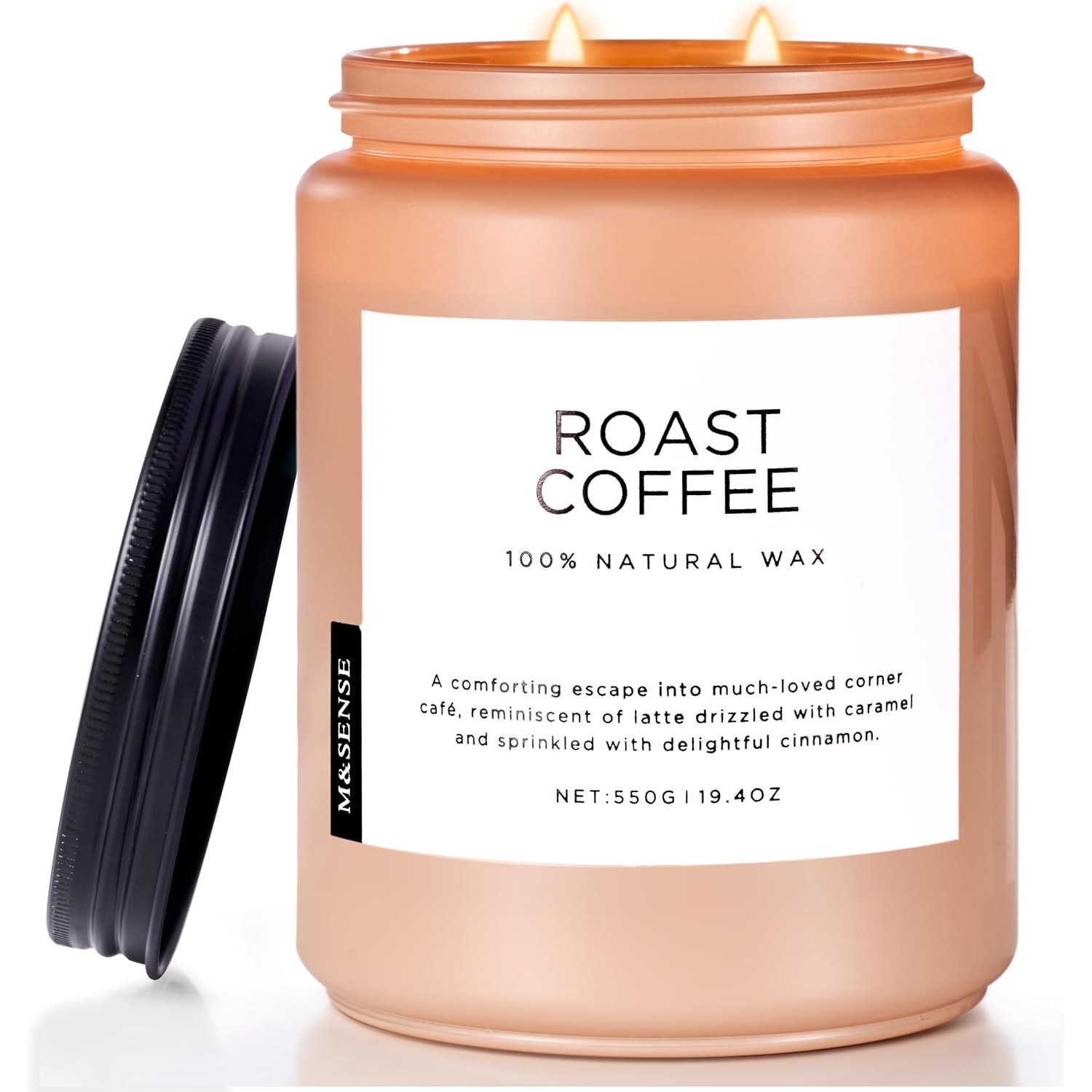
Buying a large candle feels like a safe decision. More wax, more hours, better value. Then it arrives, you light it, and three weeks later you are staring at a narrow pit down the middle with a thick wall of wax around the edge that will never melt. You paid for 550 g and burned maybe half of it.
That happens because a wide jar and a single wick are a bad match. One flame can only heat so much surface area. If the jar is wider than the flame can reach, the wax at the edge stays solid and sets harder every time the candle cools. After a few burns the wall is too thick to recover.
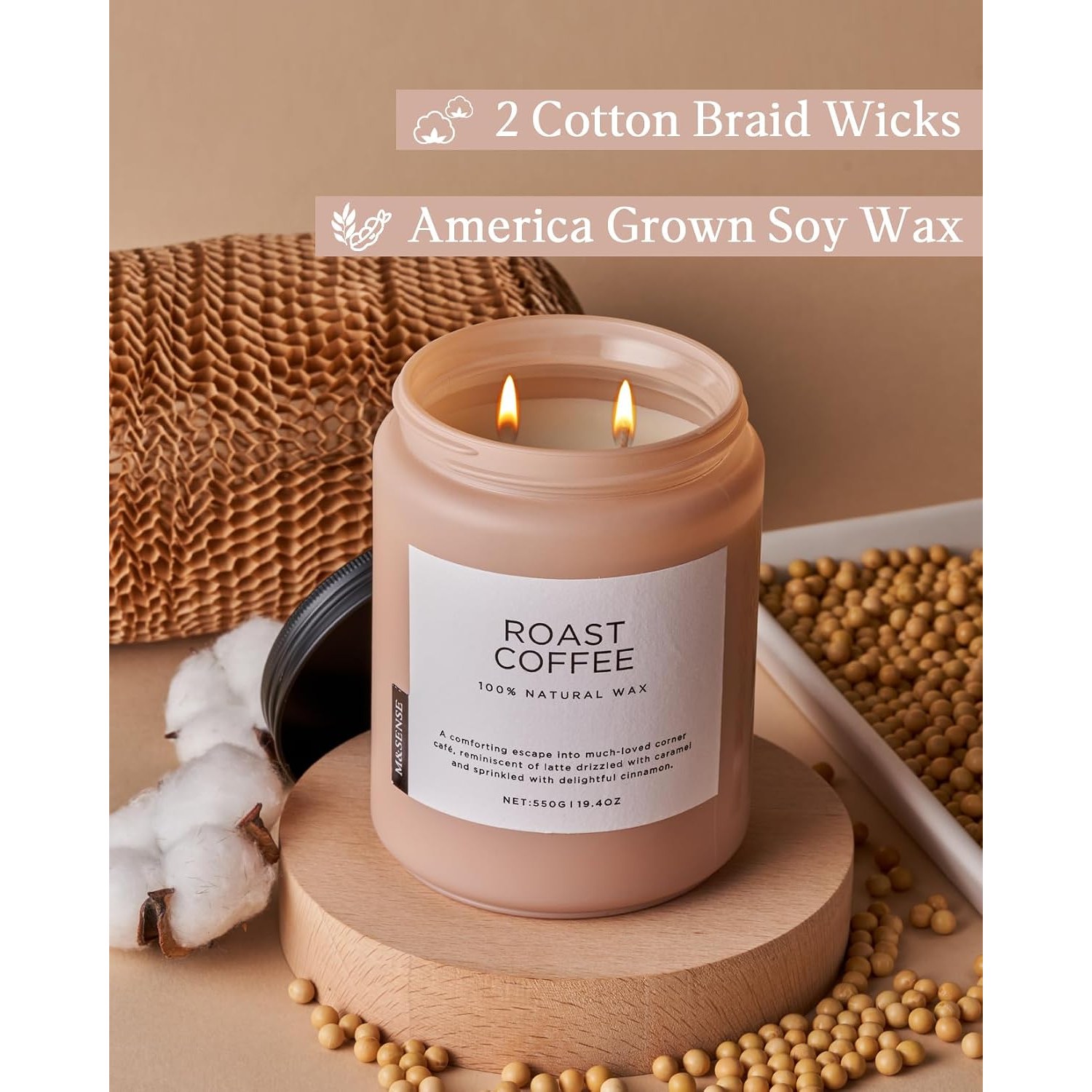
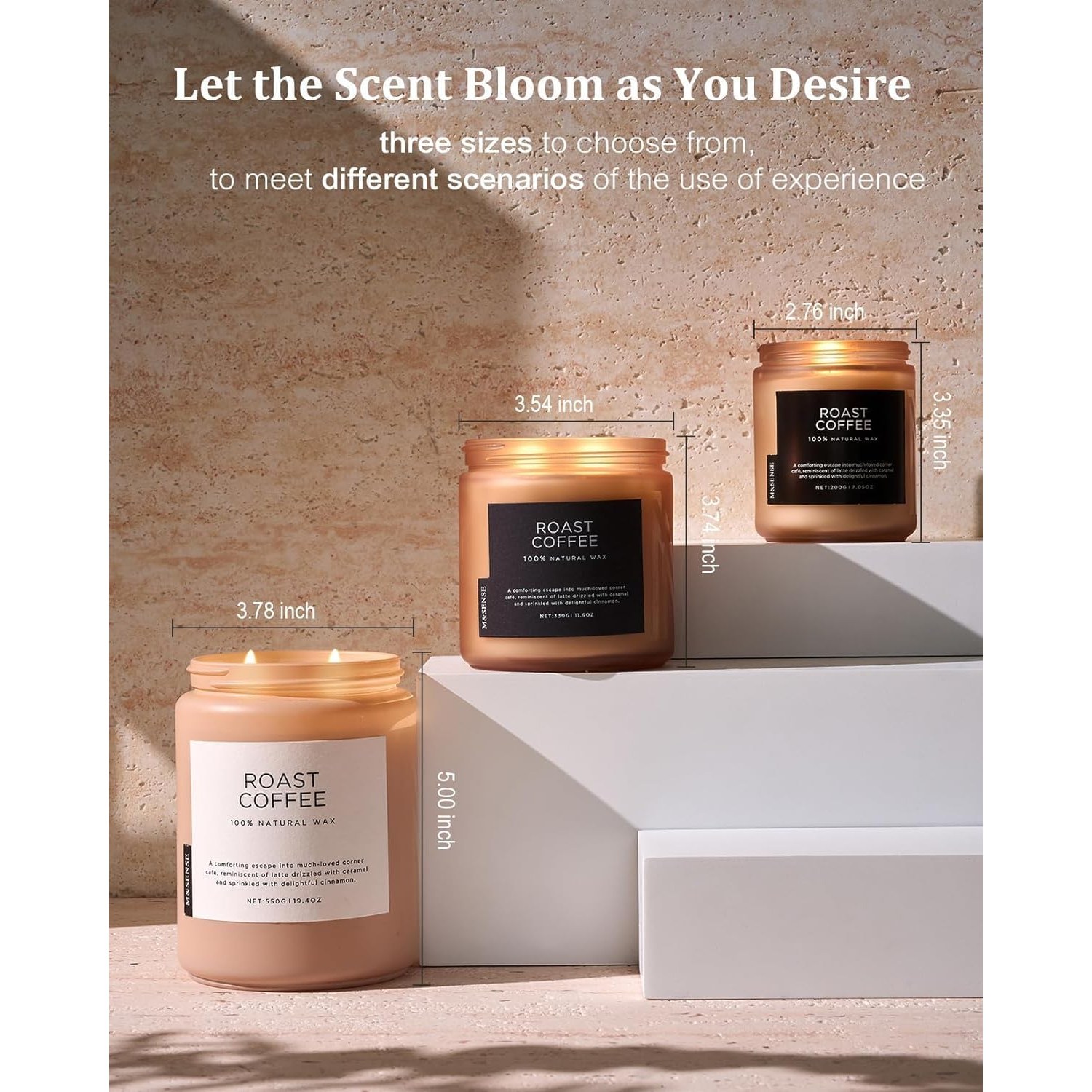
The fix is not complicated. It is two wicks, spaced apart, each handling half the job. That is what this roasted coffee soy candle does, and it is the single most useful thing to know about it.
How the two-wick design works
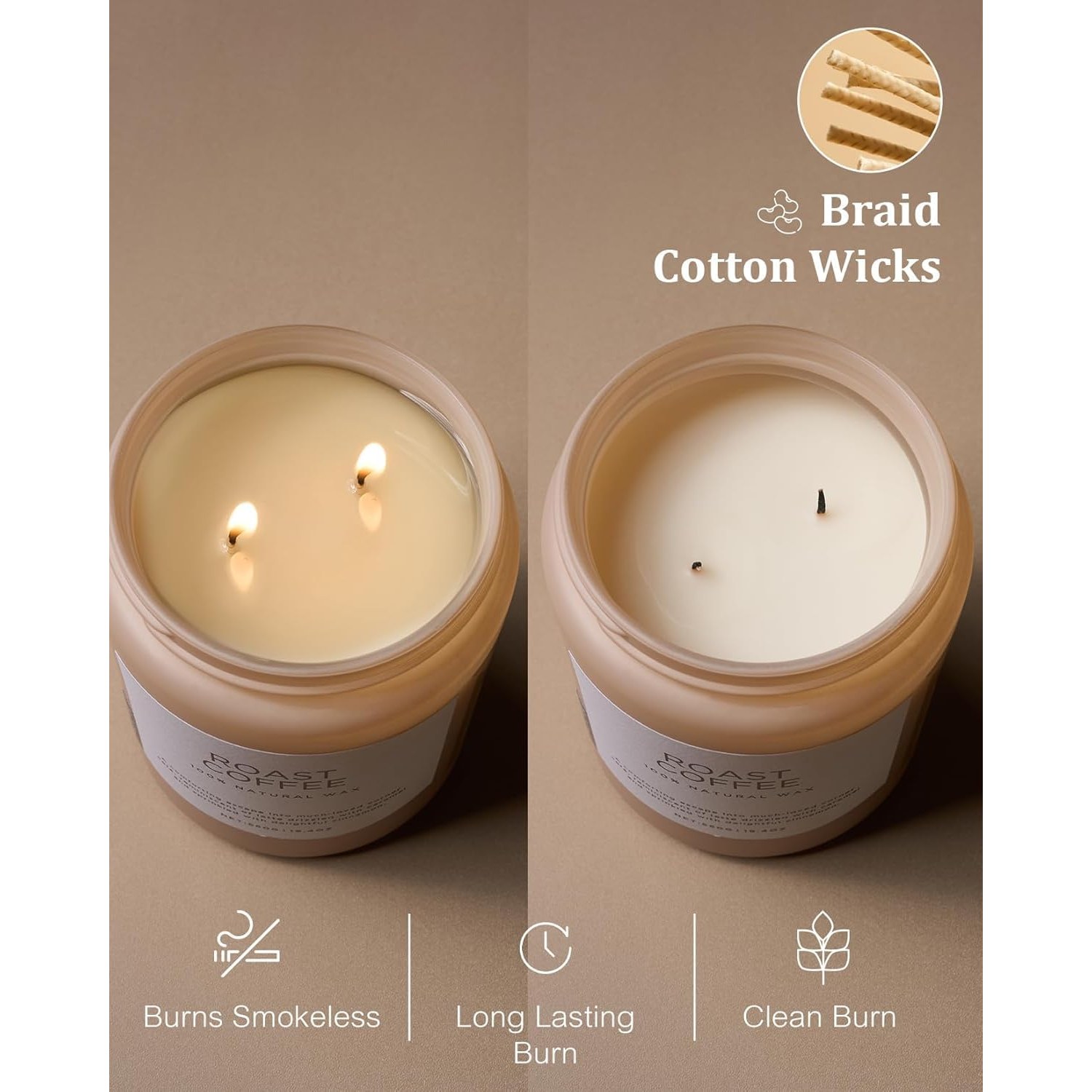
Each wick creates its own small pool of melted wax. Because the two pools sit side by side, they meet in the middle and spread outward together. Within a couple of hours the whole surface is liquid and level, right out to the glass. That is the melt pool you want, and it is what lets the candle burn straight down rather than drilling a hole.
The wicks themselves are handmade flat braid cotton, lead-free, with paper woven through the braid. The paper matters more than it sounds. A pure cotton wick goes soft as it burns and can curl or lean, which makes the flame wander and smoke. The added stiffness keeps the wick upright as the wax level drops, so the flame stays put and burns at a steadier size. Less wandering means less carbon building up on the wick tip, and less carbon means less of that black soot creeping up the inside of the glass.
Two flames also throw scent further than one. Fragrance comes off the surface of the melted wax, so a wider pool means more surface and more scent in the air. That is why a two-wick jar can perfume a whole living room while a single wick candle of similar size only announces itself when you walk past.
What roasted coffee actually smells like here
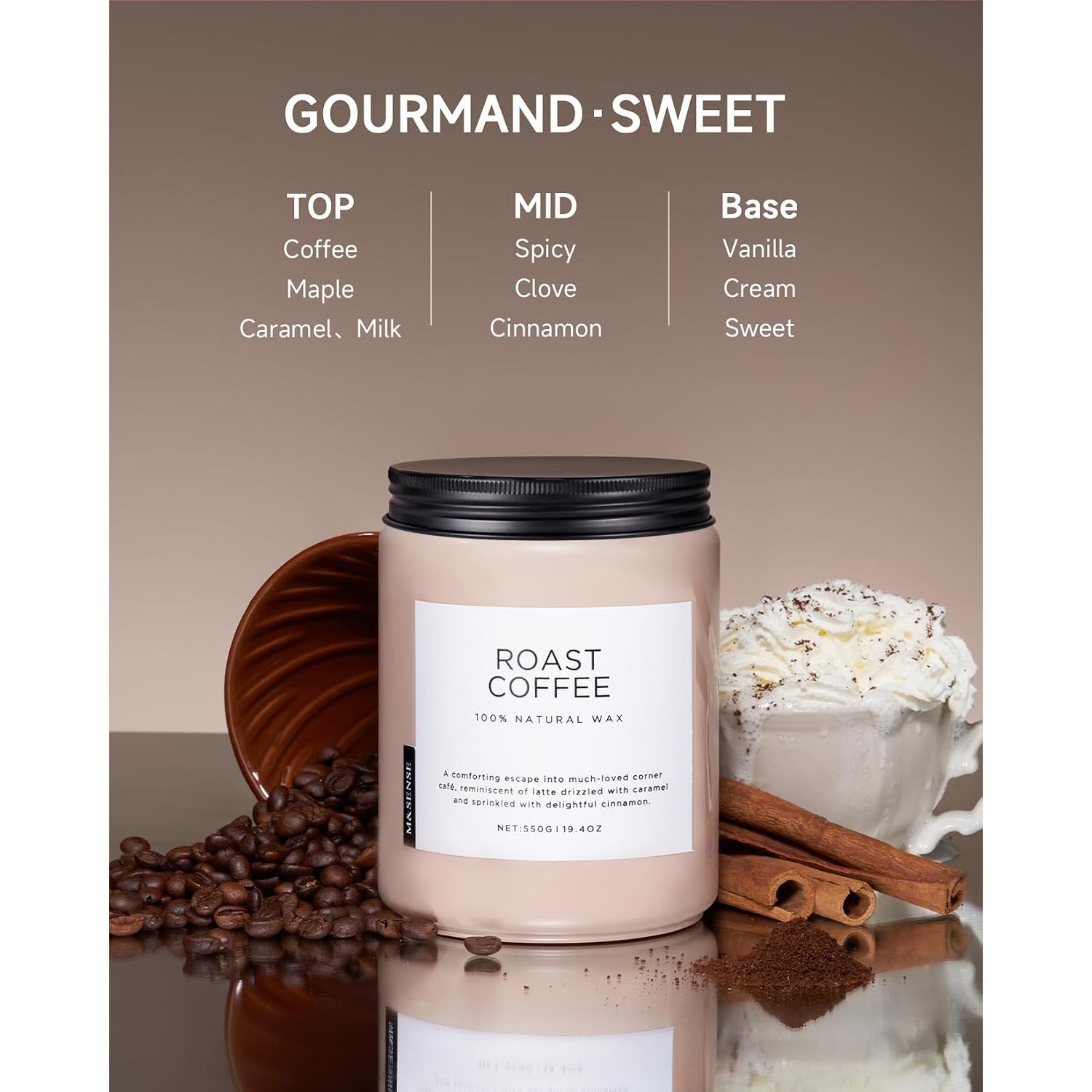
Coffee as a candle scent splits into two camps. One is the dessert version, all vanilla and caramel and sweetened milk. The other is the bean version, dry and toasted and a bit dark. This one leans to the bean side. It smells like a bag of beans opened on a bench, warm and roasted, with the toasted edge you get from a dark roast.
Where does it work? Kitchens are the obvious one. The scent sits naturally beside the smell of actual coffee and food. Home offices and studies are the next best, because coffee reads as focused rather than sleepy. Living rooms work well in winter, when a warm, slightly smoky scent suits the weather. Bedrooms are more of a personal call. Some people find coffee too alert for a space they want to wind down in.
The fragrance oils are perfume grade and free from parabens and phthalates, and they are not tested on animals. The scent is tuned to lift a room rather than dominate it, which is worth knowing if someone in your house reacts badly to heavy fragrance. You get a clear scent when you enter, then it settles.
Matching the candle to your room
The maker recommends rooms under 33 square metres. In practice that covers a standard living room, most bedrooms, a decent kitchen and nearly any home office. If your space is bigger than that, or it is one of those open plan rooms that runs from the kitchen through to the lounge, one candle will scent the end it sits at and not much further. Two candles at opposite ends solve it.
Air movement matters as much as floor area. A candle sitting under a ceiling fan or beside an open window will have its scent pulled away before it ever builds, and the flame will flicker and smoke. Find a spot with still air, on a stable heat-safe surface, away from curtains, bookshelves and anything else that could catch.
Height is worth a thought too. A candle on a low coffee table scents at seated level, which is usually where you want it. On a high shelf the warm air rises and takes the fragrance with it to the ceiling.
Getting the burn right
The first burn sets everything. Soy wax remembers the shape of its first melt pool, so light the candle when you have two to three hours spare and let the wax reach the edge of the glass before you put it out. If you light it for twenty minutes while you cook dinner and then blow it out, you have just taught the candle to tunnel.
After that, the routine is simple. Trim both wicks to roughly 5 mm before every burn. Use a wick trimmer, nail scissors or your fingers on a cooled candle, it does not matter which. A short wick gives a small, steady flame. A long one gives a tall, flaring flame that smokes, soots the glass and chews through wax faster.
Keep each session to about four hours. Past that point the wax gets very hot, the flames grow, and the jar warms up more than it should. Snuff it, let it cool, trim, and light it again later. Snuffing beats blowing it out, because blowing sends a plume of smoke and sometimes splashes wax.
Stop burning when about 1 cm of wax is left in the base. There is always some left over and that is by design, since burning right down to the glass puts too much heat into the container.
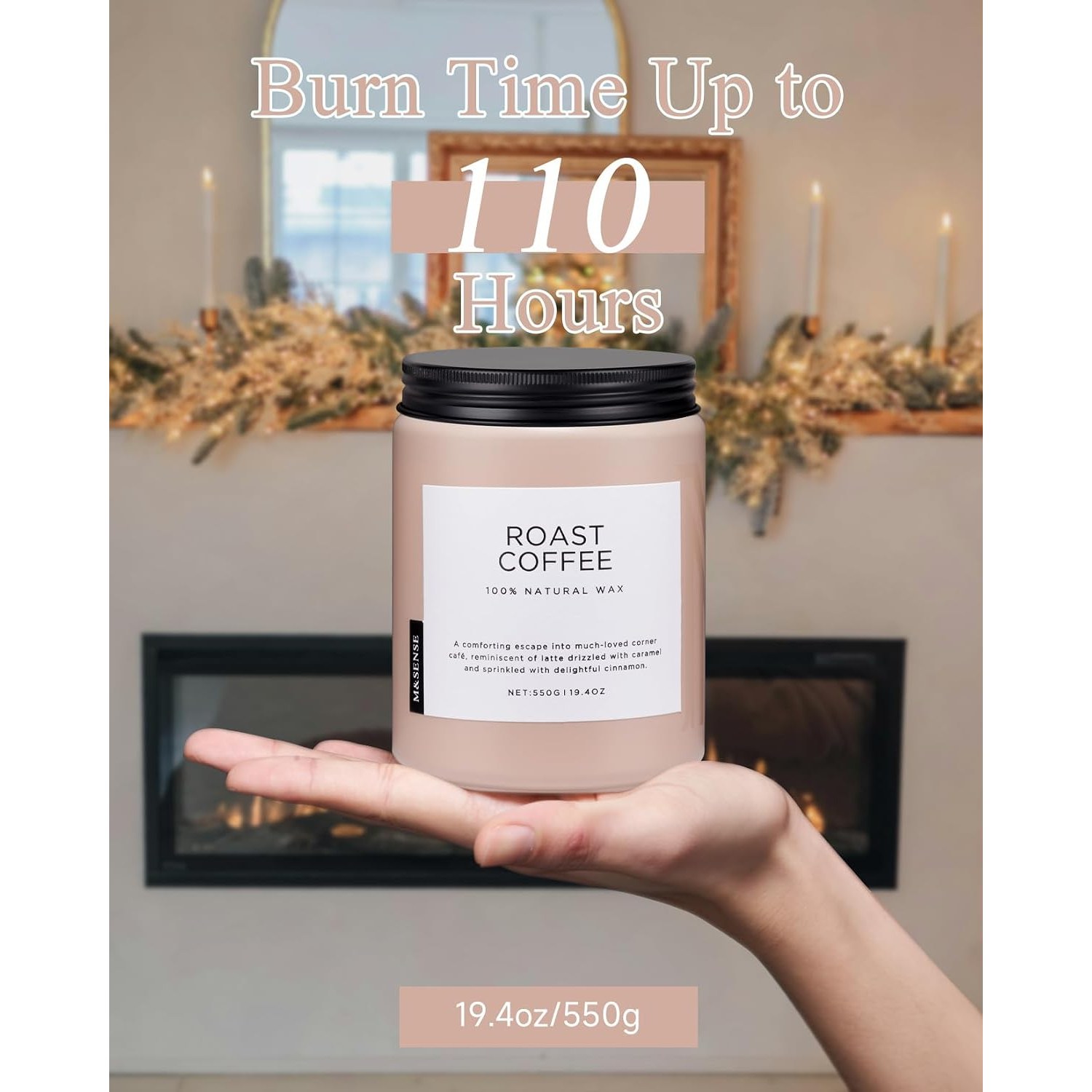
Do that and the 90 to 110 hour figure is realistic. That is a long run. At two hours a night, four or five nights a week, you are looking at several months from one jar.
Little things that are not faults
Soy wax does a few things that look like problems and are not. Frosting is the white crystalline bloom that appears on the surface, which happens because the wax is natural and wants to return to its crystal form. Wet spots are the patches where the wax pulls slightly away from the glass as it cools and contracts. Small colour variations between batches are normal too. None of it changes how the candle burns or smells.
A dip or uneven surface after a burn is also fine. The wax settles differently each time it cools. It evens out on the next burn.
As a gift
Candles are a default gift for a reason, but the cheap small ones have given them a bad name. A 550 g jar with two wicks reads differently. It has weight to it, the burn time means it lasts, and coffee is one of the few scents that most people are happy to have in their home. It covers birthdays, housewarmings, teacher thank-yous, Father's Day and the general thank-you-for-everything occasions where you need something thoughtful but not personal.
If you are buying for someone who already has shelves of candles, the long burn life is the angle. They will not need to replace this one for months.
The short version
This is a large two-wick coffee candle built to burn evenly rather than fast. The 550 g of wax and the 90 to 110 hour rating give you months of regular use. The paired lead-free cotton wicks melt the wax out to the glass so it burns down level, and the paper-reinforced braid keeps the flame steady with less soot. The fragrance is a dry roasted coffee, perfume grade, free from parabens and phthalates, and strong enough to fill a room under 33 square metres without taking it over.
Give it a long first burn, trim the wicks every time, cap your sessions at four hours, and it will do exactly what a good candle should.