

The complete guide
The Honest Guide to Choosing a Round Decorative Tray
The small mess nobody talks about
Walk into most living rooms and the coffee table tells the truth. Two remotes, a phone charger, a coaster someone forgot, a candle, maybe a pair of reading glasses. Nothing about it is dirty or disorganised in any serious way. It just looks busy. And a busy surface makes the whole room feel less settled than it actually is.
The fix is not more storage. You do not need another basket or a drawer unit. You need a boundary. Put a circle around those same objects and the eye stops reading them as scattered and starts reading them as a group. That is the whole trick behind a decorative tray, and it is why they have stayed popular through about twenty different interior trends.
A round tray does this particularly well. Square and rectangular trays tend to line themselves up with the edges of the table, which can make a room feel rigid. A circle sits at an angle to everything around it and softens the whole arrangement. On a round or oval coffee table it echoes the shape. On a square one it breaks up the lines. Either way it works.
What this tray is, in plain terms
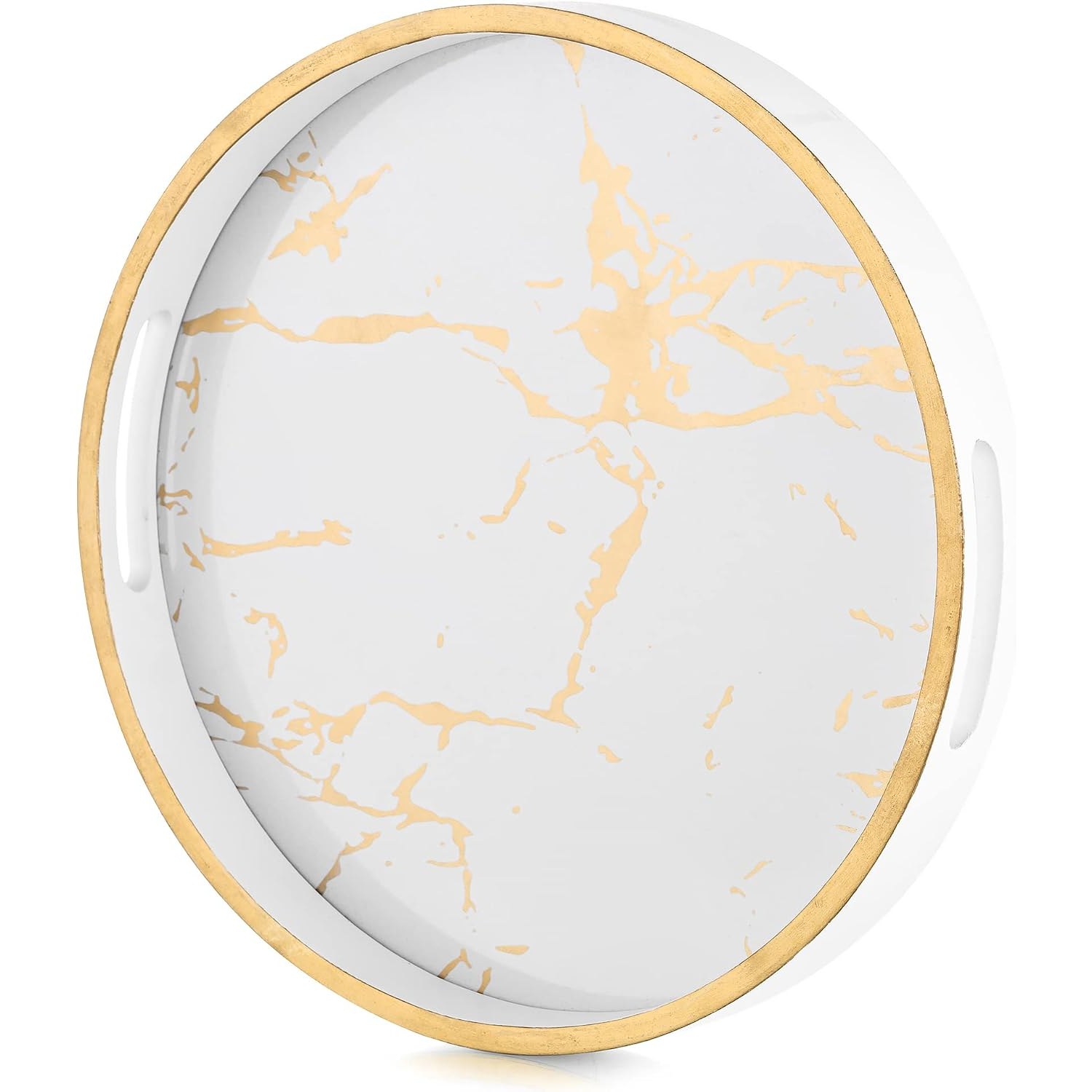
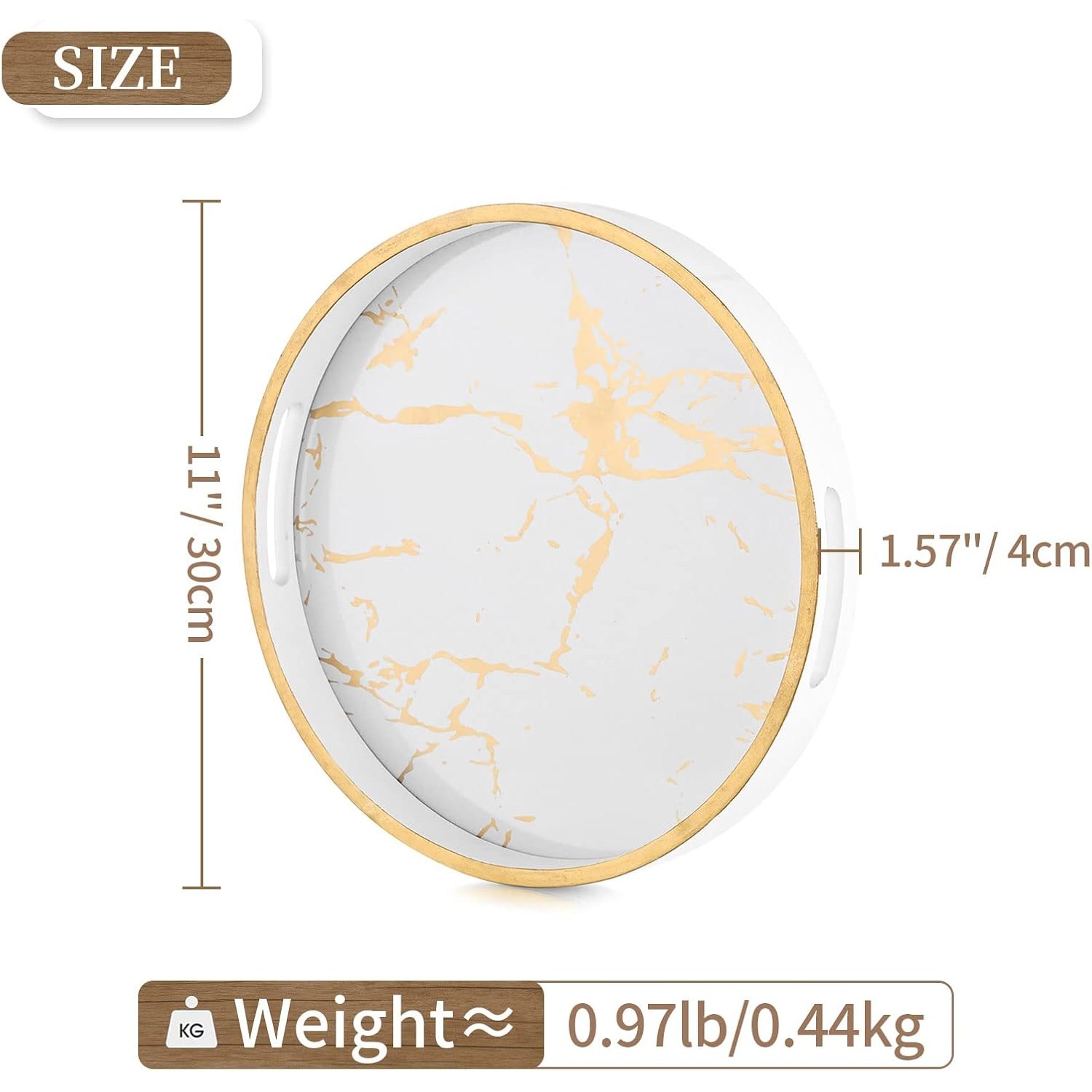
This is a round tray made from MDF wood, with a gold marbling pattern printed onto the inner surface. That is worth stating directly because the word marble gets used loosely in homewares. This is a marble look, not quarried stone.
For most buyers that is a feature rather than a compromise. Real stone trays are genuinely heavy. Load one up with mugs and you need both hands and a bit of care. They also chip. One meeting with a tiled floor and you have a flaw you will notice every single day. MDF gives you a solid, flat surface with proper structure, at a weight you can actually carry, and the printed finish delivers the look you were after in the first place.
Two handles are cut into the frame on opposite sides. Because they are part of the structure rather than attached pieces, there is nothing to loosen or rattle. They also keep the outline clean, so from above you still see a simple circle.
The rim deserves a mention too. It is wide and raised, which sounds like a small detail until you are carrying four glasses across a room. A proper rim is the difference between a tray that transports things and a tray that just displays them.
Where people actually put it
The coffee table is the obvious answer, but it is far from the only one.
On an ottoman, a flat tray turns a soft, unusable surface into a stable one. You can set drinks down without them tipping into the upholstery, and lift the whole thing off when someone wants to stretch out. This is one of the best ottoman tray uses and probably the one people underestimate most.
On a dresser, it gathers perfume, hand cream, a watch and whatever jewellery is in rotation. The surface underneath stays clear, dusting takes seconds, and you stop losing earrings behind the mirror. Anyone hunting for the best jewellery tray for dresser is usually solving this exact problem.
On a bathroom counter it holds soap and lotion. In a hallway it catches keys, sunglasses and the mail you have not opened. In a kitchen it keeps oil, salt and pepper together next to the stove. Same object, five different jobs.
What makes it flexible is that it is a neutral shape with a neutral finish. It does not demand that the room be styled a particular way. It just quietly does its job.
How to choose a tray that works
Measure first. This is the step people skip and regret. Decide the spot, then measure it. A tray should feel generous on the surface without crowding it. As a rough rule, aim to cover somewhere between a third and half of a coffee table top. Leave breathing room around the edges.
Think about weight. If the tray is going to sit in one place and never move, weight hardly matters. If you plan to carry it between rooms, or lift it off an ottoman several times a day, you want something you can manage one-handed when it is empty. That is where a wooden tray has a clear edge over stone or thick ceramic.
Check the handles. Cut-out handles like these are the most reliable type. There is no join to fail and nothing protruding to snag. Attached metal handles can look sharp, but they are extra parts, and extra parts are extra failure points.
Look at the rim. A completely flat board with a printed edge looks fine but behaves badly. A raised rim does real work. If you are going to carry anything liquid, insist on one.
Be honest about the finish. Printed surfaces are easy to care for but they are not indestructible. If your household includes small children who treat every surface as a drawing board, think about where the tray will live. On a dresser it will stay pristine for years. On a family coffee table it will need a coaster rule.
Styling it without overthinking it
The common mistake is treating a tray as a shelf and filling every inch. Leave some of the surface visible. The pattern is part of the appeal, so let it show.
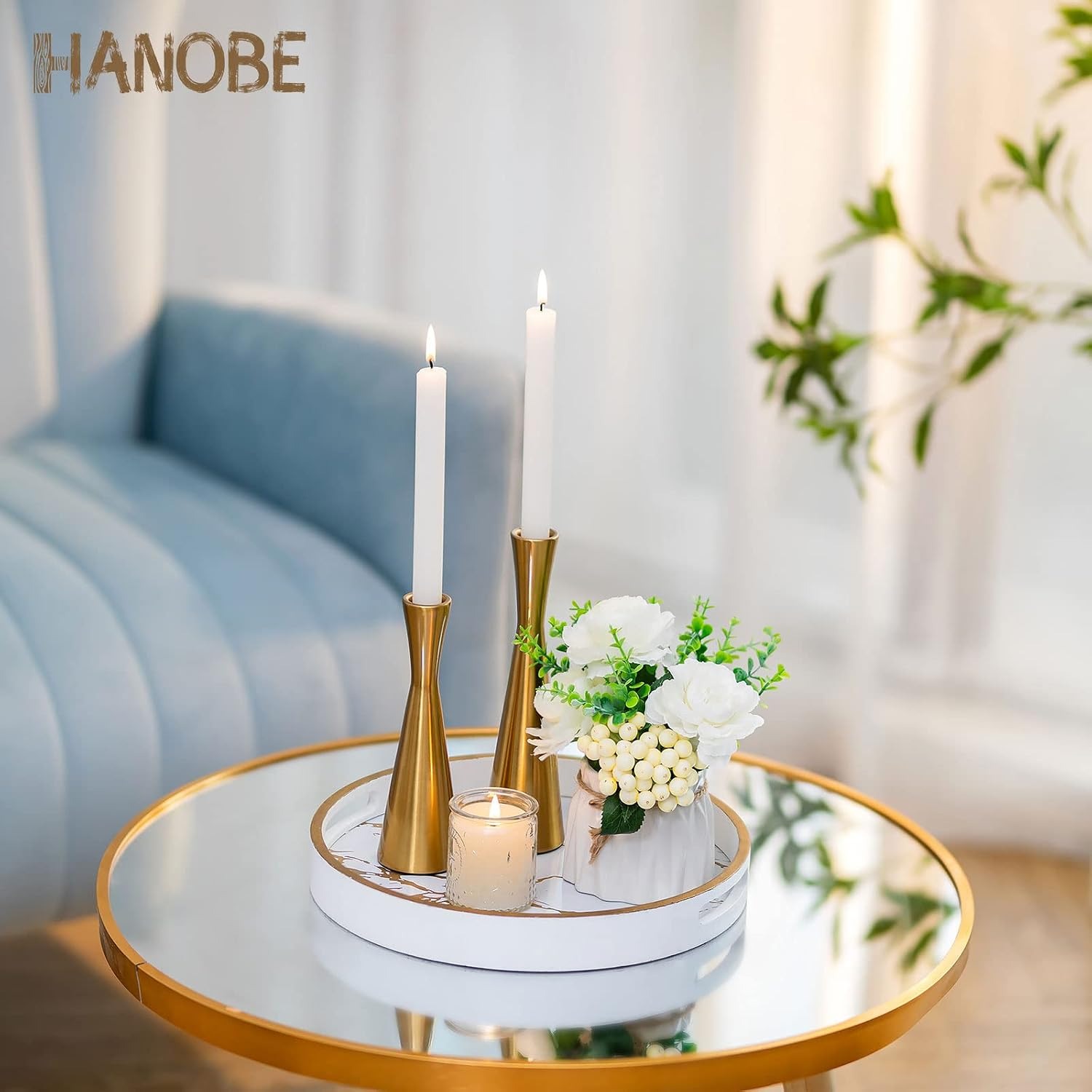
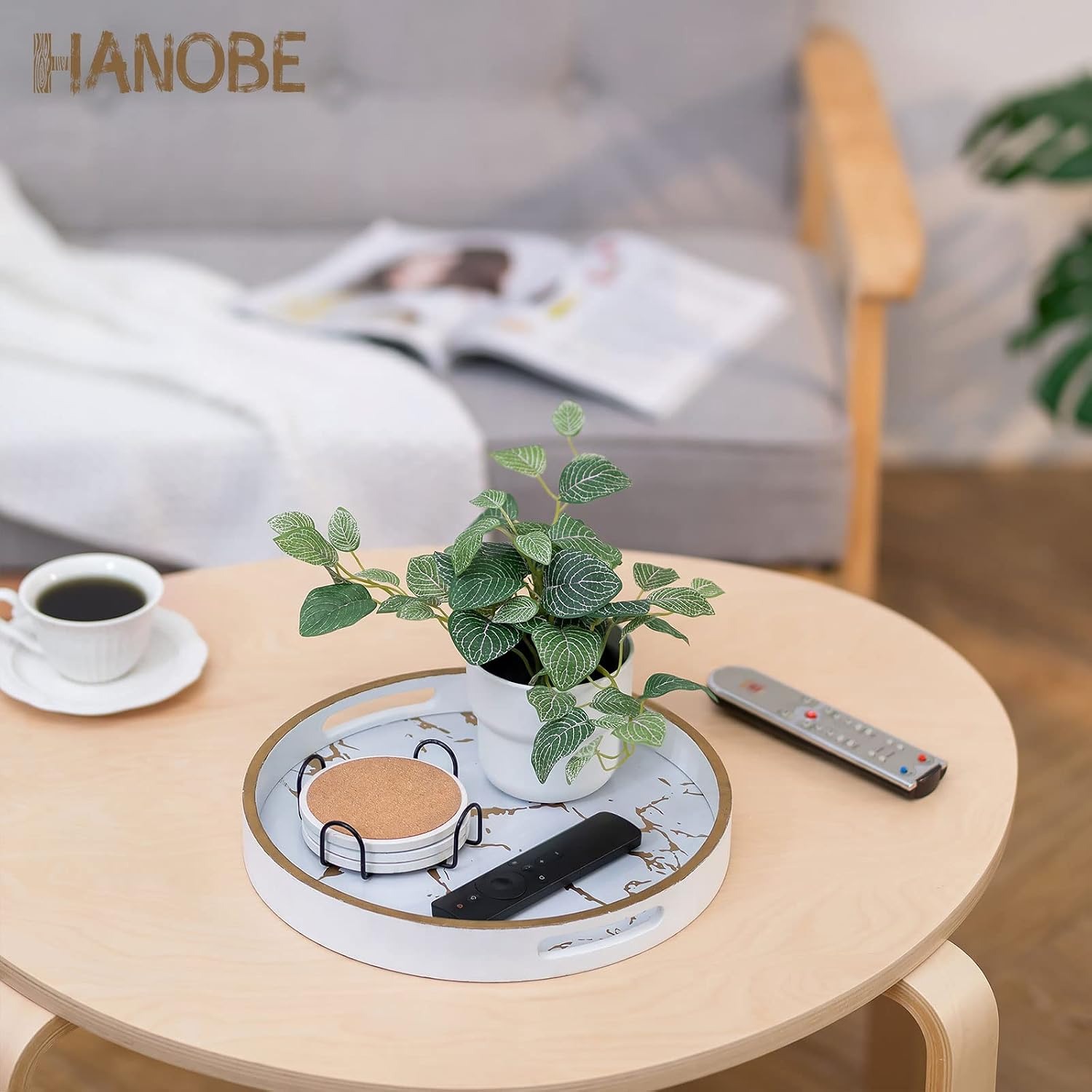
A simple approach that works nearly every time is to combine something tall, something low and something living. A candle or small vase gives height. A stack of two coasters or a small dish gives a low layer. A trimmed sprig of greenery or a tiny plant adds a bit of life. Then add whatever practical items you actually use day to day, like the remote. The point is to make the useful things look intentional, not to hide them.
If the tray is on a dresser, keep the tallest bottle toward the back and work forward in descending height. It reads as organised with no real effort.
Looking after it
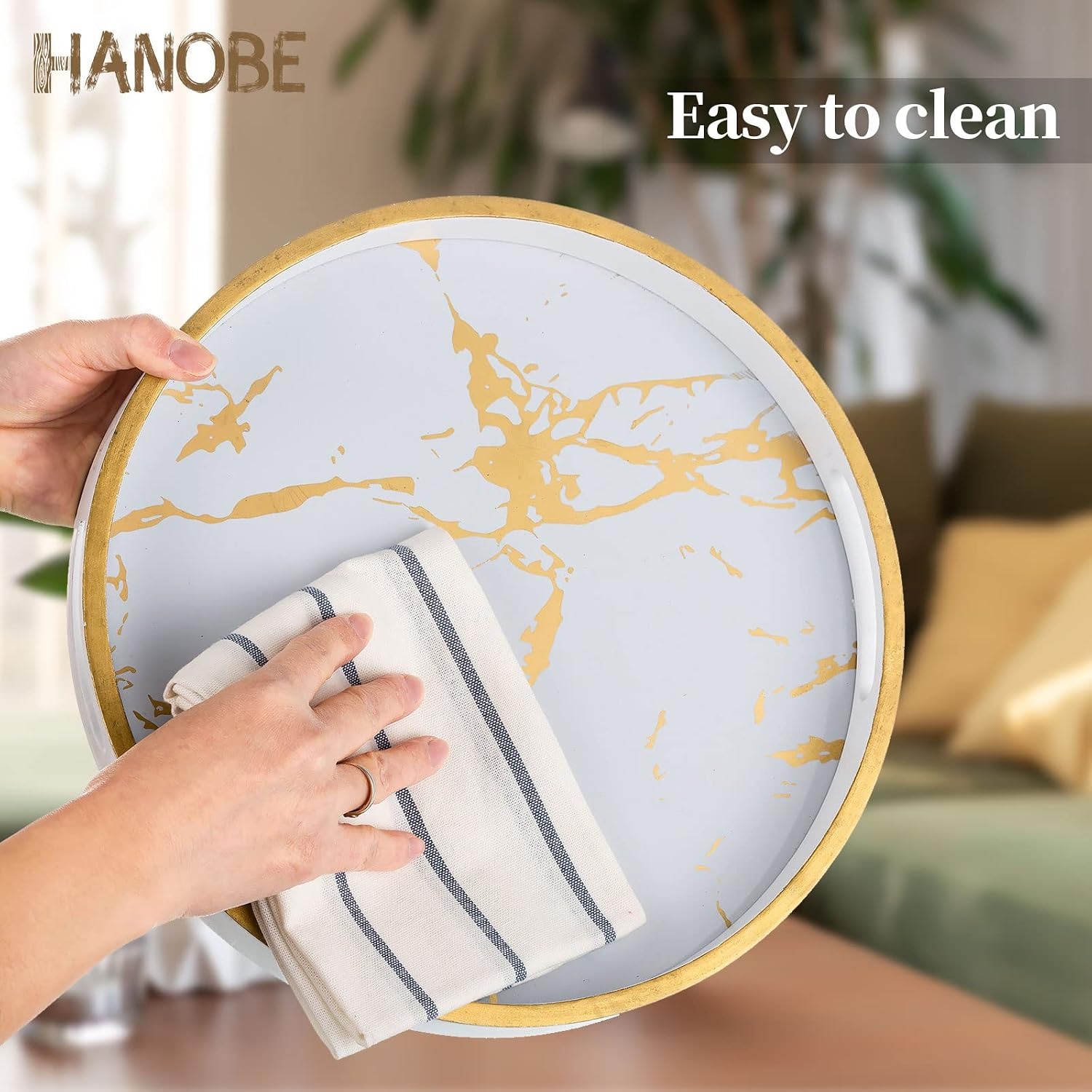
The care routine is short. Wipe the surface with a soft cloth that is barely damp, then dry it immediately. That is it.
What to avoid matters more than what to do. Do not soak it, do not rinse it under a tap, and definitely do not put it in a dishwasher. Water is the main enemy of MDF, and the edges are where it gets in. Skip bleach, strong solvents and abrasive pads, since those attack the printed pattern.
Use coasters under cold drinks so condensation does not pool. Use a mat under anything hot. If you burn candles on it, keep them in jars or proper holders and never leave them unattended. Clean wax up while it is still slightly warm rather than chipping at it when it has gone hard.
Do these few things and the tray should look the same in several years as it does on day one.
Is it a good gift?
Honestly, yes, and for a specific reason. Most homeware gifts require you to know someone's colour scheme, their taste, and whether they already own three of the thing. A tray dodges all of that. It is useful in nearly every home, it goes with most interiors because it is a neutral circle, and people genuinely use it rather than storing it in a cupboard.
It covers housewarmings, weddings, birthdays and the awkward gift exchange where you barely know the recipient. If you have been scrolling through lists looking for the best decorative tray for living room to give as a present, this is the sort of thing that gets quietly used for years.
The short version
This is a round MDF wood tray with a printed gold marbling pattern on the inner surface, two cut-out handles and a wide raised rim. It is not natural marble, and it is not pretending to be. What it offers is the look of stone at a weight you can carry, with a surface that wipes clean in seconds.
It will tidy a coffee table, organise a dresser, carry drinks from the kitchen and catch your keys by the door. Measure your spot, keep water off it, use a coaster, and it will earn its place.