
The complete guide
How To Choose A Marble Tray That Actually Gets Used
The surface that collects everything
Every home has one. The corner of the bathroom bench where hand cream, a hair tie, two bobby pins and a half-used lip balm have formed a small colony. The dresser top where perfume bottles creep outward every week. The hall table buried under keys, receipts and loose change.
None of it is really clutter. It is all stuff you use. The problem is that it has no boundary, so it spreads until the whole surface looks untidy, and then you start avoiding looking at it.
A tray fixes that for almost no effort. You put a line around the mess and suddenly the same objects read as arranged. It is the oldest trick in interior styling and it still works because it is not a trick at all, it is just containment.
Why marble instead of something cheaper
You can buy a plastic tray for a few dollars. It will hold the same things. The reason people reach for natural stone is partly how it looks and partly how it behaves.
Marble has weight. A light tray slides when you drop keys into it and tips when you lift a bottle out. A stone one stays where you put it. That sounds minor until you have lived with both.
It also ages well. Timber marks, plastic scratches and goes cloudy, and painted finishes chip at the edges. Stone picks up character instead. The surface on this tray is non-porous, so oils, spices and juice sit on top rather than soaking in, which means a wipe is usually all it takes.
Then there is the look. Real marble has depth that printed patterns cannot copy. You notice it at close range, which is exactly where a vanity tray lives.
Handmade means every piece is different
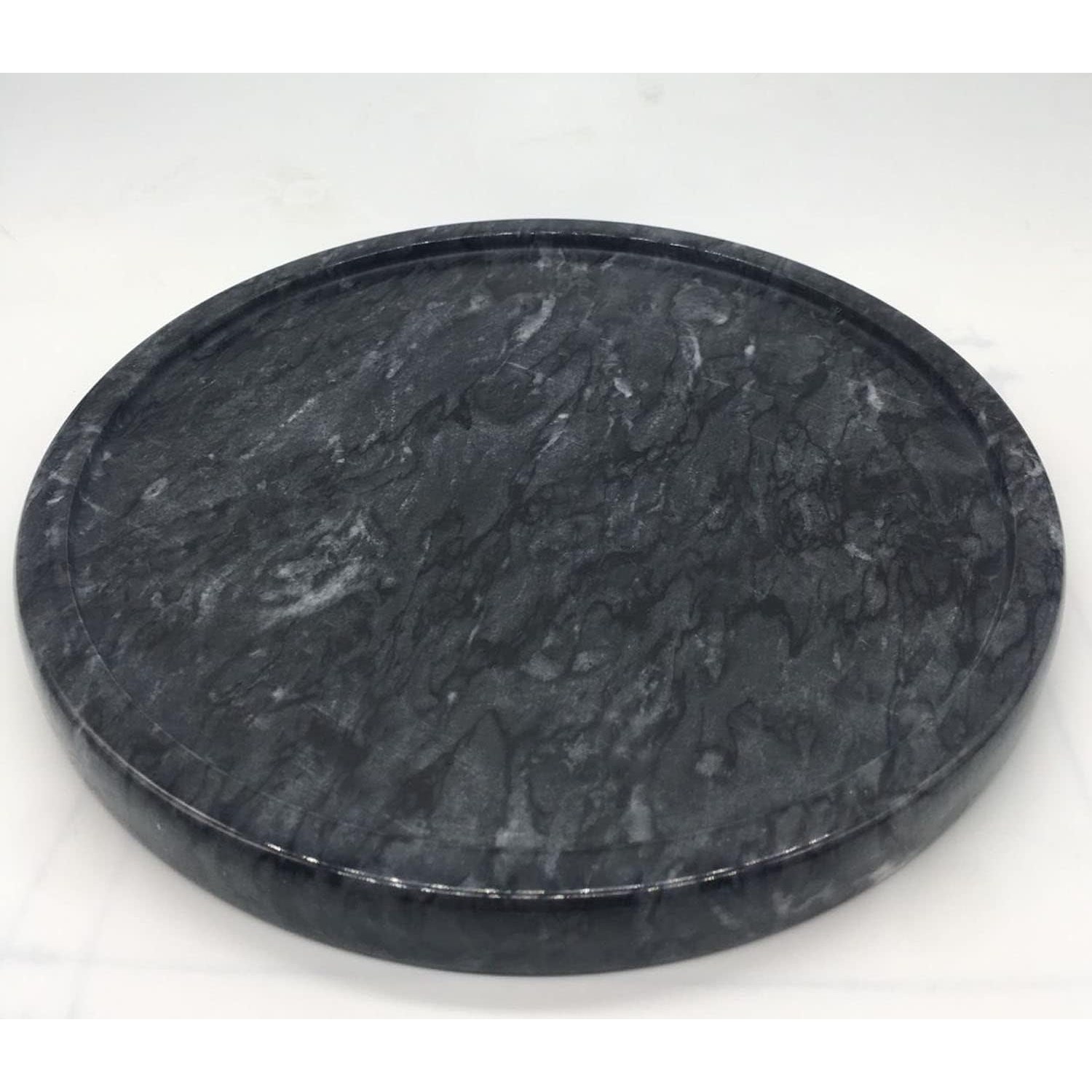
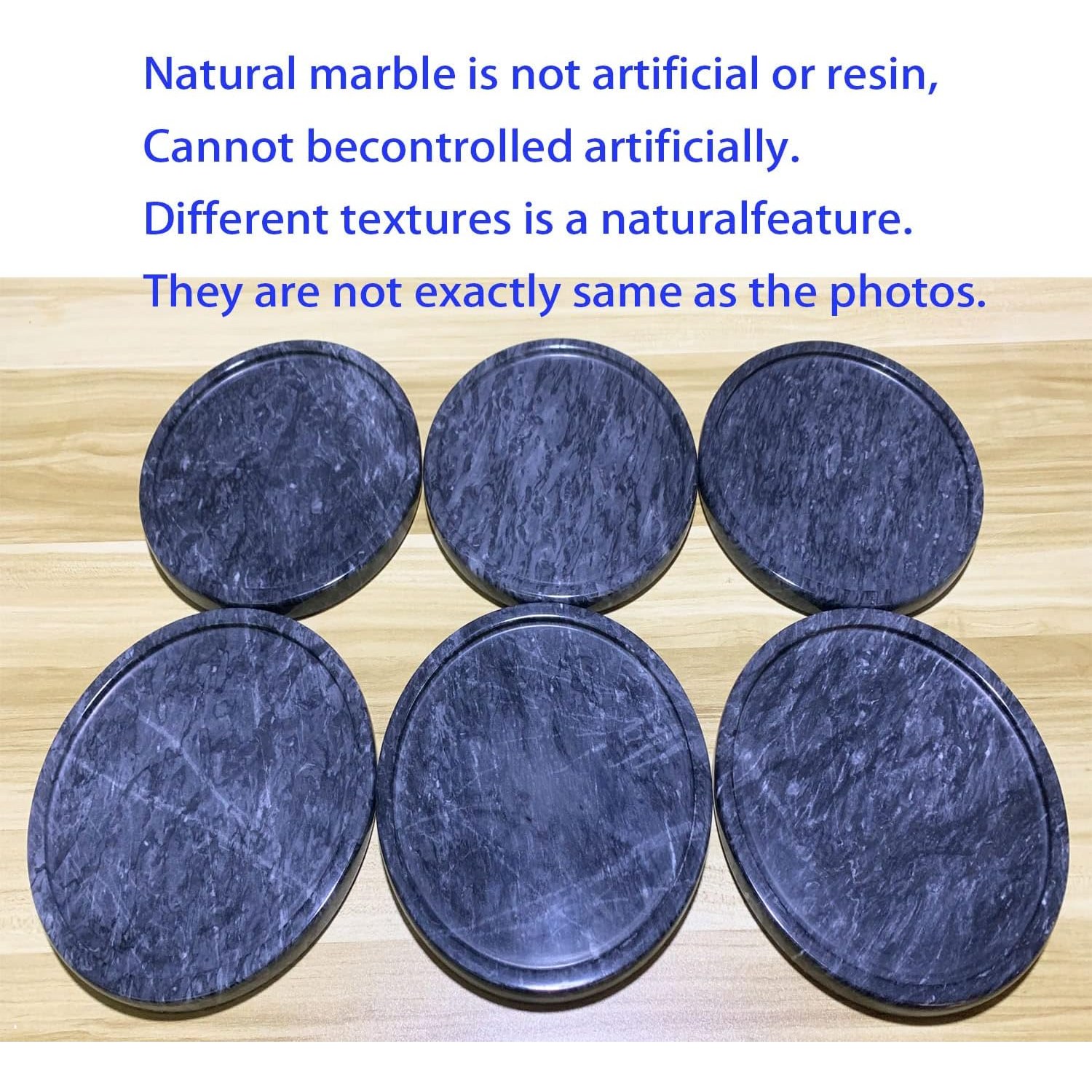
This tray is cut from natural marble and finished by hand. That has one consequence worth being clear about before you order. Your tray will not look identical to the photographs.
The grey might be warmer or cooler. The veining might run across the middle or hug one edge. Some pieces have dramatic movement in the stone, others are quieter.
If you were hoping for an exact colour match to something you already own, natural stone is the wrong material for that job. If you like the idea of owning a piece that nobody else has exactly, it is the right one. The variation is not a flaw in manufacturing, it is the stone showing what it is.
Where a round tray earns its place
The round shape is more flexible than people expect. Rectangles want to align with an edge. Circles sit happily anywhere.
On a dressing table it anchors a perfume collection. Three or four bottles grouped on stone look intentional, the same bottles scattered across bare timber look forgotten. Add a small dish or a ring stand and you have a proper makeup tray setup.
In the bathroom it handles soap, hand cream, an electric toothbrush or a stack of cotton pads. The non-porous surface matters more here than anywhere else, because bathroom products leak, drip and smear.
By the front door it becomes a key tray. Keys, sunglasses, a wallet, the thing you keep forgetting. A good stone catchall by the door saves more time than it has any right to.
On a coffee table it works as a small styling moment. A candle, a box of matches, maybe a tiny plant. It also doubles as a tea or coffee tray for one person on a quiet afternoon.
Beside the bed it holds a watch, reading glasses and whatever you empty from your pockets.
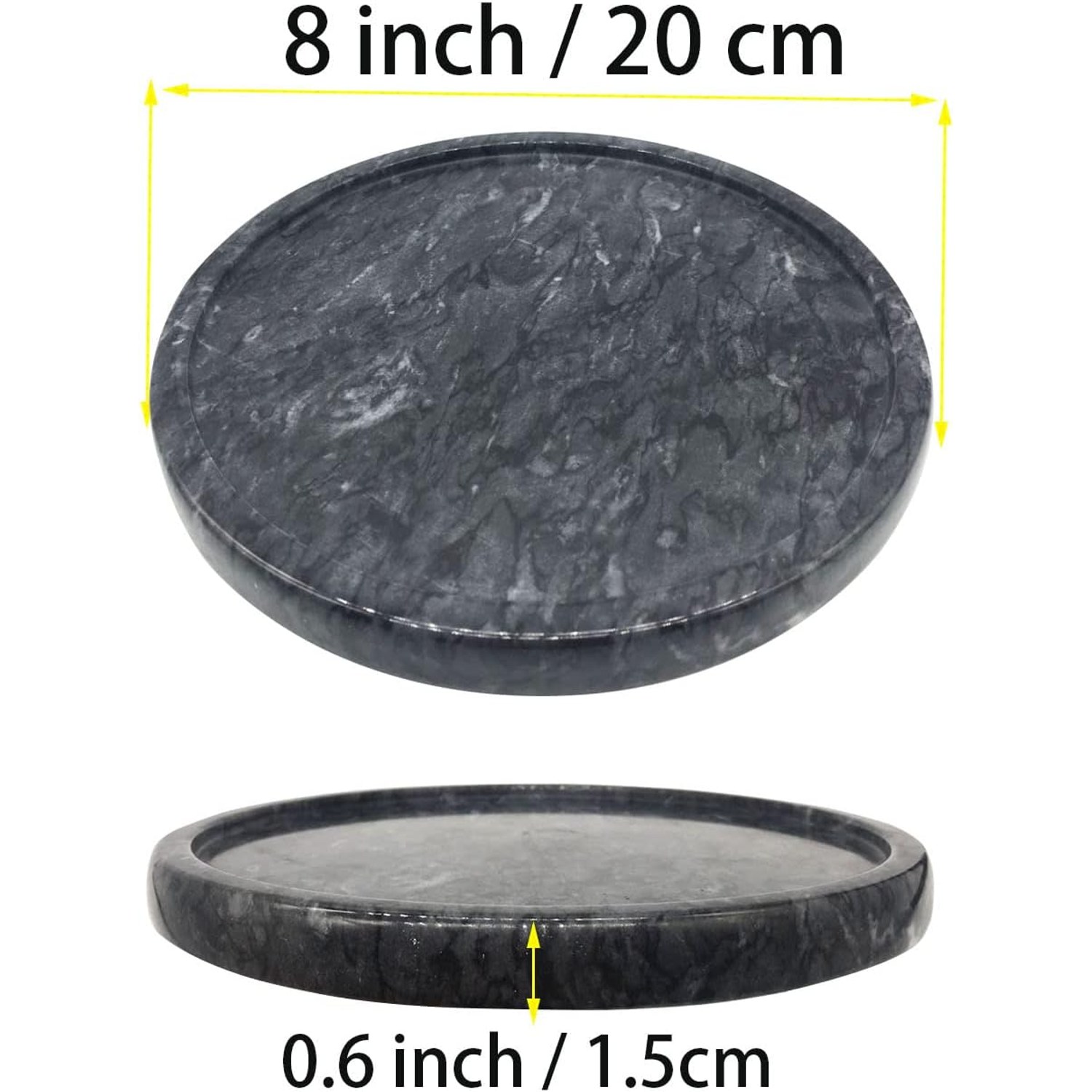
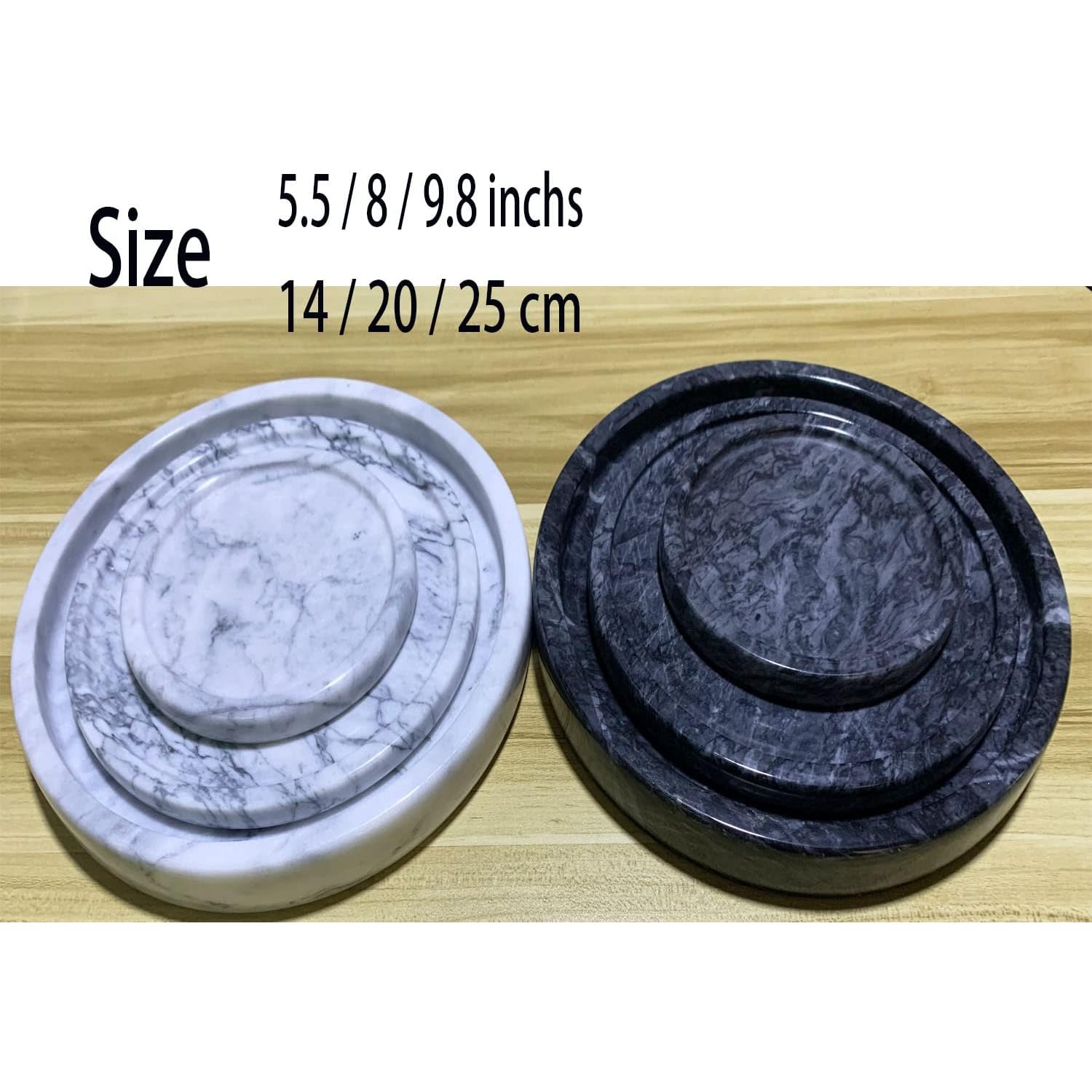
How to work out the right size
Since every space is different, start with what you want to put on it rather than the tray itself.
Gather the items you want contained and push them together into a loose group on the bench. Measure across the widest part of that group. That measurement, plus a little breathing room, is your minimum tray size.
Then check the surface it will sit on. A tray that covers an entire narrow shelf looks cramped and leaves nowhere to rest a hand. As a rough guide, leave some visible surface on all sides so the tray reads as an object rather than a lining.
For a bathroom vanity, also think about tap clearance and whether a cabinet door or mirror swings over the area.
If exact measurements matter for your spot, message us before you order and we will check the supplier's listed figures for you.
Caring for natural stone
This part is short, because the maintenance is genuinely light.
Wipe it with a soft cloth. Use plain water or a weak, mild detergent if something greasy has landed on it. Dry it afterwards so you do not get water spots.
What to avoid is the more useful list. Keep acidic things off it. Lemon juice, vinegar, citrus cleaners and bathroom sprays with strong chemistry can dull or etch natural stone. Nail polish remover and similar solvents should not be left sitting on the surface either. The product guidance is blunt about this, do not place corrosive items on the tray.
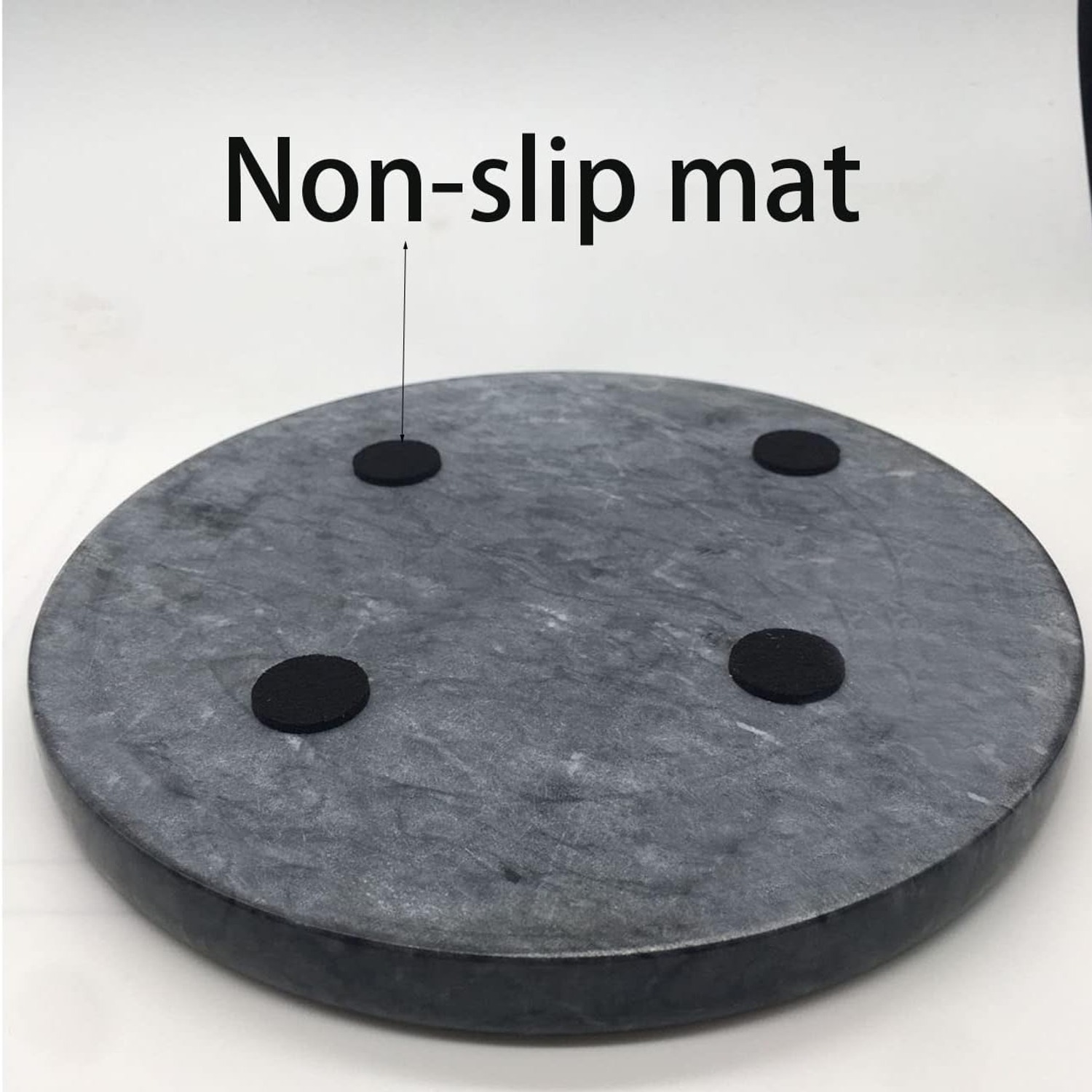
Do not scrub it with abrasive pads. Do not put it in a dishwasher. Lift it rather than dragging it across polished timber, and if you are worried about the furniture underneath, stick a few small felt pads on the base.
That is it. Treat it like a nice benchtop and it will stay looking good for years.
Buying it as a gift
Marble trays are one of the safer gifts going. They are useful without being boring, they suit almost any interior style, and they do not require you to know somebody's size, colour preference or taste in scent.
They work for a wedding, a housewarming, a birthday, an anniversary, Mother's Day or a Christmas gift for someone who insists they do not need anything. A person who already likes marble and brass decor will slot it straight in. A person who has never thought about it will still find somewhere to put it within an hour.
The only thing worth remembering is the natural variation. If you are giving it to someone very particular about matching, mention that every piece of stone is different so they expect it.
The short version
A round natural marble tray solves a small, constant annoyance. It gathers the loose items on a surface into one deliberate group, it holds its position because of its weight, and it cleans up with a cloth because the stone does not absorb oils or juice.
It is handmade from real stone, so the pattern on yours is unique and will not match the photos exactly. Keep acids and corrosive liquids away from it, dry it when it gets wet, and lift rather than drag it.
Measure your things before you order, pick the spot it will live in, and it will quietly do its job every single day.