
The complete guide
The Honest Buyer's Guide to Linen Napkins
The small thing that fixes a table
Most people do not think about napkins until they are halfway through dinner, wiping their hands on their jeans. Paper napkins tear. Thin ones pill and leave bits of fluff on your fingers. A proper cloth napkin solves a problem so small that it feels silly to spend money on, right up until the first time you use one and realise the difference.
A 42cm linen square is big enough to actually do its job. It covers a lap. It absorbs a spill instead of smearing it around. And it does not need to be thrown away, which quietly saves you money over a year of meals.
That is the practical case. There is also the look. A table with cloth napkins reads as cared for, even if the food is simple and the plates do not match. Natural beige linen does that without making the table feel formal or fussy.
Why linen, specifically
Linen comes from flax, and flax fibre has a few properties that make it unusually good for table use.
It is absorbent. Linen can take up a lot of moisture before it feels wet, which is exactly what you want when a glass tips over. It also dries quickly, so a damp napkin does not stay damp for long. That matters if you fold them away before they are fully dry.
It is strong. Flax fibre is tougher than cotton, and it gets stronger when wet rather than weaker. That means linen handles washing better over the long run. A set of pure linen napkins used weekly can last for years, and often looks better at year five than year one.
It has texture. Linen has a slight irregularity in the weave, little slubs where the fibre is thicker. Some fabrics try to hide that. Rustic linen leans into it, which is where the Rustico name comes from. If you want flat, glossy, hotel-style napkins, linen is the wrong fabric. If you want something that looks like it was made from a plant, it is the right one.
The trade-off is creasing. Linen wrinkles. You can press it, and it presses beautifully, but it will crease again as soon as someone sits down. Most people who buy linen stop fighting this after a week and decide they like it.
Getting the size right
Napkin sizes sit in rough bands. Cocktail squares around 25cm to 30cm, lunch napkins around 35cm, and dinner napkins from about 40cm upwards.
At 42cm x 42cm, these sit firmly in dinner napkin territory. That is the useful size for a seated meal. The extra cloth means the napkin sits across a lap with enough weight to stay put, instead of sliding off every time you reach for the bread. It also folds well. A 42cm square gives you enough fabric for a simple rectangle under the cutlery, a loose roll tied with twine, or a flat triangle on the plate.
Smaller napkins look neat in a photograph and then disappear under the table in real life. If you are deciding between sizes, bigger is usually the safer call.
Who this set suits
People who host often. If you have friends over regularly, washable cloth napkins stop being a luxury and start being sensible. Four covers a small dinner. Two sets covers six or eight with spares.
People reducing paper waste. This is a straightforward swap. One set replaces a steady purchase of paper napkins for as long as the linen lasts, which with linen is a long time.
People who want a neutral base. Natural beige goes with almost anything. If you change your table styling with the seasons, or you have mismatched plates, a neutral napkin is the piece that ties things together without drawing attention.
People planning an event. Rustic table settings for weddings and long outdoor lunches lean heavily on natural linen. You would need several sets, and you would want to order early enough to wash and press everything, but the look is hard to beat with paper or polyester.
Who it suits less: anyone who wants a crisp, pressed, never-creased napkin with zero upkeep. Linen will not do that. A polyester-blend napkin will.
How to choose between options
Fibre first. Check whether a napkin is 100% linen or a blend. Blends are often cheaper and crease less, but they are less absorbent and the texture is flatter. These are pure linen, so you get the full behaviour of the fibre.
Then size. Decide if you want lunch size or dinner size. For a proper sit-down meal, dinner size wins.
Then colour. Natural, white and grey are the three neutrals that do the most work. White looks sharpest but shows every tomato splash. Natural beige hides light marks better and feels warmer under candlelight.
Then quantity. Count your usual table and add two. Napkins get used mid-week, dropped, and used as a stand-in oven cloth. Having spares means you are never short because the set is in the wash.
Then care. Check the wash temperature. These wash at 40°C in a normal machine, which is the practical end of the scale. If a napkin says hand wash only or dry clean, think honestly about whether you will do that.
Looking after them
Wash before first use. New linen has a slightly stiff finish and the first wash takes it off.
Wash at 40°C with similar colours. Skip the fabric softener. It sounds counterintuitive, but softener leaves a film on the fibres that stops them absorbing moisture, which is the one thing you actually need a napkin to do. Linen softens on its own with each wash.
Skip chlorine bleach too. It weakens flax fibre and can yellow natural tones. For stains, rinse in cold water straight away. Oil responds well to a dab of dish soap worked in before washing. Wine and coffee usually lift if you get to them before they dry.
Dry on a low tumble setting or on the line. If you plan to iron, take them out while still a bit damp. Linen presses far more easily damp than bone dry, and you will spend half the time on it.
Store them folded or loosely rolled somewhere dry. Linen does not mind being stacked and does not need special treatment.
A few ways to use them
Folded flat under the cutlery is the simplest and most reliable. A loose knot in the centre of the plate reads relaxed. Rolled and tied with garden twine or a sprig of rosemary works for a dinner party without looking like a hotel.
Outside the dining table, people use linen napkins as bread basket liners, as covers over a proving dough, and as small kitchen cloths. Because linen dries fast, it handles damp jobs better than most cotton cloths.
The short version
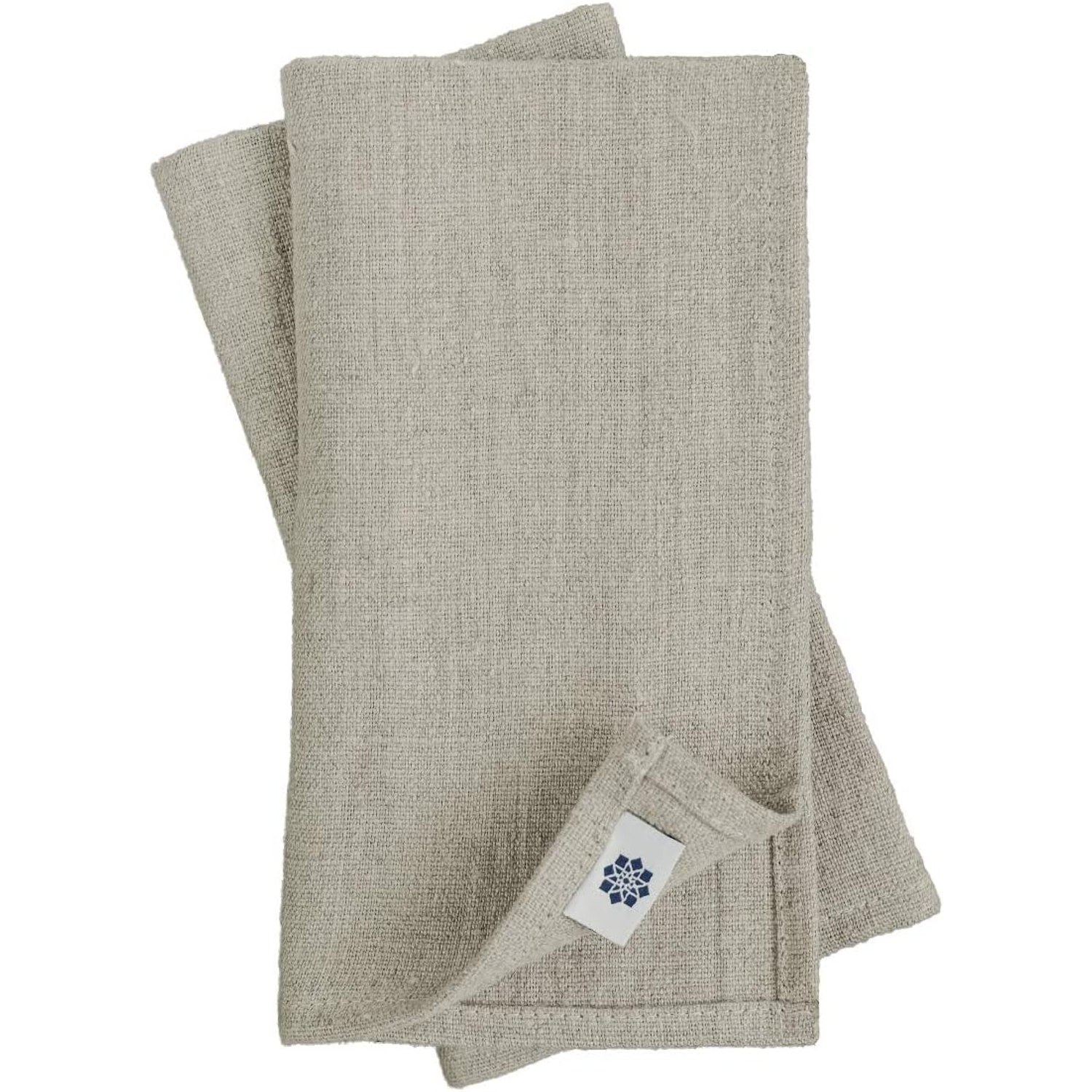
This is a set of four pure linen napkins, 42cm square, in a natural beige tone, made in the EU and washable at 40°C. The size is right for a real dinner, the fibre is absorbent and durable, and the colour works with almost any table.
Linen creases. If that bothers you, buy a blend. If it does not, these will soften with every wash and probably outlast most of the things on your table. Buy two sets if you ever cook for more than four people, and wash them before the first use.