

The complete guide
How to Choose a Slim Leather Wallet That You Will Actually Use
The problem with the wallet you have now
Open your current wallet and lay everything on a table. Most people find eleven or twelve cards and only three or four that have been used in the last month. There is a gym card from a place you left, a hotel key from a trip two years ago, a loyalty card for a shop that closed, and a small drift of receipts.
All of that adds up. A fat wallet in a back pocket tilts your hips when you sit, wears a square patch into your jeans, and makes a clean line in a jacket impossible. It is also slower to use, because finding the right card in a thick stack takes longer than you think when someone is waiting behind you.
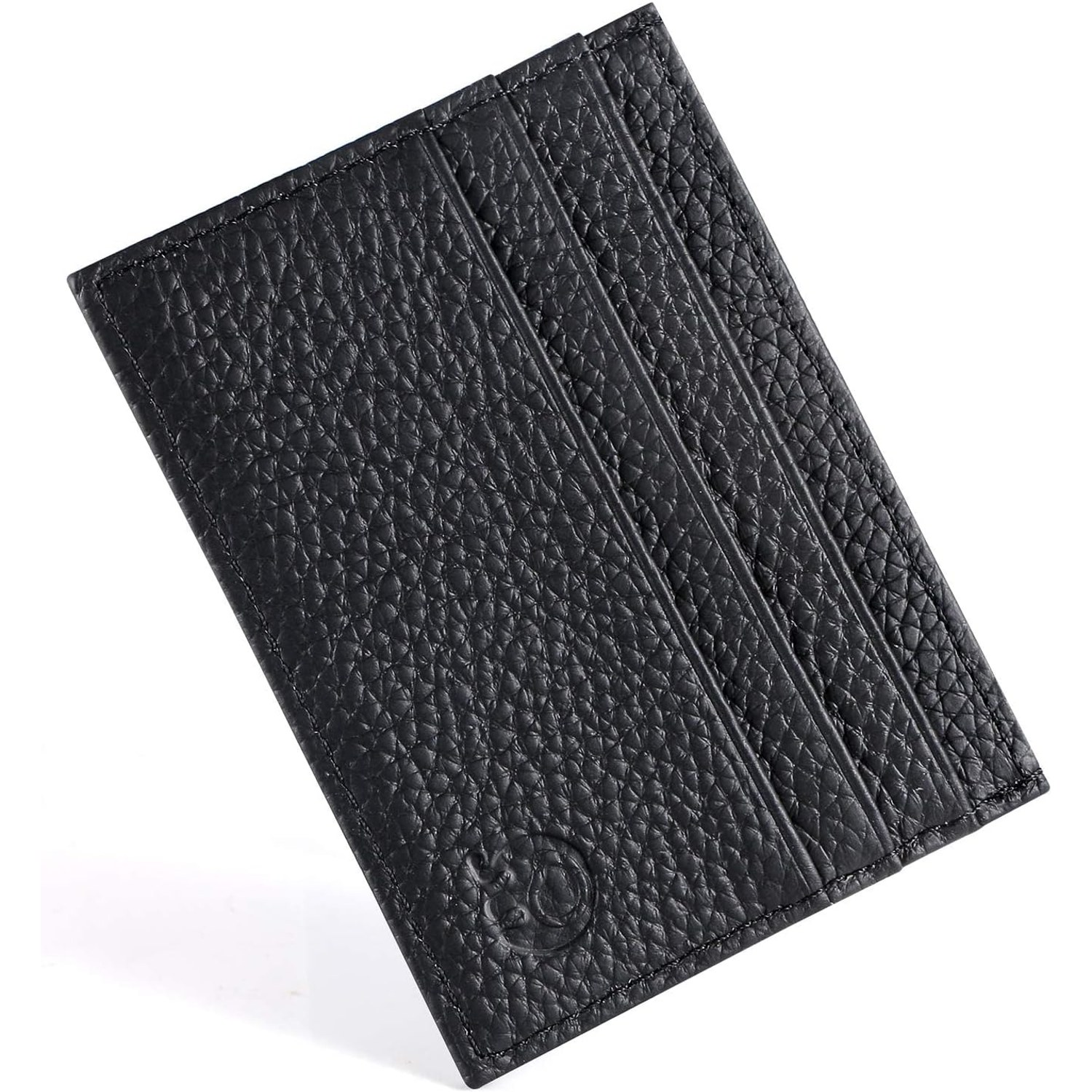
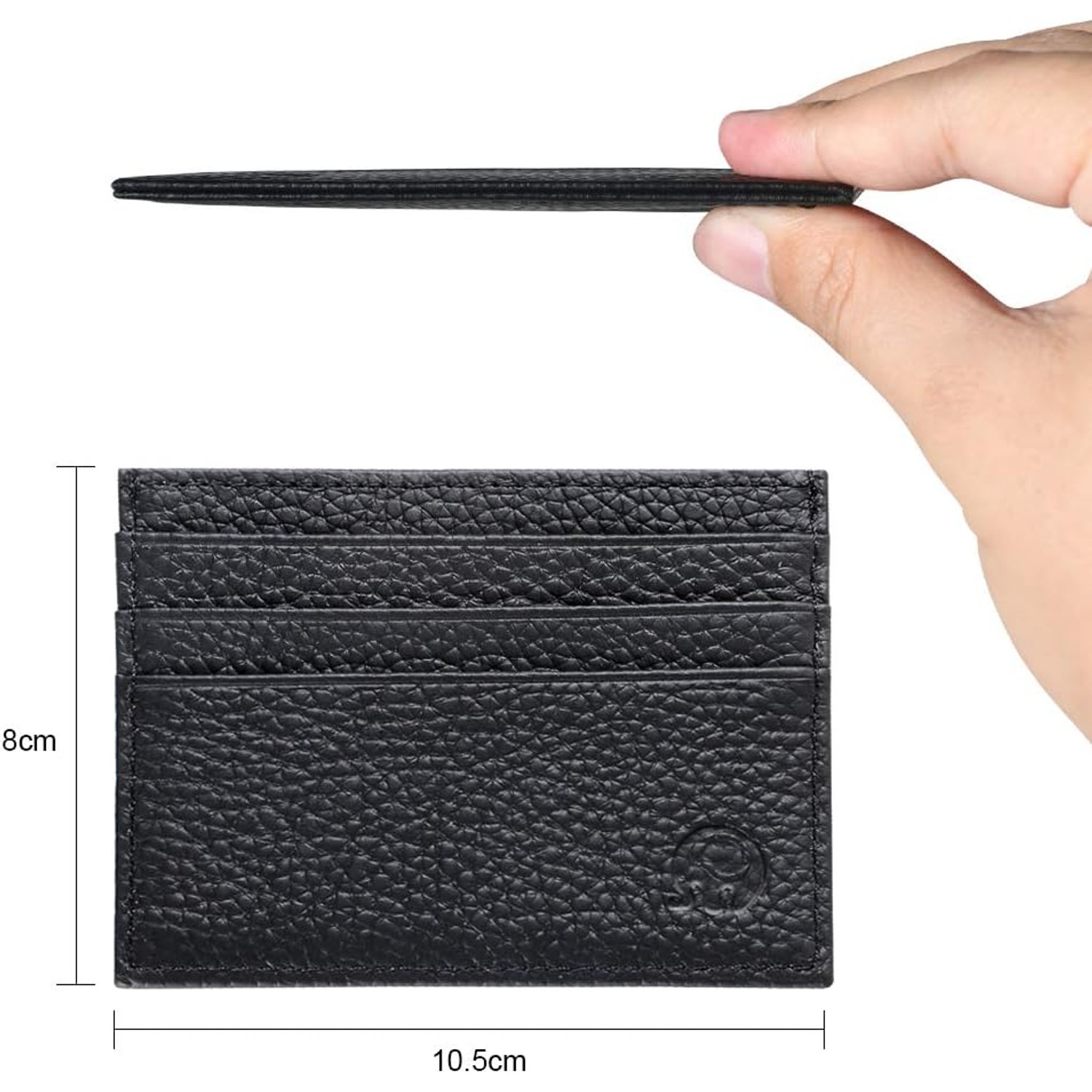
A slim leather wallet solves this by giving you a hard limit. Seven card slots, a flat body at 10.5 x 9 x 0.7 cm, and nowhere to hide junk. The constraint is the feature.
How a slim card wallet works
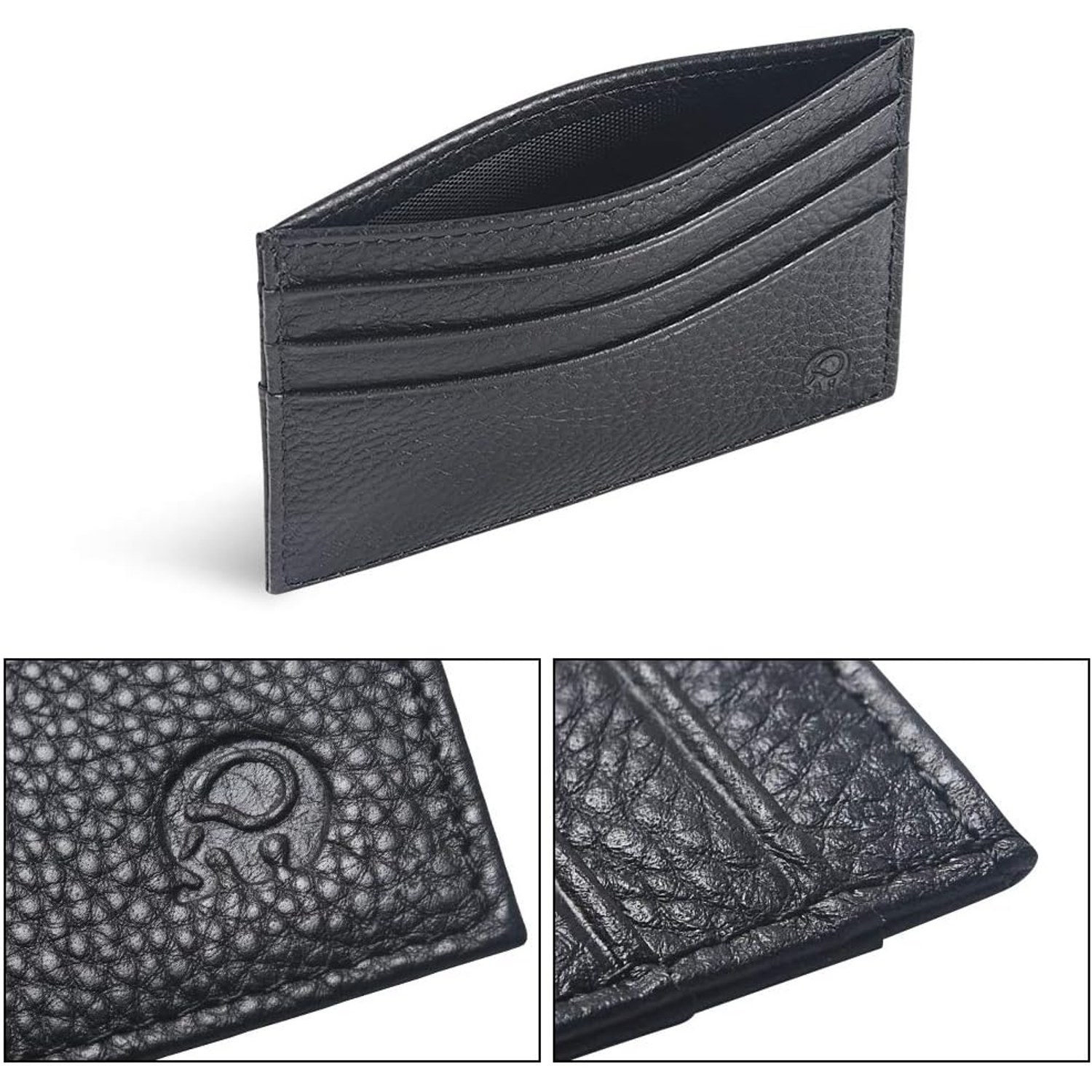
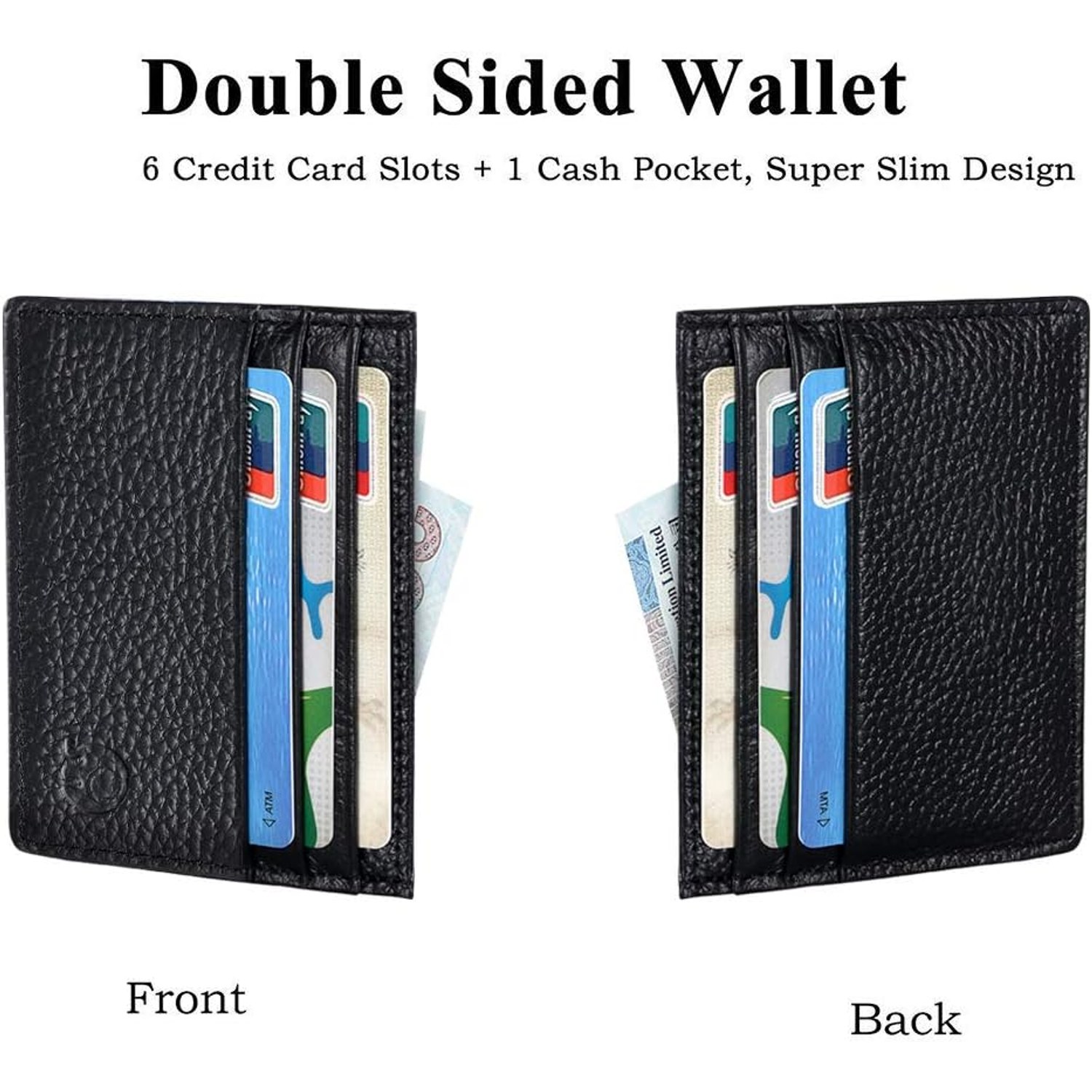
The layout here is straightforward. Three card slots sit on one outer face, three on the other, and one more runs down the middle. Each slot comfortably takes one card, and often two if those cards are flat and unembossed.
That gives you a practical range of roughly six to nine cards. In real use, most people settle somewhere around seven. Bank card, backup card, ID, transit card, one or two loyalty cards, and a few of your own business cards in the centre slot.
There is no clasp or zip. The closure type is open top, which means you thumb a card up and out in one motion. It sounds minor until you have done it a few hundred times. There is also nothing mechanical to fail, which is where most wallets die first.
Notes are handled by folding once and sliding them against the card stack. If you are in a mostly contactless country, you will barely notice the absence of a billfold sleeve. If you handle cash every day, be honest with yourself about that before you switch.
Who this suits
It suits people who have already gone mostly digital. If your phone handles transit, your bank card handles the shop, and cash is a once a fortnight thing, you are carrying a wallet sized for 2005 habits.
It suits anyone who wears fitted trousers or a suit. A flat card case in an inside breast pocket keeps the jacket hanging properly. People hunting for the best small wallet for suits almost always end up in this category, because nothing else sits as cleanly.
It suits commuters and travellers who want a short, controlled list of cards. A best compact wallet for travel is one that makes it obvious at a glance what you are carrying, so you notice immediately if something is missing.
It also suits people who do a lot of handshakes. Keeping your own cards in the centre slot, separate from your banking, means you can hand one over without a shuffle. As a best business card case for light carry, it beats a dedicated metal case that you then have to carry alongside your wallet.
Who it does not suit is equally clear. If you need a coin pocket, a clear ID window, a dozen cards, or room for folded A4 receipts, this is the wrong shape. There is no shame in that, but buying the wrong category is how wallets end up in a drawer.
How to choose
Start with a card audit rather than a product comparison. Lay out everything, and sort it into three piles, daily, occasional and expired. Bin the expired pile. Photograph or store the occasional pile at home. Whatever is left in the daily pile is the number of slots you need.
If that daily pile is six or seven cards, this wallet is sized correctly. If it is fifteen, no slim wallet will rescue you until you cut down first.
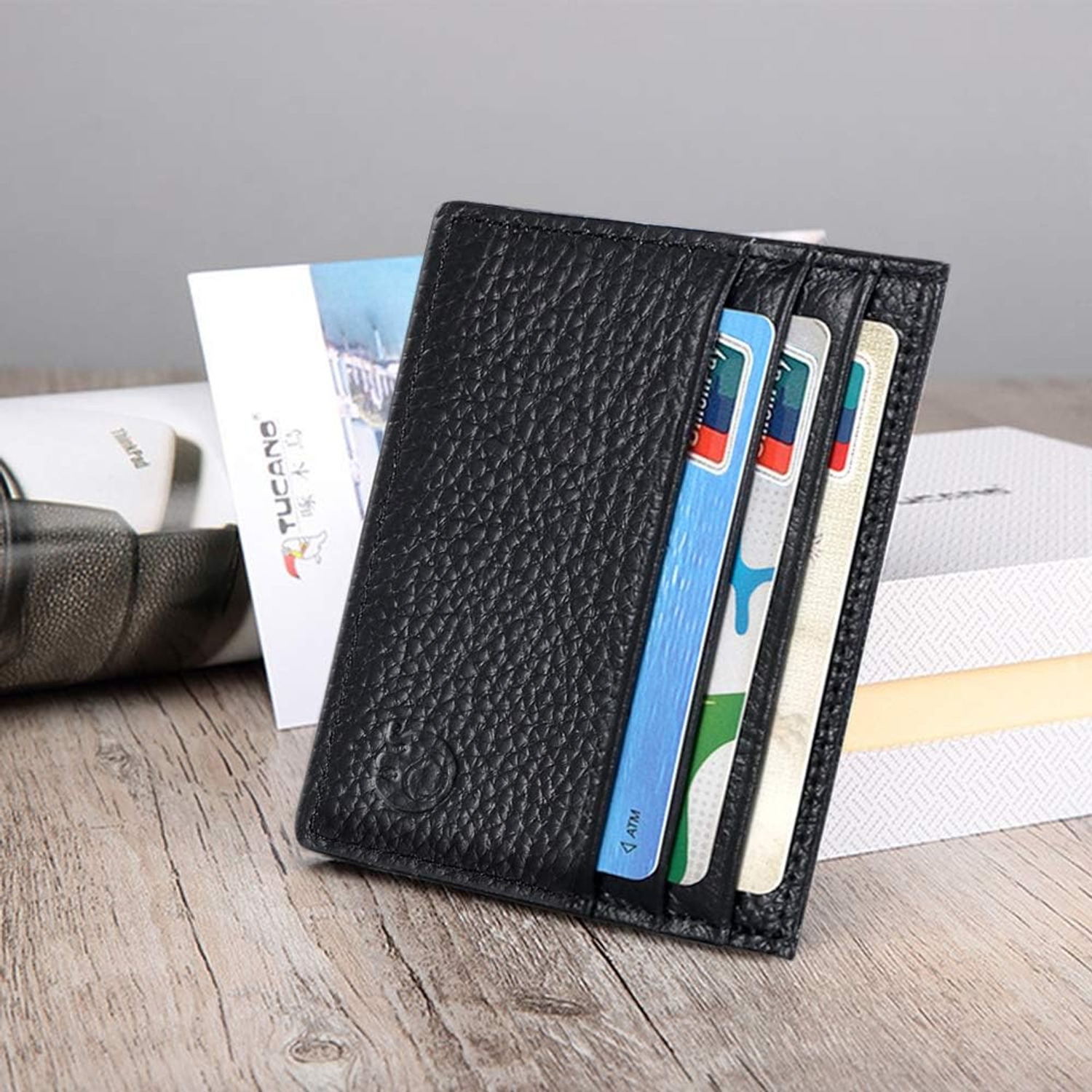
Next think about where you want it to live. A front pocket is the whole point of a design like this, and it is also safer than a back pocket in crowded places. Try it in the trousers you actually wear. The best thin wallet for jeans is one that clears the pocket lip without catching.
Then consider card thickness. Modern bank cards are fairly uniform, but older embossed cards with raised numbers take up more room and can wear slots faster. If several of your cards are embossed, plan one card per slot rather than doubling up.
Finally, think about style. This design is quiet. No large logo, no loud hardware, nothing that looks dated after a season. That is deliberate, because an everyday item should not be a statement piece. If you want something flashy, look elsewhere.
Setting it up well
Give yourself five minutes with it on the first day. Decide which slot holds your main bank card and never change it. Muscle memory does the rest, and within a week you will be pulling the right card without looking.
Put the cards you use least in the middle slot, since that is slightly slower to reach. Keep business cards there too if you carry them.
Fold notes once, not twice. A double fold creates a thick wedge and defeats the flat profile you bought the wallet for.
Resist the slow creep. Every few weeks, take out anything that has crept in. A best everyday carry wallet only stays good if you keep it curated.
Caring for leather
Care here is simple. Wipe the outside with a dry, soft cloth when it looks dull. That is the care instruction listed for this item and it covers most situations.
Keep it away from standing water. If it does get wet, blot it and let it air dry at room temperature. Do not put it near a heater or on a radiator, because fast drying is what makes leather stiff and brittle.
Do not machine wash it, do not tumble dry it, and do not attack it with household cleaners. Strong solvents strip finish and leave a patchy look that does not come back.
Avoid overfilling. Jamming three cards into a slot cut for two is the single fastest way to ruin the fit. Leather stretches, and once a slot has stretched it does not shrink back.
A little softening and a change in tone over time is normal and generally looks good. That is leather behaving like leather, not a fault.
Common mistakes to avoid
Buying a slim wallet while refusing to cut down your cards. The wallet is not magic. It works because you carry less.
Keeping it in a back pocket out of habit. You bought a flat wallet to use a front pocket. Back pocket use also puts a bend through the card stack every time you sit down.
Treating it as a receipts folder. There is nowhere for receipts here, and trying to force them in bends cards and stretches slots.
Expecting features that are not listed. Our record for this item does not specify colour, material, country of origin or weight, and it does not mention RFID shielding. We have left those blank rather than invent them. If one of those is a dealbreaker, ask us before ordering.
The short version
A slim leather wallet is a decision about habits, not just about leather. Seven slots, a 0.7 cm body and an open top layout mean you carry the cards you use and nothing else.
It fits a front pocket, keeps a jacket hanging straight, and gets you through a checkout faster than a thick billfold ever did. Wipe it with a dry cloth, keep it out of the rain and off the radiator, and do not cram the slots.
Do the card audit first. If your daily pile is six or seven cards, this is the right wallet for you, and you will wonder why you carried the old one for so long.