
The complete guide
How to Choose a Leather Valet Tray That You Will Actually Use
The problem is small, and it repeats every single day
Nobody loses their keys in a dramatic way. They lose them in a boring way. The keys go down on a bench while you carry groceries in, then a jacket goes on top, then the post, and twelve hours later you are patting down every flat surface in the house while running late.
The same thing happens with coins, a watch, a wedding ring taken off before washing up, a USB stick, reading glasses. These items have no home. They land wherever your hands were when you stopped needing them.
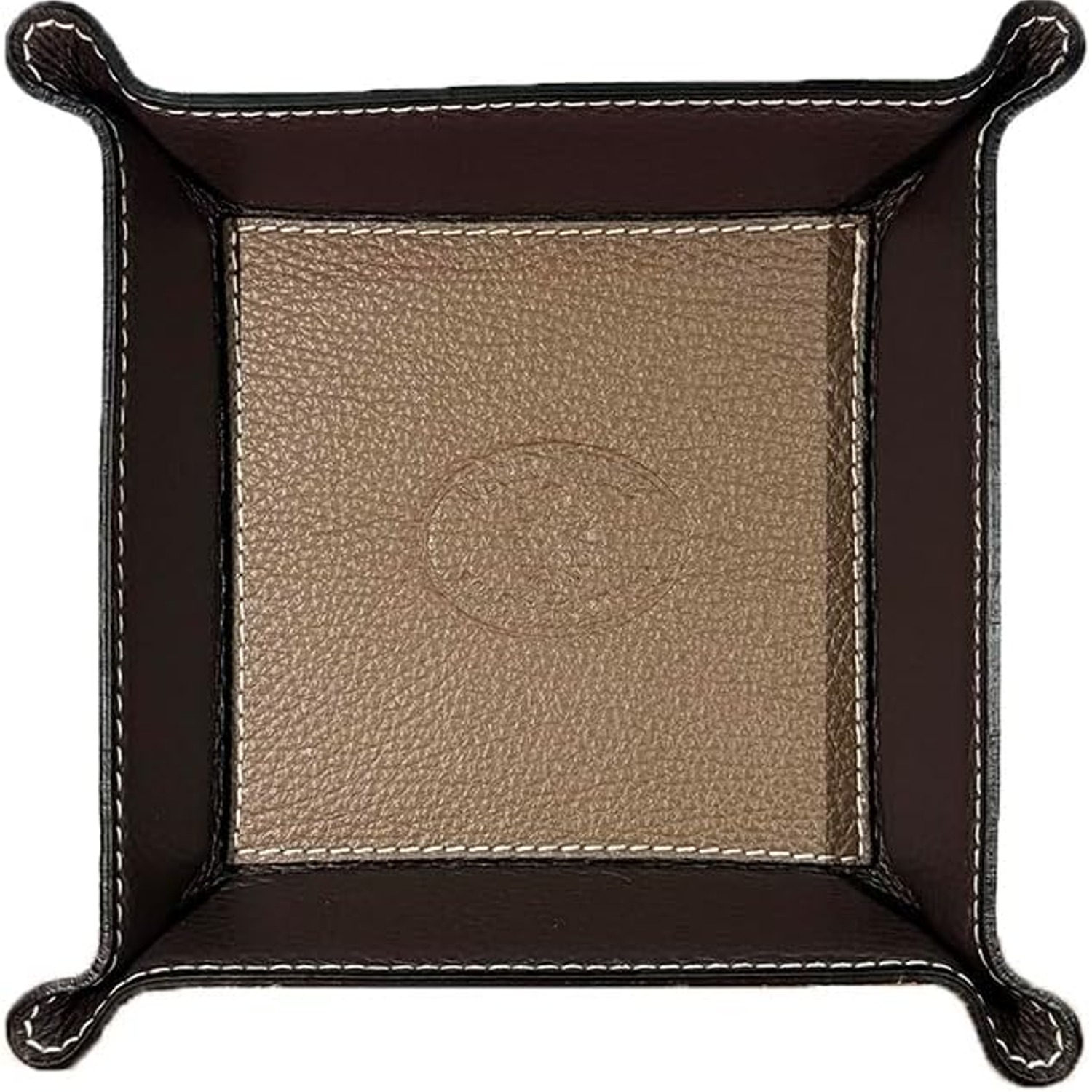
A square leather tray solves it by giving them a home that is obvious and always in the same place. That is the whole mechanism. It is not clever, but it works, and it keeps working after the novelty of a new organising system has worn off.
What a pocket empty tray actually does
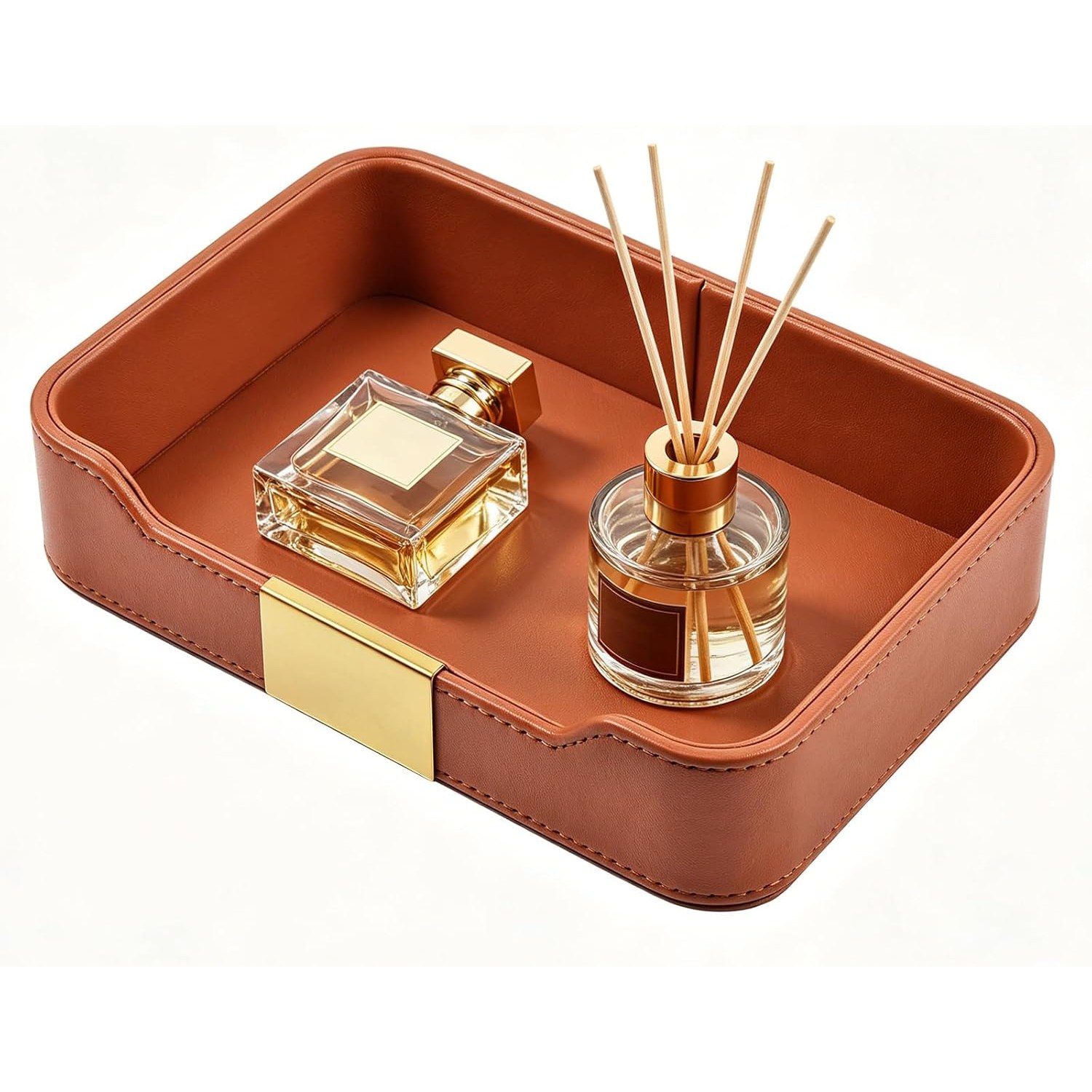
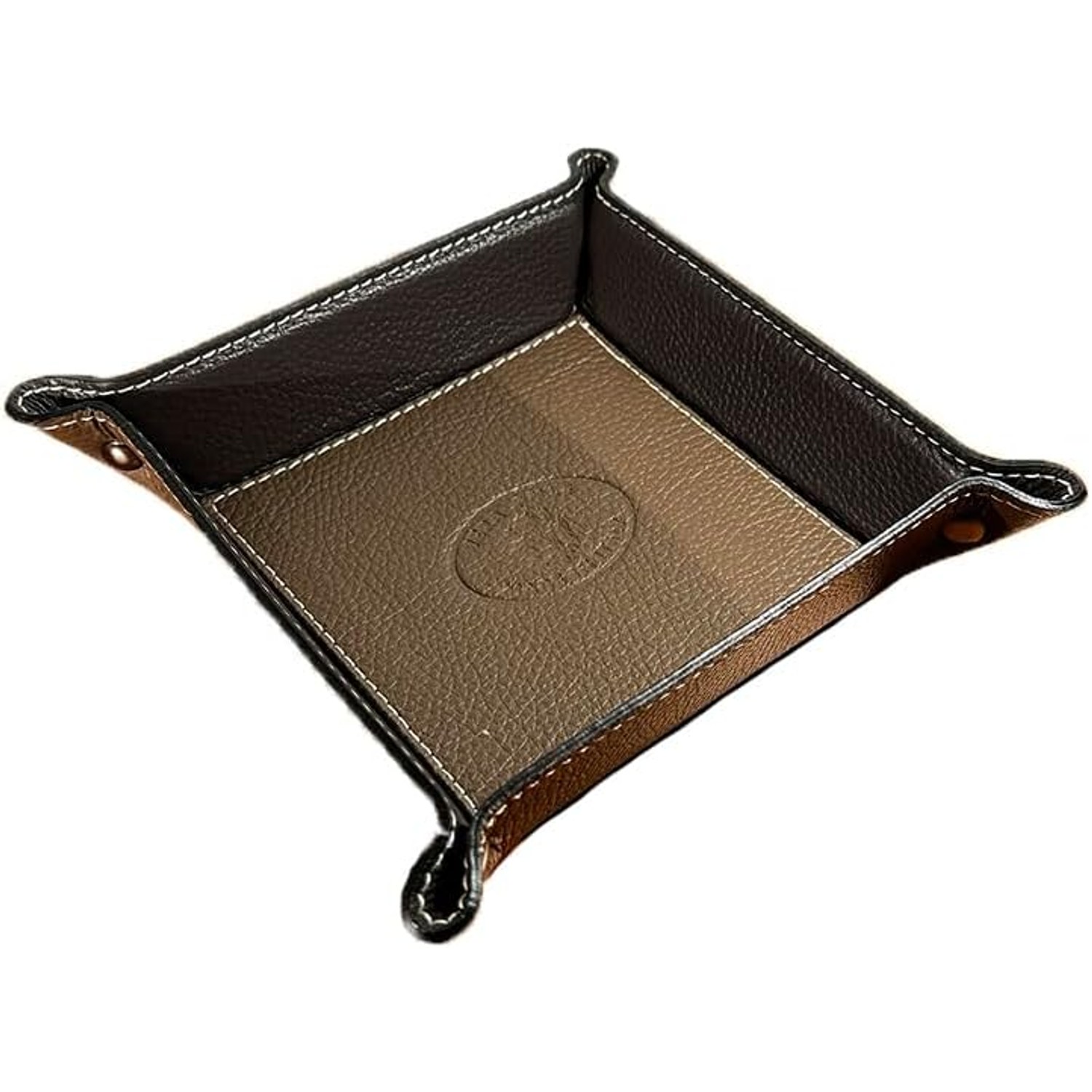
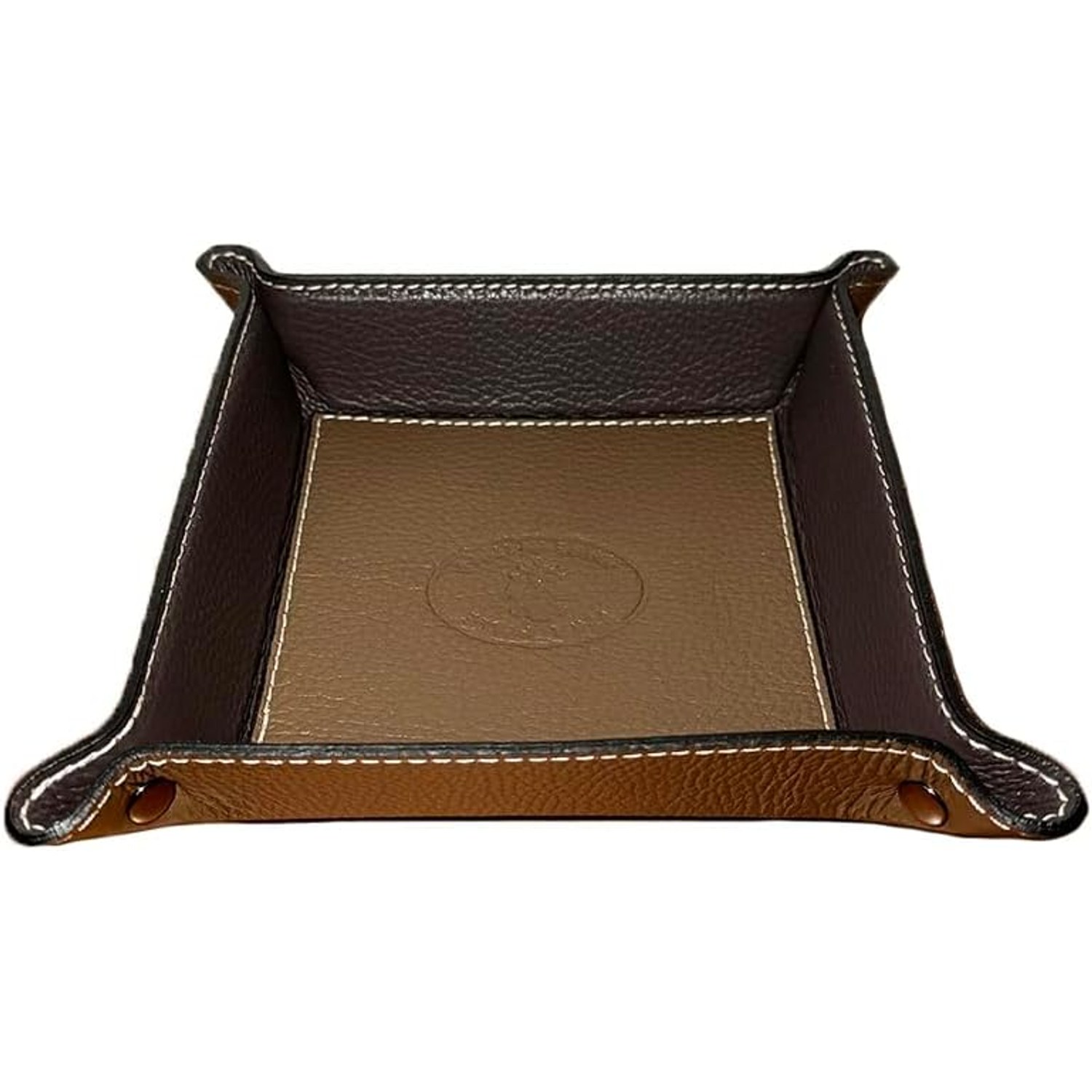
A pocket empty, sometimes called a catchall or a valet tray, is a shallow tray with raised sides. You keep it where you naturally put things down. Most people choose one of three places: a bedside table, a desk, or a surface near the front door.
The raised sides matter more than they look like they should. Without them, items skid off when you drop them from pocket height. With them, a handful of change lands and stays. The flat base matters too, because it lets cards, notes and a phone lie flat instead of sliding into a pile at the bottom of a bowl.
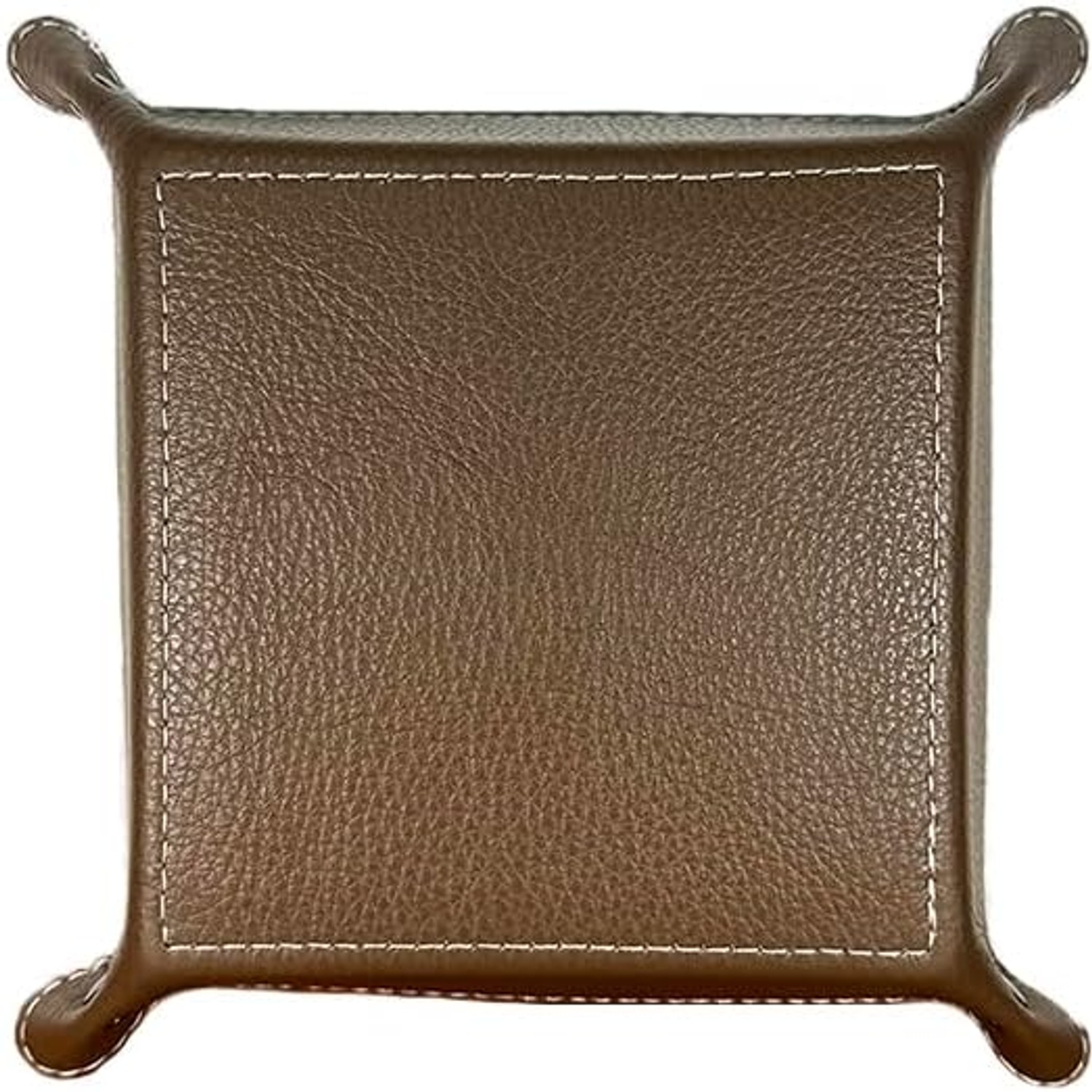
Square is a deliberate choice here. Round dishes look nice but waste their corners. A square leather tray uses every bit of its floor space, and rectangular things like cards and a phone sit against a straight edge rather than at an angle.
Why leather suits this job
Leather is quiet. Drop a watch into a ceramic dish and you hear it. Drop it into leather and you do not, which sounds trivial until you are putting your watch down at midnight next to someone who is already asleep.
It is also gentle. Keys, watch cases, glasses frames and rings are all harder than leather, so the tray takes the wear rather than your belongings. Over a few years a leather catchall develops a slightly burnished look where your hand passes over it. Most people like this. It is the difference between an object that wears out and one that settles in.
The third reason is simply how it reads in a room. A leather tray does not look like storage. It looks like something that belongs on the desk, which means you are less likely to tidy it away into a drawer and lose the habit.
Where to put it
This decision matters more than the tray itself. Put it in the wrong place and it becomes a dust collector.
The test is simple. Stand where you stop when you come home or when you get ready for bed. Whatever surface your hand reaches first, that is the spot. If you have to walk two steps or open a drawer to reach the tray, the habit will not stick.
On a desk, the best spot is usually the non dominant side, away from where your mouse or notepad lives. On a bedside table, keep it closest to the edge you face. By a door, chest height on a console or shelf beats a low side table, because you do not have to bend.
If you share a home, consider two trays rather than one shared tray. Mixed keys are worse than scattered keys.
How to choose one
A few things decide whether a tray gets used or ignored.
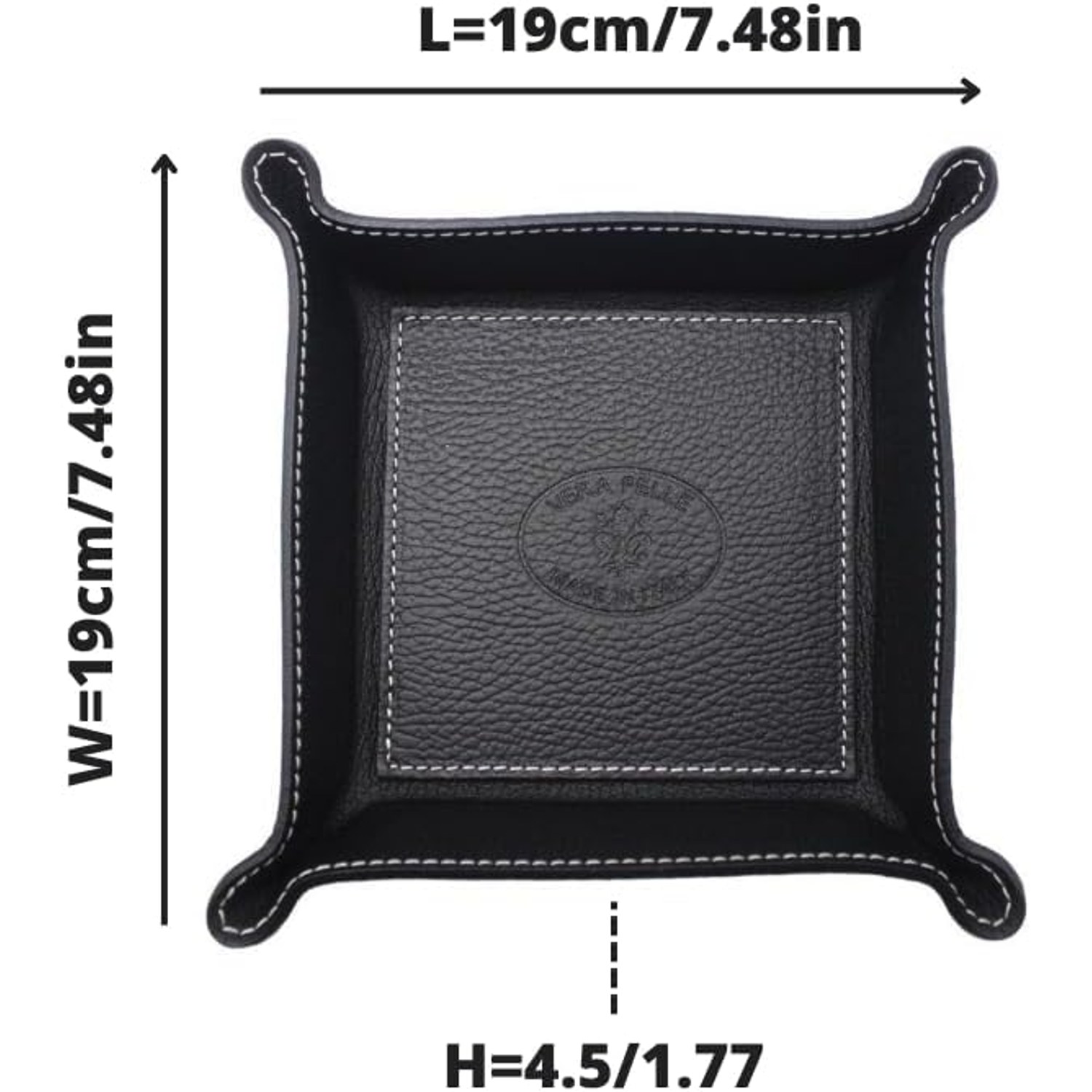
Size. Match it to what you actually carry, not to what you imagine you carry. If your daily load is keys, a wallet and a phone, a compact square is plenty. A tray that is too big invites clutter, because empty space gets filled with receipts and cables.
Depth of sides. Low sides are easier to scoop from. Very deep sides turn a tray into a box, which means you fish around instead of seeing. For a catchall, shallow wins.
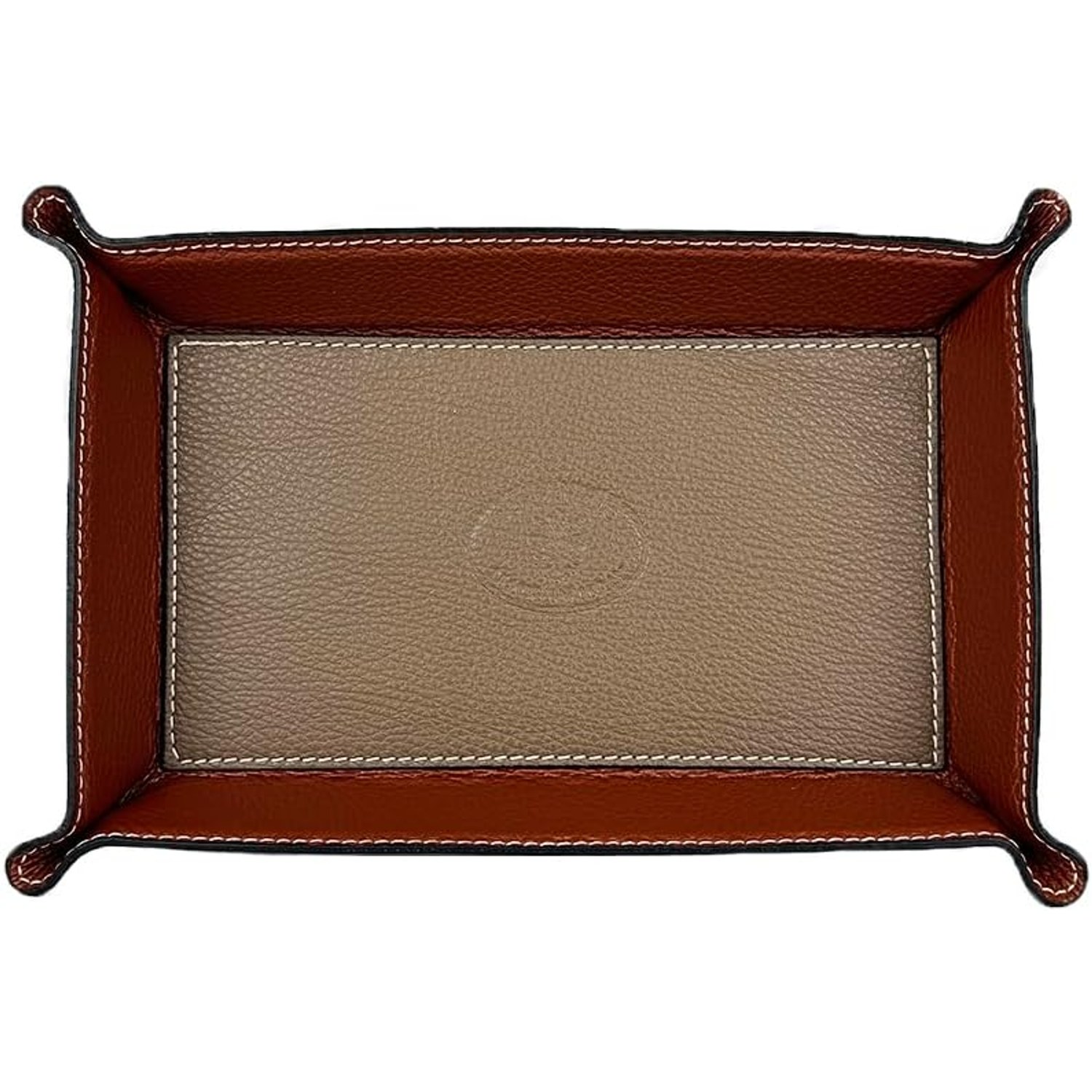
Material feel. If you are buying real leather, expect grain variation and slight tone differences. That is a sign of the material, not a defect. Uniform, plastic-flat surfaces are usually coated heavily, which looks neat on day one and tends to crack later.
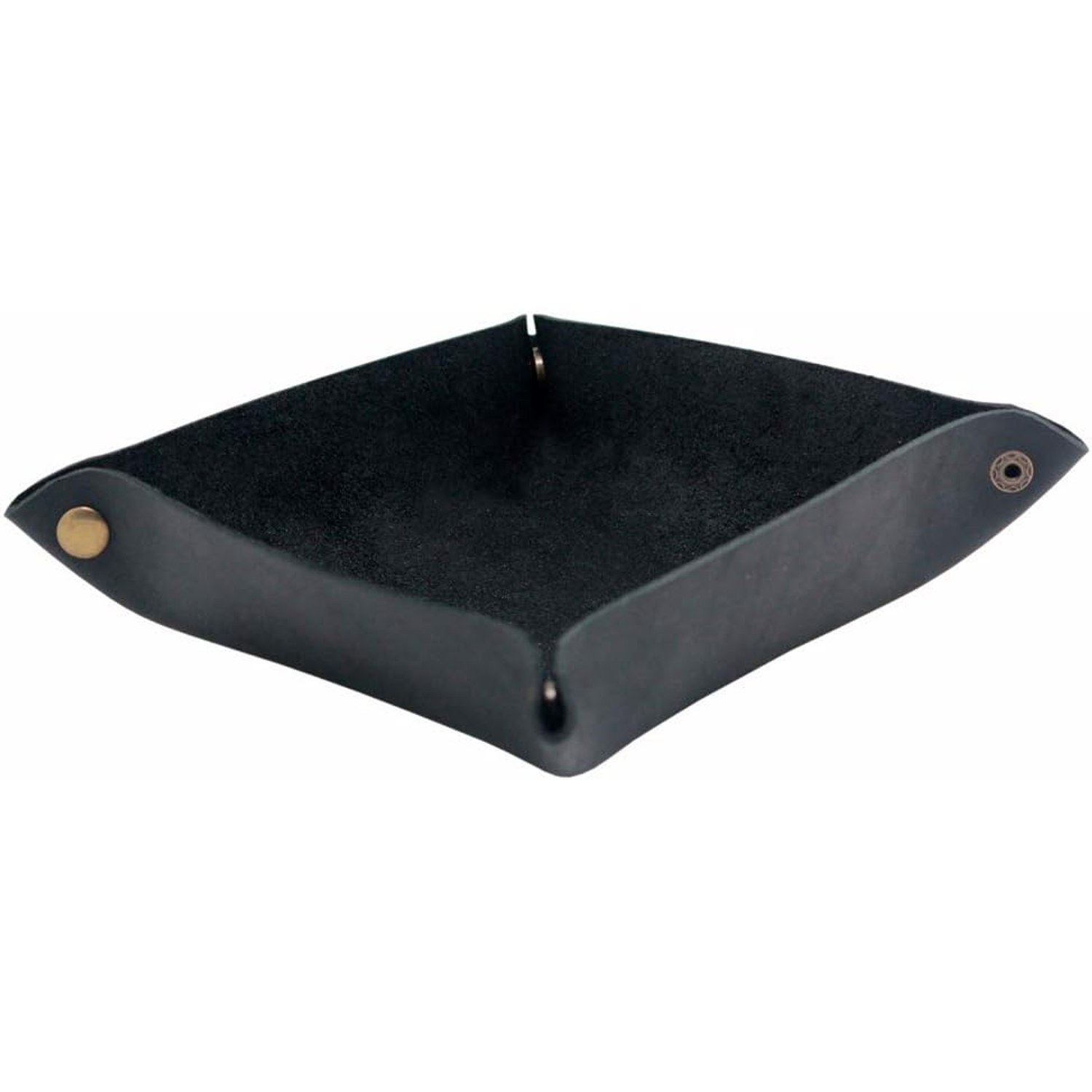
Construction. Handmade trays are often shaped by folding and stitching the corners. Look for stitching that is even and corners that hold their shape when you press them. A tray that will not stay square is a tray that will slump.
Where it has to live. If the surface is glass or polished stone, a flat leather base can slide a little. A couple of small felt pads underneath fixes that in thirty seconds.
Using it well
Give the tray one job. Keys and small daily carry, nothing else. The moment it becomes the place for receipts, batteries and spare screws, it stops being useful and becomes a dish full of junk you avoid looking at.
A weekly reset helps. Once a week, tip it out, wipe the inside with a dry cloth and put back only the things that belong. It takes about a minute and keeps the tray working.
If you keep small items like studs or collar stays, put them in one corner so they do not get buried. Some people drop a tiny fabric pouch into one corner for exactly this.
Care and keeping it looking good
Leather care sounds fussier than it is. Dust it with a soft dry cloth whenever you reset it. If something leaves a mark, a barely damp cloth usually lifts it, then let the tray dry on its own at room temperature.
Three things to avoid: soaking, heat, and harsh cleaners. Water sitting in leather causes stiffness. Drying it near a radiator or in direct sun causes cracking. Alcohol based cleaners and solvents strip the finish and leave a patchy look that does not come back.
Two or three times a year, a small amount of neutral leather conditioner on a cloth keeps the surface supple. Apply it to the cloth, not the leather, and work it in thinly. Test a hidden area first if you have not used that product on this piece before.
If you spill something oily, blot immediately and do not rub. Rubbing pushes oil deeper into the grain.
As a gift
Leather catchalls are one of the safer gifts you can buy. There is no size to get wrong, no fit to worry about, and the use case is obvious to anyone who carries keys. They land well for a new home, a new job, a wedding party gift, or a parent who already owns every gadget.
One tip if you are gifting: pair it with something small that lives in it. A keyring, a pair of cufflinks or a pocket knife turns a tray into a complete present rather than an empty object.
The short version
A square leather tray is a small fix for a daily annoyance. Put it where you already put things down, keep it to one job, and it stops keys and coins from scattering across your home.
Choose a size that matches your daily carry, shallow sides you can scoop from, and real leather if you want it to improve rather than wear out. Wipe it, condition it occasionally, keep it away from heat and soaking, and it should serve for years.
If you are unsure whether this particular tray suits your space, ask us. We would rather talk you into the right piece than sell you one that ends up in a drawer.