
The complete guide
How to Choose a Square Linen Table Topper That Actually Suits Your Table
The problem with a bare table
A table is a working surface. It takes mugs, laptops, homework, mail, dinner, and the odd spilled drink. Left bare, it starts to look like exactly that. Timber shows rings and scratches, glass shows every fingerprint, and a large expanse of hard surface makes a dining room feel a little cold even when the rest of the room is warm.
The usual answer is a full tablecloth. That works, but it hides the table completely, it needs washing after every meal, and it can look heavy in a small space. A square linen table topper is the lighter answer. It covers the middle, adds texture, leaves the edges of the table visible, and takes up almost no room in a drawer.
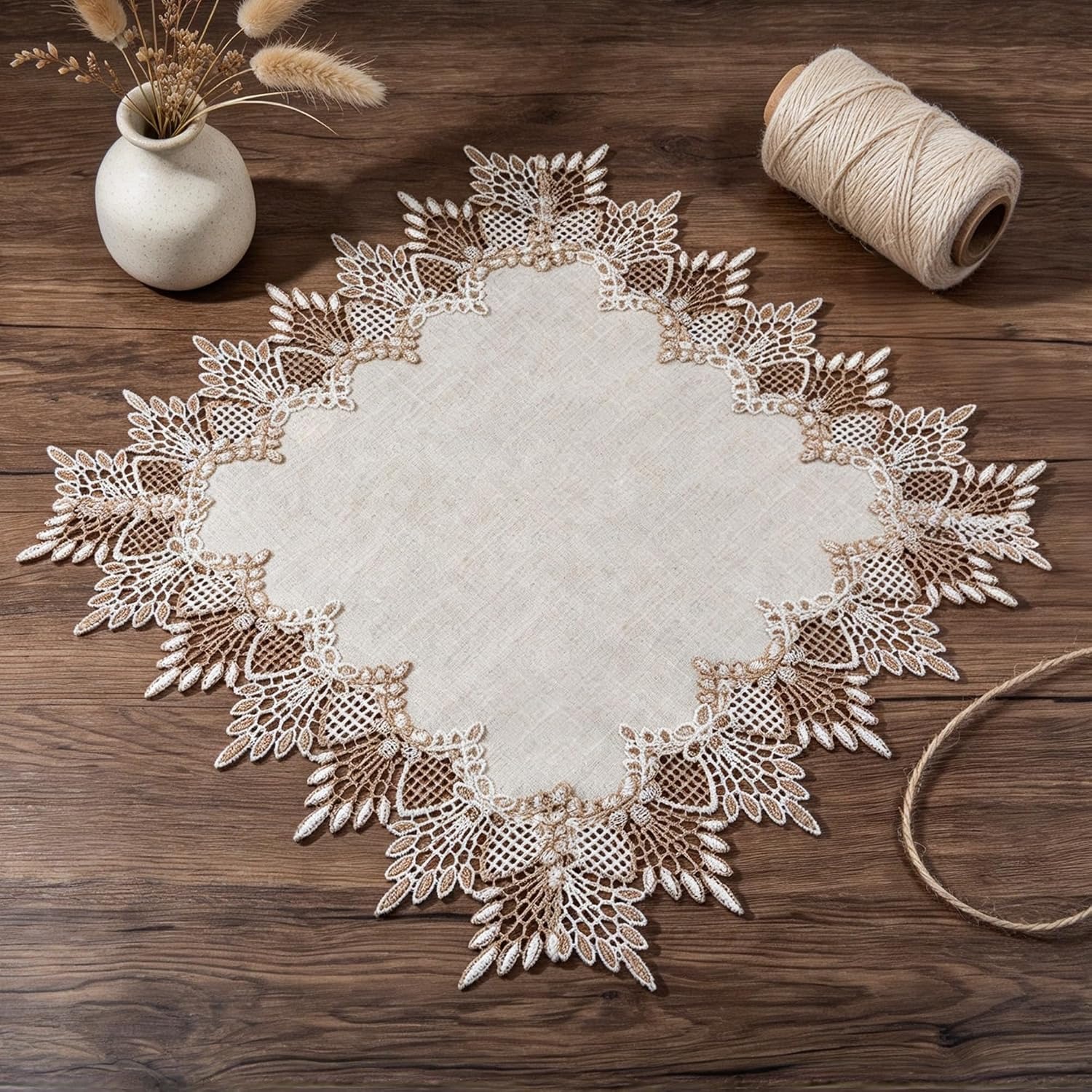
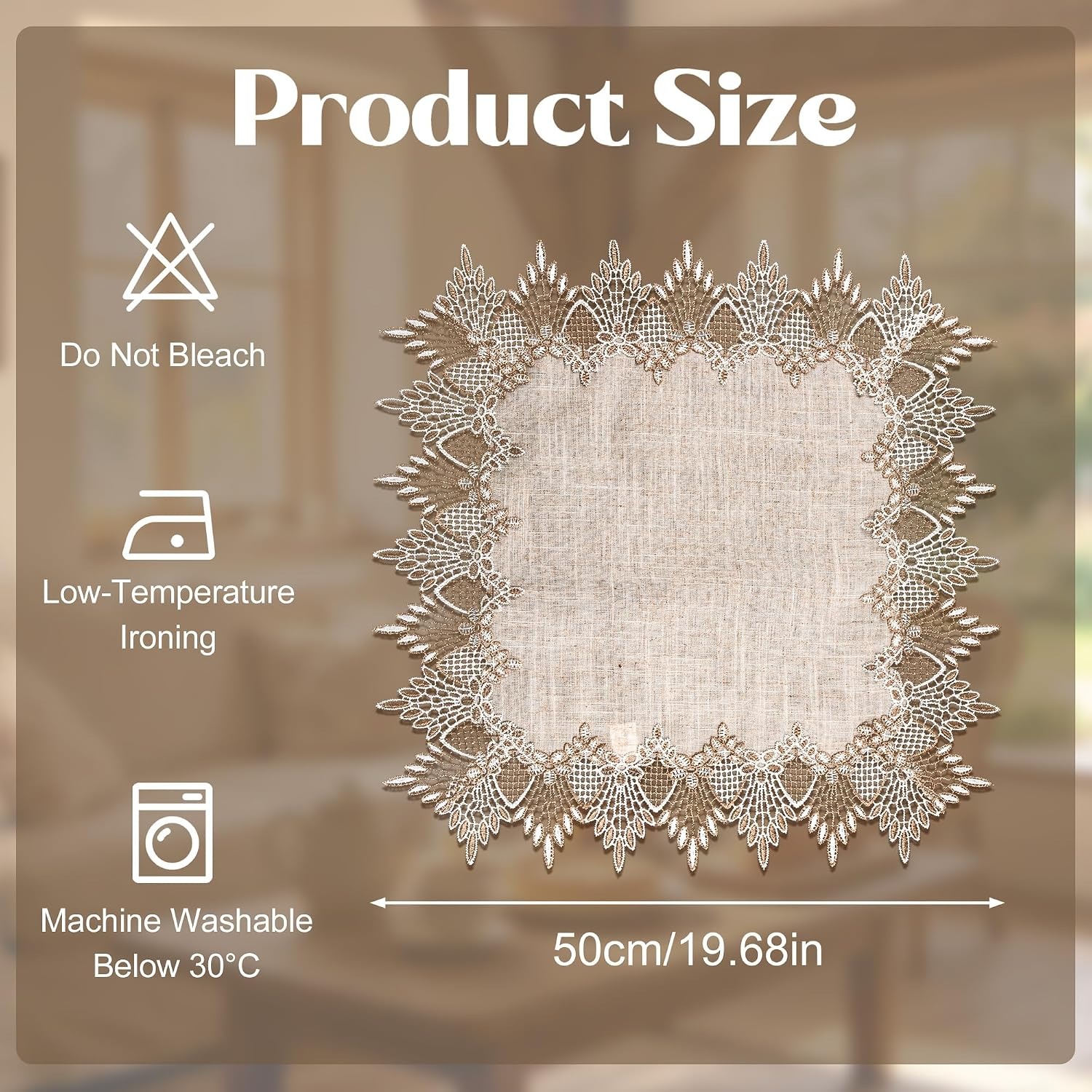
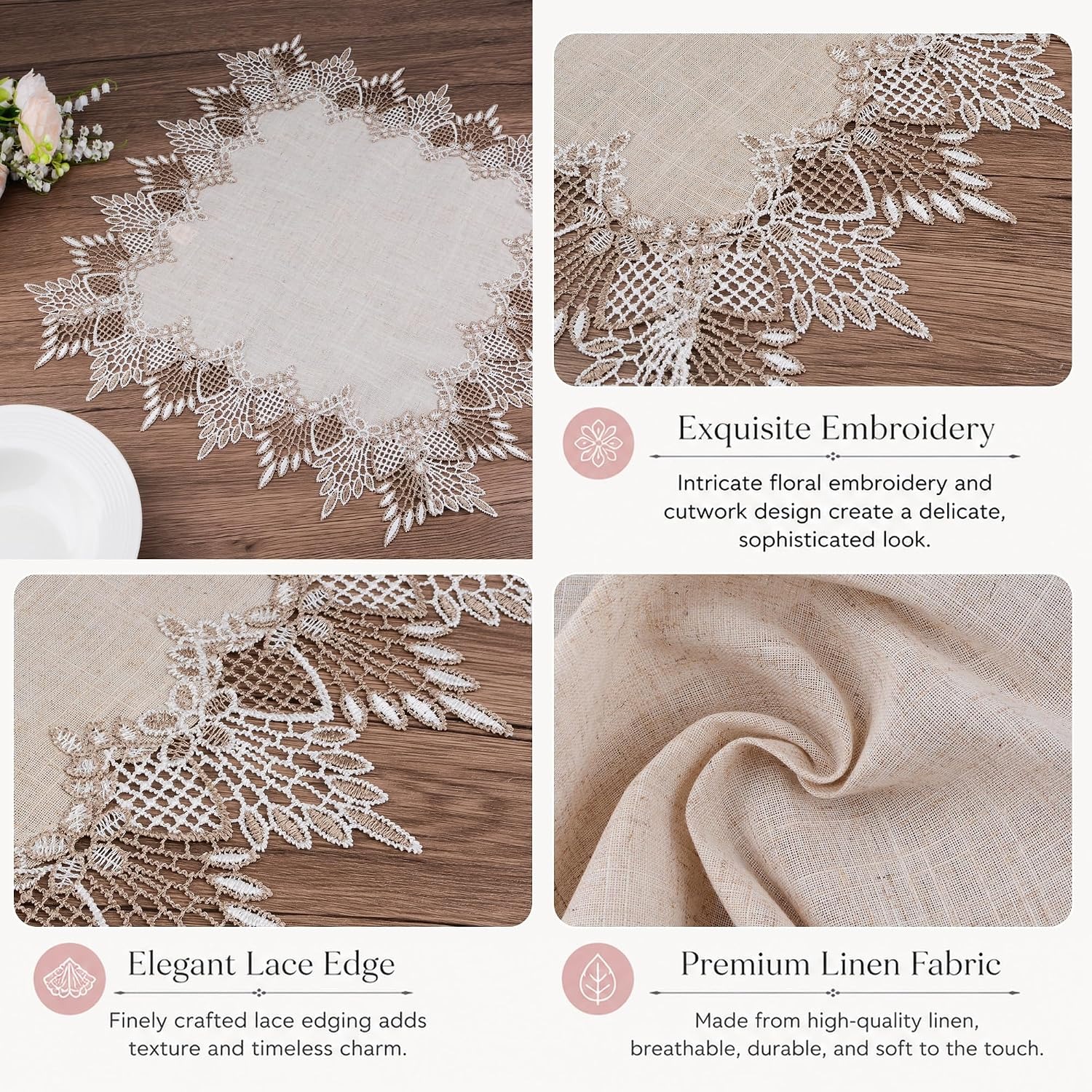
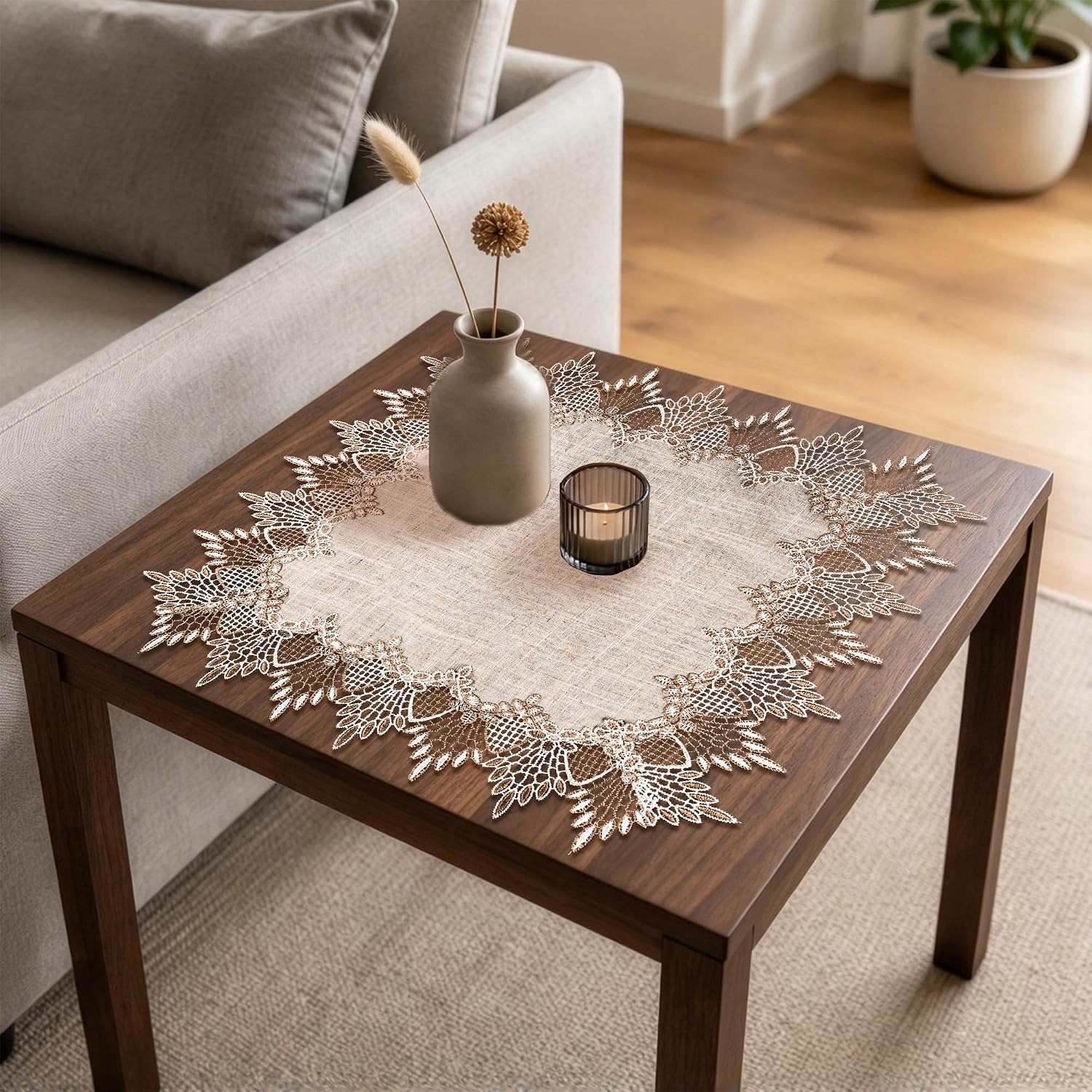
This one is 50 cm square with a linen centre panel and a polyester lace border. That combination is worth understanding before you buy, because it tells you how it will look and how it will behave over time.
What linen and lace actually bring
Linen has a slightly uneven weave. That is not a flaw, it is the nature of the fibre, and it is why linen looks relaxed rather than glossy. It does not reflect light the way a synthetic satin does, so it reads as calm and natural on a table. It also creases. Anyone who has worn a linen shirt knows this. On a table topper, soft creasing looks lived in rather than messy, and a warm iron takes care of the sharp fold lines from packing.
The border here is polyester lace. Some people hear polyester and assume it is a compromise. On a decorative border it is often the sensible choice. Lace patterns have open spaces and fine threads, and those are the parts that get pulled when you lift the cloth or drag it off a table. Polyester holds its shape through that handling and through repeated washing better than a very fine natural thread would. It also keeps colour well.
So what you have is a natural-feeling centre with a hard-wearing decorative frame. That is a practical pairing for something that will be used, not just looked at.
Where a 50 cm square works best
Size is where most people get this wrong, so it is worth being specific. Fifty centimetres is a bit wider than a standard dinner plate placed beside another one. Picture that footprint in the middle of your table.
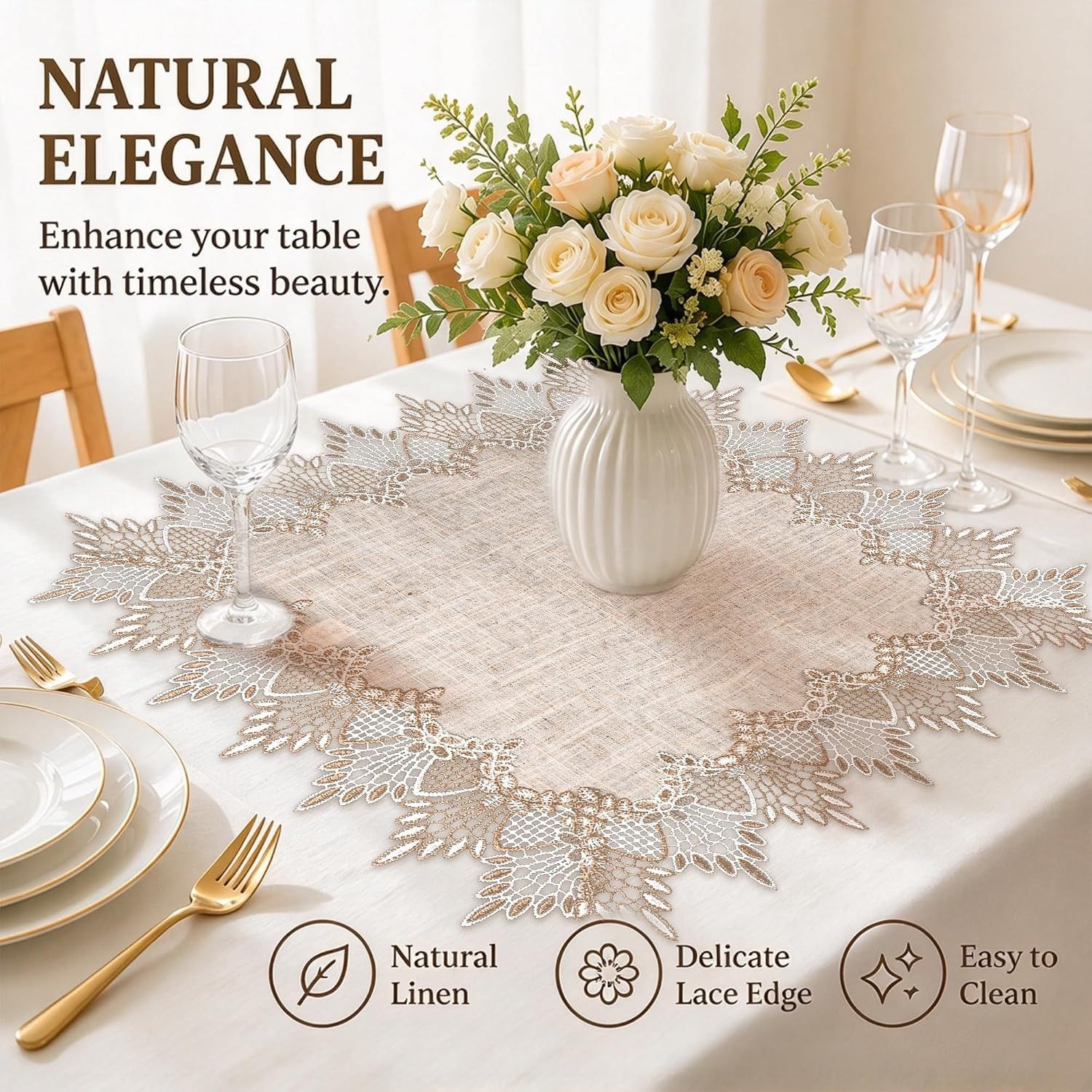
On a four-seater or six-seater dining table, it sits in the centre and gives your centrepiece a base. A vase, a fruit bowl, a pair of candles, a bread board. The topper defines that zone and stops the middle of the table looking empty between meals.
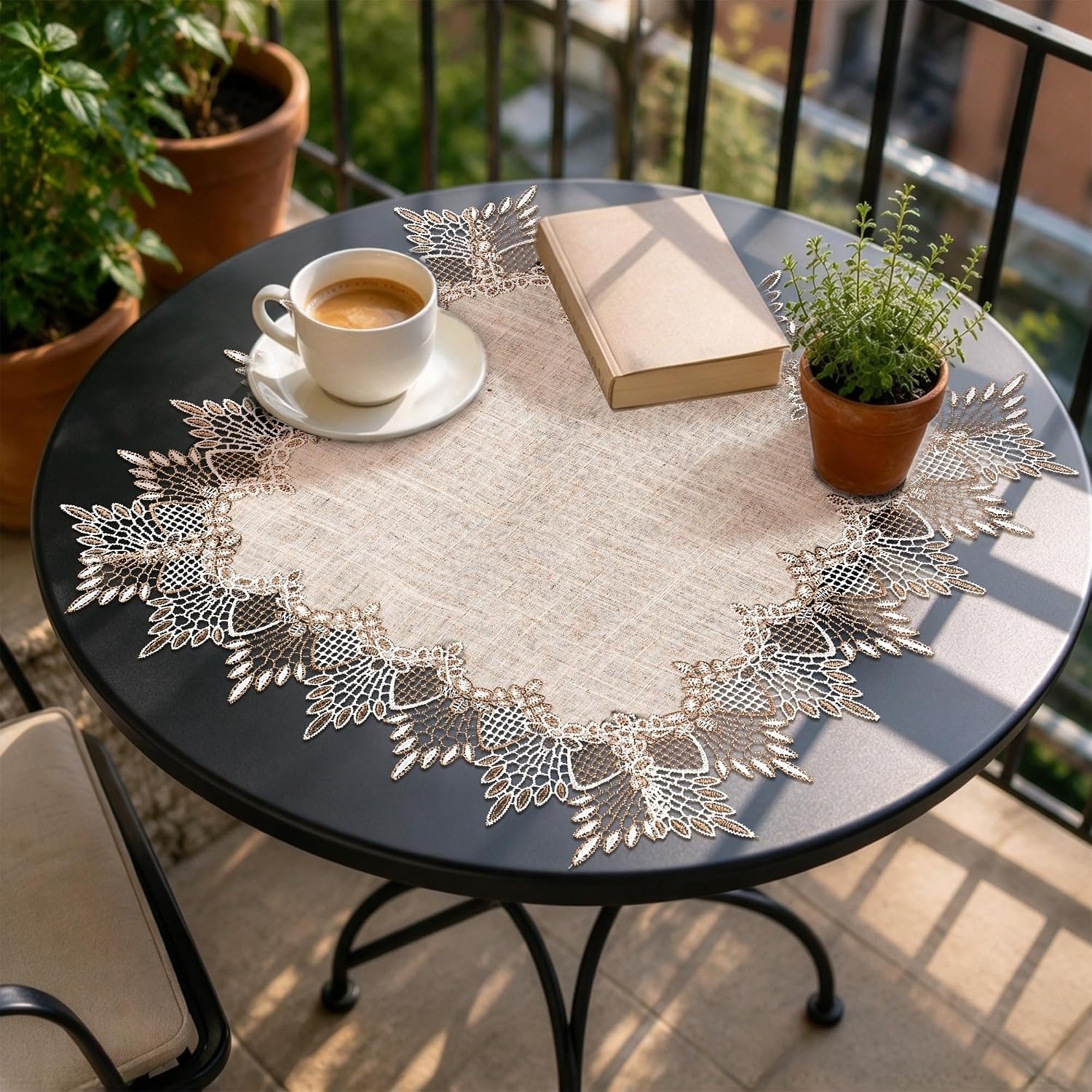
On a coffee table it often covers a decent proportion of the top, which is exactly the look most people want. Add a tray, a couple of books and a candle and the job is done.
On a sideboard, hall console or dresser it works as a scarf. The corners hang slightly over the front edge, which softens the hard line of the furniture. This is a particularly good use for a small square tablecloth, because sideboards are usually too deep for a runner and too narrow for a full cloth.
On a bedside table it covers most of the top and keeps a lamp base from scratching the surface.
Where it does not work is as full coverage on a dining table. If you want the table hidden, buy a full cloth and use this square on top of it instead.
Layering, which is the trick most people miss
Layering is the fastest way to make a table look styled without buying a matching set. Put a larger plain cloth down first, in a solid colour, then centre this square on top. The contrast between the plain base and the lace border does the work for you.
The same logic applies in reverse. If you already own a busy patterned cloth, a quiet linen topper gives the eye somewhere to rest and gives your centrepiece a clean base to sit on.
You can also layer a square over a runner. Lay the runner down the length of the table, then set the square at the centre point where it crosses. It creates a natural focal spot for flowers or a cake.
Choosing for your style of room
If your room leans traditional or vintage, lace does a lot of the heavy lifting. Pair it with ceramic, brass and older timber and it looks like it has always been there.
If your room is plain and modern, the thing that saves this from looking fussy is the linen. The matte natural panel keeps it grounded. Keep the styling on top minimal, one vase or one bowl, and the lace reads as texture rather than decoration.
For seasonal tables it is genuinely flexible. The neutral linen sits under eucalyptus and candles at Christmas, under a few painted eggs at Easter, and under a flower arrangement at a small wedding. You are not buying a single-occasion item.
Caring for it so it lasts
The care routine is short. Wash cold on a gentle cycle, or hand wash if you want to be careful with the border. Skip bleach entirely, because bleach weakens fibres and can yellow a lace trim over time. Lay it flat to dry and give the border a gentle reshape with your fingers while it is still damp. That step takes ten seconds and makes a real difference to how the lace sits.
Press it with a warm iron if creases remain. Put a thin cloth over the lace so the iron is not sitting directly on the polyester. Direct high heat on synthetic lace is the one thing that can really ruin it.
Between uses, roll it rather than folding it. Hard folds in linen eventually set in, and rolling avoids that. Store it dry, in a drawer, away from any damp cupboard.
For spills, blot rather than rub. Rubbing pushes the stain deeper into the weave and can fuzz the linen surface. Blot, then wash cold as soon as you reasonably can.
A note on what is not specified
Honesty is worth more than filler here. This record states the materials and the 50 cm square size. It does not state the colour, the weight, the country of origin or any certification, so we are not going to guess at those. Check the product images for the finish, and if you need a detail that is missing, ask before you order and we will find out.
Protecting the table underneath
A fabric topper handles light scuffs from vases and trays. It is not armour. If your table is a piece you care about, two habits help. Use a trivet under anything hot, and put a felt pad or a thin mat under heavy decorative pieces that stay put for weeks, because trapped moisture under a static object is what causes most marks on timber.
That is true of any table linen, not just this one. The cloth is there to look good and catch the small stuff.
The short version
A square linen table topper is a low-effort way to make a table feel finished. This one is 50 cm square, with a linen centre and a polyester lace border, so it brings natural texture and a decorative frame in a size that suits dining tables, coffee tables, sideboards and dressers.
Buy it if you want the middle of a table dressed without hiding the whole surface, or if you want a topper to layer over a cloth you already own. Skip it if you need full table coverage.
Wash cold, dry flat, press warm with a cloth over the lace, roll it for storage, and it will keep doing the job for a long time.