
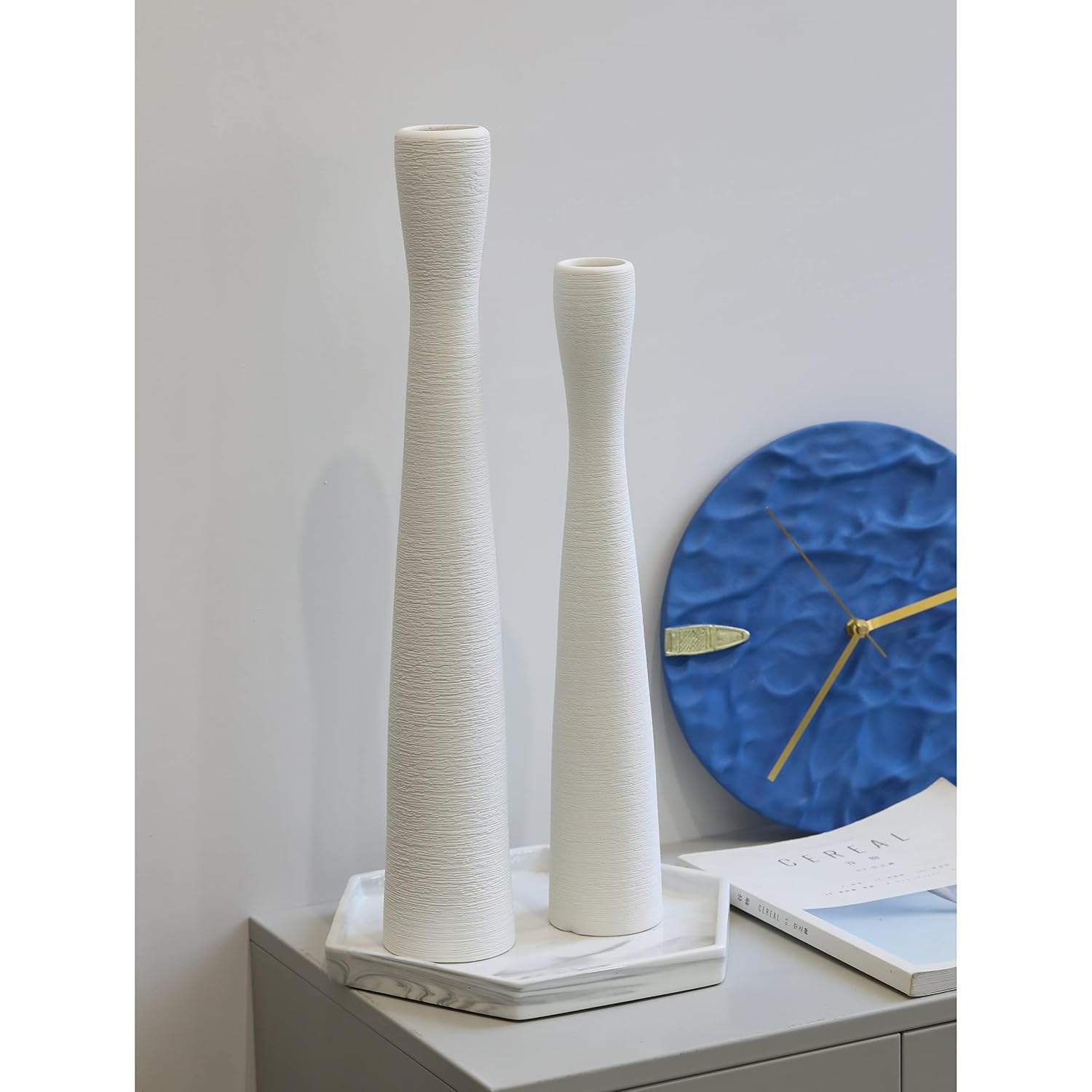
The complete guide
How to Choose and Style a Tall White Ceramic Floor Vase
The corner nobody knows what to do with
Almost every home has one. A patch of floor beside the sofa, the gap at the end of a hallway, the space next to a bookcase that is too narrow for a chair and too wide to ignore. You have probably tried a plant there and watched it struggle for light, or put a small ornament on the floor and realised it just looked lost.
The issue is height, not clutter. Rooms read as finished when the eye has something to follow upward. Most furniture tops out around waist level, so unless you hang art or stack shelves, everything sits in one flat band. A tall white ceramic floor vase breaks that band cheaply and without taking up usable floor space.
It also needs no maintenance if you fill it with dried material. No watering, no light, no repotting. For renters, for people who travel, and for anyone who has killed a fiddle leaf fig, that matters.
How a floor vase actually works
The mechanics are simple but worth understanding before you buy, because the wrong proportions will annoy you for years.
A floor vase works on three things. First, height, which is what creates the vertical line. Second, neck width, which decides how your stems behave. Third, base width, which decides whether it stays upright.
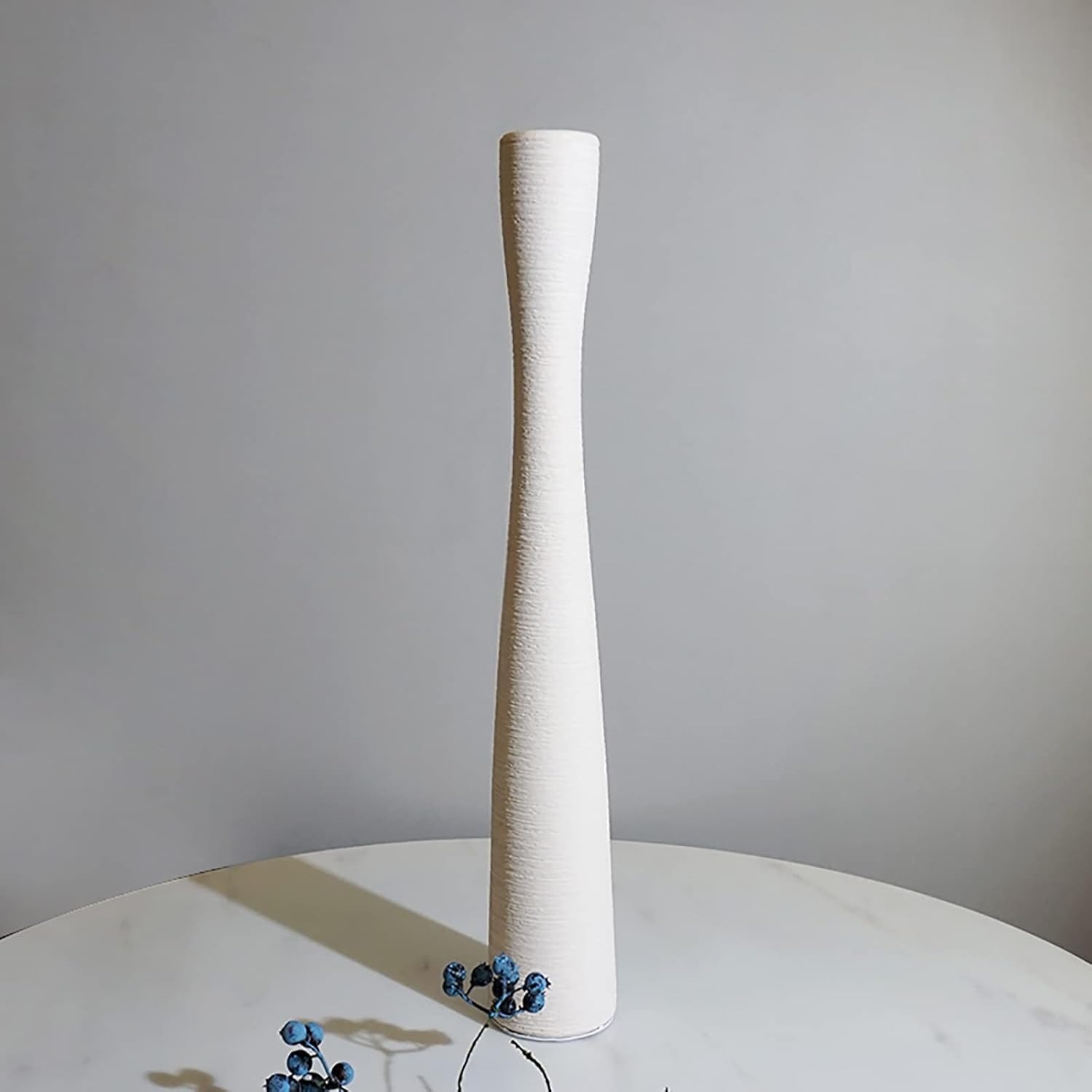
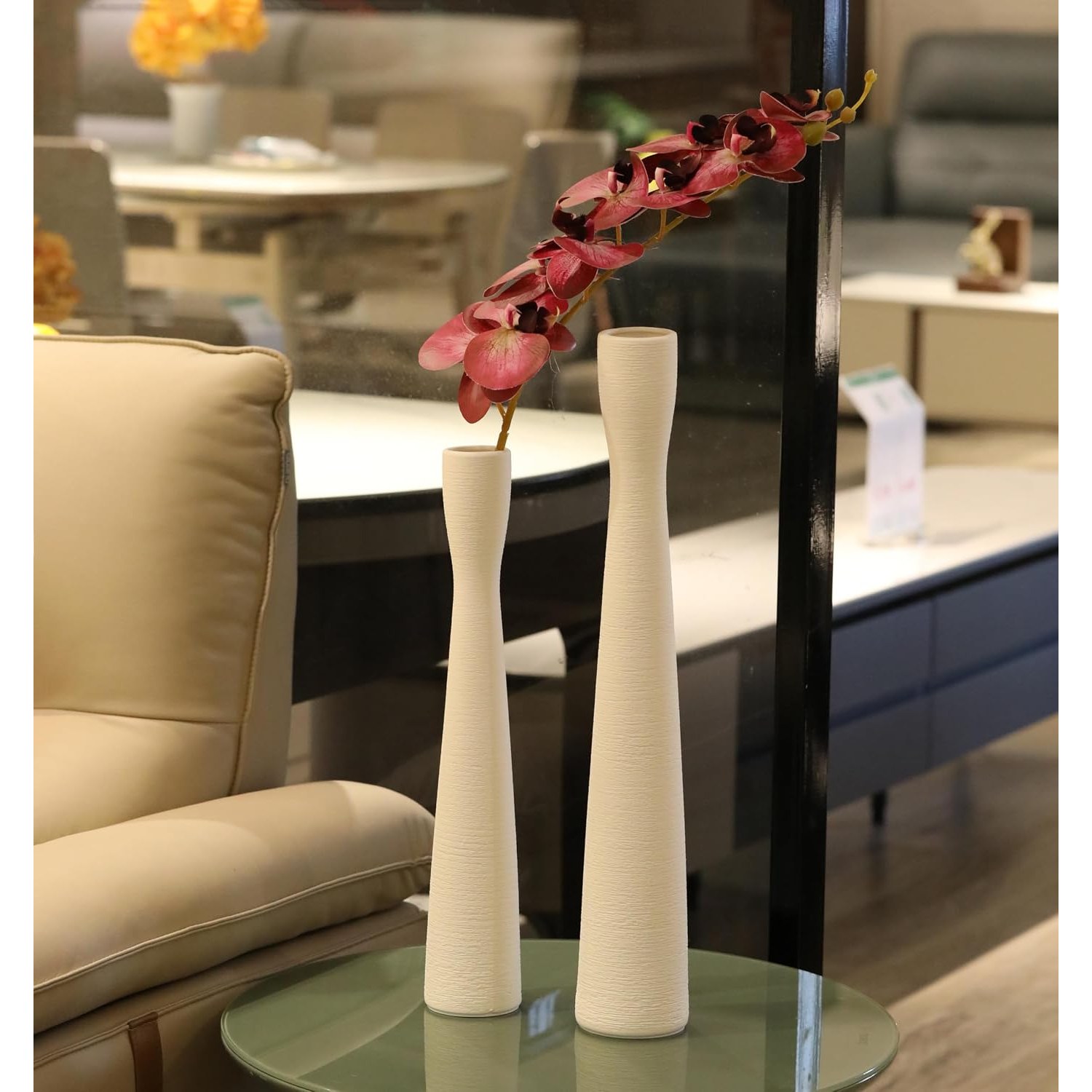
This vase is a slim 50 cm ceramic vase with a narrow opening and a wider foot. The narrow neck is the part people underestimate. When the opening is tight, stems are forced into a close bundle at the base and then fan naturally as they rise. That is exactly the shape you see in interior photos. Put the same stems in a wide mouthed urn and they slump against the rim in a messy ring.
The wider base does the opposite job. It pulls the weight down low so the vase does not rock when someone walks past or a vacuum cleaner bumps it. Combined with the tapered body, you get something that looks delicate but behaves sensibly.
One thing to be clear about, since it affects how you use it. The exact material details and water performance are not specified in our product record. Dried stems are always a safe choice. If you want fresh flowers, stand the vase on a tray for a few hours with water in it first and check the base stays dry.
Who this suits
People styling a first home or a rental tend to like floor vases because they add character without drilling holes or buying furniture. You can pick it up and move it when the lease ends.
It suits anyone who wants a quieter room. A single tall vase with three branches does more for a space than five small decorative objects on a shelf, and it collects far less dust.
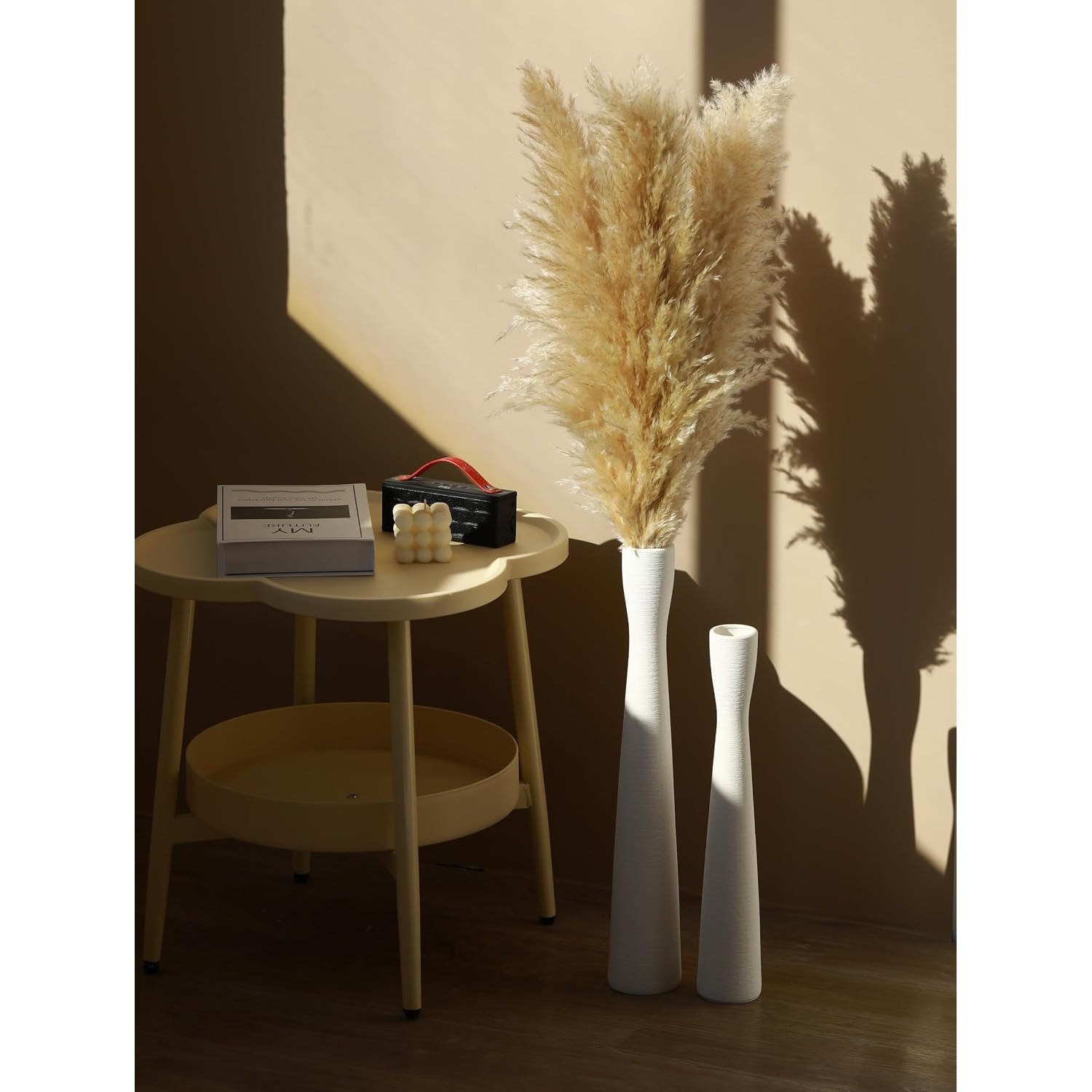
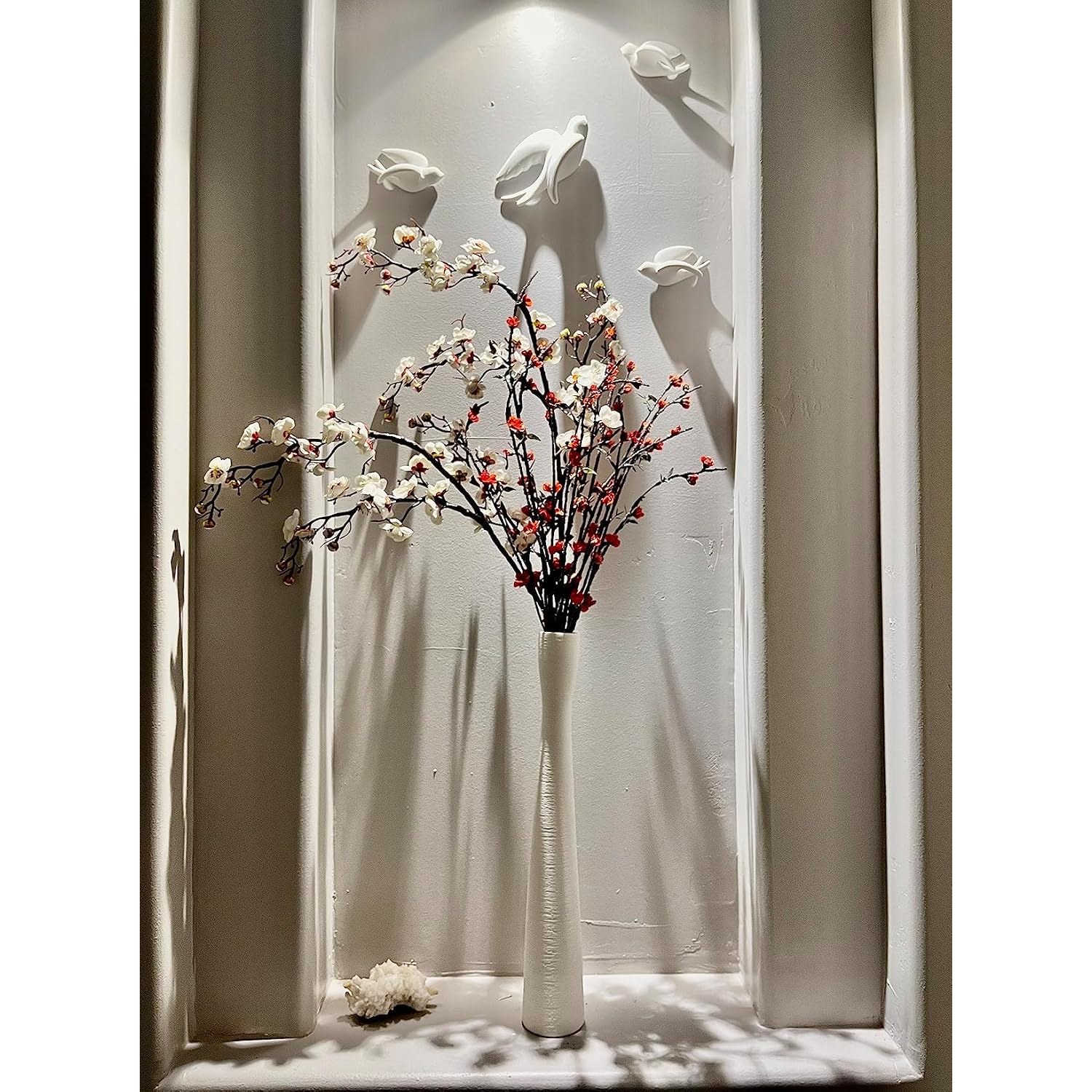
It also works well for people who change their mind often. Because the vase is plain white, the look is driven entirely by what you put in it. Pampas grass one season, bare dogwood branches the next, eucalyptus when you want a bit of colour. The best dried flower vase is the one that disappears behind the arrangement, and white does that job.
Where it is less suited is a house with a toddler and a dog who both run indoors, at least in open floor positions. Tuck it into a protected corner in that case, or wait a couple of years.
Choosing the right stems
This is where most people go wrong, so it is worth being specific.
Aim for stems roughly one and a half times the height of the vase. For a 50 cm vase, that puts you somewhere between 70 and 90 cm. Any shorter and the arrangement looks stubby, as though the vase swallowed it. Much longer and the whole thing starts to look unstable, even if it is not.
Quantity matters less than you would think. A narrow neck means you physically cannot overstuff it, which is a built in safeguard. Five to fifteen stems covers most arrangements, depending on thickness. Pampas plumes take up a lot of room each. Thin birch or willow branches need more of them to read as full.
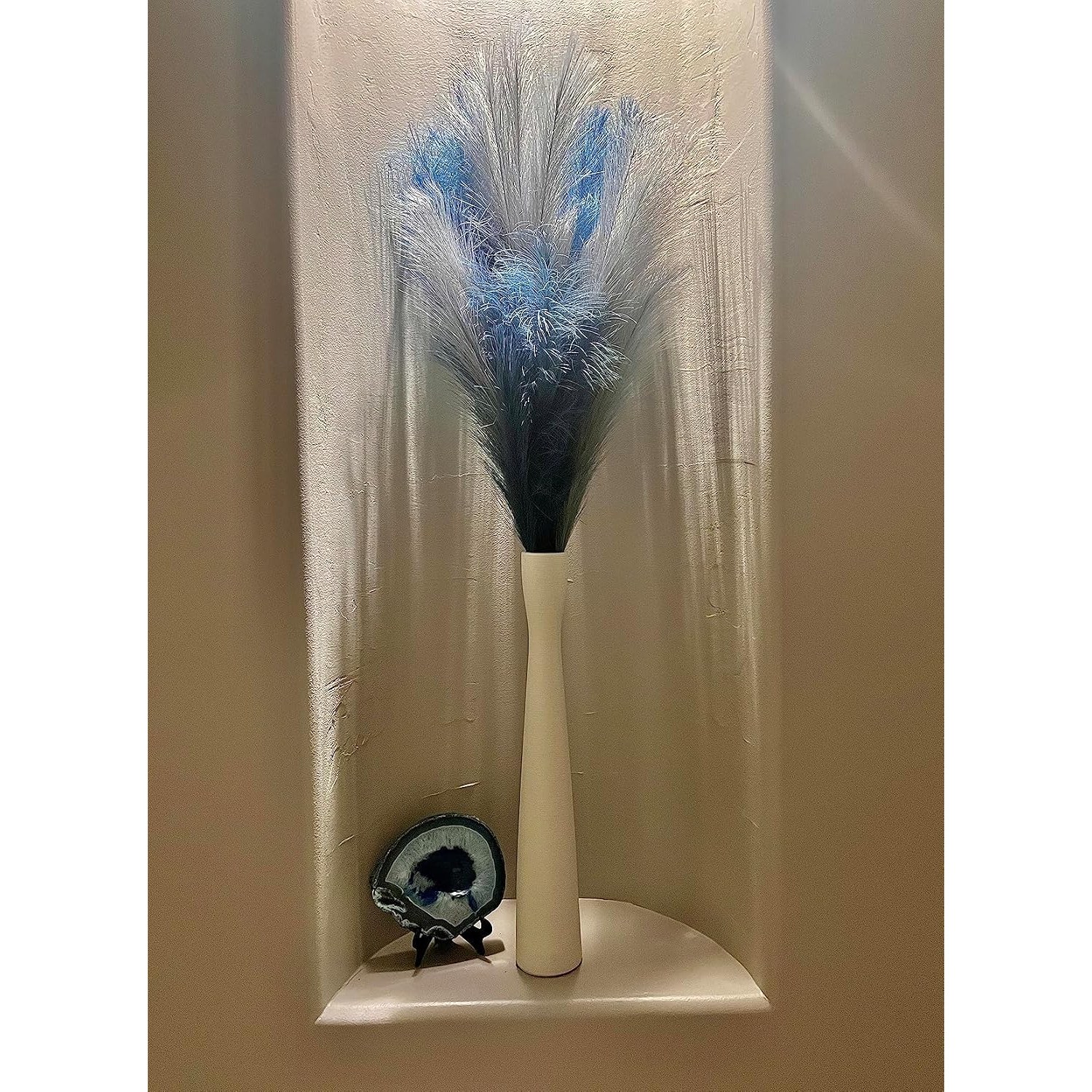
For a modern look, go monochrome. All pampas, or all bleached palm, or all dark branches. For something softer, mix two textures only, like fluffy plumes with a few straight stems for structure. Three or more textures in one narrow vase usually ends up looking busy.
If you are after the best vase for long stemmed flowers in a floor format, fresh options like gladioli, delphinium and tall lilies all suit the silhouette, assuming you have confirmed water use as described above.
Getting the placement right
Walk the room before you decide. The single most useful trick is to put the vase down, leave it for a day, and see whether you keep catching it in the corner of your eye in a good way or a bad way.
Against a plain wall is the most reliable position. The stems get a clean background and the shape reads properly. Against a patterned wallpaper or a packed bookshelf, the outline gets lost.
Beside a sofa arm works because the vase height contrasts with the low furniture line. Just leave enough clearance that nobody knocks it while sitting down. Entryways are another strong spot, which is why it is often picked as the best entryway floor vase, though keep it out of the door swing.
Think about light too. A vase in a dim corner is fine, but if a lamp or window throws light across it, the texture of the stems becomes part of the effect. That little bit of shadow play is free decoration.
Pairs deserve a mention. Two identical vases either side of a fireplace, doorway or media unit create symmetry that looks deliberate and expensive. If you go that route, buy both at once.
Looking after it
Ceramic is easy, with a couple of habits worth forming.
Dust the outside with a dry cloth whenever you dust the room. If it needs more, use a soft cloth with a little water and dry it right away. Skip scouring pads and harsh cleaners, which can wear down a surface finish over time.
Cleaning inside takes a minute. Half fill with warm water and a drop of dish soap, swirl, tip out, rinse, then stand it upside down to drain. A long bottle brush is useful if anything has stuck. Make sure it is completely dry before dried stems go back in, or they will mark.
Keep the underside clean. Grit under a ceramic base is what scratches timber floors, not the ceramic itself. Lift the vase to move it rather than dragging, and consider a felt pad or small mat if your floor is soft.
Do not put it in the dishwasher. Do not leave it outside in freezing weather. Those two rules cover most ceramic disasters.
The short version
A tall white ceramic floor vase fixes the one problem that small decor cannot touch, which is empty vertical space. This one is slim enough to tuck into a corner, tall enough to be noticed, and plain enough to survive every restyle you do over the next decade.
Buy stems about one and a half times its height. Keep the arrangement simple. Stand it against a plain wall where it will not get kicked. Dust it occasionally and it will keep doing its job quietly.
If you are unsure about scale, measure the gap you have in mind and compare it to the 50 cm height before ordering. And if it lands and the proportions are wrong for your room, message us and we will sort it out.