
The complete guide
Choosing Linen Napkins That Last - A Practical Buyer's Guide
The problem with the napkin drawer
Most households have two napkin situations and neither is great. There is the pack of paper napkins bought for a party, half of which are still in the cupboard a year later going soft and dusty. And there is the set of "good" cloth napkins, bought for a wedding or inherited from a grandmother, stored somewhere safe and brought out roughly twice a decade.
The middle ground is the thing worth owning. A set of cloth napkins you actually use, that look right at a formal dinner and are not precious enough to hide from a Tuesday night. That is what a dozen plain white linen napkins is for.
This guide covers what to look for, why linen behaves the way it does, how to pick a size, and how to keep white looking white without a lot of work.
Why linen, and not cotton or polyester
Linen comes from flax. The fibre is longer and stronger than cotton, which has two useful effects. It holds up to repeated washing better, and it gets softer as it goes rather than thinner. A linen napkin that has been washed a hundred times has a hand that new fabric cannot fake.
Linen is also very absorbent, and it releases moisture quickly. For a napkin, that matters more than it sounds. It means the cloth does its job during a meal and dries out fast afterwards instead of sitting damp in a pile.
Cotton is the usual alternative. It starts softer, which some people prefer, but it wears through sooner and it does not hold a pressed edge with the same crispness. Polyester blends resist creasing, which is genuinely convenient, but they are poor at absorbing anything and they tend to feel slippery against skin. If you are after the best linen napkins rather than the cheapest cloth ones, the fibre content is where the decision is made.
The set covered here is 100% linen. No blend, no filler.
Size matters more than people expect
Napkin sizes fall into rough categories. Cocktail napkins sit around 10 inches, lunch napkins around 16 to 18 inches, and dinner napkins around 20 to 22 inches.
These are 20 x 20 inches, which is roughly 51 cm square. That is the standard dinner size and it is what caterers order for a reason. A 20 inch square stays put across an adult lap, has enough body to fold into a proper shape, and does not look mean sitting next to a full dinner plate.
A smaller napkin is fine for a quick lunch, but at a seated dinner with several courses it starts to feel inadequate. Going bigger than 22 inches is usually unnecessary and makes folding awkward. Twenty inches is the sensible middle.
Reading the construction
Two details tell you most of what you need to know about how a napkin is built.
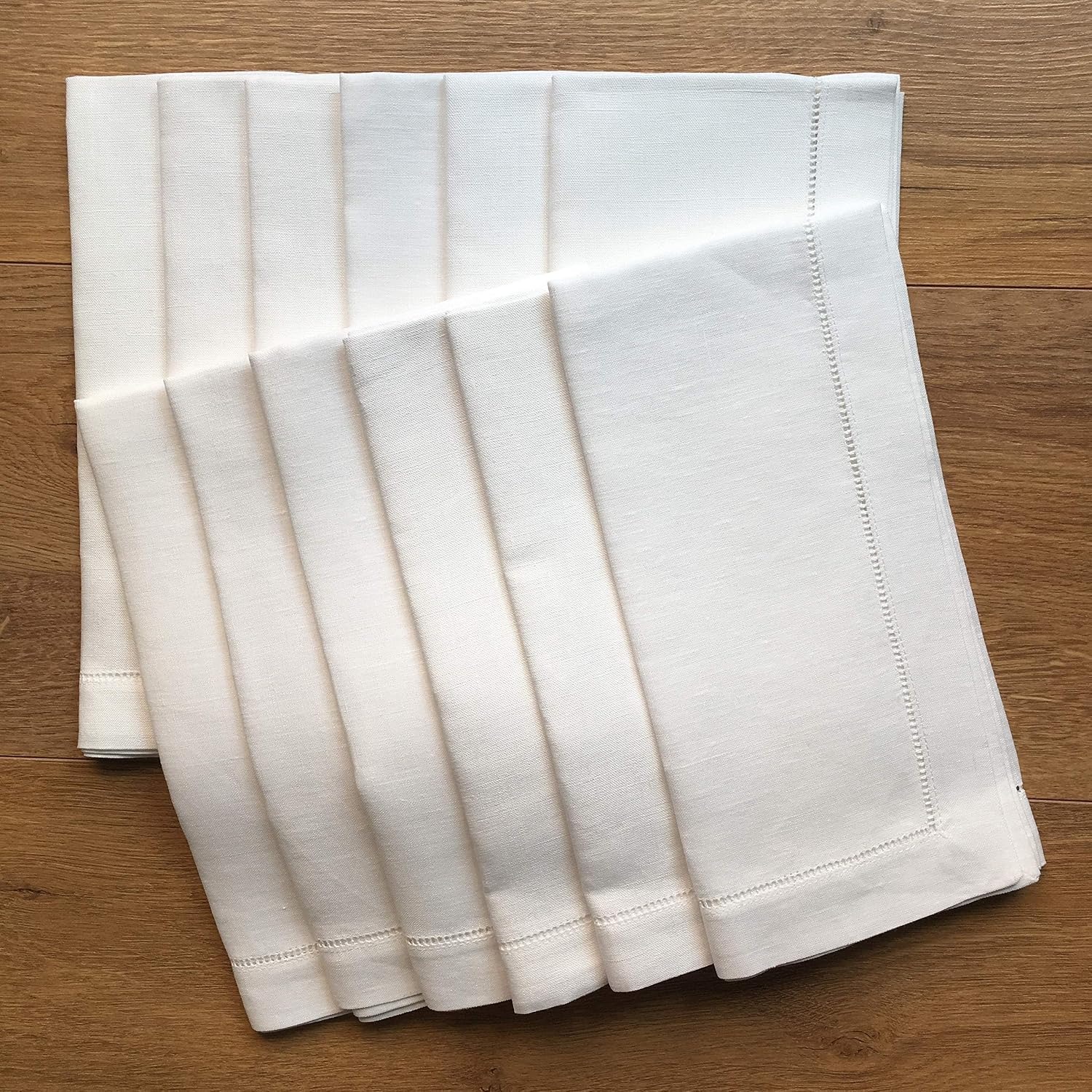
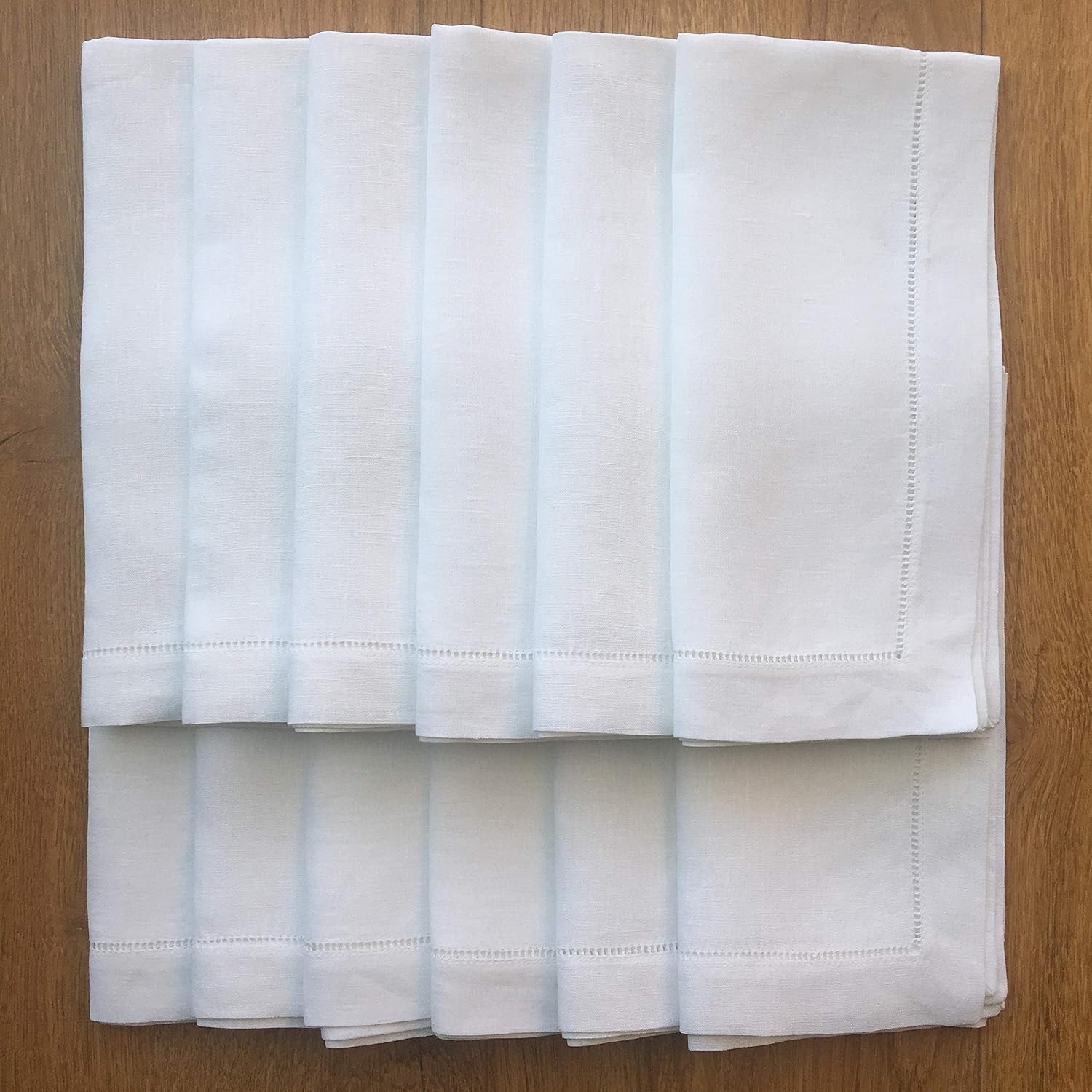
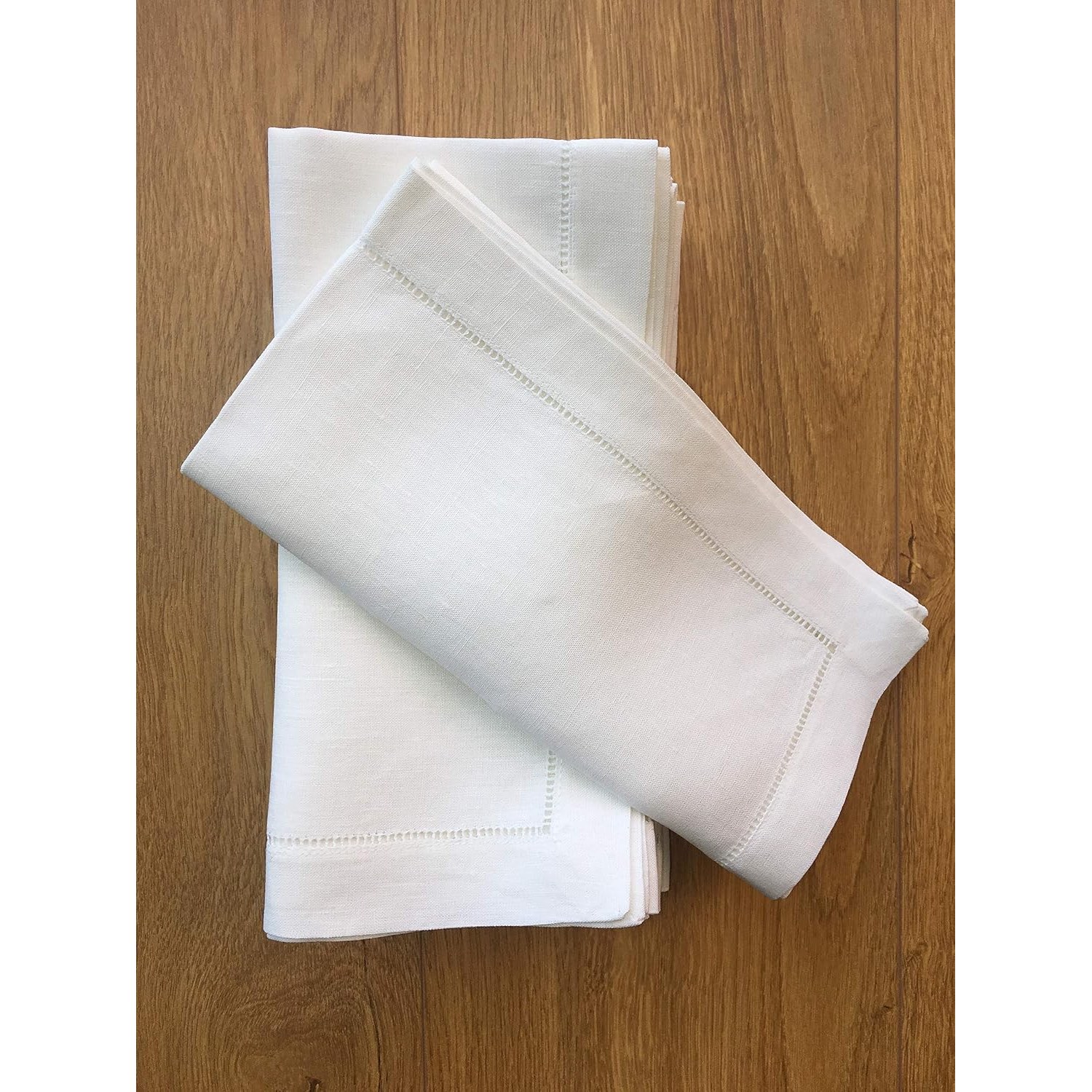
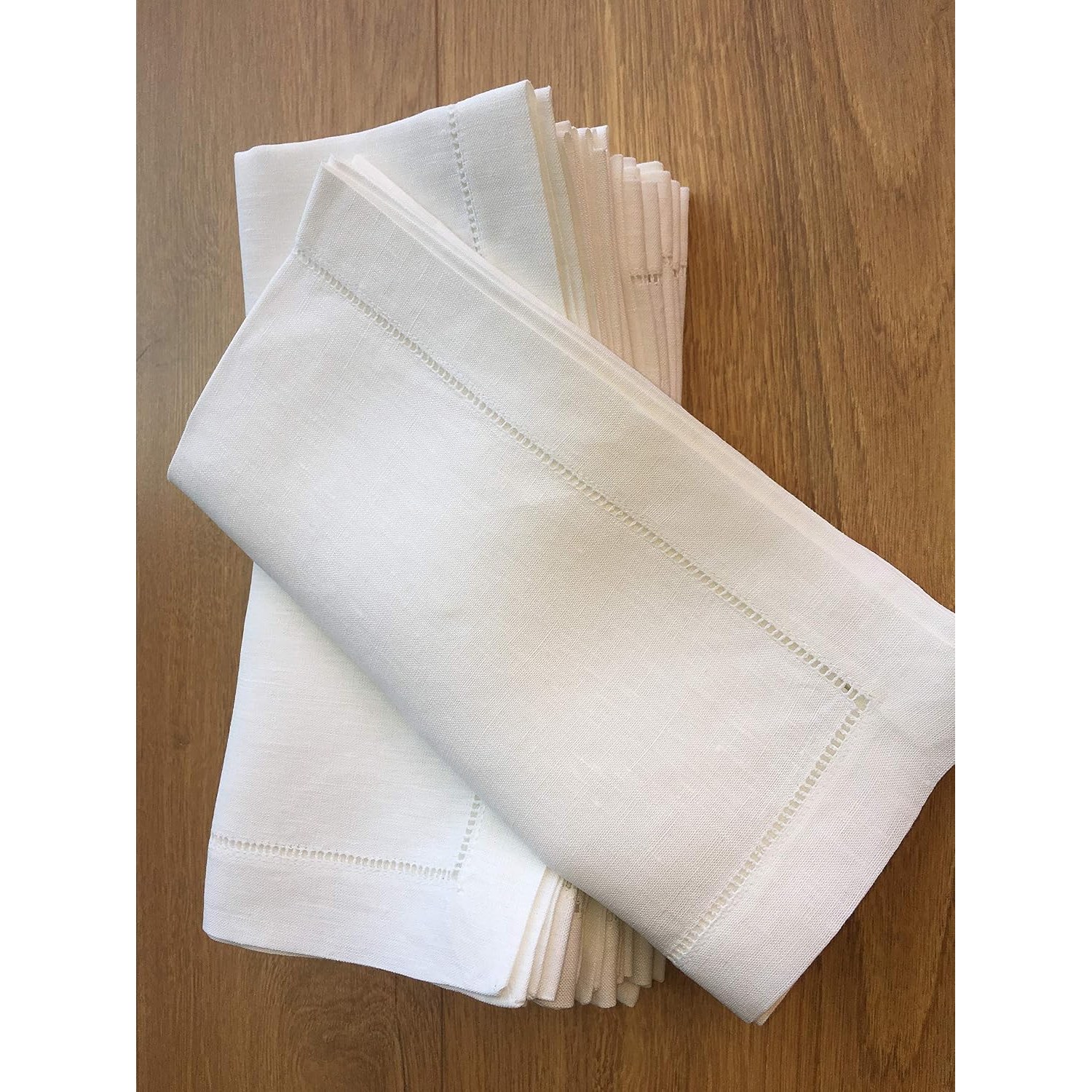
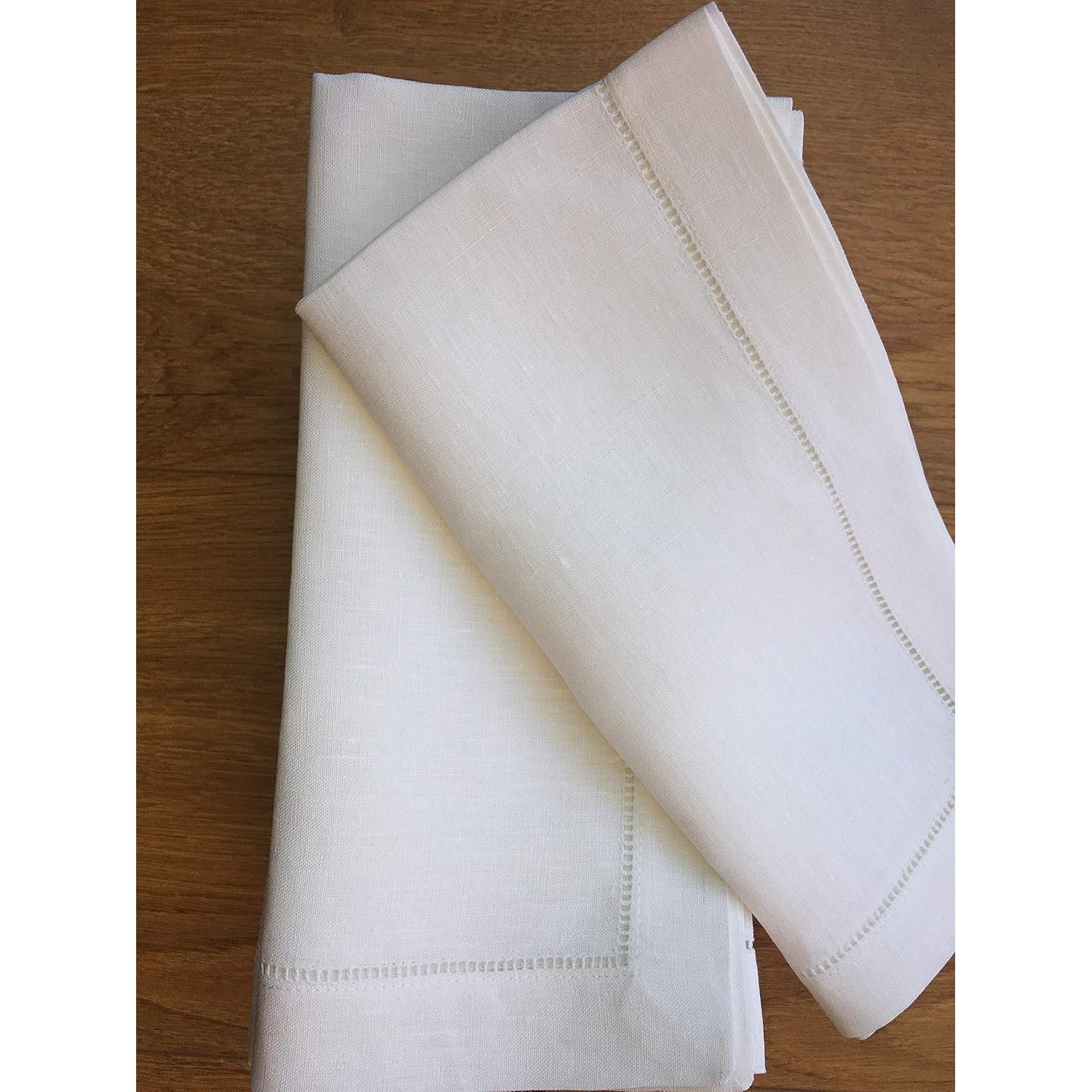
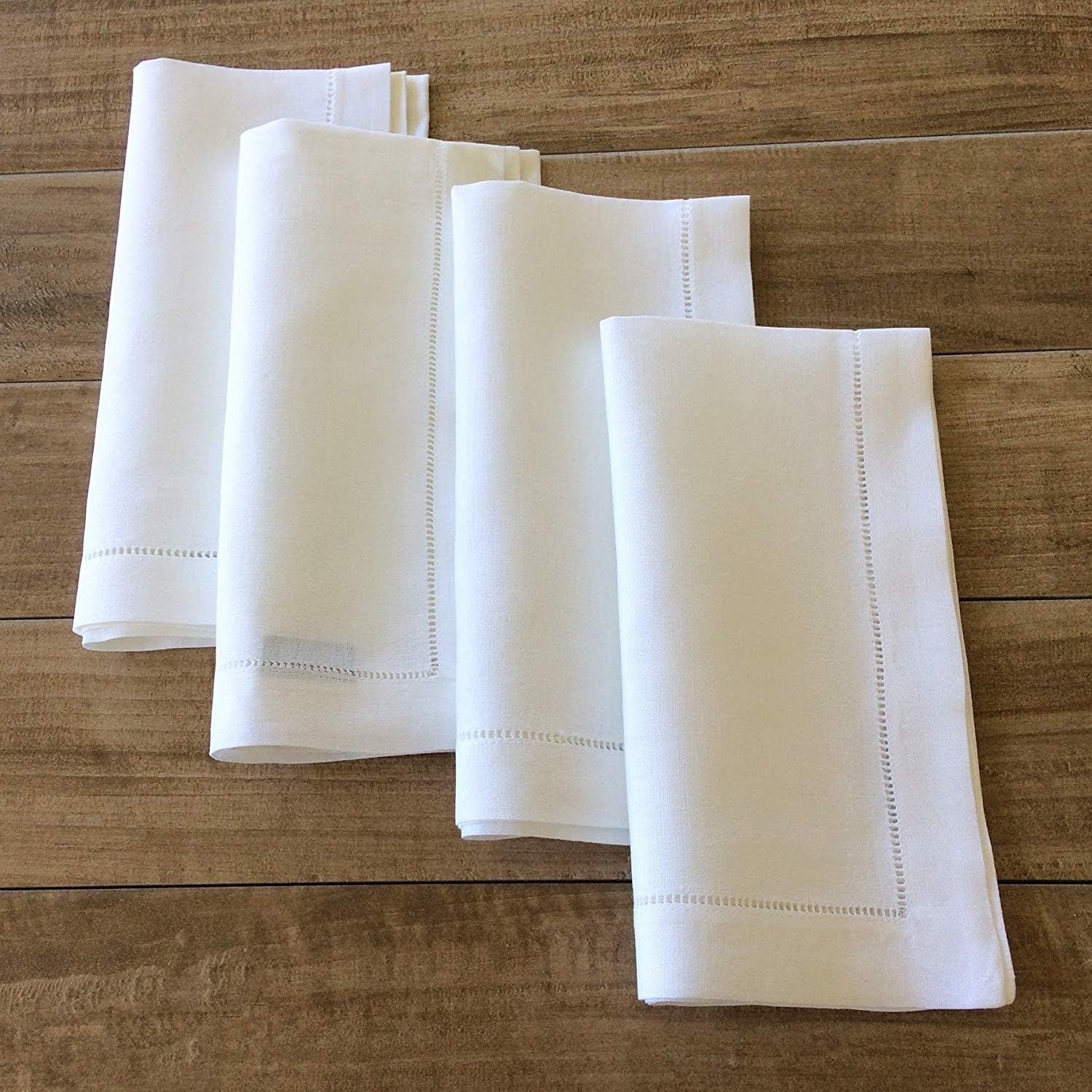
The first is the hem. A cheap napkin has an overlocked or single-folded edge that frays after a dozen washes. A hemstitch is different. Threads are drawn out of the fabric near the hem and the remaining threads are stitched into small bundles, creating an open ladder pattern. It is decorative, but it also means someone spent real time on the edge, and hemstitched borders are what you see on hotel and restaurant linen that gets laundered constantly.
The second is the corners. Mitered corners are folded and joined on a diagonal so the hem lies flat where two edges meet. Without mitering, the corner bulks up, resists the iron and often becomes the first place the stitching gives way. Flat corners also fold more cleanly, which matters if you like a structured napkin fold.
These napkins have both the ladder hemstitch and mitered corners.
Who this set suits
Anyone who hosts more than occasionally. Twelve is the number that covers a full dinner table at Christmas or a long shared lunch, and splits into two groups of six for normal weeks.
People planning weddings or formal events buy white hemstitched linen because it photographs well, matches whatever the venue provides, and does not date. If your guest count is higher, sets stack easily since the colour and size are consistent.
It also suits anyone trying to get off paper. Washing a dozen napkins adds almost nothing to a normal laundry load, and the cost works out quickly in favour of cloth once you stop buying disposables.
If you only eat at the table twice a year and prefer something you never have to think about, a polyester blend will frustrate you less. Linen does crease. That is part of the deal.
Why white is the practical choice
White gets a reputation for being impractical. With linen, the opposite is true.
A white napkin can be washed hot, soaked, and treated with an oxygen based stain remover without any risk of fading or patching, because there is no dye to lose. A coloured napkin with a red wine stain is a problem. A white one is just a wash away.
White also matches everything you already own. It works against dark stoneware and pale porcelain, it suits a timber table and a linen runner, and it carries from summer lunches through to a candlelit winter dinner. It does not need to coordinate with a scheme, because it is the scheme.
The one rule is washing. Keep whites with whites. Grey, dull linen is almost always dye transfer from a mixed load rather than any failing in the fabric.
Care without the fuss
Machine wash in cold water on a delicate cycle. Skip the bleach, which weakens natural fibres over time, and go easy on detergent since residue is what dulls white fabric.
Dry on low heat or hang them out. If you want a crisp finish, iron while they are still slightly damp. The steam does most of the work and you will get a flatter result with less effort. If you prefer the relaxed, slightly rumpled look that linen does naturally, skip the iron entirely and fold them straight off the line.
Store them folded loosely rather than crammed into a tight stack. Linen can take a permanent crease if it sits in the same hard fold for years, so rotating how you fold them helps.
For stains, speed beats technique. Rinse under cold water as soon as you can, then soak before the wash. Hot water sets protein and sugar stains, so always start cold.
How many sets to buy
Count your largest realistic gathering, then add a few. If your big table seats ten, one set of twelve is right, with two spares for spills. If you regularly host twenty, two sets.
If you are buying for a venue or a wedding, build in a wash rotation. You want a clean set ready while another set is in the laundry, which usually means roughly double your seat count.
Because these are plain white at a standard size, buying a second set later will not leave you with an obvious mismatch.
The short version
Twelve white linen napkins, 20 x 20 inches each, 100% linen, with a ladder hemstitch and mitered corners. Machine washable in cold water on a delicate cycle, iron optional.
They suit weddings, dinner parties and ordinary weeknights equally. They can be monogrammed if you want them personalised. They get softer the more you wash them, and the white can be treated hard for stains without risk.
Buy once, wash sensibly, and this is the kind of table linen you still have in fifteen years.