
The complete guide
How to Choose a White Rustic Ceramic Vase That Actually Suits Your Room
The problem with empty surfaces
Most homes have a few surfaces that never quite look finished. The hallway console. The end of a bookshelf. The mantel above a fireplace that is only lit three weeks a year. They are not empty in a peaceful way, they are empty in a slightly unresolved way, like a sentence missing its last word.
The usual fix is to buy something big. A tall vase, a large framed print, a lamp. That often makes it worse, because a small surface with a big object on it just looks crowded. What those spots actually need is one modest item with enough texture and shape to hold your eye for a second.
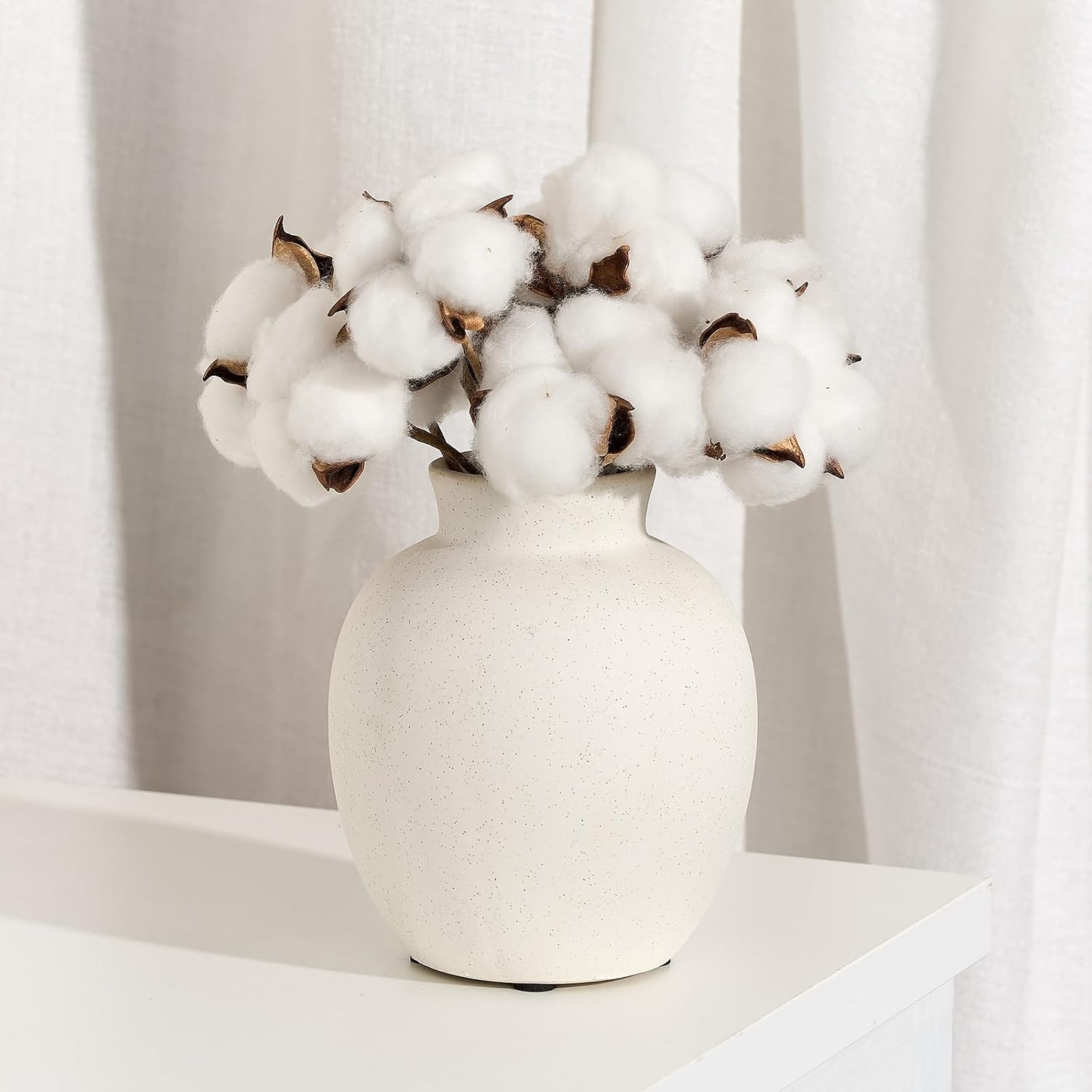
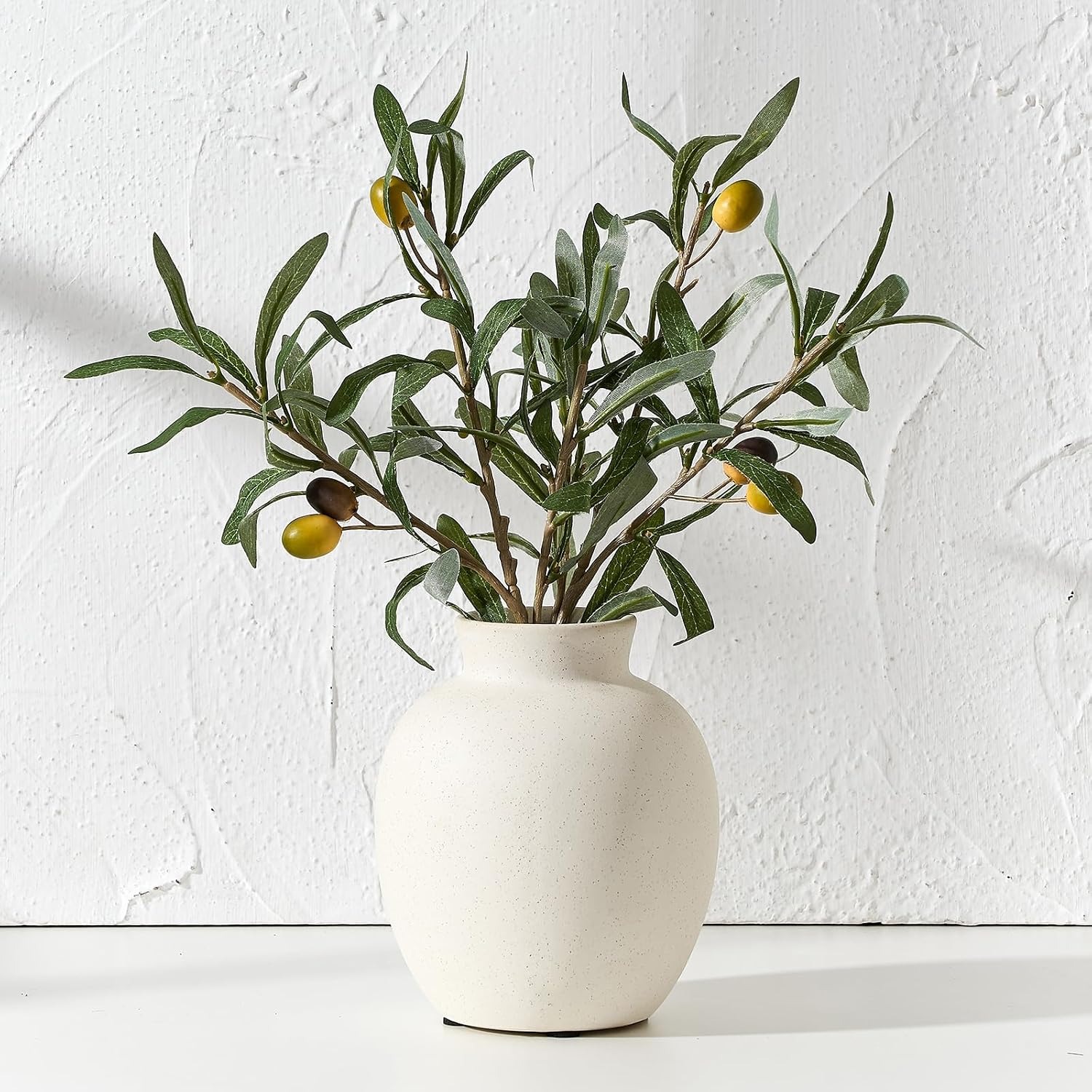
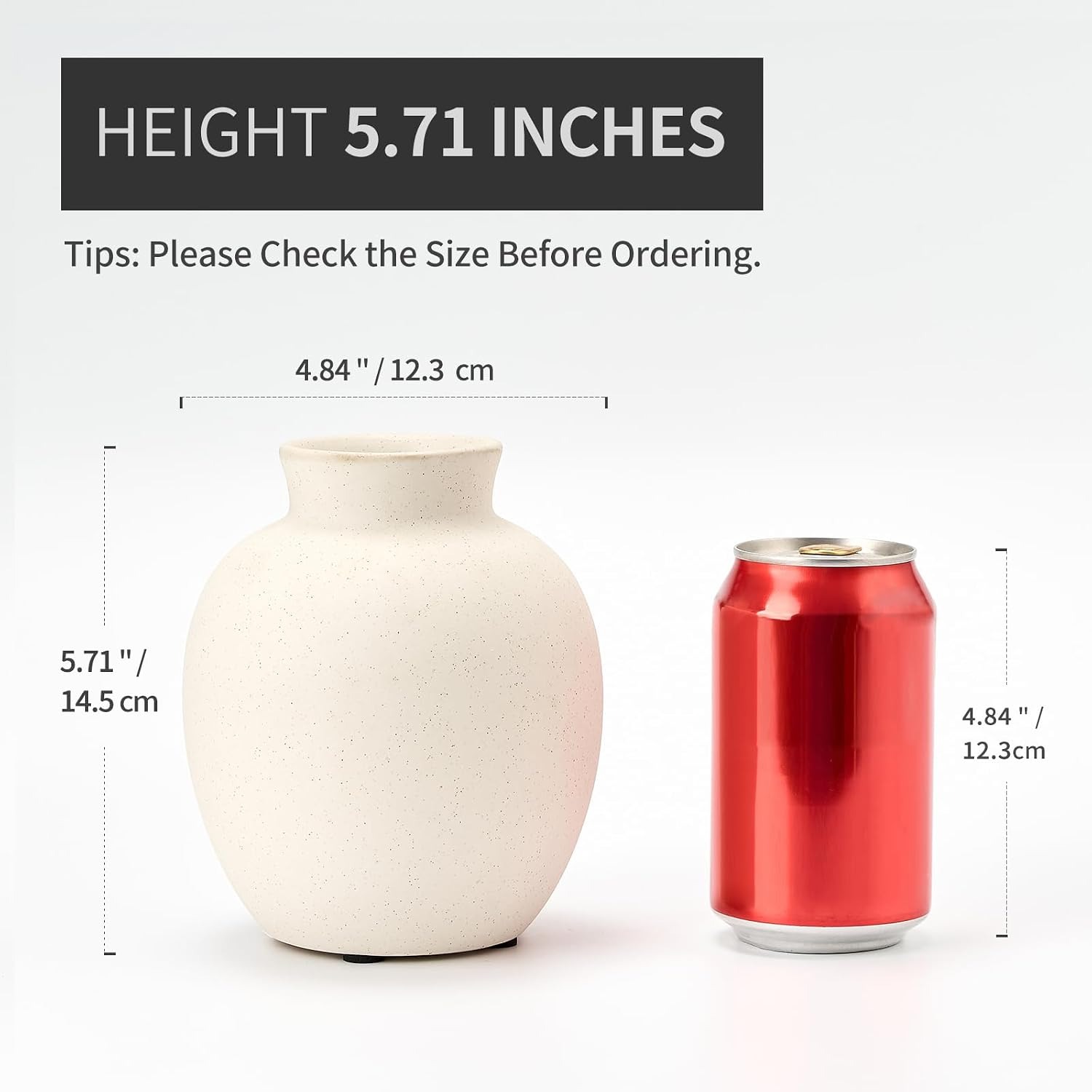
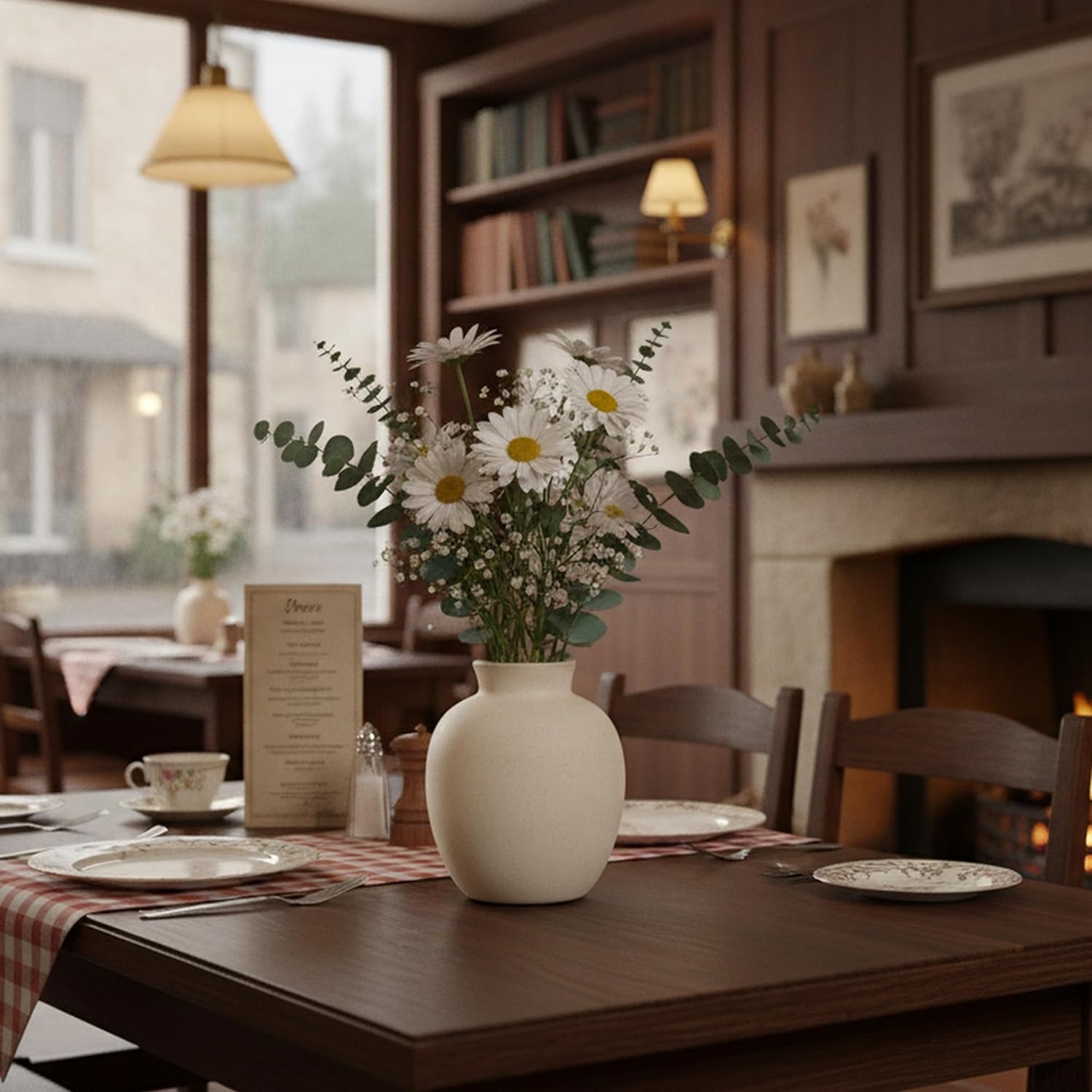
That is the job a white rustic ceramic vase does well. At around 15 cm it is small enough to leave breathing room, and textured enough that it does not disappear into a pale wall.
Why texture matters more than colour
When people shop for the best white ceramic vase, they usually focus on the shade of white. In practice, the finish does more work than the colour.
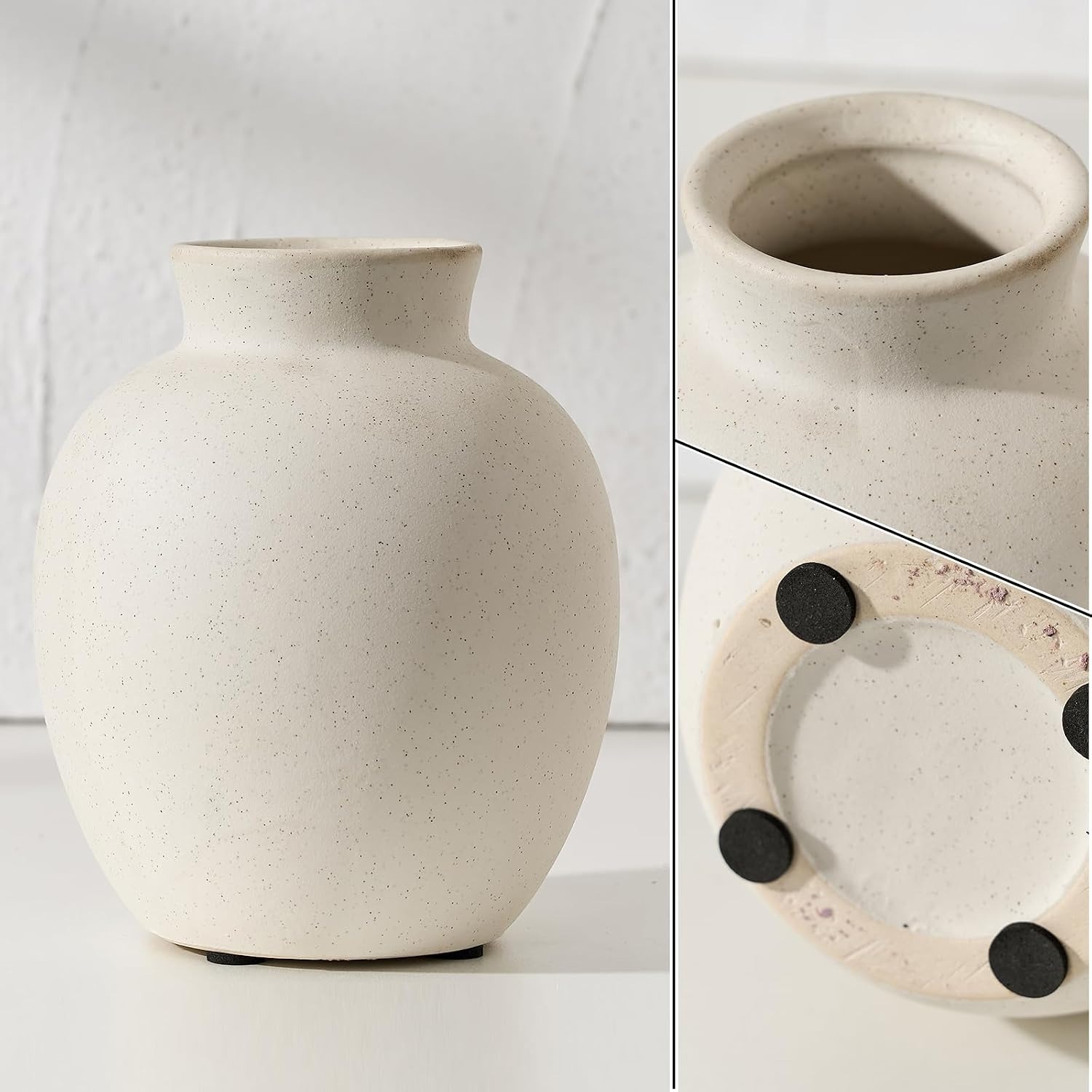
A high-gloss white vase reflects light. In a sunny room it can read as shiny and a bit clinical, closer to bathroom tile than to home decor. A textured surface does the opposite. It scatters light, picks up soft shadows in the grooves, and reads as warm even when the colour itself is cool.
This vase uses a particle-style textured surface rather than a polished glaze. Run your hand over it and you can feel the grain. That is intentional. It is what gives a mass-produced piece a hand-thrown impression, and it is the reason the same vase can sit in a rustic cottage kitchen and in a modern apartment without looking out of place in either.
If your room is already full of smooth surfaces, laminate benchtops, glass, painted walls, a textured ceramic piece gives your eye somewhere to rest.
Getting the size right
Fifteen centimetres sounds small on paper. On an actual shelf it is often exactly right.
Here is a simple rule. Your vase should be roughly one third the height of whatever sits behind it, and it should take up no more than about a third of the depth of the surface it is on. A 15 cm vase works beautifully in front of framed art, under a wall-mounted shelf, or on a console that is only 25 to 30 cm deep.
Where it struggles is on a very large surface with nothing else on it. A lone small vase on a three metre dining table looks lost. If that is your situation, buy two or three and group them, or pair this one with a stack of books, a bowl or a candle.
For stems, aim for a total height of two to three times the vase. So with a 15 cm vase, stems finishing around 30 to 45 cm above the table look balanced. Any taller and the arrangement starts to look top heavy, which is both a styling problem and a stability one.
Fresh flowers, dried stems, or nothing at all
You have three honest options, and all of them are fine.
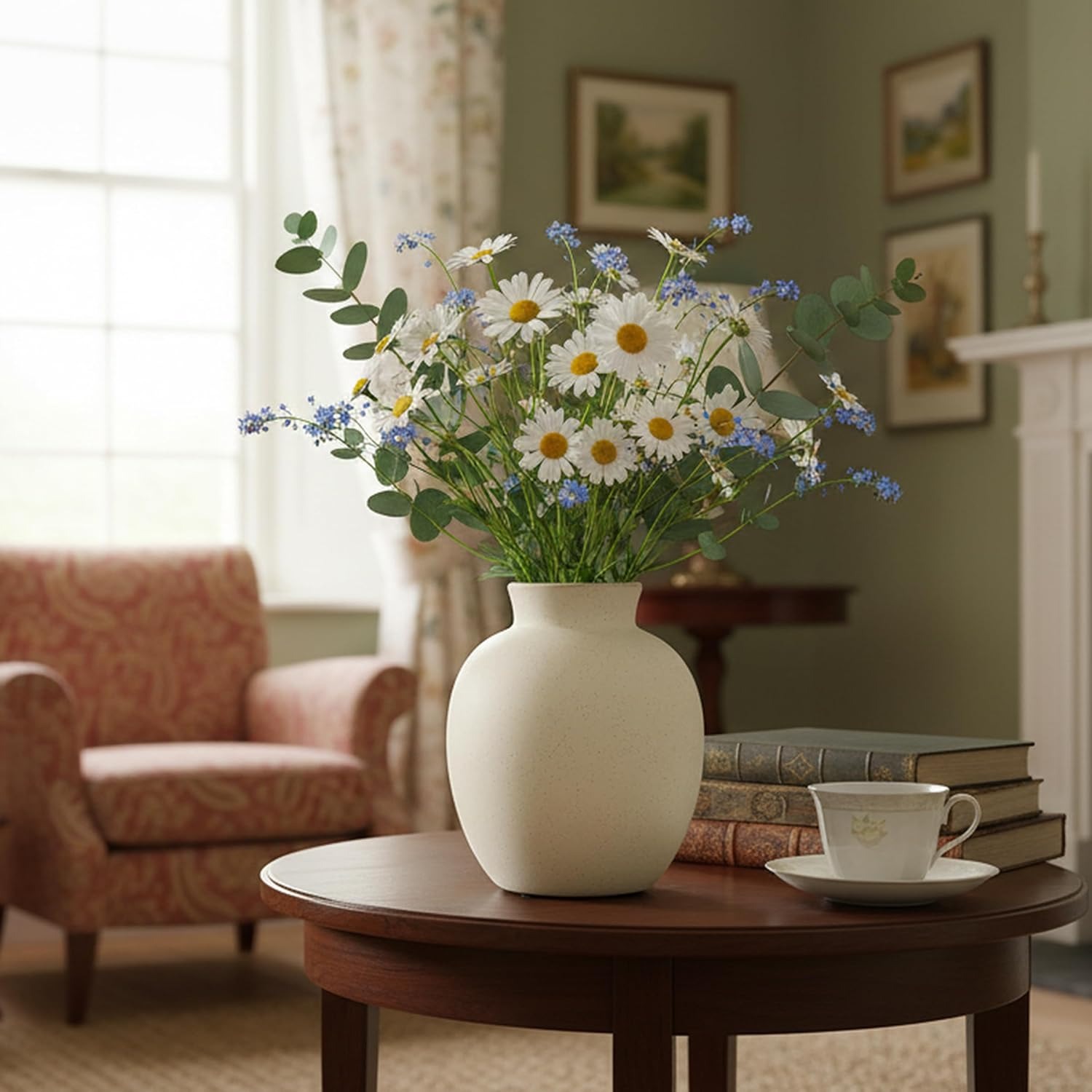
Fresh flowers give you the most life, and the most upkeep. A vase this size suits short cut stems, supermarket bunches trimmed down, or a few garden roses. Change the water every couple of days and recut the stems on an angle. Keep a coaster or a cloth mat underneath if the surface is timber, because condensation on any vase can mark a finish over time.
Dried arrangements are the low-effort path and the reason many shoppers search for the best vase for dried flowers in the first place. Pampas, bunny tails, wheat, preserved eucalyptus, dried hydrangea heads. No water, no wilting, no weekly trip to the florist. A handful of stems will look good for a year or more if you keep them out of harsh sun and give them an occasional shake outside to clear dust.
And empty is a legitimate choice. The silhouette and texture carry the piece on their own. This is the smart option for bathrooms, bedsides and any shelf where spilled water would be a genuine nuisance.
Where it earns its place
Entryways are the obvious one. Most hallway consoles are shallow, so a small vase fits where a large one would stick out and get knocked by coats and bags. The weight of ceramic helps here too, since a hallway is the highest-traffic spot in the house.
Mantels suit it because you usually want a low grouping that does not fight with whatever hangs above. Two vases of different heights at one end, a candle or two at the other, and you have a mantel that looks considered rather than cluttered.
Open kitchen shelving is another good fit. White ceramic sits comfortably next to plates, bowls and timber boards, and a few dried stems soften a wall of hard edges.
Bedside tables, bathroom shelves and desk corners all work for the empty or dried approach. And for events, a cluster of small white vases down a reception table is a long-standing trick, because they decorate without blocking anyone's view across the table.
Styling it with the rest of your room
The good news with a neutral white piece is that it does not demand anything from the rest of your decor. It sits happily alongside warm timber, black metal, rattan, linen and clay tones.
A few combinations that reliably work:
Timber and white. Put the vase on a raw or oiled timber surface and let the grain do the contrast. This is the classic farmhouse pairing and it never looks dated.
White on white, with texture doing the separating. A white vase on a white shelf against a white wall only works if the finishes differ. A textured vase against a smooth painted wall gives you that separation.
Warm neutrals. Terracotta, oatmeal, rust and olive all read well next to soft white. This is where the boho leaning of the piece comes through, and it is why people chasing the best boho vase often end up with something in this family.
If your room runs cool, with greys and blues, white still works, but you may want to keep the stems muted rather than warm toned so the whole thing stays coherent.
Looking after it
Ceramic is tough, but it is not indestructible, and the care routine is short.
Dust the outside with a soft dry cloth. For marks, a barely damp cloth is fine, followed by a dry one. Skip the scouring pads and the abrasive cream cleansers, because a textured surface will trap residue and can be dulled by scrubbing.
If you have used fresh flowers, rinse the inside with lukewarm water and a drop of mild dish liquid. A soft bottle brush is useful for reaching the bottom through a narrow opening. Let it dry completely upside down before you put it away, since trapped moisture can leave a smell.
Hand wash only. No dishwasher, no microwave, no oven. And give it a sensible home away from table edges, especially if you have pets or small children around.
Buying it as a gift
This is one of the easier gifts to get right. A small white vase does not require you to know someone's favourite colour, their furniture, or whether they already own one. It is useful, it is neutral, and it gets used rather than stored in a cupboard.
Housewarmings are the natural fit. Weddings work too, particularly as part of a small homewares bundle. It also suits the thank-you present for someone who has hosted you, where you want something nicer than wine but not extravagant.
If you want to make it feel complete, add a small bunch of dried stems. The recipient can put it straight out on a shelf without a trip to the shops, which is the difference between a gift that is appreciated and one that is actually used.
The short version
If you have a shelf, mantel or console that looks unfinished, a 15 cm white rustic ceramic vase is a low-risk fix. The textured surface gives it warmth that a glossy vase would not have. The size suits real-world furniture rather than showroom photographs. The neutral white works with almost any palette you already own.
Use it with dried stems if you want zero upkeep, fresh flowers if you enjoy the ritual, or leave it empty and let the shape do the work. Keep the stems proportionate, hand wash it, and set it back from the edge.
A few specifics, exact material, weight, country of origin and full dimensions, are not recorded in this listing. If any of those matter for your project, ask us before you order and we will find out what the supplier can confirm.